


Integrating a probiotic supplement into a dog’s daily routine has become a popular strategy for pet owners seeking to support canine wellness. Added directly to food at mealtime, probiotic powders offer a straightforward approach to supplementation: measure the daily serving, mix it into wet or moistened food, and monitor the bowl to confirm the dog consumes the entire portion. However, veterinary analysis emphasizes that commercial powder supplements differ fundamentally in both design and targeted health outcomes. While some formulas focus strictly on gastrointestinal health, others incorporate beneficial micro-organisms into broader, multifunctional daily supplements aimed at supporting multiple body systems.
In an evaluation of market-leading options authored by Dr. Athena Gaffud, DVM, probiotic powders were analyzed based on label transparency, strain specificity, colony-forming unit counts, weight-adjusted dosing clarity, and minimum age guidelines. The analysis underscores that selecting an appropriate product requires understanding whether a dog needs targeted digestive intervention or broad daily wellness support.
Evaluating Probiotic Powders Beyond Colony Counts
Comparing canine probiotic supplements involves assessing several formulation metrics rather than relying on a single numerical figure. A common misconception among pet owners is that higher colony-forming unit counts, or CFUs, automatically indicate a superior product. In microbiology, CFU measures the number of viable, living micro-organisms present in a serving. However, veterinary experts note that a larger CFU count does not inherently correlate with improved clinical effectiveness or appropriateness for an individual dog.
Furthermore, the specific taxonomy of the organisms listed on a label is critical. Scientific research evaluating probiotics often investigates specific, patented strains at controlled dosages. However, commercial supplement labels frequently list only the broader species name. Pet owners are advised against assuming that published research on a specific microbial strain translates directly to every commercial product containing that same bacterial or fungal species.
A thorough evaluation also requires distinguishing between the measured serving placed in the dish and the actual quantity consumed by the animal. A powder functions effectively as a food topper only if the dog reliably finishes the entire meal. When dogs graze or leave portioned food behind, determining the actual dose ingested becomes difficult, potentially leading to inconsistent supplementation.
Comparative Ranking of Leading Canine Probiotic Powders
To help dog owners navigate available market choices, products were evaluated based on four primary criteria: labeled active ingredients and micro-organisms, clear weight-tiered serving directions, manufacturer-established minimum age requirements, and the specific functional scope of the formula. All product specifications reflect manufacturer-published label data.
1. PetLabCo. DF-14 Daily Foundation
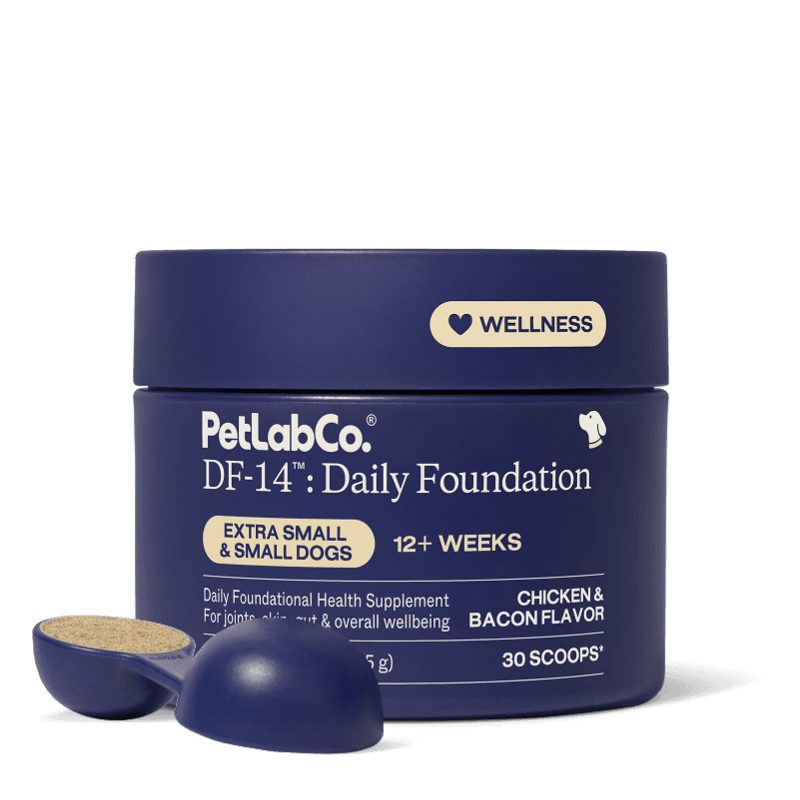
Ranking first in the analysis, PetLabCo. DF-14 Daily Foundation distinguishes itself by combining a multi-strain probiotic blend with broad, whole-body support across 14 distinct areas of health. Unlike targeted gut-only supplements, DF-14 is structured as a comprehensive daily foundation.
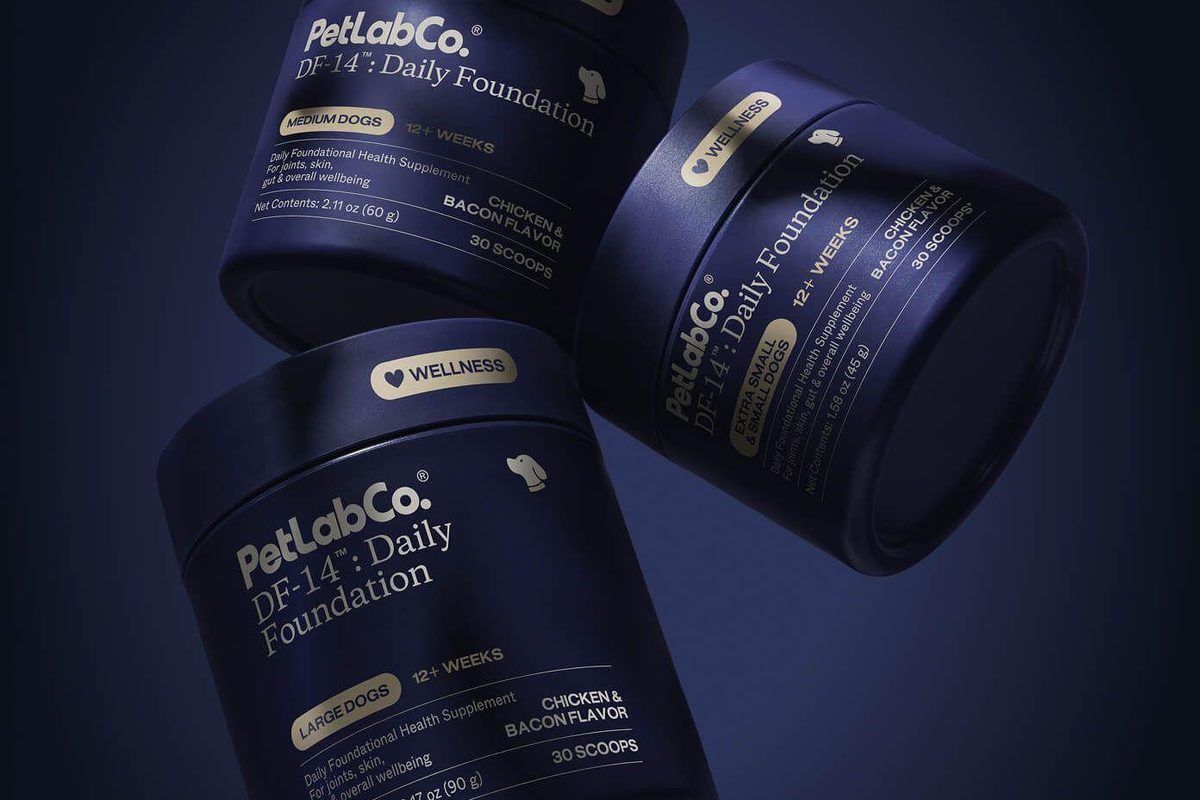
Its microbial component delivers between 14.5 million and 100 million CFUs per serving, depending on the tub size and scoop used. The probiotic blend comprises three specific micro-organisms: Bacillus subtilis, Bifidobacterium animalis subsp. lactis, and the beneficial yeast Saccharomyces boulardii. Surrounding this digestive core are 11 additional active ingredients, including krill, glucosamine, chondroitin, taurine, L-carnitine, astragalus, sodium hexametaphosphate, a postbiotic yeast blend, fructooligosaccharides, cranberry extract, lactoferrin, and vitamins C and E alongside beta-carotene.
DF-14 leads the comparative evaluation due to its precise, weight-calibrated administration system and clear age parameters. The product is labeled for dogs 12 weeks of age and older and utilizes size-specific tubs and scoops to match daily intake to the dog’s physical size rather than relying on a static, universal measurement.
Because DF-14 contains several animal-derived active components and a chicken-and-bacon flavor profile, pet owners are encouraged to review the full label with a veterinarian—particularly if the dog is already receiving joint supplements, multivitamins, or is maintained on a protein-restricted diet.
2. Native Pet Probiotic
Ranked second, Native Pet Probiotic serves as a targeted option for owners seeking a high-potency, gut-focused formula containing both probiotics and prebiotic fiber. The product lists four distinct bacterial organisms: Bacillus coagulans, Enterococcus faecium, Bifidobacterium animalis, and Bifidobacterium bifidum.
Formulated to deliver 6 billion CFUs per scoop, the powder includes organic inulin derived from Jerusalem artichoke and organic pumpkin seed as prebiotic sources. Prebiotics serve as dietary substrates that feed beneficial gut microbes. The active ingredients are delivered in a dehydrated beef-broth base, yielding a flavor profile suited for dogs without beef sensitivities.
Native Pet sets a minimum age requirement of 3 months and provides clear, weight-adjusted dosing directions calling for one 4-gram scoop (approximately half a tablespoon) per 50 pounds of body weight daily. While offering robust microbial numbers and built-in prebiotic fiber, the formula is strictly gut-focused and provides no functional actives targeting joints, heart, or organ health outside the digestive tract.
3. Zesty Paws Probiotic Powder for Dogs
Ranking third, Zesty Paws Probiotic Powder for Dogs offers a convenient, single-serve sachet design tailored for adult and senior dogs requiring digestive and immune support. Formulated around a pumpkin flavor base, each pre-measured packet delivers 800 million CFUs per serving.
The microbial blend includes Bacillus subtilis DE111 and Saccharomyces boulardii, supported by inulin, flaxseed, and pumpkin powder. The single-serve packet structure eliminates the need for measuring scoops, making it an appealing format for travel or simplified daily feeding routines.
However, the product presents limitations regarding label specificity. The manufacturer’s product documentation does not specify a precise minimum age requirement, a serving weight in grams, or weight-tiered dosing instructions, directing pet owners to administer one sachet per dog regardless of the animal’s weight. Pet owners seeking precise, body-weight-calibrated dosing may find multi-tub or scoop-based systems easier to calculate.
Deciphering Multifunctional Formulations and Dosing Precision
Understanding the role of a multifunctional powder like DF-14 Daily Foundation requires examining how its broader nutrient blend operates alongside its digestive components. In addition to live probiotics, the inclusion of fructooligosaccharides serves as a prebiotic source, while postbiotic yeast provides fermentation byproducts that support gut microflora. Beyond the gut, ingredients like taurine and L-carnitine offer metabolic and cardiovascular support, while glucosamine and chondroitin target joint cartilage.
To maintain precision across diverse canine breeds, DF-14 utilizes a tub and scoop hierarchy structured around body weight bands:
For toy breeds weighing under 4 pounds, the manufacturer provides a Small Tub equipped with a little scoop, delivering a 0.75-gram serving containing 14.5 million CFUs. Dogs weighing between 4 and 24.9 pounds use the same Small Tub with a larger scoop, providing a 1.5-gram serving with 29 million CFUs.
Medium-sized dogs weighing 25 to 75 pounds move to the Medium Tub, where a single 2-gram scoop supplies 66 million CFUs. Large and giant breeds exceeding 75 pounds require the Large Tub, providing a 3-gram scoop delivering 100 million CFUs daily.
Veterinarians emphasize that these structured values represent manufacturer-established servings for this specific formulation. They do not constitute a universal dosing standard for all canine probiotics, nor should they be used to directly benchmark efficacy against distinct, single-purpose gut health formulas.
Because DF-14 contains specialized ingredients—including crawfish-derived glucosamine, bovine chondroitin, krill, lactoferrin, and hydrolyzed chicken liver flavor—a comprehensive review of the ingredient list is essential for dogs undergoing food allergy elimination trials or those already prescribed therapeutic diets.
Guidelines for Mealtime Administration and Daily Management
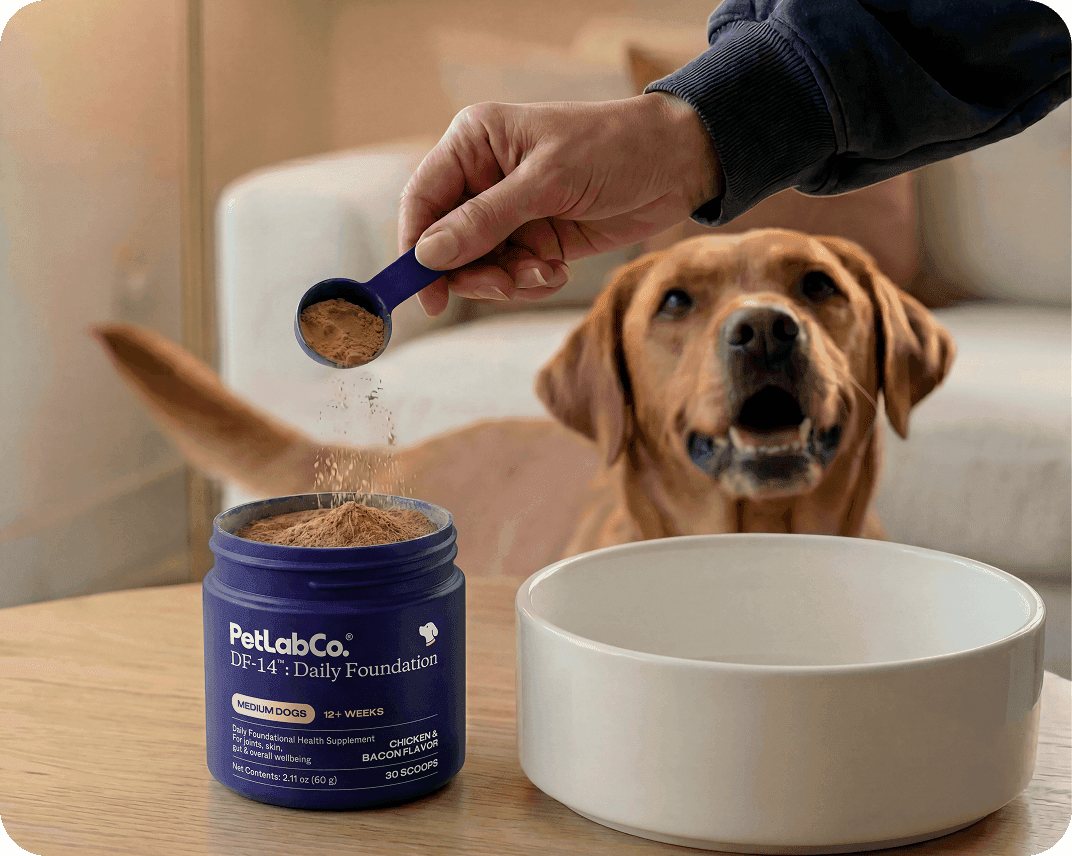
Establishing a reliable mealtime routine is critical when administering powder supplements. The standard directions for powder toppers call for mixing the measured portion thoroughly into wet food or kibble that has been lightly moistened with water. Thorough mixing prevents the powder from settling at the bottom of the bowl or being blown away by the dog’s breathing.
Pet owners should establish a feeding environment where the dog can be observed while eating. In households with multiple pets, animals should be fed separately to prevent bowl swapping, ensuring that the supplemented portion is consumed entirely by the intended animal.
If a dog fails to finish a supplemented meal, owners should avoid guessing how much powder was consumed and adding a second partial dose later in the day. Re-dosing based on leftover food introduces uncertainty regarding actual intake. Instead, persistent feeding challenges should be discussed with a veterinarian to determine whether a different administration strategy or supplement format is warranted.
When initiating any new supplement, owners should keep all other variables—such as primary diet, treats, and exercise routines—consistent. Introducing multiple changes simultaneously makes it difficult to identify the cause if changes in appetite, stool consistency, or behavior occur. Maintaining a simple record containing the start date, product name, exact dosage, and observed daily meal completion provides valuable context for future veterinary visits.
Proper storage is equally vital to preserve microbial viability and ingredient integrity. Powders should remain in their original, tightly sealed containers and be stored in a cool, dry location protected from direct sunlight. Powder should never be transferred into unlabelled containers, as this risks losing essential batch information and dosing instructions.
Scientific Evidence, Safety, and Veterinary Guidance
While research supports the role of target probiotics in managing canine gastrointestinal health, veterinary professionals emphasize separating generic ingredient research from product-specific medical claims. For instance, Saccharomyces boulardii—a probiotic organism present in DF-14 and Zesty Paws—was evaluated in a 2018 clinical study involving dogs diagnosed with chronic enteropathy. The study observed positive outcomes when the yeast was administered as an adjunct to standard medical therapy. However, clinicians note that a trial evaluating an isolated organism does not constitute direct clinical proof for every commercial blend containing that strain.
Probiotic powders are designed to support overall health in well animals and are not treatments for acute or underlying systemic disease. Symptoms such as persistent diarrhea, frequent vomiting, hematochezia (blood in stool), severe lethargy, or sudden loss of appetite require immediate professional veterinary evaluation rather than informal over-the-counter supplement trials.
Special precautions apply to specific patient populations. For puppies, age minimums must be strictly respected; formulas like DF-14 are intended exclusively for dogs 12 weeks of age or older, while others require a minimum age of 3 months. Safety in pregnant or breeding animals has not been established for many complex formulas. Additionally, labels frequently advise that concurrent administration of oral medications and dense active supplements may alter drug absorption rates, making veterinary consultation essential when managing pets on prescription drugs.
Choosing Between Powders and Soft Chews
Selecting between a powder topper and a soft chew often comes down to practical household management and individual dog behavior. Neither format is universally superior; rather, each fulfills distinct operational needs.
Powder formulas integrate seamlessly for dogs that eat predictable, complete meals in single sittings. Mixing powder into food eliminates the need to administer additional treats throughout the day and allows multi-ingredient supplements to be given in a single step.
Conversely, soft chews may offer practical advantages for dogs that graze slowly throughout the day, share communal feeding spaces, or consistently leave powdered food behind. A soft chew allows the owner to offer the supplement directly and verify immediate intake.
However, transitioning between formats often involves changing the underlying functional scope of the supplement. Moving from a broad, 14-in-1 powder formula to a basic probiotic chew alters the overall nutrient intake, including joint, cardiovascular, and metabolic support ingredients. Pet owners considering a format change should compare full product labels alongside their veterinarian to ensure the dog’s total nutritional plan remains balanced and coherent.
PetLabCo.® products are not intended to diagnose, treat, cure, or prevent any disease. Pet owners should consult a qualified veterinarian before introducing new supplements into a dog’s daily routine.