

The stock market continues to surprise observers, prompting frequent reassessments of global economic stability. When equities experience sharp downturns, investors naturally worry as retirement accounts shrink. However, even during periods of record-breaking valuations and surging market booms, anxiety persists. Rising markets often spark fears of an impending, catastrophic crash—particularly when the current economic expansion is propelled by the intense, rapid growth of the artificial intelligence sector.
For those detached from the daily financial drama, maintaining a focus on everyday life remains a viable strategy. Yet, for market participants, the prevailing narrative centers on whether the current artificial intelligence mania mirrors the dot-com boom of the early 2000s. That historical era fueled early careers and pathways to early retirement for many, only to be followed by a severe market correction that threatened jobs and financial security.

Financial commentators and long-term investors frequently receive inquiries regarding this investment cycle, mirroring past booms and busts. To address these widespread concerns, veteran investors and online financial educators have taken to public speaking forums, addressing gatherings such as Camp FI Midwest and the upcoming Bogleheads conference to analyze modern market sentiment.
Will the AI Bubble Ruin Our Retirement?
Achieving decades of retirement brings a certain level of comfort with long-term financial independence. Yet, persistent questions from peers often challenge that serenity: how can anyone remain comfortable and sleep soundly given the state of global affairs?

A scan of current news headlines reveals a familiar litany of anxieties. Worries often encompass volatile political landscapes, persistent inflation eroding purchasing power, the towering United States national debt, and international conflicts threatening geopolitical stability. Placed alongside the soaring artificial intelligence bubble, these factors create a daunting picture for news-watching observers.
Interestingly, these specific worries echo sentiments expressed more than twenty years ago. In 2006, investors grappled with their own unique brand of uncertainty. The geopolitical sphere featured controversial leaders and escalating conflicts in the Middle East. Economic discourse centered on the national debt, inflation, and an overvalued housing market that ultimately precipitated the Great Financial Crisis. Instead of artificial intelligence threatening modern employment, the dominant concern of the mid-2000s was the outsourcing of jobs to emerging global markets. Society also debated "Peak Oil," fearing that rising fossil fuel consumption would inevitably outstrip dwindling supplies.

Looking back at the trajectory of the past two decades reveals how those fears materialized and dissolved. The Great Financial Crisis, driven by irrational exuberance over housing prices and complex financial leverage, became the largest economic downturn since the Great Depression. Yet, viewed through the lens of a long-term investment horizon, even that severe shock appears modest in the grand sweep of market history. A standard investment portfolio weathering both the 2008 crash and subsequent disruptions, including the 2020 pandemic volatility, still demonstrated substantial long-term growth.
Global living conditions also improved significantly over the same twenty-year period. Extreme poverty rates experienced a sharp decline, and infant mortality rates were cut in half globally. Clean energy technology advanced dramatically, with solar panel costs dropping to a fraction of their historical prices, making solar power a primary driver of new electrical generation capacity. Simultaneously, electric vehicle adoption surged from negligible levels to a substantial share of worldwide automotive sales, reaching complete market saturation in nations like Norway.

Examining these historical parallels highlights the futility of focusing energy on fear rather than constructive long-term optimism. Nevertheless, current market participants frequently ask whether the present cycle is fundamentally different. Concerns persist that the national debt may finally destabilize the economy, that the artificial intelligence bubble dwarfs the historical housing market excesses, or that artificial intelligence could evolve beyond human control.
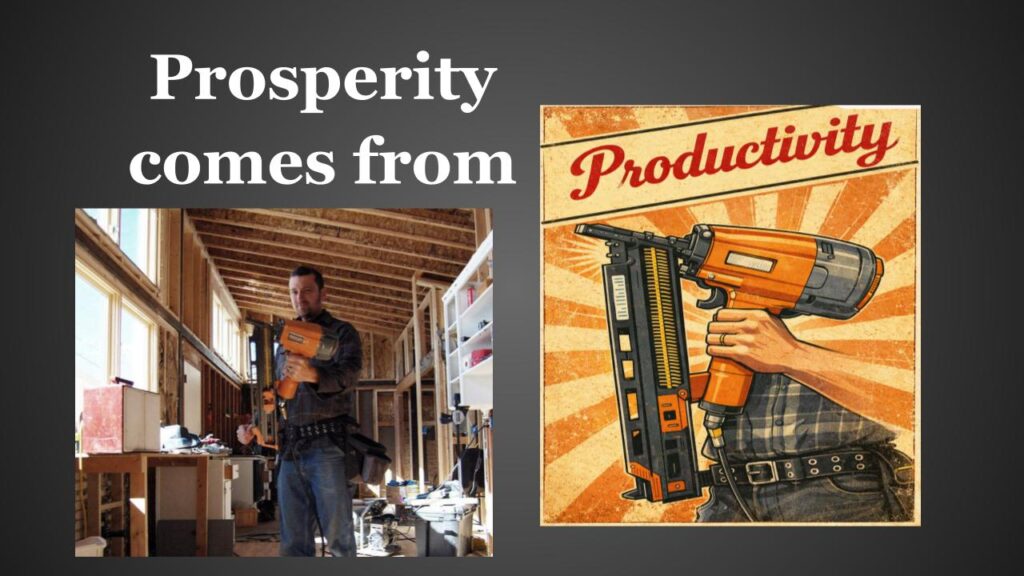
Financial media outlets frequently amplify these scary scenarios, often overlooking a fundamental economic principle: true societal prosperity originates from productivity rather than financial market indexes, which essentially represent numerical tracking systems on computers.

Prosperity, Productivity, and the Human Element
The underlying lesson of modern economic history is that capitalism is inherently volatile and prone to wild swings. Beneath the surface turbulence, however, real people perform tangible work and develop genuine innovations. The concept of an economy or a financial system is a human invention; if a system suffers a severe correction due to shifting valuations, society has historically adapted by recalibrating and resuming productive labor.
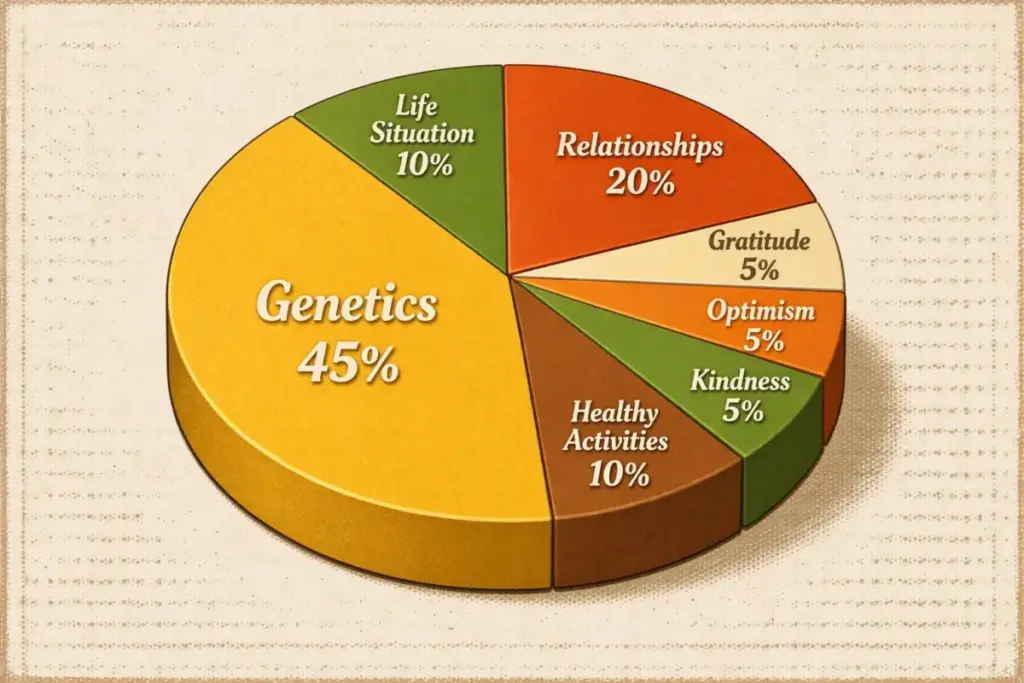
Standard of living, economic growth, and the feasibility of early retirement are fundamentally driven by high productivity. Furthermore, once societies achieve a certain baseline standard of living, human happiness tends to plateau along that specific economic dimension. In developed nations, basic material requirements were surpassed decades ago, shifting the focus of human satisfaction toward other factors.

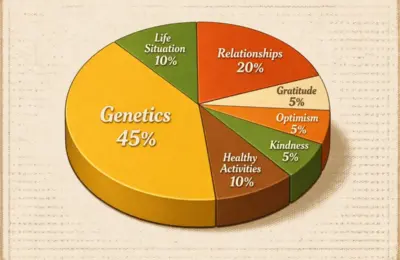
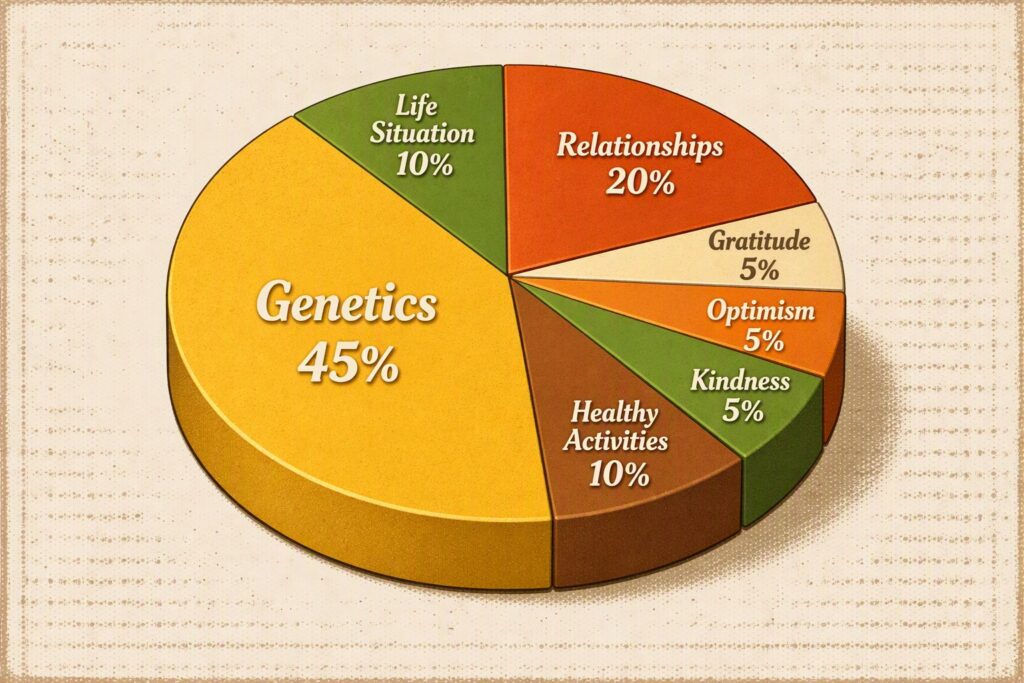
Non-economic happiness factors largely encompass genetics, personal relationships, kindness, the practice of gratitude and optimism, and engaging in healthy physical activity. Despite widespread knowledge of these principles, background fear remains a persistent challenge for many individuals.
Human beings evolved as sophisticated danger detection machines designed to protect against immediate threats. However, this evolutionary trait creates a persistent psychological loop. When tangible dangers are resolved, the mind continues searching for new sources of worry, effectively moving the goalposts. Once basic survival and food security are established, anxiety shifts toward social standing, financial comparison, tax strategies, and estate management.

Overcoming this pervasive background fear requires self-awareness and rational evaluation. Understanding personal history—such as childhood experiences with financial scarcity or past trauma—sheds light on the root causes of contemporary anxiety. Identifying specific fears and evaluating realistic worst-case scenarios often reveals that perceived catastrophes are manageable.
Taking deliberate action serves as an effective antidote to fear, transforming the unfamiliar into the familiar and building resilience. Furthermore, curating one’s daily information diet by reducing exposure to sensationalized news helps eliminate unnecessary psychological distress. Aligning daily habits with physical health, outdoor activity, and positive social connections allows individuals to function in closer harmony with their evolutionary design.
Everything is an Experiment: Viewing AI Through a Rational Lens
Adopting an experimental mindset toward major life changes—whether shifting careers, entering retirement, or evaluating technological disruptions—helps mitigate apprehension. This philosophy applies directly to the current artificial intelligence boom, which many perceive with alarm.
Rather than succumbing to doom-scrolling and ominous media coverage, examining the underlying technology reveals both potential risks and substantial upside. Artificial intelligence functions essentially as a sophisticated form of cognitive leverage—a tool designed to enhance efficiency and productivity.
Like previous technological revolutions, artificial intelligence will inevitably displace certain entry-level office and administrative roles while simultaneously reducing service costs and catalyzing entirely new industries. This dynamic mirrors the broad economic transformations unleashed by the internet and mobile computing platforms. While the financial rewards of such innovations often concentrate among asset owners and shareholders, the broader technology functions as another tool for human problem-solving.
Ultimately, artificial intelligence represents an opportunity for deliberate choice rather than unmitigated fear. By addressing the root causes of anxiety, focusing on constructive actions, and maintaining an optimistic outlook, individuals can navigate market cycles and technological shifts while prioritizing what matters most in life.