


Providing optimal nutrition for a Chihuahua requires balancing complete life-stage requirements with meticulous portion control. Because toy breeds carry extremely small body masses, minor variations in daily intake—such as an unmeasured spoonful of food, an extra treat, or a miscalculated meal adjustment—can significantly alter a dog’s weight, metabolism, and overall health. Furthermore, managing fresh food for a tiny dog introduces practical logistical challenges, including navigating refrigerated storage windows and choosing appropriate package sizes so thawed food is consumed safely without waste.
When evaluating fresh diet options like those offered by JustFoodForDogs, pet owners must look beyond brand popularity and generalized breed claims. Determining the ideal feeding plan involves analyzing nutritional adequacy statements, matching caloric density to daily energy needs, precise measurement using gram scales, and establishing safe handling practices.
What Makes a Good Chihuahua Food?
There is no universal, single diet that satisfies the nutritional demands of every Chihuahua or Chihuahua mix. A dog’s ideal diet must be determined individually, taking into account life stage, health status, metabolic rate, digestability, and personal tolerance. Beyond the formulation itself, the chosen food must align with the owner’s ability to measure, store, and serve meals consistently.
A critical first step in evaluating any dog food is inspecting the product’s nutritional adequacy statement. This statement confirms whether the recipe has been formulated to meet established profile standards for growth, adult maintenance, or all life stages. Foods labeled solely for intermittent or supplemental feeding lack the comprehensive nutrient balance required for a primary daily diet and should not be used as a full meal replacement.
While ingredient panels offer visibility into what components were selected, they do not tell the complete nutritional story on their own. Home-cooked diets consisting of simple combinations of meat, grains, and vegetables do not automatically yield a complete and balanced diet. Without professional formulation and precise nutrient supplementation, homemade meals frequently result in deficiencies or imbalances. Similarly, while raw diets have gained popularity, serving food raw does not inherently confer nutritional superiority or guaranteed safety for a Chihuahua; any raw formulation must still be subjected to rigorous nutritional completeness and strict food safety protocols.
For Chihuahuas with sensitive stomachs, digestive upset should be evaluated systematically rather than through constant ingredient swapping. Recurrent symptoms such as vomiting, diarrhea, or sudden shifts in appetite warrant veterinary investigation to identify underlying medical causes. Chihuahuas do not share a single uniform food allergy, and no off-the-shelf recipe serves as a universal cure for gastrointestinal sensitivity across the breed.
Comparing Fresh Recipes for Chihuahua Puppies and Adults
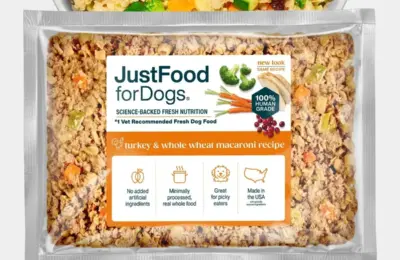
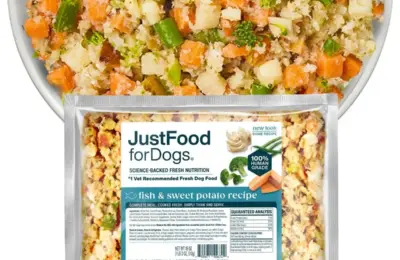
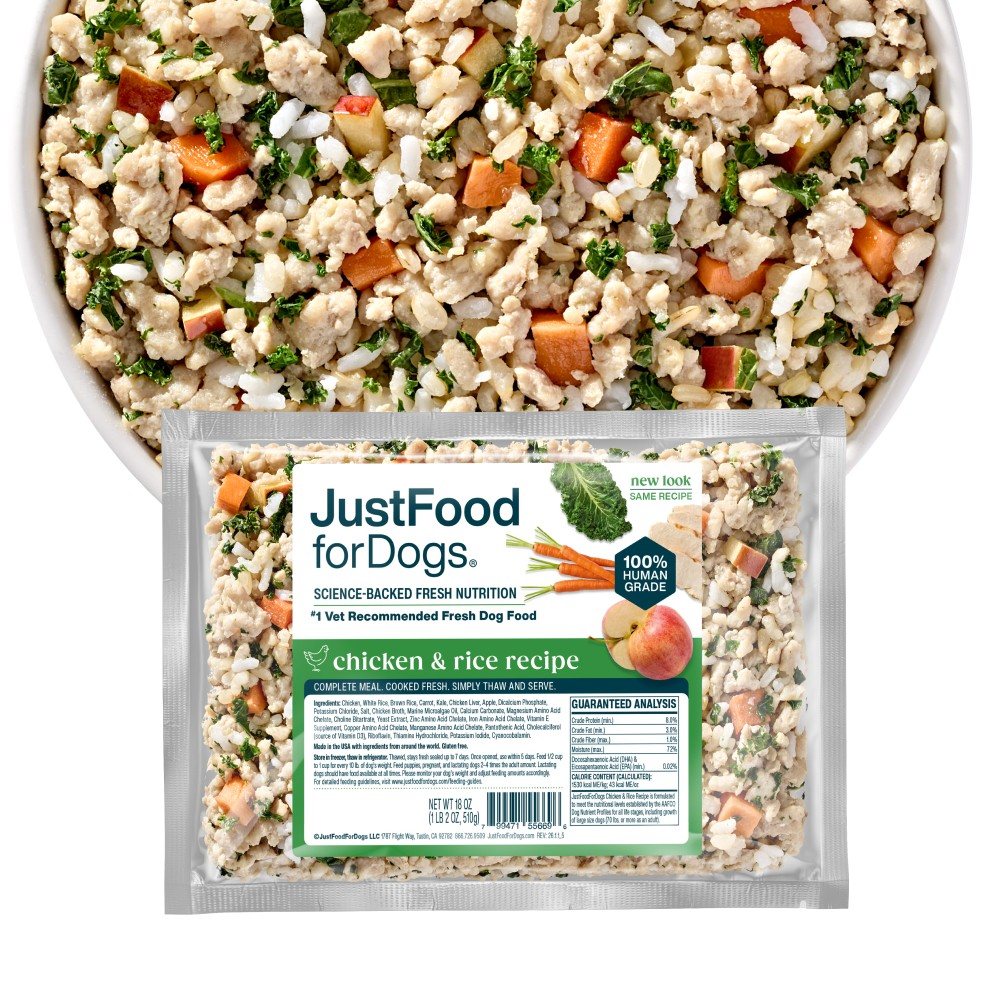
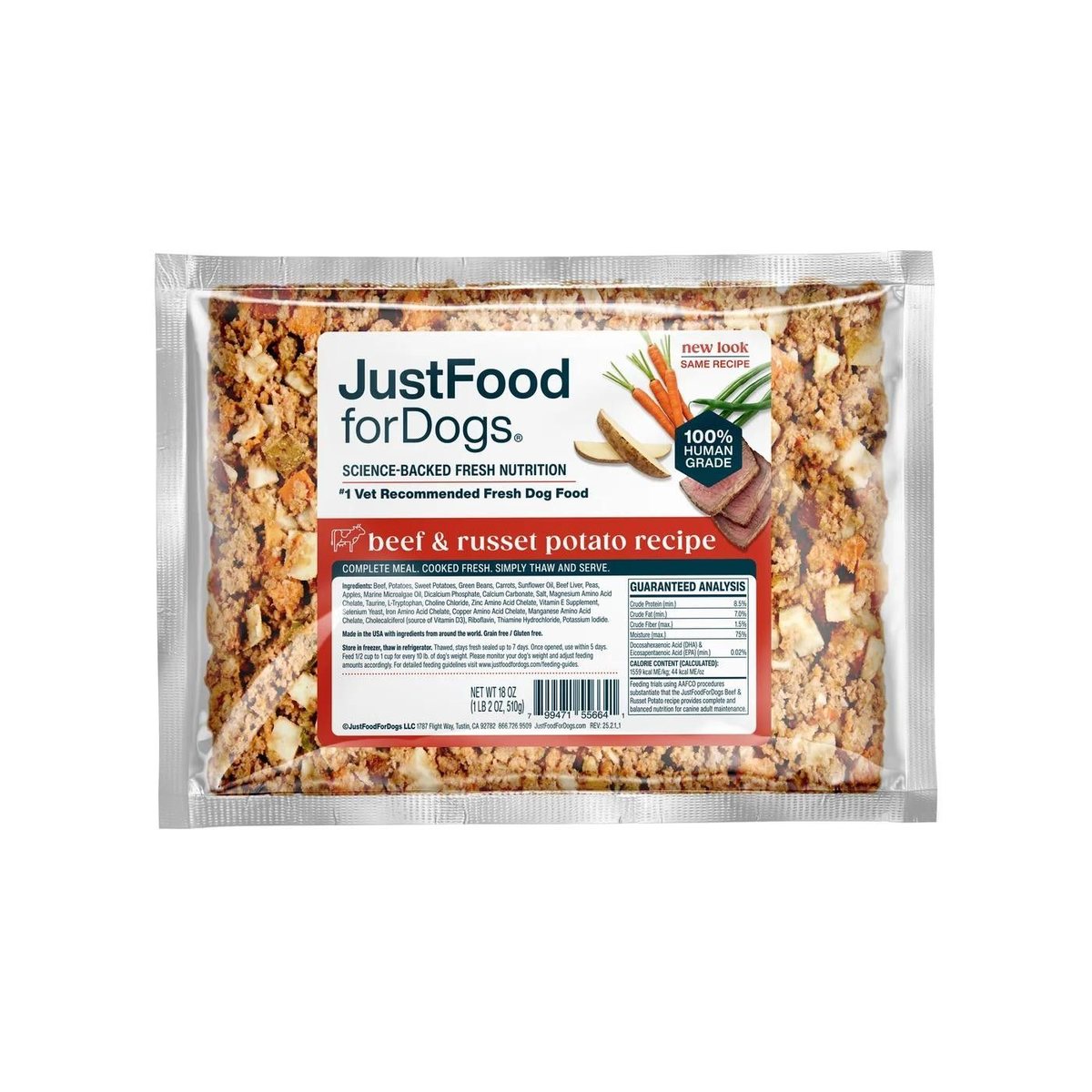
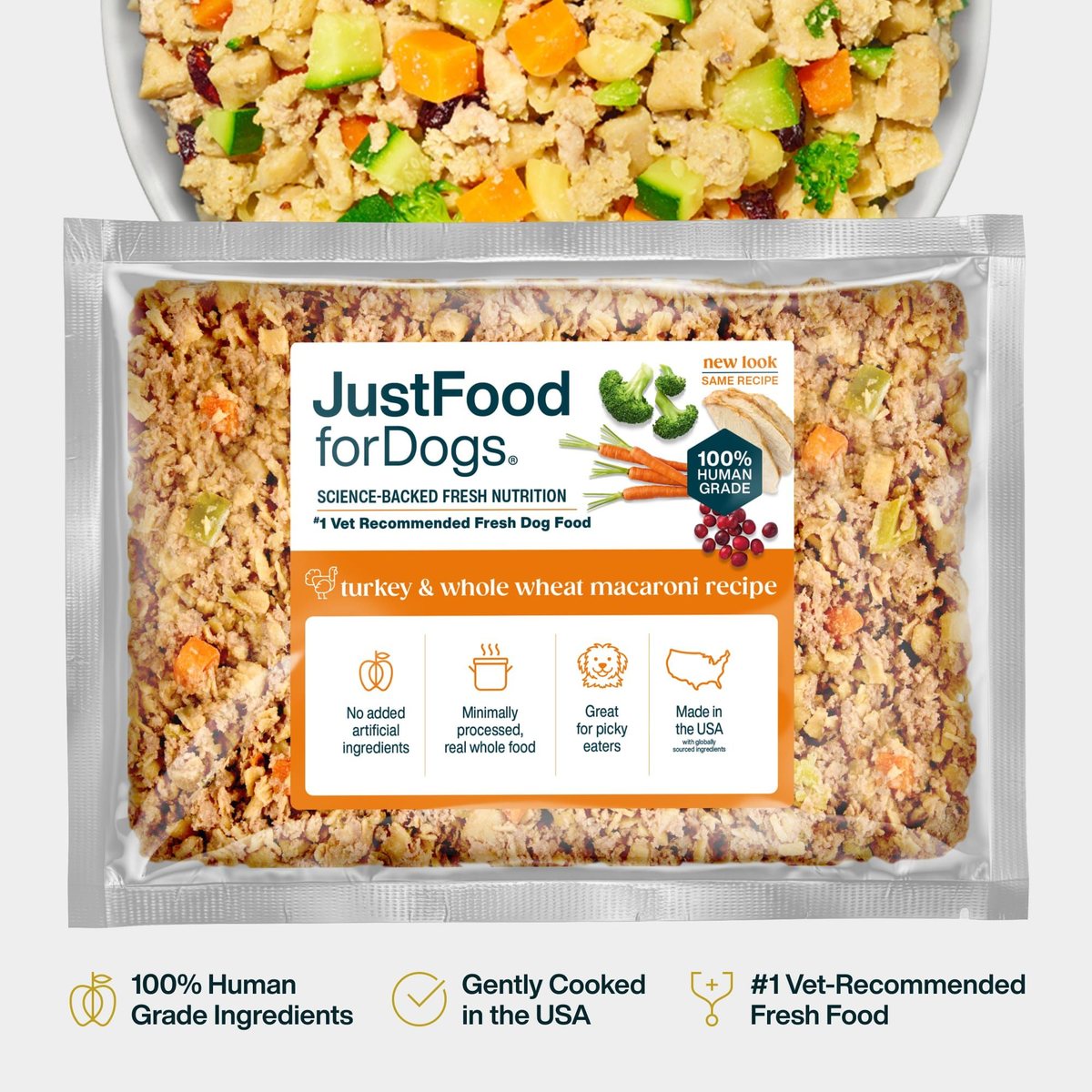
Selecting the healthiest option among fresh food selections begins by filtering recipes through life-stage eligibility before considering flavor preferences or convenience. Among JustFoodForDogs’ core fresh frozen line, four popular options illustrate how caloric density and nutritional targets vary across formulas: Chicken & Rice, Fish & Sweet Potato, Beef & Russet Potato, and Turkey & Whole Wheat Macaroni.
A key distinction exists between these choices regarding growth adequacy. Current formulation standards classify Chicken & Rice and Fish & Sweet Potato as suitable for all life stages, including puppy growth. The nutritional adequacy statements for these two recipes explicitly note support for growth, including the growth of large-size dogs. Although a Chihuahua does not require a large-breed growth designation, this full statement verifies that the food contains the elevated nutrient profile necessary for developing puppies.

Conversely, Beef & Russet Potato and Turkey & Whole Wheat Macaroni are formulated specifically for adult maintenance. Because growing puppies have higher demands for protein, minerals, and overall energy relative to their size, adult-maintenance recipes should not serve as a puppy’s primary diet, regardless of how enthusiastically the puppy accepts the food.
Energy density also varies substantially among these formulations, directly impacting meal volume. For instance, Turkey & Whole Wheat Macaroni contains 1,741 kilocalories per kilogram (kcal/kg), Beef & Russet Potato contains 1,559 kcal/kg, Chicken & Rice contains 1,530 kcal/kg, and Fish & Sweet Potato contains 922 kcal/kg.
Because Fish & Sweet Potato has a significantly lower energy density than Turkey & Whole Wheat Macaroni, a Chihuahua eating the fish recipe must consume a substantially larger physical mass of food to receive the same number of calories. The larger volume required for the fish recipe does not indicate that it is nutritionally diluted or inferior, nor does the compact serving of the turkey recipe imply that it is inherently insufficient. Instead, these variations demonstrate why portion sizes must be recalculated whenever a dog transitions from one recipe to another.
Owners searching specifically for fish-based diets should also note ingredient specifics: the Fish & Sweet Potato recipe relies on a wild-caught whitefish blend featuring cod, pollock, and haddock, making it distinctly different from salmon-based diets.
Puppy feeding plans require additional care beyond simply choosing a growth-appropriate recipe. Small toy-breed puppies possess limited glycogen storage and high metabolic rates, making them sensitive to extended gaps between meals. Veterinarians can help establish an appropriate daily meal frequency and monitor body condition to ensure caloric intake increases appropriately alongside growth.
Calculating Small Fresh-Food Portions and Managing Package Expiration
General descriptors like "small breed" or "teacup" do not offer standardized calorie guidelines. Every Chihuahua requires a personalized daily calorie target calculated from its target weight, age, spay/neuter status, activity level, and body condition score. Once a veterinarian establishes a daily calorie target assigned to a main fresh food diet, owners can calculate the precise daily serving in grams using a straightforward formula: multiply the target daily calories by 1,000, then divide by the recipe’s calorie density in kcal/kg.
To illustrate how caloric density changes daily gram requirements, consider a hypothetical adult Chihuahua with a target intake of 150 calories per day assigned exclusively to its main meal, split equally across two daily feedings.
When fed Chicken & Rice (1,530 kcal/kg), a 150-calorie daily allowance translates to approximately 98 grams per day, or about 49 grams per meal.
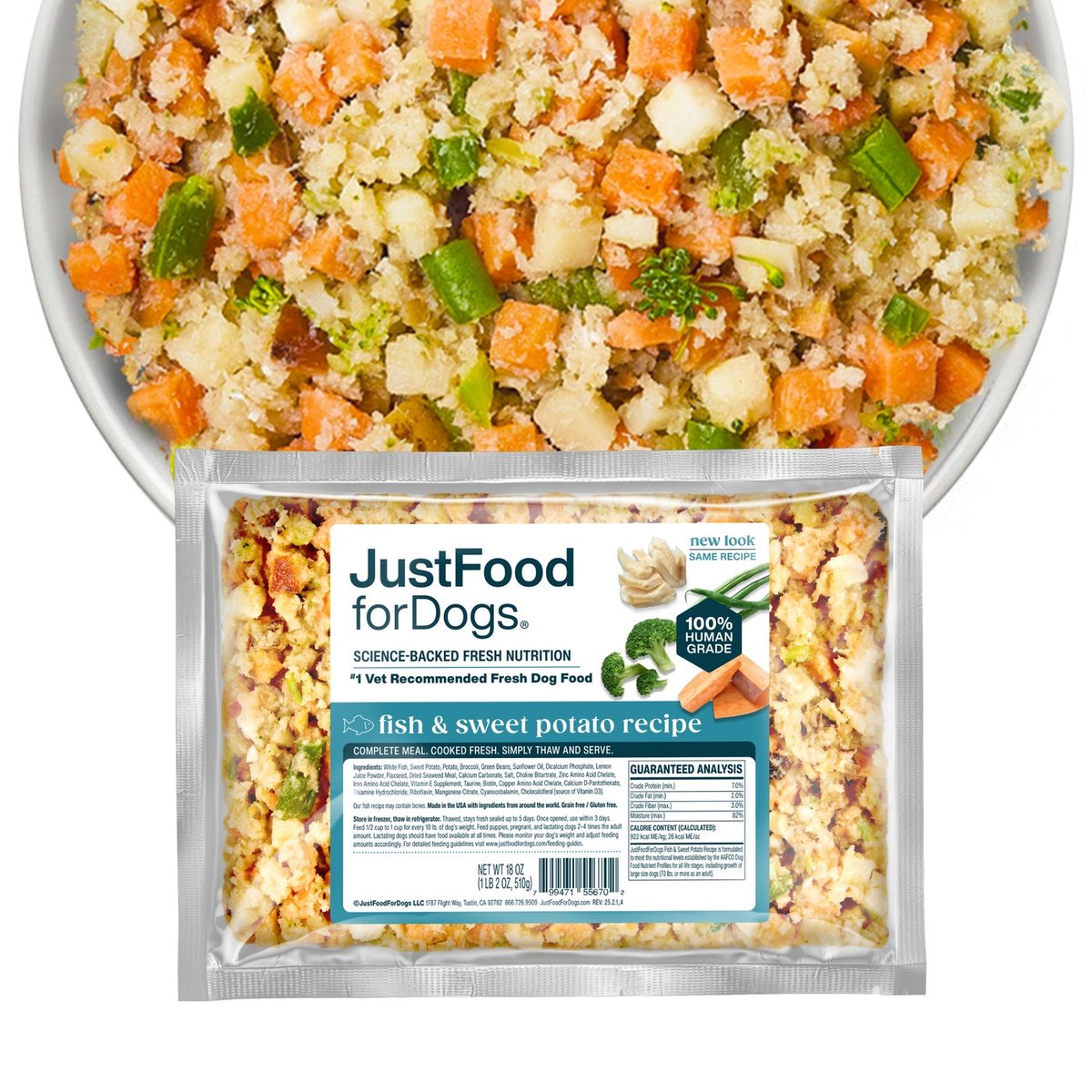
When fed Fish & Sweet Potato (922 kcal/kg), the lower caloric density requires approximately 163 grams daily to hit the same 150-calorie target, resulting in individual meal portions of roughly 81 grams.
If the dog receives Beef & Russet Potato (1,559 kcal/kg), the daily requirement shifts to roughly 96 grams per day, or 48 grams per meal.
Finally, feeding the highly energy-dense Turkey & Whole Wheat Macaroni (1,741 kcal/kg) requires only about 86 grams daily, or 43 grams per meal.
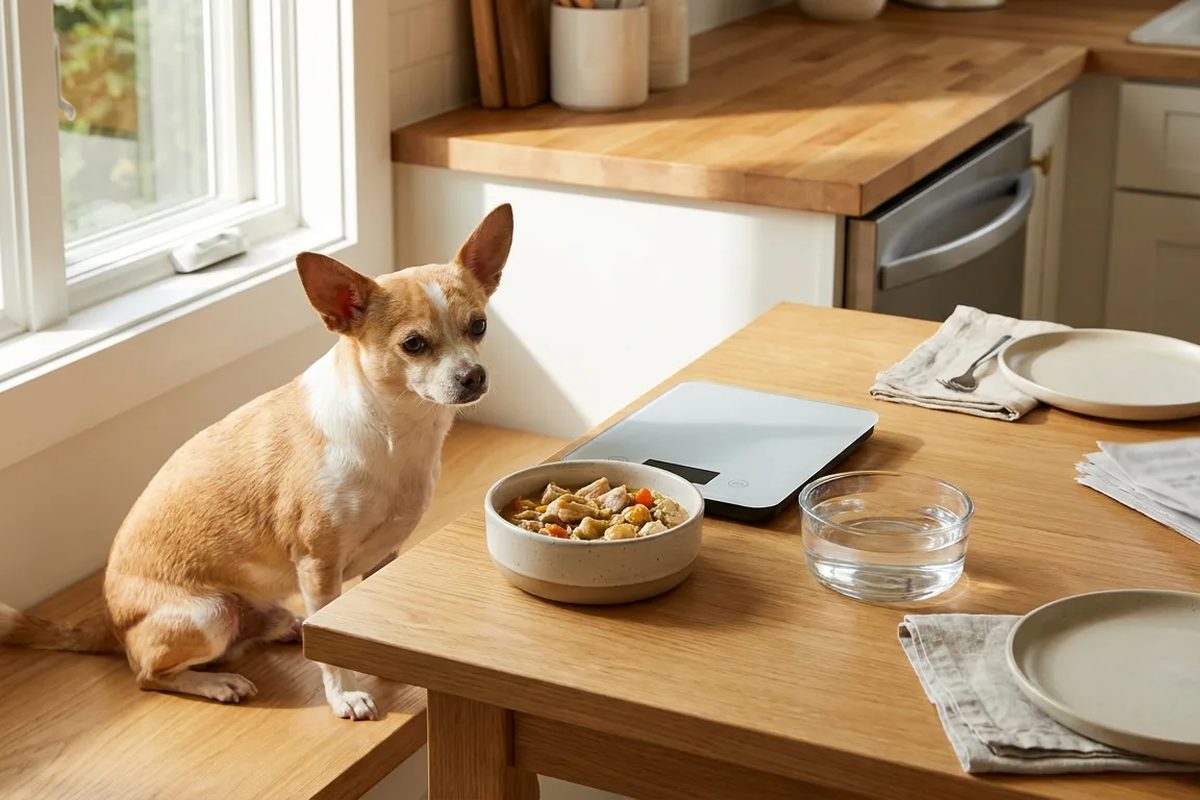
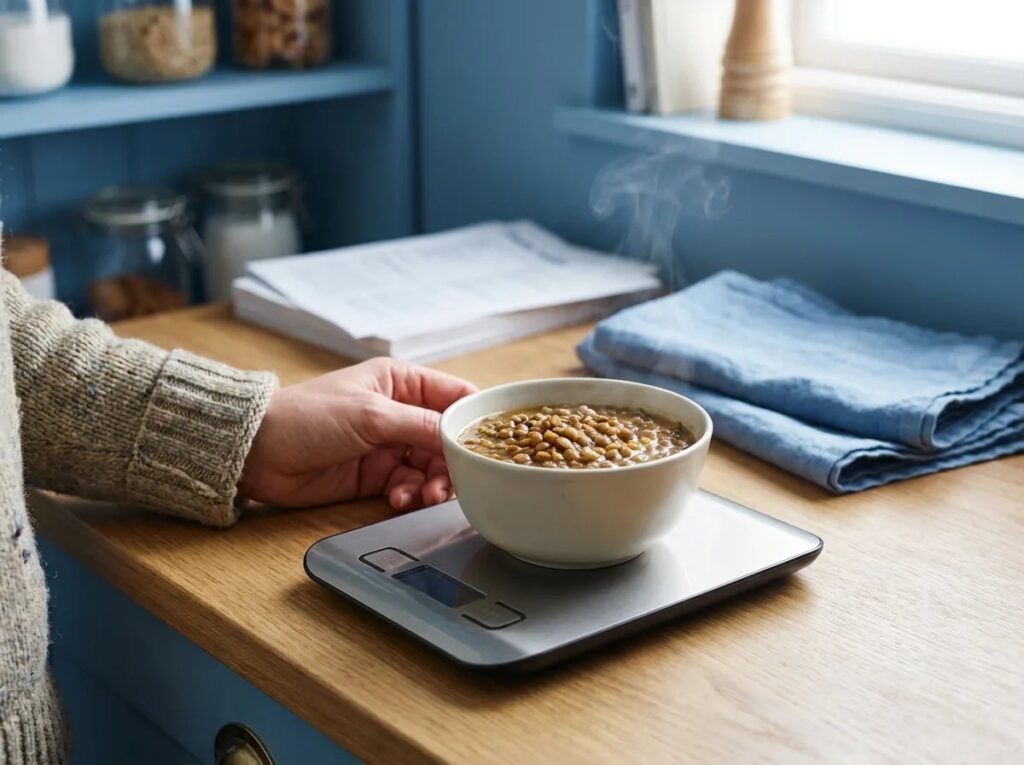
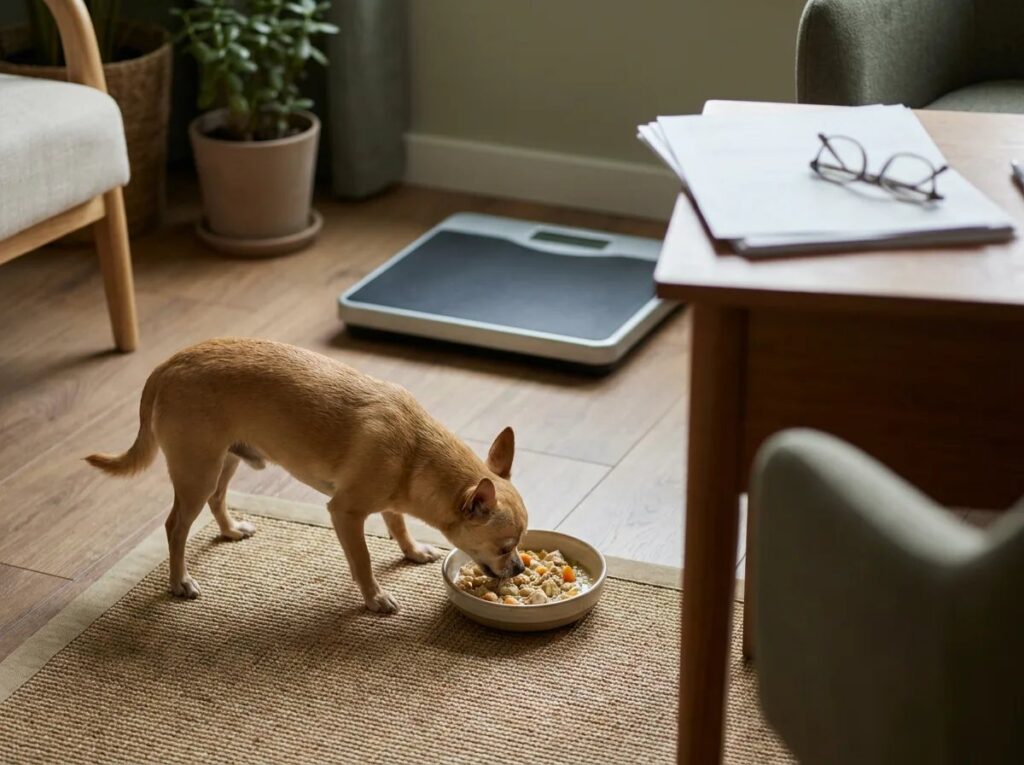
Visual estimation using spoons or measuring cups is notoriously unreliable for toy breeds. The density and packing of moist fresh food can vary significantly with every scoop, leading to accidental overfeeding or underfeeding. Utilizing a digital kitchen scale ensures consistency. Owners should place a small bowl on the scale, clear or tare the balance to zero grams, and weigh out the exact target portion of the mixed complete recipe rather than selecting individual components like meat or vegetables. If a dog routinely picks around specific ingredients, owners should consult their veterinarian or the manufacturer rather than assuming the consumed portion matches the intended nutritional profile.

Managing small portions also introduces fresh food safety considerations. Because a Chihuahua consumes very few grams per day, standard package sizes can easily outlast safe refrigerated limits once opened. JustFoodForDogs’ guidelines specify that fish-based recipes can remain sealed in the refrigerator for up to five days after thawing and must be fully used within three days of opening. Non-fish fresh frozen proteins, such as chicken, beef, or turkey, can remain sealed in the refrigerator for up to seven days after thawing and must be consumed within five days once opened.
Evaluating package duration against these storage limits reveals potential leftovers and waste. For example, an 18-ounce package weighs approximately 510 grams. At a daily allowance of 150 calories:
A 510-gram package of Chicken & Rice provides roughly 5.2 days of food. Adhering strictly to the 5-day opened refrigerated limit leaves approximately 20 grams of food remaining in the package.
A 510-gram package of Fish & Sweet Potato yields about 3.1 days of food. Given the 3-day opened limit for fish recipes, about 22 grams would remain unused after three full days of feeding.
A 510-gram package of Beef & Russet Potato lasts about 5.3 days, leaving approximately 29 grams behind at the end of the 5-day opened limit.
A 510-gram package of Turkey & Whole Wheat Macaroni stretches across roughly 5.9 days of feeding. Because its opened limit is five days, approximately 79 grams of food remain when the package reaches its safety threshold.
Owners must never extend refrigerated storage times or intentionally overfeed a dog simply to use up an opened package. Doing so undermines calorie control or risks exposing the dog to spoiled food. Instead, owners should explore smaller package options, discuss manufacturer-approved handling methods for small portions, or factor prospective food waste into their budget comparisons. Refreezing previously thawed fresh food should never be attempted without explicit manufacturer confirmation.
Managing Meal Schedules, Treats, and Weight
Establishing a structured feeding schedule helps prevent accidental extra feedings, particularly in busy or multi-dog households. Dividing a measured daily allowance into pre-portioned containers allows different family members to serve meals confidently without duplicating servings. In homes with multiple pets, Chihuahuas should be fed separately to prevent larger or faster eaters from consuming the Chihuahua’s allocation.
Treat management is equally vital for small dogs. A treat that appears negligible to a human can account for a massive percentage of a five-pound dog’s daily calorie requirement. The American Animal Hospital Association (AAHA) recommends that complete and balanced main food make up at least 90 percent of a dog’s daily caloric intake, leaving a maximum ceiling of 10 percent for treats, training rewards, dental chews, table scraps, and food used for medication administration.
For an adult Chihuahua with a total daily calorie budget of 200 calories, the 10 percent rule dictates that no more than 20 total calories per day should come from treats. Pet owners should check product packaging for calorie counts per piece, break treats into smaller training morsels, and track all extras strictly. Alternatively, owners can set aside a portion of the dog’s measured complete daily meal to use as rewards throughout the day, provided moist fresh food is kept safely chilled and not carried loose in pockets.
When dealing with high-density recipes like Turkey & Whole Wheat Macaroni, owners must adjust treat allowances carefully, as every extra gram of food carries more calories than less dense recipes.
If a Chihuahua requires weight loss, owners should avoid unilaterally cutting main food portions drastically, as this can lead to nutrient deficiencies. Instead, veterinarians can evaluate body condition, eliminate uncounted table scraps and treats, and set a safely reduced, nutritionally complete caloric allowance.

Navigating Texture, Dental Concerns, and Senior Needs
Fresh, wet, canned, and dry kibble formats can all deliver complete and balanced nutrition when properly formulated. Kibble requires checking whether the piece size allows comfortable chewing, while soft or fresh foods offer an easily manageable texture for dogs with missing teeth or small jaws. However, soft food alone does not prevent or treat dental disease. If a Chihuahua shows sudden reluctance to eat, drops food, or struggles while chewing, a veterinarian must inspect the dog’s mouth for underlying dental health issues or pain rather than assuming the dog is simply acting picky.
When addressing picky eating, owners should distinguish long-term dietary preferences from sudden changes in appetite. Keeping track of appetite consistency, stool quality, transition speed when changing foods, and treat frequency helps clarify whether fussiness is behavioral or symptomatic of a health issue. Transitions between recipes should always occur gradually over several days to avoid digestive disruption.
As Chihuahuas enter their senior years, their nutritional needs may evolve based on activity changes, metabolic slowdowns, or organ health. Age alone does not mandate abandoning a complete adult recipe if the dog maintains a healthy weight, lean muscle mass, and good mobility. However, if a senior dog exhibits weight loss, muscle wasting, or decreased appetite, a veterinary evaluation is necessary to adjust protein, fat, and caloric levels appropriately.
Veterinary therapeutic diets or targeted fat modifications should only be introduced under professional guidance. Guaranteed analysis panels list minimum fat percentages but do not reveal precise maximums, making veterinary input essential when specific dietary restrictions are required.
Common Nutritional Questions for Chihuahua Owners
Should an adult Chihuahua eat only once a day?
Meal frequency should be tailored to the individual dog’s health, age, and lifestyle. While some healthy adult Chihuahuas adjust well to a single daily meal, many benefit from splitting their daily allocation into two well-spaced feedings to maintain steady energy levels. Toy breed puppies should never be put on a once-daily adult feeding schedule; they require multiple daily meals under veterinary guidance to prevent hypoglycemia and support steady growth.
Is plain scrambled egg a safe treat option for a Chihuahua?
Plain cooked egg can serve as an occasional treat if accounted for within the dog’s 10 percent daily treat allowance. Eggs must be prepared without butter, oils, salt, garlic, onions, or spices. Because egg is calorically dense and not a complete diet on its own, it should be given only in small, measured quantities without replacing primary balanced meals.
Will switching to soft fresh food resolve dental issues?
No. While soft fresh food is often easier for a dog with dental disease or missing teeth to chew, it does not cure or clean infected teeth and gums. Any changes in chewing behavior, bad breath, or signs of mouth pain warrant a thorough dental examination and treatment by a veterinarian.
What should an owner do if an opened fresh food package cannot be finished in time?
Owners should prioritize food safety and discard any opened fresh food that exceeds its refrigerated storage window—three days for fish recipes and five days for other fresh protein recipes. Overfeeding a dog or extending storage times to avoid waste compromises safety and weight management. Purchasing smaller package sizes or discussing safe handling methods with the manufacturer can help minimize unused food.
What specific ingredients and foods must Chihuahuas strictly avoid?
Chihuahuas must never consume items known to be toxic to dogs, including chocolate, grapes, raisins, onions, garlic, avocado, caffeine, alcohol, and the artificial sweetener xylitol (birch sugar). Additionally, growing Chihuahua puppies should avoid adult-maintenance diets that lack explicit growth adequacy statements, as adult formulas do not provide the proper nutrient balance required for development.