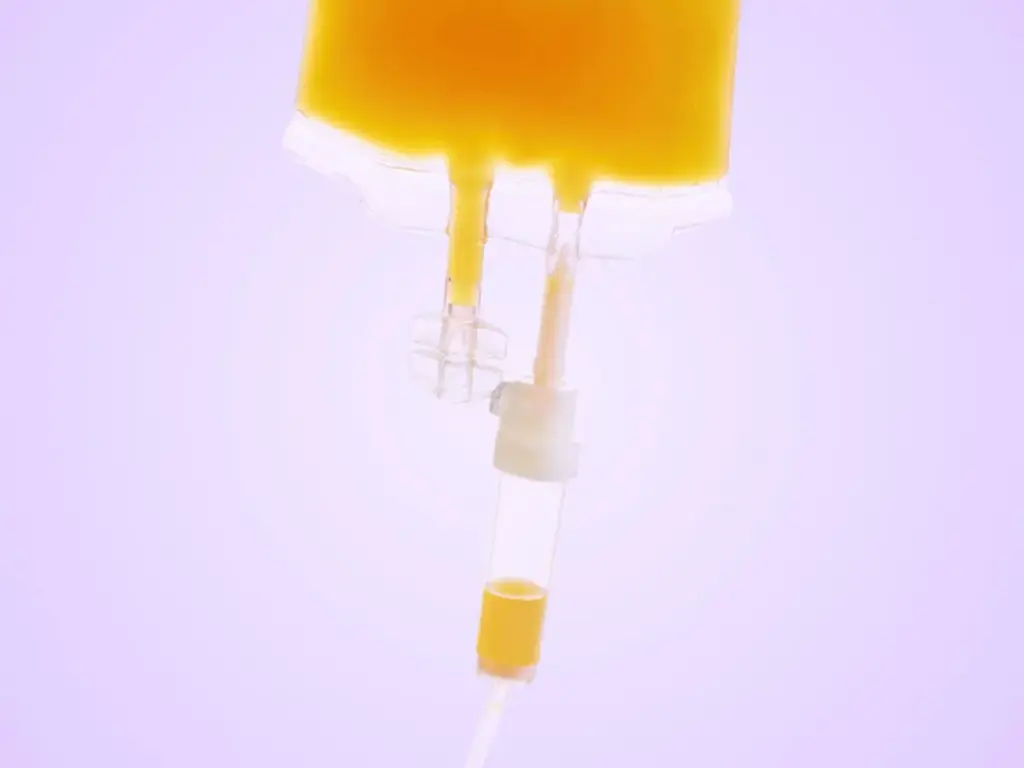
However, before individuals begin searching for commercial anti-aging plasma clinics, medical experts urge caution and a closer examination of what the research actually demonstrates. While the headline figures are striking, understanding the nuance behind the data is crucial. The study offers valuable insights into human biology and the aging process, but it also highlights the significant limitations and physiological hurdles that currently prevent plasma exchange from being used as a routine, accessible anti-aging elixir.
Why Longevity Experts Care About Plasma
To understand why researchers are focusing on blood plasma, it helps to look at what plasma actually is within the human body. Far more than just the background fluid that carries red and white blood cells through the cardiovascular system, plasma is a complex, dynamic biological soup. Although it is predominantly composed of water, it is also densely packed with vital proteins, metabolites, hormones, and inflammatory signaling molecules. According to Dr. Andrea Maier, a geriatrician and board member of the Academy for Health and Lifespan Research, these circulating components both reflect and actively influence the state of health across all of the body’s major organ systems.
Dr. Maier describes plasma using an everyday logistical analogy, comparing it to a delivery service like DHL. It acts as a primary transport vehicle moving crucial biochemical messages and materials from the brain to the muscles, from the kidneys to the lungs, and everywhere in between. Because it continuously gathers and distributes information from across the entire body, it functions as a fluid repository of physiological data.
This unique characteristic makes plasma a prime focal point for modern longevity studies. By analyzing the fluctuating levels of thousands of distinct circulating proteins found within a person’s plasma, scientists can construct a wide-angle snapshot of their overall internal state—a metric commonly referred to as "biological age."
Biological age represents the functional status of a person’s cells and tissues, which can diverge significantly from their chronological age, or the number of years they have been alive. An individual might have a chronological age of 40, but their underlying biological systems might function more like those of a 30-year-old—or, conversely, a 50-year-old. While it is not a fixed or absolute physical measurement, this concept provides a powerful lens for assessing health, notes Dr. Keenan Walker, a senior investigator at the National Institute on Aging.
Dr. Walker explains that while there is no single, universally agreed-upon way to measure biological age, researchers constantly work to estimate it. The overarching finding across numerous longevity studies is that individuals whose estimated biological age outpaces their chronological age face a substantially heightened risk of developing chronic medical conditions, severe diseases, and premature mortality.
The scientific exploration connecting plasma to the fundamental mechanics of aging is not entirely new; it builds upon foundational experiments that began approximately 15 years ago. During that time, researchers began investigating parabiosis, a surgical technique that physically connects the circulatory systems of two distinct organisms. In laboratory experiments, scientists linked the blood vessels of old mice with those of young mice. The core hypothesis was that introducing youthful plasma into an aged organism would allow the older body to experience rejuvenating benefits.
The results of those early animal studies aligned with the researchers’ hypotheses. Older mice that received a continuous supply of plasma from younger mice demonstrated a remarkably higher resilience to various forms of tissue and organ stress. These promising findings eventually paved the way for the clinical adaptation of plasma exchange to treat specific human medical conditions, including certain severe autoimmune diseases, complex neurological disorders, and specific types of blood cancers.
Dr. Maier notes that the entire modern wave of research essentially stems from a fundamental question: Is there something inherently present in our circulation that we can actively remove, or conversely, infuse into our bloodstreams, to help human beings live longer, healthier lives? Despite decades of inquiry, a definitive, universally applicable answer to that question remains elusive.
The Study Has Potential, But It’s Not a Panacea, Experts Say
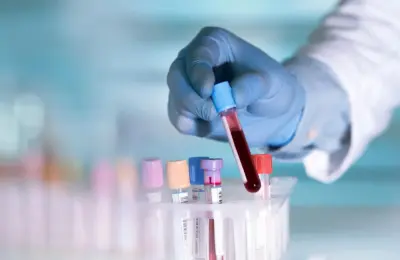
The recent Aging Cell study sought to explore these questions further in a human clinical setting. Researchers enrolled a total of 42 participants and performed therapeutic plasma exchange, systematically filtering out their natural plasma and replacing it with a solution composed of purified albumin—a major blood protein—along with saline. Additionally, a subset of the study participants received an infusion of intravenous immunoglobulin (IVIG), a specialized type of immune therapy. To track the physiological impact of the procedure, researchers utilized advanced laboratory assays designed to measure molecular-level changes associated with aging.
At first glance, the clinical outcomes appeared remarkably positive. Several individuals who underwent the procedure showed a reduction in their estimated biological age by roughly 2.5 years. However, Dr. Maier emphasizes that this notable data point was captured during the midpoint of the study, rather than at its final conclusion.
When examining the data more deeply, Dr. Maier points out that the measurement showing a biological age reduction of 2.5 years reflects a comparison between the participants’ status at the midterm evaluation and their original baseline measurements. By the time the study concluded, that rejuvenating effect had almost entirely dissipated.
According to Dr. Maier, a primary driver of this temporary shift is the profound stress that the procedure places on human physiology. Removing a person’s entire volume of plasma and reintroducing a different fluid composition places an immense burden on the body. While the initial influx of new components can temporarily alter biomarkers and shift biological age estimates downward, the body soon experiences significant physiological stress as it struggles to adapt to the drastic change. Consequently, the biomarkers inevitably swing back to their baseline levels. In short, while therapeutic plasma exchange may induce short-term rejuvenation, the effect appears to be transient.
Another critical factor highlighted by the study is the baseline health status of the participants. Dr. Walker notes that individuals who entered the study in poorer health actually exhibited a stronger response to the intervention. This observation underscores the importance of identifying precisely which patient populations might benefit from such procedures, rather than assuming a universal utility.
As conceptual models, both Dr. Maier and Dr. Walker recognize genuine promise in blood-based interventions as a pathway toward improving overall human healthspan. However, they emphasize the need for future research to pivot toward highly personalized, precision-based approaches rather than relying on generalized, non-specific plasma filtering methods.
Dr. Maier characterizes the current research as a preliminary phase 1 study. The primary takeaway, she explains, is that researchers have demonstrated that the procedure can be performed safely in a controlled setting. The next critical steps involve conducting much larger clinical trials to thoroughly evaluate long-term efficacy and safety.
While the underlying science is grounded in a substantial body of experimental evidence, experts agree it is not a universal solution suitable for everyone. Because the process is physically demanding and harsh on the human body, neither expert recommends implementing therapeutic plasma exchange in routine clinical practice for anti-aging purposes at this stage. Although innovation in the longevity field moves rapidly and the current study offers intriguing insights, experts believe that future breakthroughs will likely take different, more refined forms.