



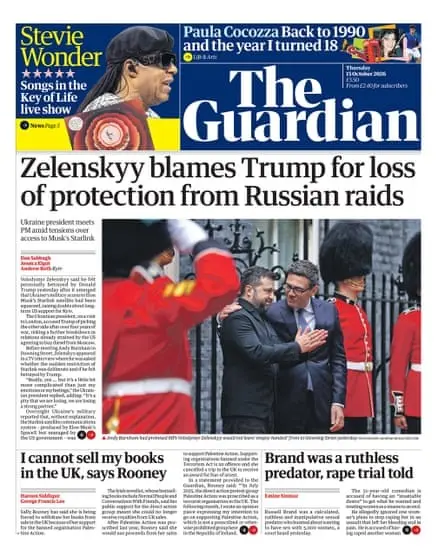
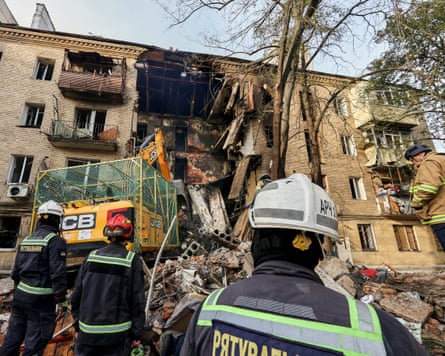
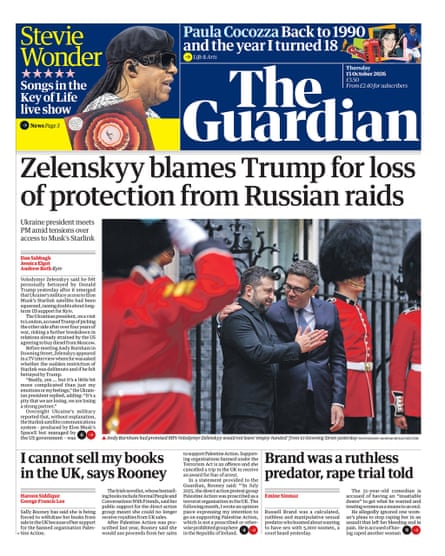
Good morning, and welcome to First Edition. In his characteristically unconventional approach to international relations, Donald Trump took to social media on Sunday to announce what he termed an “ENERGY CEASEFIRE in the War between Russia and Ukraine.” The announcement, made via Truth Social, apparently bypassed consultations with either belligerent nation. Ukrainian President Volodymyr Zelenskyy remarked that the proposal was entirely “news to me,” yet nonetheless declared that Kyiv was “ready and we will accept it.” The response from Moscow was swift and unambiguous: Russian forces intensified their bombardment, blowing up a series of Ukrainian power plants.
This discordant episode encapsulates much of diplomacy during Trump’s tenure, characterized by sudden announcements, abrupt U-turns, incoherent strategic positions, and an ongoing, highly scrutinized diplomatic dance with Vladimir Putin. Meanwhile, the grinding war of attrition continues unabated, leaving America’s traditional allies scrambling to manage the geopolitical fallout. British political leaders hosted Zelenskyy at Downing Street, using the platform to announce that the United Kingdom is doubling down on its military and financial support for Ukraine while pointedly calling on international partners to follow suit.

For ambassadors, intelligence officers, and career diplomats navigating this volatile landscape, the current environment has become the ultimate negotiator’s nightmare. To understand how diplomatic corps are handling the chaos and whether an authentic ceasefire or lasting peace deal remains within reach, we spoke with career diplomat and former ambassador Nigel Gould-Davies.
In depth: “A peace agreement is only possible when both sides believe that it better serves their interests”
Since Russia launched its full-scale invasion of Ukraine in early 2022, international efforts to secure either a temporary cessation of hostilities or a permanent peace settlement have repeatedly foundered. Endless rounds of formal and informal talks held across various international venues—from Belarus and Turkey to Abu Dhabi and Geneva—have proven largely futile.
To Nigel Gould-Davies, the underlying reasons for this diplomatic stalemate are clear. Drawing on his extensive background as a former British diplomat, former head of economics at the Foreign Office in Moscow, and former UK ambassador to Belarus, Gould-Davies now serves as the senior fellow for Russia and Eurasia at the International Institute for Strategic Studies.
According to Gould-Davies, established norms govern how professional negotiators approach military conflicts. Diplomats routinely analyze the specific interests, fundamental needs, and articulated red lines of each opposing party in pursuit of an elusive diplomatic “win set.”
“A peace agreement is only possible when both sides believe that it better serves their interests to end the fighting than to continue,” Gould-Davies explains. “You have to find that overlap in the Venn diagram that leads to a defined set of conditions which, despite involving painful compromises, is ultimately judged to better serve each side than continuing to fight. The problem with this situation is that Russia has no interest in ending the war.”
When viewed through this analytical framework, the flurry of diplomatic activity and public posturing surrounding Russia-Ukraine talks since Trump’s return to the presidency takes on a distinct character. Gould-Davies suggests that these interactions have rarely functioned as genuine negotiations. Instead, they have largely manifested as parallel, competitive efforts by both Moscow and Kyiv to persuade the White House that the opposing party is solely responsible for the failure to secure a peace agreement—and, by extension, frustrating Trump’s stated ambition of securing a Nobel Peace Prize.
Despite this strategic posturing, the respective red lines of the combatants remain stark and irreconcilable. Ukraine has repeatedly stated its willingness to accept an unconditional ceasefire. By contrast, Gould-Davies notes, Russia has publicly and consistently rejected a simple ceasefire, insisting instead on a total resolution to the conflict that achieves what Moscow defines as decisive superiority and dominance over a severely weakened Ukrainian state. It is an outcome that Kyiv fundamentally cannot, and will not, accept.
The “non-standard president” and transatlantic friction
This diplomatic deadlock presents an immediate headache for UK, European, and American diplomats, who convened most recently in Miami for high-level consultations. Compounding these structural challenges is the distinct, unpredictable influence of what Gould-Davies diplomatically terms a “non-standard president” in the White House.
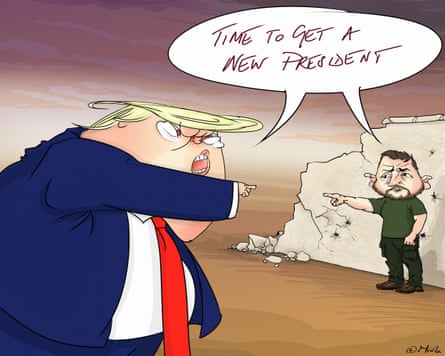
When Trump unilaterally proclaimed his energy ceasefire, Gould-Davies observes, the declaration had “no basis whatsoever in reality,” with neither Moscow nor Kyiv having been briefed in advance. “He simply made it up… a product of a fantasy,” he says.

Beyond erratic digital diplomacy, Trump’s core strategic instincts frequently diverge from the traditional security frameworks of Ukraine and longstanding US allies. Gould-Davies points out that Trump’s natural center of gravity appears to favor Russia, noting historical patterns of restricted US weapon supplies and temporary freezes in intelligence sharing. These underlying tensions spilled into public view when Zelenskyy accused the White House of restricting Ukrainian access to military-grade Starlink services, a move that Kyiv warns directly hampers ongoing drone strike missions and vital air defense operations.
While Trump has periodically adopted measures aligned with Ukrainian interests—such as sanctioning Russian oil companies and supporting strikes on Russian energy infrastructure—his overarching theory for concluding the conflict continues to rely heavily on concessions to Moscow coupled with diplomatic and logistical coercion directed at Kyiv.
The price of a deal and broader geopolitical maneuvers
After a period of relative quiet regarding the conflict, Trump’s attention returned sharply to the region amid domestic political pressures. With American voters grappling with soaring energy costs ahead of upcoming midterm elections, the administration floated plans to import Russian diesel in an effort to drive down retail fuel prices. The proposal immediately drew fierce pushback, not only from European leaders but also from a bipartisan coalition of US senators.
Legal concerns aside, policy analysts have questioned the viability of the initiative, noting that the quantities under discussion appear too small to materially impact global or domestic fuel prices, even if deliveries could reach American ports in time. However, within certain diplomatic circles, anxieties run deeper. Gould-Davies warns that the diesel proposal may be “only the visible tip of the iceberg,” masking a potential pivot by the White House toward a much more substantial pro-Russian alignment.
Gould-Davies suggests that the administration might be attempting to leverage ties with Moscow to pressure Iran into easing blockades in the Strait of Hormuz, thereby lowering oil prices before domestic voters head to the polls. In exchange, Putin’s quid pro quo could involve the relaxation of American economic sanctions against Russia alongside the total withdrawal of US support for Ukraine. While framed as a working hypothesis, Gould-Davies notes that connecting these geopolitical dots presents a logically coherent narrative of transactional diplomacy.
Navigating the back channels
Despite the overt turbulence, back-channel diplomacy persists through secret, closed-door meetings and off-the-record communications. However, Gould-Davies remains skeptical of their utility under current conditions.
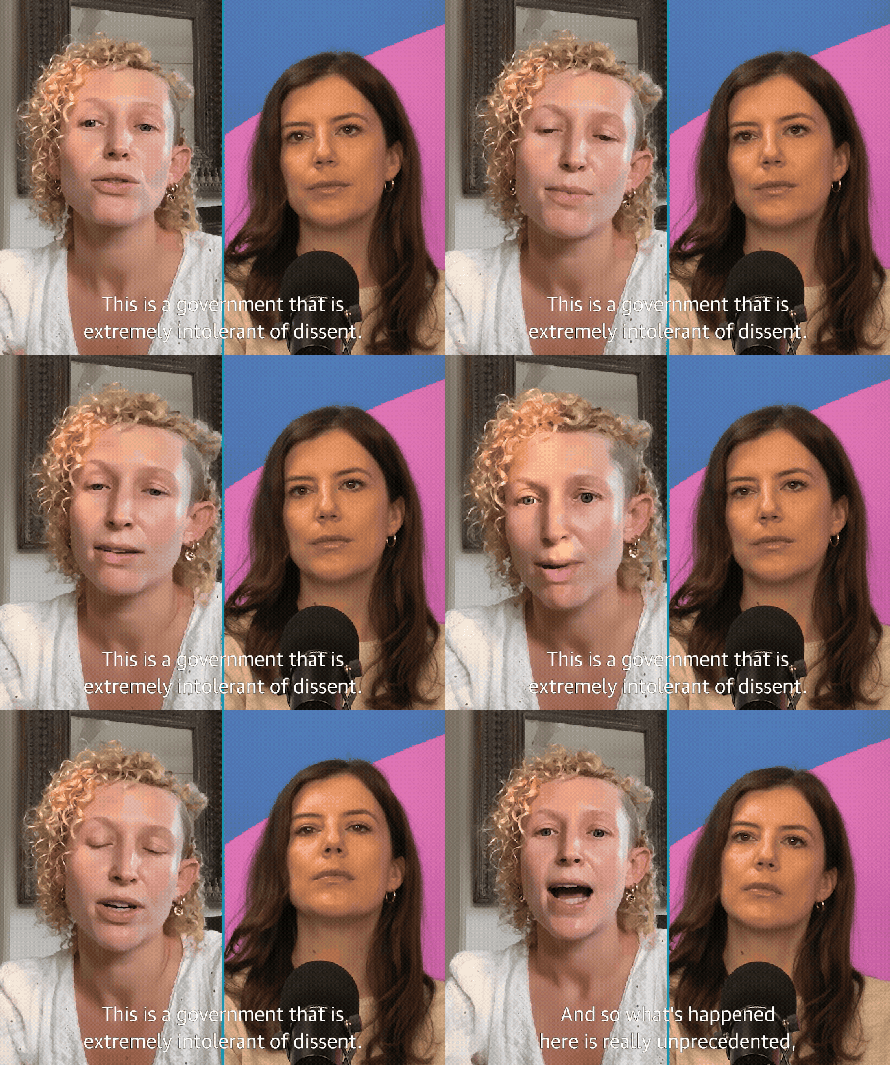
“There is a degree of collective delusion here,” he cautions, pointing to a persistent hope among some Western officials that Moscow can somehow be persuaded to alter its fundamental strategic trajectory, despite an absence of empirical evidence supporting such an outcome. He warns that these informal discussions may ultimately prove counterproductive by sustaining the illusion that a breakthrough is imminent.
Faced with a mercurial White House, European diplomacy has increasingly focused its efforts directly on Washington. Through a concerted, collective approach, European leaders and diplomats have repeatedly traveled to the US capital to intervene whenever administration policy threatens to veer off course. According to Gould-Davies, this persistent engagement has successfully averted the nightmare scenario of the United States permanently abandoning its transatlantic alliances.
Yet, managing relations within the US government remains complex. Gould-Davies describes the White House as an abstraction comprising numerous factions holding private views that often diverge sharply from those of the president. He highlights figures such as CIA Director John Ratcliffe, whose visits to Moscow reportedly included firm warnings against further Russian escalation into Europe—a markedly different tone from the public pronouncements emanating from the Oval Office.
Consequently, Western diplomats find themselves engaged in a modern form of Kremlinology, attempting to decipher the competing factions, shifting moods, and individual influences surrounding the president. As these diplomatic efforts continue, European and Ukrainian officials remain locked in a delicate struggle to shape the balance of power within Washington, navigating an unpredictable political landscape where the next influence on the president’s ear could dictate the course of the war.