
By Lauren Liebhaber
Published October 25, 2026
National parks have always served as fertile ground for storytelling. These expansive protected lands hold deep geological, cultural, and sacred histories stretching back thousands of years. Places of such magnitude and age naturally inspire and collect narratives that are passed down from generation to generation. Over time, old details are dropped and new ones are added until the story itself evolves into a sort of cultural tapestry. Fact and folklore blend together seamlessly until it becomes nearly impossible to tell where history ends and legend begins.
Furthermore, the national park system has no shortage of settings for the unexplained. These protected domains are full of dark caves, historic century-old buildings, abandoned settlements, remote battlefields, and vast, isolating stretches of wilderness. Spend a single night at the bottom of a deep canyon or inside a rustic, century-old hotel, and every unexplained footstep, flicker of light, or sudden movement in your periphery starts to feel a little more otherworldly.
It comes as little surprise that some of the enduring stories attached to these landscapes involve ghosts. What remains genuinely surprising, however, is where many of those chilling tales actually originated.
Yellowstone: The Headless Bride of Old Faithful Inn
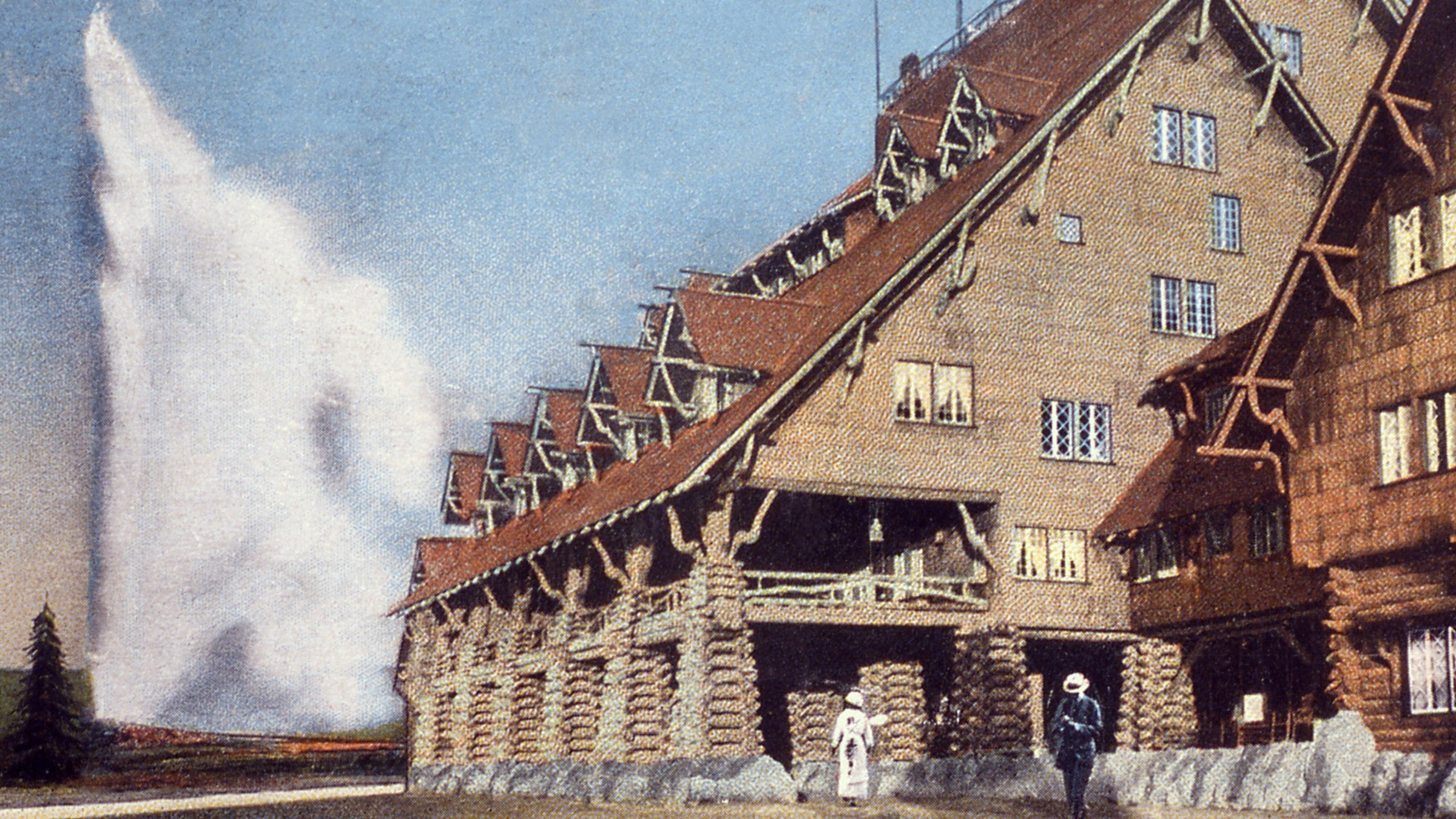
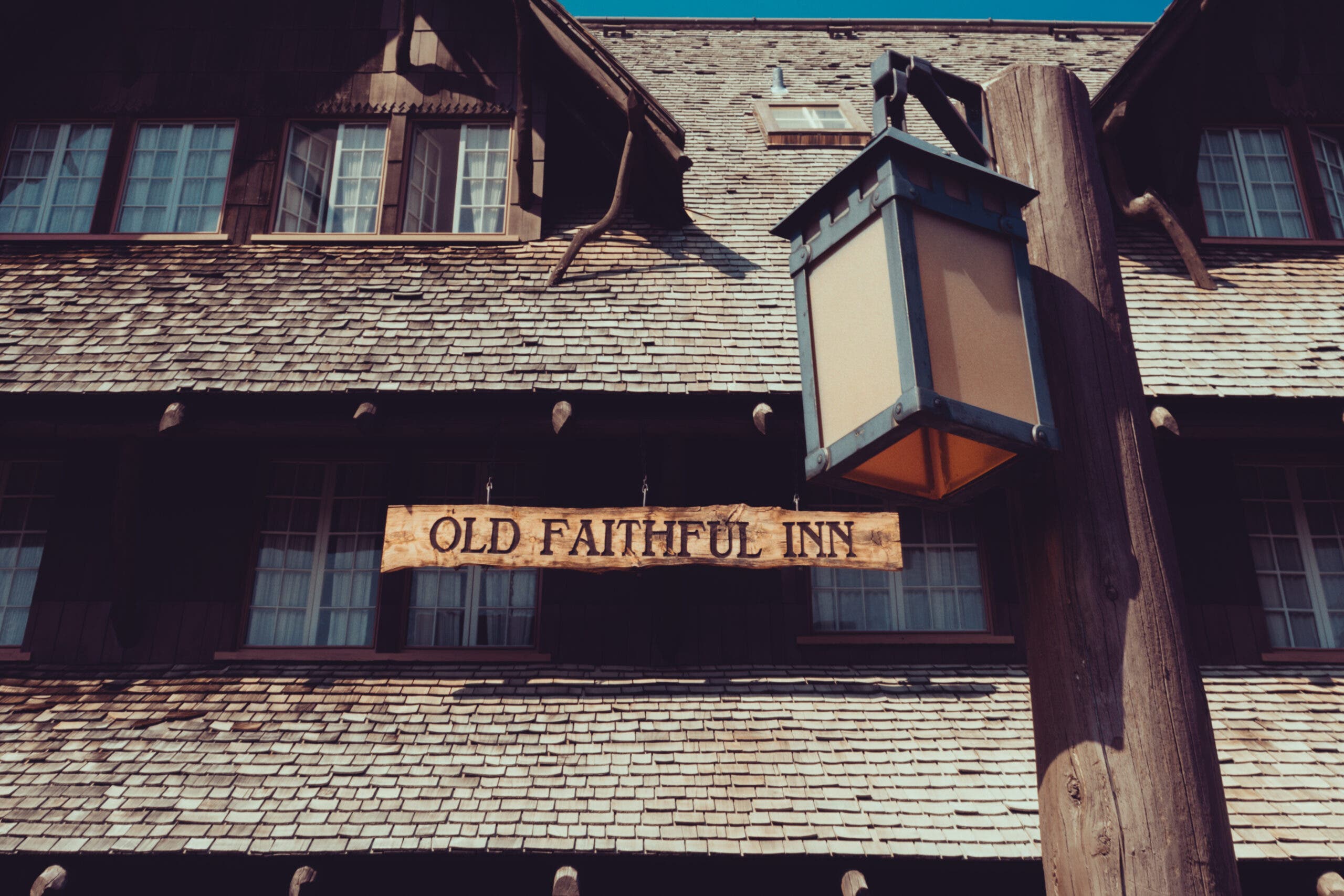
The Old Faithful Inn stands as a gabled, architectural monument to lodgepole pine within Yellowstone National Park. Opened in 1904, it was originally built for travelers who wanted to watch the famous Old Faithful geyser erupt by day and then retire somewhere comfortable yet suitably rustic by night. The historic structure possesses immense character, and according to local lore, it was also the site of Yellowstone’s most famous and gruesome murder.
According to one popular version of the legend, the year is 1915, and the rebellious teenage daughter of a wealthy New York shipping magnate has refused an arranged marriage. Having fallen in love with an older man who works in her family’s household as a servant, she resists her father’s wishes. Certain that the young man is merely after the family fortune, the father attempts to call their bluff by offering a generous compromise: take a substantial dowry, leave New York entirely, and never return.
The newlyweds accept the money and head west, eventually arriving at the Old Faithful Inn to spend their honeymoon. In some specific tellings of the tale, they lodge in Room 127. At first, domestic life seems peaceful. Soon, however, the husband begins drinking heavily and gambling, rapidly burning through the dowry until, roughly a month into their stay, they are completely broke. When the bride contacts her father to beg for financial assistance, he refuses.
One night, hotel staff reportedly overhear the couple engaged in a fierce argument. The husband storms out of the room and is never seen again. For a couple of days, hotel employees keep their distance out of respect or caution. Finally, a worried maid enters the room and discovers the young bride inside the bathroom, covered in blood.
Her head is entirely missing.
The legend maintains that staff searched the sprawling inn for days before someone finally looked up. There, perched high above the main lobby in the Crow’s Nest—the historic musicians’ loft where artists once played for evening dances—sat the bride’s missing head.
That is supposedly where she continues to appear to this day. Over the decades, guests and employees have described encountering a spectral woman in white drifting down from the Crow’s Nest, occasionally carrying her own severed head. In alternative versions of the myth, she walks the midnight corridors, retracing her steps all the way back to the room where she met her untimely end on her honeymoon.
It is a deeply gruesome story, and it is also entirely fabricated.
Yellowstone’s park staff have successfully traced one primary version of the legend to a former Old Faithful Inn bell captain named George Bornemann. A reporter had reportedly been pestering Bornemann repeatedly for the inn’s ghost stories. Bornemann insisted time and again that there were no ghosts, but the journalist proved relentless.
Eventually, Bornemann simply made one up on the spot. When the reporter asked what specific year the fictional murder had taken place, Bornemann allegedly told him to pick whatever year he liked best.
A second version of the confession exists as well. According to the concessionaire company that operates Yellowstone’s lodges, an assistant manager from the 1980s informed a local newspaper in 1991 that he had invented the entire narrative because guests perpetually expected a historic hotel to possess a resident ghost. Whether two different employees independently arrived at the same creative idea, or the storyteller’s identity simply shifted as the tale was retold over generations, remains unclear. Regardless, the fact that visitors still claim to encounter the ghastly apparition of a fictitious beheaded bride serves as a remarkable testament to the power of the human imagination.
Mammoth Cave: Tuberculosis and Melissa in the Darkness
Mammoth Cave hardly requires fictional ghosts to evoke a sense of unease, as its documented historical record is haunting enough on its own.
In the autumn of 1842, a Kentucky physician named John Croghan, who had acquired Mammoth Cave a few years prior, began to wonder if the subterranean environment might hold a cure for tuberculosis. The cave environment remained naturally cool, the air felt pristine, and the local miners who spent extended stretches underground appeared to be in remarkably good health. During an era when tuberculosis was decimating populations and mainstream medicine offered virtually no effective treatments, Croghan hypothesized that living deep inside Mammoth Cave might provide damaged lungs an opportunity to heal.
To test this bold theory, he moved 16 tuberculosis patients directly underground.
Roughly a mile and a half into the winding cave system, Croghan established a subterranean settlement featuring wooden cottages and stone buildings. The patients spent their days entirely beneath the surface, existing solely by the illumination of lamps and candles. One resident noted in writing that he scarcely ever heard daylight mentioned, nor did he even think of it.
They had been promised that the cave might save their lives. Tragically, it did not.
Fires maintained for warmth and cooking quickly filled the stagnant subterranean air with thick smoke, causing the patients’ conditions to deteriorate rapidly. Alfred, an enslaved man who worked as a prominent cave guide, later recalled that the residents eventually resembled a company of skeletons, their pupils so abnormally dilated by the absolute darkness that their eyes appeared entirely black. Several patients died underground. Within a matter of months, Croghan abandoned his radical medical experiment.
The original stone structures remain standing today, and according to generations of subsequent visitors, the phantom sound of coughing remains as well. People have repeatedly reported hearing distinct coughs near the old tuberculosis settlement when the area is entirely vacant. It is a legend easily understood by the human psyche, given that real people genuinely suffered, coughed, and died in that exact portion of the cave.
However, another of Mammoth Cave’s famous spirits possesses a much stranger, purely literary origin. Her name is Melissa.
According to the traditional tale, Melissa was hopelessly in love with her tutor. Unfortunately for her, the tutor’s affections lay elsewhere. Devised out of unrequited heartbreak, she hatched a calculated plan. She invited him on an excursion to explore Mammoth Cave. They traveled deep underground, with Melissa carrying the sole source of light. Passage after subterranean passage carried them farther from the safety of the entrance until, once she was certain he could never find his way out alone, Melissa abandoned him in the pitch black.

He never surfaced again.
Some versions of the narrative suggest that overwhelming guilt eventually compelled Melissa to return to the cave to search for her victim, only to perish there herself. Her ghost is said to wander near the subterranean Echo River, wailing endlessly as she searches for the man she left behind to die.
It is a classic, deeply gothic tale of unrequited love. Yet Melissa was never a real murderer; she was simply a character in a nineteenth-century short story.
In February 1858, The Knickerbocker magazine published a piece titled "A Tragedy of the Mammoth Cave." The story was later attributed to writer Lillie Devereux Blake, who had previously visited Mammoth Cave alongside her husband. In the original fiction, Melissa confesses that 15 years prior, she deliberately abandoned the man she loved deep within the cave system. The narrative concludes with a dying Melissa announcing her intention to return to the cave to await her own demise.
Subsequent retellings took the narrative and ran with it, transforming a fictional confession into an urban legend of a wandering spirit. Readers and storytellers even embellished her biography, claiming she died of tuberculosis and thereby blending historical context with pure fiction. According to the modern legend, her ghost continues to roam the dark passages in search of her victim.
American Samoa: The Dance at Toʻaga
The legends found in the National Park of American Samoa transcend typical Western campfire ghost stories.
Within traditional Samoan culture, aitu are powerful spirit beings that do not neatly fit into Western frameworks of a conventional "ghost." According to the National Park Service, belief in aitu remains deeply rooted and profoundly respected in Samoa, where personal accounts of encounters with these entities are still openly shared among residents.
For generations, the coastal area of Toʻaga has been closely associated with them. Toʻaga is a picturesque stretch of beach situated on the island of Ofu, falling entirely within the boundaries of the national park. Archaeological evidence confirms that human populations have inhabited the area for thousands of years. Today, however, no permanent residents live at Toʻaga.

When National Park Service planners initially began studying the landscape prior to the park’s formal establishment, local residents on Ofu offered explicit, urgent warnings: Do not walk Toʻaga Beach at noon, and do not walk it after dark, as it serves as a primary gathering place for aitu.
Park researchers later discovered that these exact warnings had been documented decades earlier in an unexpected historical archive—a government public health report.
In 1950, the Public Health Department of the Government of American Samoa recorded a series of disturbing accounts surrounding a medical dispensary constructed at Toʻaga in 1923. Officials had chosen the site because its location proved convenient for residents living on Ofu and neighboring Olosega.
Island residents strongly objected to the construction, warning authorities that Toʻaga was a well-known, active meeting place for aitu. The government proceeded to build the facility anyway.
Around 1924, according to official records, a Navy medical worker stationed at the dispensary began hearing persistent knocking at the front door. Whenever he opened it, no one stood outside. The nocturnal knocking continued night after night. Eventually, one evening, he opened the door to find the apparition of a headless man waiting silently on the threshold, as documented by the National Park Service.
The strange encounters persisted. While the pharmacist’s mate was away on a professional call, his wife reportedly heard invisible visitors stomping heavily through the interior of the house and physically moving furniture in broad daylight.
Then came the account that ultimately cemented the location’s eerie reputation among locals. One night, the worker, his wife, and several others were traveling by longboat toward Toʻaga. Two nurses who had accompanied them earlier had stayed behind, planning to make the water journey later.
As their boat approached the shore, the occupants witnessed a crowd of people gathered on the sand. A traditional siva, or Samoan dance, was underway, but something was profoundly wrong with the participants.

The dancers were entirely headless.
Among the figures on the beach, the official report notes, were the two nurses the group had left behind just hours prior.
The government report did not present the incident as undeniable fact, explicitly noting that the veracity of the accounts had been disputed at the time. Yet that detail is largely immaterial, because the profound cultural belief in aitu at Toʻaga predated the dispensary by generations.
The 1950 report documented that islanders already viewed the region as a gathering place for spirits long before colonial structures were imposed upon the land. Local residents initially refused to utilize the facility altogether, and the dispensary was eventually dismantled and relocated to Ofu village.
Only the concrete foundations remain at Toʻaga today. Decades later, when National Park Service researchers arrived to survey the park, local residents on Ofu still issued the precise warning recorded in the archival report: Do not go there at noon, and do not go there after dark.
Grand Canyon: The Phantom at the Bottom
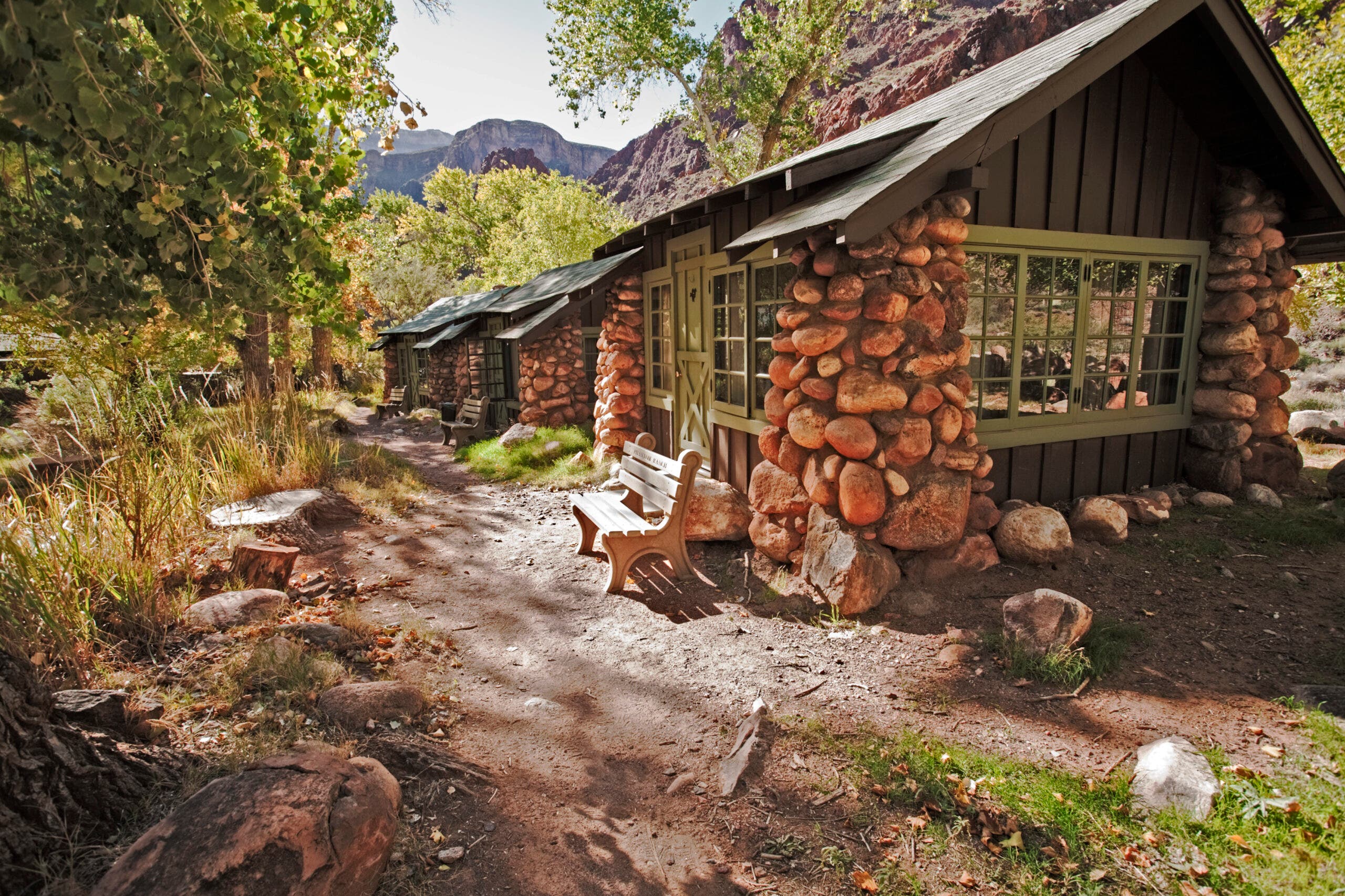
Constructed in 1922, Phantom Ranch sits nearly a mile below the rim of the Grand Canyon, nestled among towering cottonwood trees beside Bright Angel Creek. Because the destination cannot be accessed via standard automobiles, visitors must hike down steep trails, ride pack mules, or arrive via rafts navigating the Colorado River.
Phantom Ranch hosts a variety of local ghost stories, but one of the most unsettling originates from the historic bunkhouse utilized by the ranch’s mule wranglers. The National Park Service has documented oral histories passed down among ranch employees concerning a wrangler who walked into the bunkhouse one afternoon and observed a former mule packer standing inside.
The sighting would have been entirely ordinary, except for the realization that the man she saw had died of natural causes in that exact location years prior—and that she was currently sleeping in the same bed where he had drawn his final breath.
Hikers and campers traversing the canyon floor have similarly described encountering shadowy figures walking past them on the trails, occasionally dressed in period attire that belongs to a bygone era, such as men wearing formal suits or women in ankle-length skirts. Other mysterious figures appear strikingly ordinary, approaching travelers to ask for water before vanishing into thin air. Numerous visitors also report hearing the heavy crunch of boots crossing the gravel outside their tents at night, only to find no one standing outside when they investigate.
Even the name Phantom Ranch sounds almost suspiciously tailored for ghost stories. However, the location was not named in honor of any supernatural sightings. Architect Mary Colter chose the moniker in the early 1920s, borrowing the word "Phantom" from nearby Phantom Creek and Phantom Canyon.
The origin of the phantoms inhabiting those canyons, however, remains a more elusive subject.
One recurring narrative points toward a prospector named John Shane. Early Phantom Ranch caretaker Noah Kelly claimed that Shane had been killed years earlier near the mouth of a side canyon upstream when a massive rock detached and crushed him from above. Following the tragedy, prospectors and hunters purportedly began witnessing a strange, moving light along the cliffside near the site of his death. Kelly asserted that he had witnessed the phenomenon firsthand. During severe storms, he described seeing a light resembling someone carrying a lantern materialize on the cliff face, moving purposefully from ledge to ledge before disappearing and reappearing elsewhere.
Historical records confirm that the ghost stories circulated almost immediately after the ranch opened. When a visitor named Ralph Pierson stayed at Phantom Ranch in 1926, he recorded in his journal that he and fellow guests spent the evening playing cards while hoping the local phantom would materialize, noting that numerous people claimed to have seen a whitish shape moving through the high canyon recesses.
The following year, a correspondent for the Kansas City Star arrived and encountered essentially identical lore, being told that the phantom manifested at night along the mountain as a white, veiled, human-like figure. The writer soon realized, somewhat ironically, that his cabin sat directly beneath the very cliff where the apparition supposedly appeared.
Over the ensuing century, these tales expanded to encompass the deceased mule packer in the bunkhouse, period-specific travelers, thirsty hikers, and unexplained footsteps. Unlike several other legends grafted onto national parks decades after the fact, visitors actively sought out the phantom in the 1920s, virtually concurrent with the ranch’s establishment. Whether those early witnesses truly saw something unexplainable along the canyon walls remains an open question, but travelers have been searching the cliffs ever since.
Yosemite: The Haunted Ahwahnee
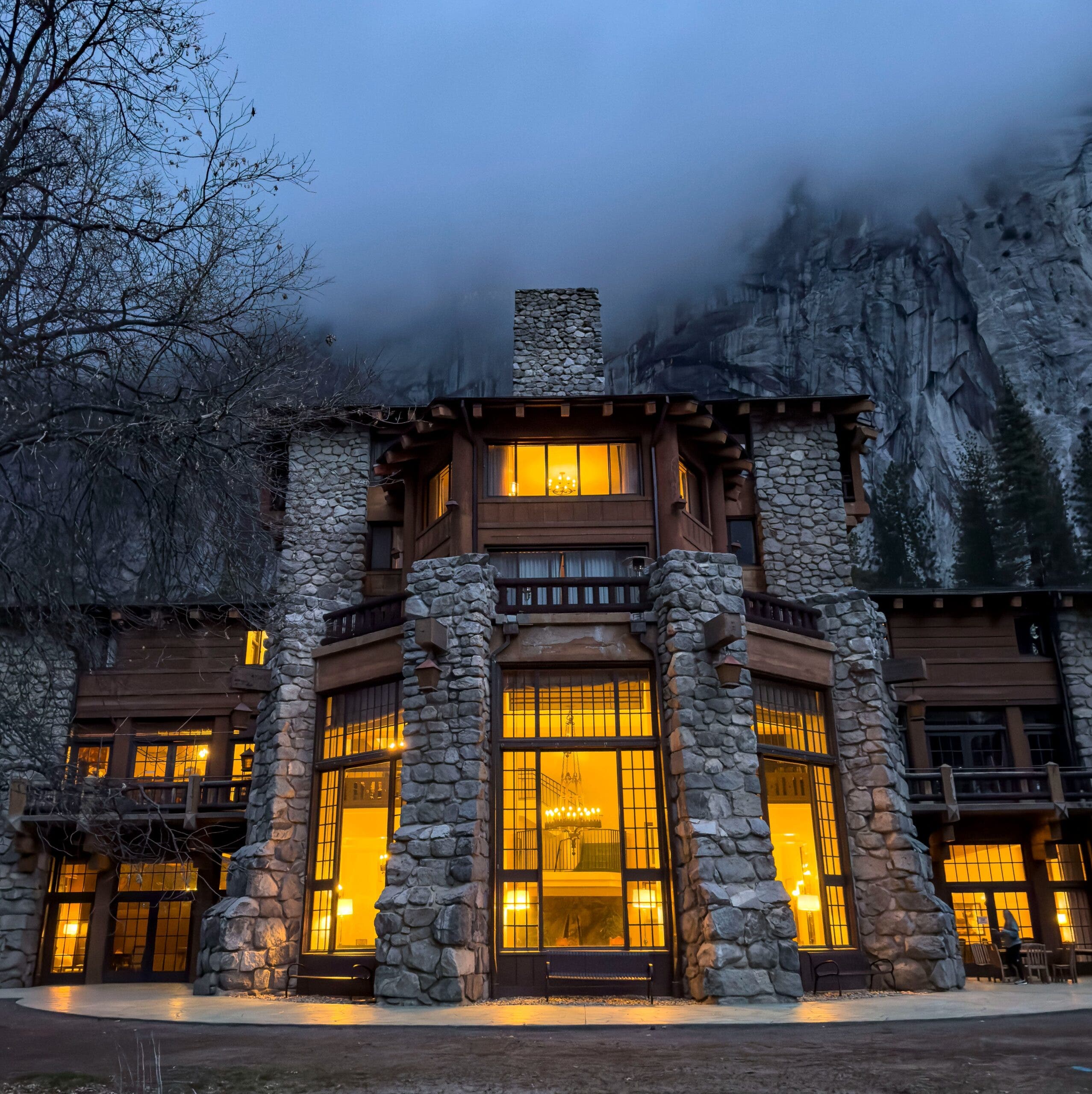
If any hotel within the national park system visually embodies the aesthetic of a classic ghost story, it is the Ahwahnee.

Opened in Yosemite Valley in 1927, the grand hotel features massive stone fireplaces, dark exposed timber, towering windows, and cavernous public rooms. Over nearly a century of continuous operation, it has hosted U.S. presidents, international royalty, and Hollywood celebrities. According to generations of guests and staff members, however, not every visitor who checks into the Ahwahnee eventually checks out.
One of the hotel’s most prominent resident spirits is Mary Curry Tresidder.
Mary was the daughter of David and Jennie Curry, who founded Camp Curry in Yosemite Valley in 1899. Having grown up in the park, she later married Donald Tresidder and ultimately helped manage the Yosemite Park and Curry Company, which operated the Ahwahnee and various other hospitality facilities across the park. Donald played an integral role in developing the hotel, and in 1928, the couple moved into a private apartment situated on the Ahwahnee’s sixth floor.
When Donald passed away in 1948, Mary chose to remain. She directed the company for years and sustained a profound personal connection to Yosemite for the remainder of her life. Even following her retirement, she retained her sixth-floor Ahwahnee apartment.
In 1970, Mary went to sleep in that very room and never woke up. True to the hotel’s enduring folklore, she seemingly never entirely left.
Guests and employees have frequently reported sensing Mary’s presence throughout the building, particularly on the sixth floor. In one variation of the local legend, guests wake up to the sensation of someone gently tucking their blankets tightly around them. In another version, Mary rouses sleeping occupants because she simply wants to dance.
She is not the Ahwahnee’s sole reported spirit. Visitors and employees alike have documented hearing footsteps echoing through empty hallways and noting unexplained presences throughout the sprawling structure—phenomena that the National Park Service itself characterizes as encounters with "friendly spirits." Such a categorization feels fitting, as a spectral presence that tucks guests into bed and wishes to dance is far from malicious.
Then there is the matter of the rocking chair. Following a presidential stay, lore naturally follows. President John F. Kennedy visited Yosemite in 1962 and resided at the Ahwahnee. According to park traditions, Kennedy specifically requested a rocking chair for his accommodations. Following his assassination the subsequent year, rumors began to circulate that the chair occasionally rocked entirely on its own accord.
Unlike Yellowstone’s headless bride, no single staff member has ever stepped forward to admit inventing the Ahwahnee ghost stories, nor is there a single documented inception point for the tales. However, the historical bedrock beneath the legends remains completely factual.
Mary genuinely grew up in Yosemite, genuinely helped manage the corporation behind the Ahwahnee, maintained a sixth-floor apartment there for decades, and passed away within its walls in 1970. In the years following her death, reports steadily accumulated. Guests felt unseen presences, employees heard phantom footsteps, and sleepers awoke to perfectly tucked bedsheets.
The woman who dedicated the entirety of her life to the preservation and operation of the hotel ultimately became an immutable part of its enduring folklore. Perhaps that is precisely how a historic hotel acquires a true ghost: someone must love a place deeply enough to desire spending not only a lifetime there, but an afterlife as well.
If the Ahwahnee already appeared to be the quintessential setting for a ghost story, Hollywood filmmakers evidently concurred. When director Stanley Kubrick produced The Shining, interior elements of the Ahwahnee were directly recreated for the fictional Overlook Hotel, most notably its cavernous Great Lounge and elevator banks.
It is a fitting legacy that a national park hotel harboring its own collection of quiet spirits helped inspire one of the most famous haunted properties in cinematic history.