



Gear makers will gladly sell you a hundred different add-ons to improve your sound system. To this day, it remains entirely possible to buy gold-plated audio cables, even though such high-end wires cannot realistically improve digital audio signals. When dealing with digital data, you are either getting a clean data signal or you are not, making exotic cabling largely superfluous. However, on the much shorter list of products to take genuinely seriously is an audio amplifier. Whether you are currently building a dedicated home theater or designing your own private music sanctuary, amplifiers have maintained a central role in audio engineering for decades, and there is a clear engineering reason why your local boutique audio store has been stocking them for generations.
Despite their established reputation, consumers should not automatically pick up a standalone amplifier alongside every new set of speakers. It is critical to understand precisely what an amplifier does, how much it can realistically improve sound quality in the real world, and whether you actually need to purchase a separate unit at all. If you happen to be a newcomer to serious audio equipment, you might be surprised to learn that you probably already own several amplifiers in your home, hiding in plain sight within everyday electronics. This ubiquity speaks volumes about the underlying importance of the technology, yet it also highlights widespread misunderstandings about when external hardware is truly required.
Navigating the audio market also means tackling some fundamental misconceptions along the way. These misunderstandings include not only the absolute necessity of standalone amplifiers, but also enduring industry notions like the inherent superiority of tube amplifiers over modern solid-state models. Buyers should resist the temptation to spend hundreds or thousands of dollars on equipment simply because it features a visually striking chassis that looks impressive on a shelf. Presumably, your primary goal when assembling an audio system is high-quality sound reproduction, rather than simply showing off expensive gear to your friends. Often, there are far more cost-effective ways to upgrade your listening environment without splurging on redundant hardware.
How Amplifiers Can Improve Your Sound System
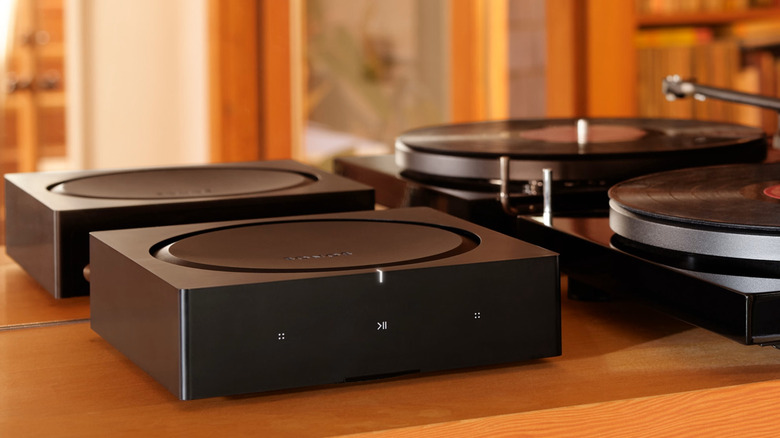
To understand the core function of an amplifier, it helps to look at how sound signals originate. On their own, most raw audio signals are not nearly strong enough to be heard clearly through traditional speakers. For a clear demonstration of this physical limitation, all you need to do is examine a turntable with its primary speakers disabled or disconnected. If you listen closely near the cartridge, you will hear what audio engineers call "needle talk"—the microscopic physical vibration of the stylus running along the grooves of a vinyl record. This acoustic output is exceptionally quiet, and it may not even be immediately distinguishable as music. For you to hear anything meaningful, all traditional sound systems require an amplifier to increase the voltage and strength of an audio signal before it reaches the output stage. When selecting components, it is crucial to properly match an amplifier to the power handling and impedance specifications of your speakers, which are measured in watts and ohms, respectively.
Amplifiers accomplish far more than merely increasing the overall playback volume of a track. Any quality amplifier will also allow the listener to adjust the gain, which controls the precise amount of signal boost applied to the audio stream, and shape the sound profile to personal preferences via an integrated equalizer or tone controls. A listener might tweak specific frequency bands to achieve a heavier bass response or bring out clearer, more forward vocals, for example. Getting these gain and equalization settings properly calibrated is important not only for achieving a pleasing tonal balance, but also for preventing dangerous audio clipping, harmonic distortion, or even physical damage to sensitive speaker components over time.
It is also helpful to distinguish clearly between standard amplifiers and preamplifiers. Preamplifiers serve the foundational purpose of raising weak signals up to standard line level to ensure correct gain staging throughout the entire sound system. However, a preamp alone cannot power passive speakers; you still require a power amplifier to drive the physical speaker drivers. To streamline this process, many modern consumer units combine both preamplifier and amplifier functions into a single integrated chassis, effectively streamlining the overall audio chain.
This brings us to the central question of whether the average consumer actually needs to purchase an external amplifier at all. The reality is that in many common scenarios, you simply do not. Many, if not most, consumer-grade speakers available today are active models, meaning they already feature built-in, integrated amplifiers, as evidenced by their need for individual power cords plugged directly into a wall outlet. Only traditional passive speakers strictly require external power sources, and even then, you may not need a dedicated standalone unit. Audio receivers frequently incorporate both amplifier and preamp functions into a single box, serving as a convenient, all-in-one hub for home entertainment. Exceptionally power-hungry systems, however, may demand an external amplifier on top of that base hardware. For instance, elaborate Dolby Atmos configurations that exceed the internal channel count your receiver can power simultaneously will invariably require additional external amplification to drive overhead and surround speakers properly.
When evaluating amplifier technologies, most everyday listeners should probably opt for a solid-state amplifier rather than a vintage tube-based model. While tube amplifiers famously provide a distinctive, warm harmonic distortion profile and possess a visually slick aesthetic—particularly appealing to enthusiasts of retro-futuristic design themes—they typically deliver modest power outputs of 50 watts or less per channel. This makes traditional tube models largely unsuited to multi-channel surround-sound configurations unless a buyer is willing to invest heavily in multiple units. Vacuum tubes also require significantly more ongoing maintenance, notably the routine task of swapping out worn components as they degrade over time. Attempting to run a modern, high-channel home theater entirely on tube amplification would prove to be an expensive and largely impractical exercise.
More Cost-Effective Sound Improvements
In many cases where a listener feels dissatisfied with their audio setup, the limiting factor is not the amplification stage at all, but rather the quality of the speakers themselves. If you are currently relying on a basic stereo soundbar or a modest pair of entry-level bookshelf speakers, making the jump to a high-powered, all-in-one Dolby Atmos soundbar can make a world of difference in spatial immersion and dialogue clarity. If you already own a competent multi-channel system, the next logical step might involve adding dedicated rear and side surround channels to achieve enhanced sound separation and spatial imaging. While installing overhead ceiling channels represents something of an endgame milestone for dedicated audiophiles, those physical channels can frequently turn out to be more trouble than they are worth, given the labor-intensive requirements of mounting speakers and routing wires through walls and ceilings.
Fortunately, a wide variety of meaningful acoustic improvements can be achieved at a fraction of the cost of new hardware. Unwanted mechanical rattling and structural vibrations can often be effectively resolved with simple add-ons like isolation pads, damping mats, or sturdy speaker stands. Listeners can significantly reduce unwanted room reverb and flutter echoes by installing affordable acoustic treatment panels, and muddy bass responses can frequently be corrected simply by physically repositioning speakers farther away from boundary walls. Furthermore, if you happen to own modern smart speakers or home theater receivers equipped with automatic room calibration software, you should make a habit of running that calibration process whenever you make significant layout or furniture alterations in your listening space.
As established, standalone amplifiers certainly hold a vital, time-tested place in advanced audio engineering. The key takeaway is that if you already utilize active speakers or a robust multi-channel receiver, dedicated amplifiers are likely redundant until you reach the upper echelons of high-end home entertainment. In other words, unless you are building out a complex, multi-zone Dolby Atmos home theater or setting aside an entire room dedicated to serious, critical listening sessions, you can comfortably keep your wallet tucked away and focus your attention on speaker placement, room acoustics, and source material.