It is dinnertime at Allie Teilz’s home, and the soundtrack of the evening is already echoing through the rooms. Perhaps it is a sweeping film score courtesy of Italian classicist Ennio Morricone, or maybe some warm Italian disco gradually easing in behind it. One of her three-year-old twins is already moving to the rhythm, entirely absorbed in the sound. By house rule, the smartphones go directly into a ceramic cow stationed on the counter for the remainder of the evening, a boundary that her nearly eight-year-old child respects and oversees. The living space features a projector, a traditional record player, and a towering wall of vintage VHS tapes with classics like Yellow Submarine and The Land Before Time in heavy rotation. Teilz half-jokingly refers to her domestic setup as a "90s-electronics household."

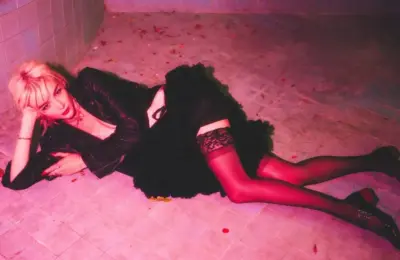
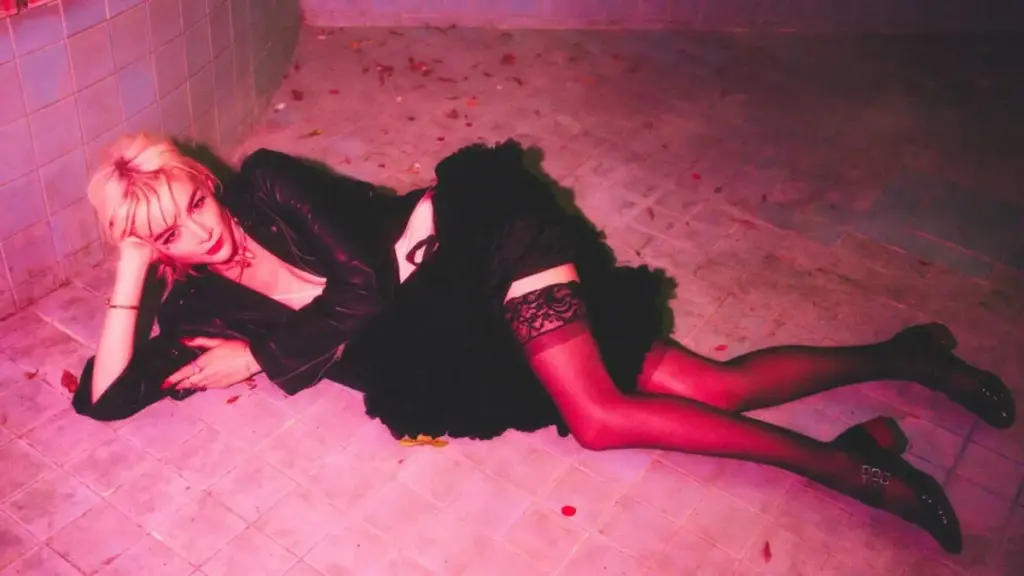
To those familiar with her background, Teilz is undeniably cool. A vinyl DJ and producer who cut her teeth in the vibrant and demanding nightlife of Los Angeles, she spent formative years sharing DJ booths with iconic figures like Grace Jones and Daft Punk. Today, rather than spinning exclusively in late-night clubs, she spends her time scouring thrift stores and estate sales for retro physical media, balancing her identity while proudly describing herself as "a mother first and an artist second." As a mother of four, she has mastered the complex art of weaving these distinct versions of herself into a singular, authentic existence.

Conversing with Teilz reveals a perspective that challenges conventional societal narratives surrounding motherhood. During a recent hour-long interview, the discussion touched upon the meticulous and artistic childhood she is actively constructing for her children—an environment steeped in tactile art, rich music, and genuine curiosity. Her debut studio album, Come to Mommy, which is out now, serves as the sonic manifestation of her journey to reclaim her internal artist after welcoming her children into the world.

The album is atmospheric, irresistibly danceable, and laced with an electronic aesthetic that feels simultaneously nostalgic and futuristic. The very title flips the traditional, patriarchal phrase "come to daddy" on its head. While modern culture routinely interrogates what fathers want or expect, Teilz boldly asks what mothers want, answering without hesitation: "Mommy wants joy. She wants to have fun and dance. She wants pleasure and joy."

We can let motherhood deepen the art
Rather than treating her children as obstacles or interruptions around which she must carefully carve out time to make art, Teilz views them as the very catalyst that deepened her creative well. Becoming a mother, she explains, made her life and perspective "bigger, not smaller." Motherhood taught her a profound lesson about time and focus: that some of the deepest creativity can emerge when time is scarce and an artist knows precisely what matters most.

There is a distinct element of surrender involved in stepping into parenthood, a process where a soul willingly hands itself over to guide another human being through life. For Teilz, this transformative experience cracked her creative work wide open rather than closing it down. It liberated her in the creation process and provided a deeper reservoir of emotional and experiential depth to draw from. In fact, she has come to view motherhood as the highest form of art she has ever experienced.

This profound shift naturally altered the type of work she wants to put out into the world. Looking at her creative output through the eyes of her children, she holds her projects to a single, unwavering north star: What does she want to see more of in the world? Her answer certainly does not include the soulless, machine-driven work she has watched creep into mainstream culture, which she characterizes as "AI art and lobotomy chic." Instead, she wants her children to experience the unbridled freedom she felt when she first heard Talking Heads, granting them the internal permission to flail around in an imaginary version of David Byrne’s giant suit and linger in that beautiful state of play. Her album Come to Mommy is her direct attempt to inject that liberating feeling back into the world, an endeavor for which she credits her children as her greatest teachers.

We don’t have to choose a singular version of ourselves
Most women are intimately familiar with the identity shift that occurs the moment they become mothers. The sense of self often contracts to make room for everyone else’s needs. For a period, Teilz felt that familiar pull, sliding perilously close to the kind of motherhood she had watched other women vanish into—the local mom groups where women endlessly give and give without ever factoring their own needs into the equation, the abandoned careers that are never picked back up, and the unsettling inability to truthfully answer the foundational question, "Who am I?"

Teilz openly calls out the insidious cultural culprits that reinforce this self-erasure, pointing to classic children’s literature like The Giving Tree and The Rainbow Fish. These stories, she argues, often sell self-erasure as the ultimate form of generosity, pushing the narrative that if a woman makes herself a stump, she will be loved, and if she gives away all her sparkles, she will be accepted. Observing that dynamic, she notes how dangerous those underlying cultural messages truly are.

For a long stretch, her own priorities became submerged beneath the endless demands of daily life. What ultimately pulled her back to herself was deceptively simple: boundaries. She adopted a low-tech flip phone for the hours when she refuses to be digitally reachable. Referencing a popular sentiment she encountered online—"have boundaries or get an autoimmune disorder"—she emphasizes that the physical toll on her health was what finally forced her to put her foot down. Her children, she realized, do not need a mother who disappears entirely into any role, even motherhood itself.

We get to decide what their childhood feels like
Teilz constructs her children’s childhood the way she curates a vinyl record: out of specific, deliberate, and slightly magical details. When one of her daughters earned a school leadership award and was granted the privilege of choosing how to celebrate, she did not ask for an extravagant trip. Instead, she requested to make "ice cream mountains" with scoops stacked high into a castle on parchment paper, lovingly modeled after the local ice cream shop Teilz adored when she was a little girl. It was an exercise in being wonderfully, intentionally ridiculous for the sake of creating a joyful memory.

The moments Teilz remembers most fondly from her own upbringing are not grand vacations or luxury cruises; they are simple, grounded experiences, like growing up in a modest one-bedroom apartment and having her mother allow her siblings and her to pick out a favorite ice cream flavor right before the start of the school year. Now, she is intentionally crafting that same impactful brand of nostalgia for her own family.

That daily intentionality is balanced with a healthy dose of everyday wonder. Her children are regularly sent out to the family garden to pull fresh parsley or pluck a ripe tomato, ensuring their hands are actively involved in the preparation of their evening meals. For years, she has taught them how to cultivate life from a tiny seed to full fruition, believing that watching a baby artichoke push up through the soil from a seed they watered themselves is the kind of small, grounding miracle she wants them to deeply appreciate.

Literature plays an equally vital role in their household. Teilz frequently recalls a memory from long before she had children, when she watched a woman reading quietly beside her small daughter on a bustling, rumbling subway car. That peaceful image of shared literacy stuck with her for years. Today, one of her proudest milestones as a mother is watching her own daughter climb onto the living room couch and get completely lost in the pages of Harry Potter. Her advice to fellow mothers is simple and steadfast: stay curious about the world, keep reading, and remain genuinely interested in the things that matter to you.

None of this delicate balance was achieved without enduring profound hardship. Come to Mommy was written through a brutal, testing stretch of life that included a traumatic childbirth experience which nearly cost both Teilz and one of her newborn sons their lives. The album stands, in part, as a musical record of her finding her way back from the brink. The final track on the record, "Back From the Dead," was written specifically for the twin son she almost lost. It serves as her personal way of communicating to all of her children that human beings can weather and return from the absolute worst circumstances. Transforming that trauma into art was her way of processing the pain while offering undeniable proof to her children that you can take something that breaks you and make something beautiful out of the ashes.

Reflecting on the overarching message of her journey, Teilz envisions a relatable scenario: a mother pulling into her home driveway at the end of a long day, sitting quietly in the parked car for a few moments before stepping inside, with music still playing softly on the stereo. When asked what she wants that woman to carry inside with her, Teilz answers without hesitation. She wants her to reclaim the fire of her own passion, to remember the song she danced to most fiercely at her thirteenth birthday party, to feel held by her own history, and to remember that she always has a valid reason to dance. Above all, she wants her to feel undeniably like herself.

In a cultural landscape that routinely expects women to dim their light, Teilz spends an entire album reminding them that their sense of self does not ever have to shrink to make room for mothering.