


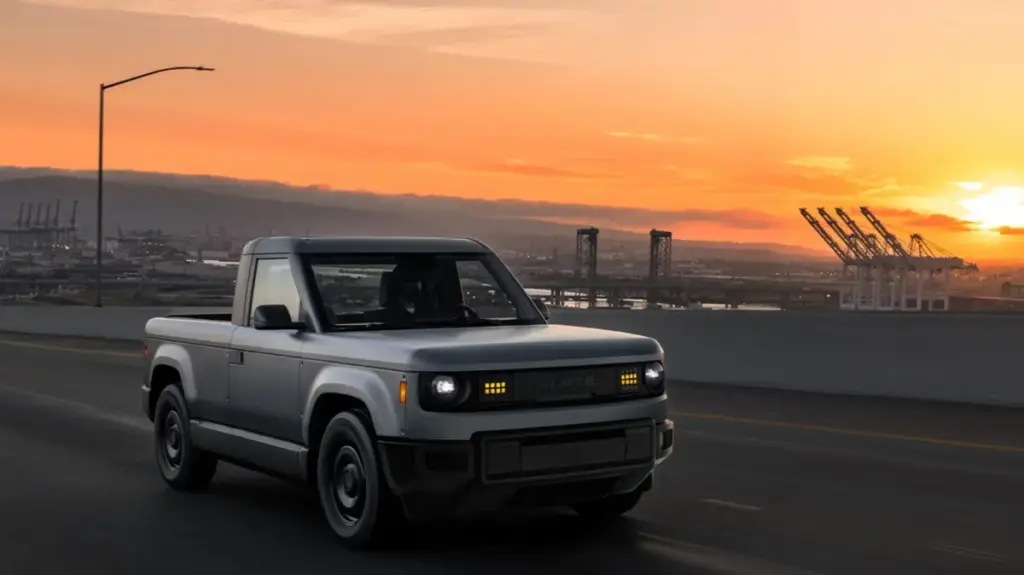
Could trading range for low costs still be a good deal for the modern American driver? It is a question that the automotive industry has largely avoided answering in recent years, preferring instead to load electric vehicles with ever-larger battery packs, luxurious leather interiors, massive touchscreens, and complex automated driving systems. The result has been a steady march upward in vehicle prices, leaving many everyday consumers priced out of the electric vehicle revolution entirely.
Into this high-priced landscape steps Slate Auto, a Michigan-based startup making a remarkably bold bet on the American market: that the single biggest impetus to widespread electric vehicle adoption is not cutting-edge technology or blistering performance, but simple, unadorned price. With a base model that carries a starting price tag of just $24,950, the company hopes its minimalist, highly customizable ride will serve as a much-needed antidote to a contemporary automotive market in which the average new vehicle now costs well over $50,000. Affectionately dubbed the "Blank Slate," this intriguing new battery-electric vehicle is being offered to consumers in both truck and SUV body styles, positioning itself as a blank canvas for budget-conscious buyers who are tired of paying for features they never asked for.
Understandably, the decision to completely eschew modern conveniences such as automatic power windows and high-end audio speakers may not be universally appealing to every driver. Yet, with a kaleidoscope of vibrant vinyl-wrap exterior color options and an expansive ecosystem of over 200 optional accessories, America’s self-proclaimed most affordable new truck may offer a sufficient array of do-it-yourself features to make it a genuinely worthy addition to your driveway. The philosophy behind the vehicle is one of radical stripping away, removing the financial fat that has bloated modern car prices and leaving behind only the mechanical essentials required for personal transportation.
Given its aggressive sales pitch and rock-bottom price point, an observer would certainly be excused for asking whether Slate’s barebones approach extends beneath the sheet metal to compromise the vehicle’s actual on-road performance. Beneath the minimalist exterior, the Blank Slate sports a competent 135-kilowatt rear-mounted electric motor capable of generating 181 horsepower and 195 pound-feet of torque, alongside a respectable 2,000 pounds of maximum towing power. On paper and in practice, this configuration packs relatively the same mechanical punch as a traditional internal combustion or hybrid 2026 Ford Maverick. Although its measured zero-to-sixty-miles-per-hour time of roughly eight seconds will certainly not win any accolades or trophies on a local racetrack, it remains entirely in line with Ford’s similarly affordable hybrid truck, ensuring that drivers will not feel dangerously underpowered during routine highway merging or city driving maneuvers.
Navigating the Trade-Offs of a Minimalist Electric Vehicle
Despite its competent power figures, the single greatest challenge for prospective Slate owners may ultimately lie in the vehicle’s driving range capabilities. Equipped with a relatively modest 63-kilowatt-hour battery pack, the Blank Slate carries an estimated driving range of 205 miles on a single charge. When stacked up against some of its much larger electric truck competitors, whose luxury-oriented battery configurations frequently boast total driving ranges stretching anywhere from 280 to 450 miles, the Slate’s capabilities may leave certain drivers wanting more flexibility for spontaneous long-distance road trips.
To the company’s credit, however, this intentionally limited range is not an engineering oversight, but rather a deliberate design choice borne out of a commitment to affordability. According to official company documentation published on its website, Slate is explicitly focused on practical, everyday driving that carefully balances total driving range with overarching affordability, mechanical efficiency, and everyday capability. By utilizing a physically smaller battery pack, the engineers were able to dramatically reduce both the overall vehicle weight and the high manufacturing costs associated with massive energy storage systems.
As a result, the electric vehicle is engineered specifically to comfortably cover standard daily commutes, weekend grocery runs, and rural drives without requiring an excessive number of heavy or expensive charging stops. In plain translation, accepting a shorter driving range is the direct financial price that the consumer pays for a substantially smaller monthly auto bill. With data from Consumer Affairs indicating that the average American driver travels approximately 37 miles per day, Slate is calculating that a baseline range of 205 miles will more than adequately satisfy the daily transit needs of the vast majority of motorists.
Understanding Charging Times and Infrastructure
Like every modern electric vehicle on the market, the actual day-to-day charging times for the Blank Slate will ultimately depend heavily on the specific home or public infrastructure setup chosen by the owner. Overall, Slate’s baseline charging speeds align closely with industry norms for typical electric passenger vehicles. Fully compatible with direct current Level 3 superchargers found along major highway corridors, the Blank Slate is capable of replenishing its battery from near empty to an 80 percent state of charge in as little as 30 minutes, making occasional longer trips manageable with a brief coffee break.
For routine daily charging, utilizing a standard Level 2 home or public charger—which can easily plug into a four-pronged heavy appliance outlet commonly found at public charging ports and modern workplaces—allows drivers to achieve a complete, one-hundred-percent battery replenishment in approximately five hours. However, for owners who choose to rely exclusively on a basic Level 1 charger plugged into a standard residential household wall outlet, the vehicle will typically top up its usable range by roughly 20 to 50 miles overnight, which is often more than enough to recover a standard 37-mile daily commute by the following morning.
To ease the transition for buyers who may not already possess home charging equipment, Slate includes a versatile charging cable capable of handling both Level 1 and Level 2 ports out of the box. Furthermore, for those consumers who require a dedicated, permanent home charging setup installed professionally, Slate has established a strategic partnership with prominent home charging infrastructure firm Treehouse to streamline the installation of Level 2 systems directly at the buyer’s residence.
Ultimately, the fundamental question facing potential Slate buyers is as simple and unpretentious as the base vehicle package itself: what are you truly looking for out of your automotive investment? If you are actively in search of an affordable, minimalist electric truck designed explicitly to handle straightforward daily commutes and mundane local errands, Slate might represent a remarkably solid and financially prudent option.
Conversely, if your lifestyle frequently involves venturing far out toward the distant horizon in search of unknown vistas and remote wilderness, this particular electric truck may simply not possess the battery capacity required to get you there comfortably—at least, not without requiring a carefully planned pitstop along the way.
Company representatives have confirmed that production models of the Blank Slate electric vehicle are scheduled to begin shipping out from its manufacturing facility in Warsaw, Indiana, later this year. Prospective buyers can currently secure their place in line for the company’s initial delivery window by placing a fully refundable $300 preorder, though they may first lose countless hours experimenting with Slate’s interactive online design tool to configure their ultimate minimalist dream truck. Yet, as future buyers will soon discover, the temptation may ultimately prove irresistible to build an electric vehicle that is simply too functional, and too remarkably inexpensive, to pass up.