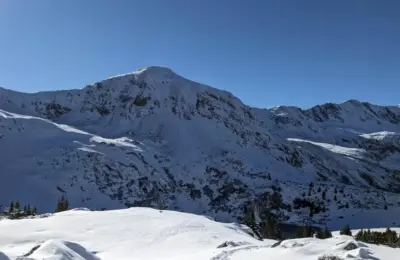


To the right stood the Apuan Alps, bearing white scars carved by two thousand years of relentless marble mining. To the left, just a few miles away, stretched the open sea. Directly beneath the traveler’s boots lay a narrow asphalt shoulder, accompanied by the persistent, hyper-vigilant mindfulness required to avoid being clipped by passing Fiat Pandas and silent electric Citroëns.
This was a stretch of the Via Francigena, the ancient medieval pilgrim route that runs all the way from Canterbury to Rome, specifically cutting through the terrain from Camaiore to Sarzana. It represents a grittier side of Tuscany, far removed from the pristine landscapes featured on classic travel postcards. In Carrara, the visitor encounters the raw industry of marble instead: giant, heavy cubes of the stone hoisted aloft by industrial cranes, sitting in open lots like unclaimed luggage, waiting to be processed into countertops for upscale kitchen remodels. They are far less likely to become the next David.
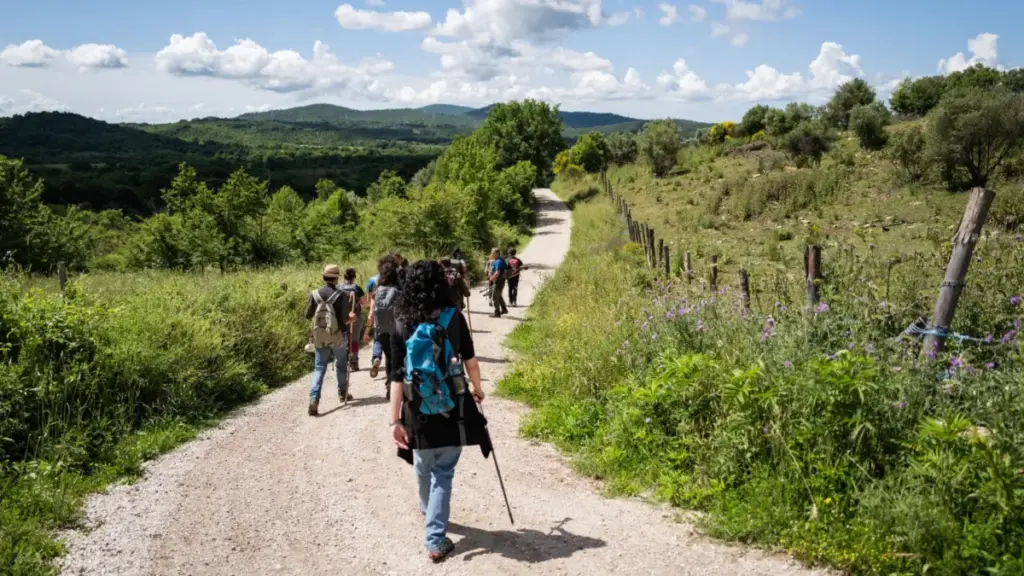
The journey began simply enough, undertaken to meet a friend at the 100-mile mark of her Via Francigena trek—a major centerpiece of her sabbatical. The plan was to hike the next 50 or so miles alongside her. In truth, this meant stepping onto the trail without conducting exhaustive research into the realities of the terrain. The plan relied entirely on joining the ride, whatever it might entail. If any preconceptions existed, they were shaped by the idyllic imagery the friend had been describing from the trail for weeks. South of Siena, the route rolls gracefully through the Val d’Orcia and the Crete Senesi, featuring white gravel roads, cypress-lined ridgelines, and towns like San Quirico and Radicofani perched dramatically on volcanic cones. North of Siena, hikers encounter the stunning architecture of San Gimignano and Monteriggioni—the very vistas that launched a thousand fantasies of life under the Tuscan sun.
The Via Francigena spans roughly 1,250 miles. At a steady pace of 12 to 15 miles per day, completing the entire route takes about 90 days, a feat that very few travelers attempt. Most walkers choose to tackle a single- or two-week section, typically in Tuscany, and revisit the trail over the course of a lifetime. Many others opt simply for the final 60 or so miles leading into Rome, which marks the minimum distance on foot required to earn the Testimonium, the official completion certificate. This concentration of final-stage walkers is precisely why the approaches to the Eternal City are the most crowded. If the friend’s chosen stretch represented the greatest hits of the Via Francigena, this northern route was decidedly the B-side.
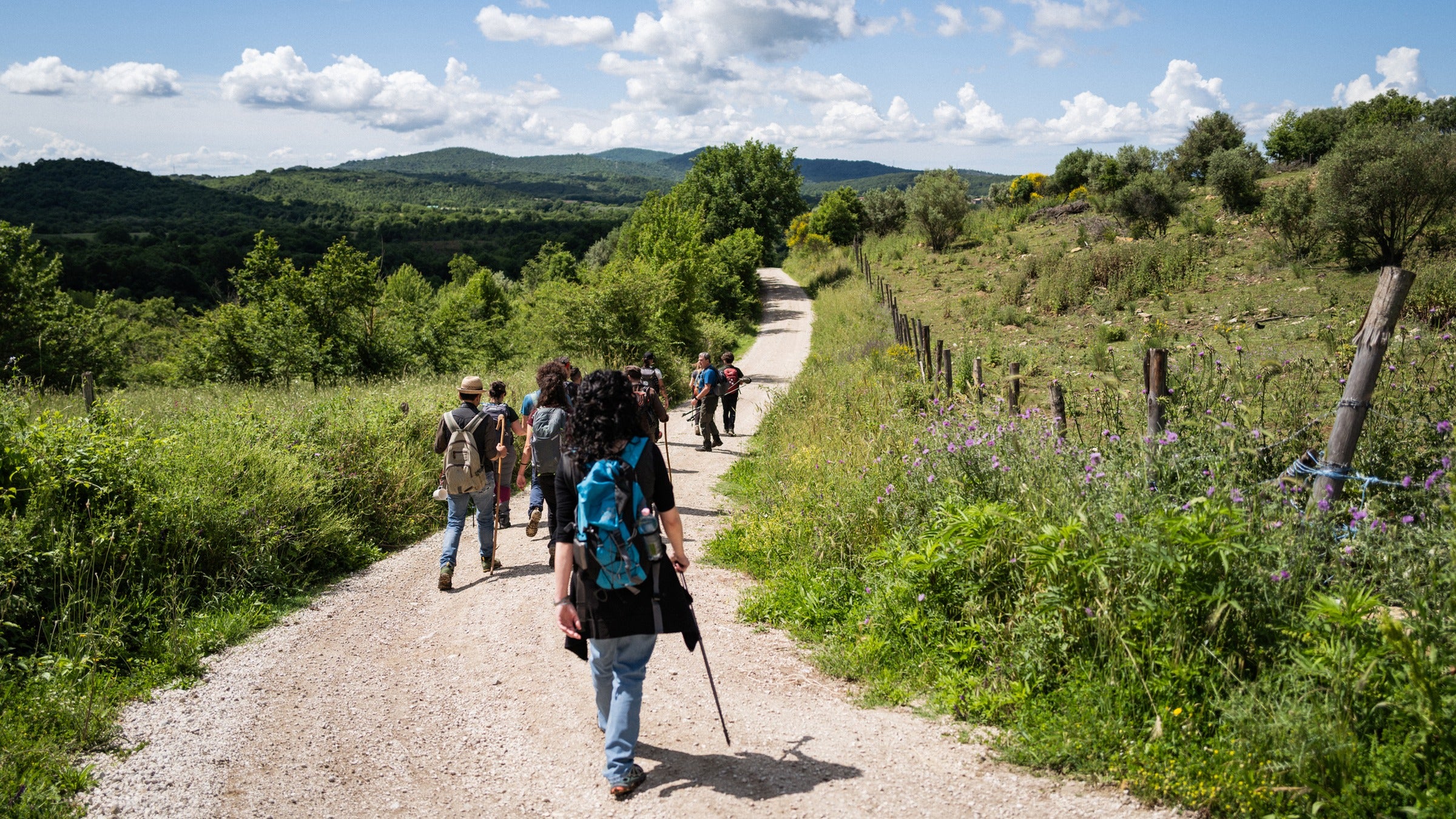
A previous taste of pilgrimage walking had come from the more genteel school of the Camino de Santiago trail network in Spain, experienced alongside chef and humanitarian José Andrés. That style of journey involved a slow, deliberate pace during the day, long lunches, and even longer dinners. Having made peace with that specific position on the hiking spectrum, the traveler realized a preference for the idea of roughing it in a basic hut, paired with the equal comfort of putting on clean clothes at night and acting like a tourist. There is, in fact, a specific slang term for this style of walking on the Camino that applies equally to the Via Francigena: turigrino, a Spanish linguistic mashup of turista (tourist) and peregrino (pilgrim or wanderer). While the term can carry a pejorative edge among hardcore, Type-2 hiking traditionalists, there is little shame in appreciating clean clothes and a cold glass of bubbly Franciacorta at the end of a long day on the trail.
However, the full turigrino treatment was not to be. The morning before the flight, the friend called with a logistical update. For most of her trip thus far, she had been "slackpacking"—a method where a hiker carries only a lightweight daypack while a commercial service ferries their real luggage ahead to the next hotel. But after exhaustive searching and asking around, it became clear that no such luggage-ferrying service existed along this specific stretch of the trail.
Mentally, the trip required an immediate pivot from a Type-2 light vacation—walking with little more than a bottle of water and some gummy bears—to a much heavier reality: walking while carrying everything. This adjustment had to be made with only 12 hours notice, and with all standard backpacks stored away elsewhere. There would be no emergency run to an outdoor gear retailer. The solution was to make do with what was available: a running hydration pack and vest featuring slightly ambitious storage capacity, which had never once been worn and was conspicuously missing one of its two chest straps.
At first, that pack was intensely disliked. Then came a phase of deeper frustration, followed eventually by acceptance—the kind of psychological surrender one reserves for a stubborn blister. Starting out, the pack felt terrible; eventually, the hiker resigns themselves to the sheer terribleness of the fit, and somewhere past that resignation, around day three, a strange affection develops. It is the classic Stockholm-syndrome phase of gear ownership, though the pack would likely be given away nonetheless.
Nobody talks about the unfashionable stretches of a famous walk because, quite simply, nobody is on them. Over the entire length of this leg, the hikers encountered perhaps six other people on foot. Everyone else passed along the way was simply living their daily lives, because this was where they lived. For days, they seemed to be the only tourists in all of Italy—a sensation that anyone who has ever bottlenecked their way through the ancient, sweltering streets of Florence or Rome in the summer knows is supposed to be impossible.
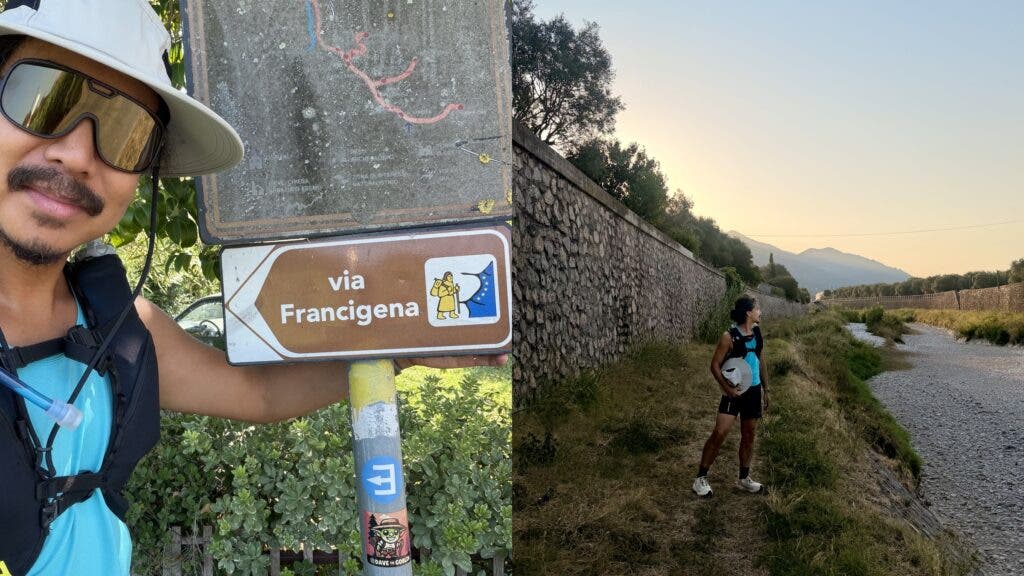
The official numbers strongly support that impression. Even in 2025, which was a Jubilee year in Rome and marked the most successful year in the modern history of the Via Francigena, only about 12,000 people collected a Testimonium. The route’s governing association estimated that roughly 100,000 individuals set foot on some portion of its 2,000 kilometers throughout the entire year. By comparison, the Camino de Santiago issued 530,919 Compostela certificates during that same twelve-month period. While the Via Francigena is growing rapidly, with completions having roughly doubled in each of the past two years, it is growing from a very small baseline. For now, that makes it a rare anomaly in Italy: a historically famous destination that is not yet overrun by mass tourism.
In Carrara, the mind naturally wanders in two opposing directions at once. One ponders what these majestic mountains might look like if they had never been subjected to industrial mining, given that the bright white scars remain starkly visible from the sea. Yet, the counter-thought arises just as quickly: What would the cultural world look like without Michelangelo’s David, his Pietà, or London’s Marble Arch, all of which were born from this exact stone?
Beauty still presents itself along the trail, even when it is not as immediately obvious or neatly packaged as a postcard. Notes and photographs from the journey conjure more poetic memories: bay laurel leaves crushed between fingers, releasing a sharp aroma reminiscent of adobo seasoning; fresh, wild mint foraged and chewed directly on the trail; Queen Anne’s lace, which can now be authoritatively reported to taste somewhat like carrots; and blackberries that materialized precisely when a hiker needed a small burst of sweetness. There was the discovery of a first pomegranate hanging heavy on a tree, and chestnuts encased in spiny husks that made them look like terrestrial sea urchins—a plant formation first encountered years earlier on the Camino with José Andrés. There were olive groves leaning out over the path, quietly depositing the pits from harvests of the previous year, or the year before that, or decades before that. While giant redwoods command a certain awe, there is something deeply magical about the quiet longevity of an ancient olive tree. And always, waiting just up ahead on the horizon, stood another hilltop town with its own strange, winding story of how it came to be built.
Then there was the dining experience, which along this northern stretch required zero effort, zero advance reservations, and zero contending with crowds of fellow tourists. Meals included traditional baccalà and a primo of cacciagione in Camaiore. In Seravezza, the menu featured a rustic seafood risotto, salted like the nearby sea and all the better for it. In Massa, travelers found maltagliati cut from corn flour, locally known as curchua, while a restaurant called Origine served calamarata—fat, ring-shaped pasta mirroring the calamari it was named after, tangled with fresh prawns. This was followed by octopus served over a cassava mousseline with gremolata, creating a plate that felt more suited to Milan than a rugged marble town. This journey cemented an appreciation for Franciacorta, Italy’s answer to Champagne, which is vastly superior to Prosecco and yet so rarely seen back in the United States. It became a nightly ritual, enjoyed at tables surrounded entirely by locals eating where they have always eaten.
The culinary crescendo of the trek arrived at Locanda de’ Banchieri, a former Malaspina residence that spent centuries operating as a post station taxing the lucrative marble trade flowing out of the ancient port of Luni. Today, the historic site functions as a Michelin-starred inn run by Giacomo Devoto, a chef originally from Sarzana. It was here that the walking journey would finally conclude, with a meal of wood-fired bread served under a rich ragout and butter infused with Tuscan black kale. The table featured croxetti, coin-like Ligurian pasta tossed in a vibrant white pesto made from San Rossore pine nuts and marjoram. It was a kitchen doing precisely what the travelers had been doing by accident for days: deeply absorbing and reflecting the surrounding landscape.
Even the vehicular traffic on the narrow roads ultimately proved manageable. The single most memorable encounter of the entire walk occurred when a shirtless old-timer eased past in an ancient Fiat pickup truck, smiled, raised a single hand in greeting, and offered a solitary word of advice: “Calma.”
Walking is still walking, even when an itinerary does not involve putting in the maximum mileage, and that realization is entirely acceptable. Few people openly discuss the low-grade boredom that often accompanies these long-distance paths—the long stretches of connective road shoulder that must be endured simply to reach the genuinely photo-worthy sights. But perhaps that is simply the necessary ratio of any trip truly worth taking. A journey cannot resemble a digital screensaver all the time. And would anyone truly want that in Italy, where landscapes that are too-perfect invariably attract too-many crowds? The crowds naturally sort themselves to the conventionally pretty parts, leaving the rest quietly open to those willing to seek it out.
Calma.