

Rescue teams in the rugged high country of Colorado have recovered the bodies of two missing college students who failed to return from a late-October alpine excursion in the Collegiate Peaks Wilderness. The tragic discovery brings a heartbreaking close to a multi-day search operation that was severely hampered by treacherous winter weather, heavy snowfall, and dangerous terrain in the Sawatch Range.
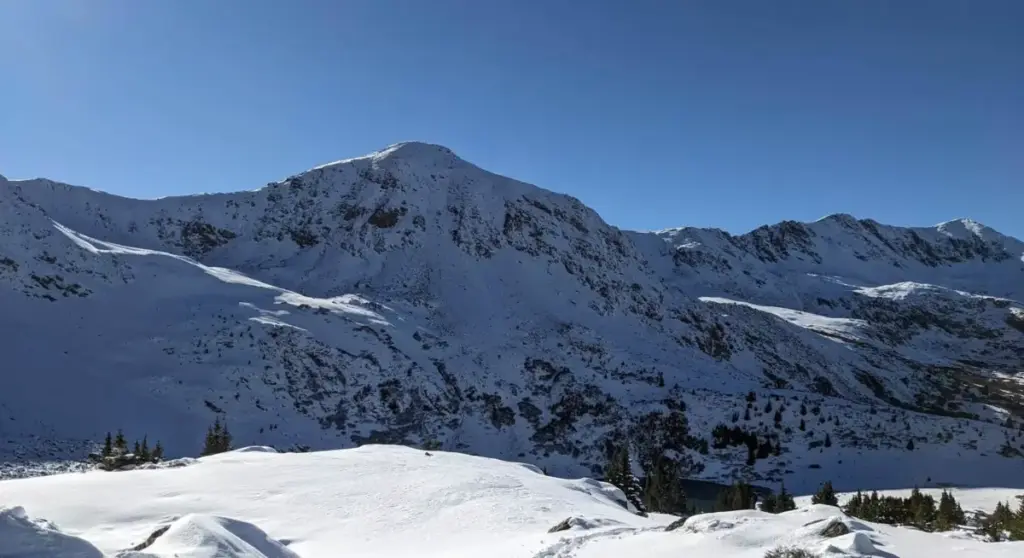
According to the Chaffee County Sheriff’s Office, search-and-rescue personnel located the deceased students on October 28 within an alpine basin situated beneath West Apostle Mountain. The victims were identified as 19-year-old Kaden Matsuda and 20-year-old Jackson Donlon, both of whom were enrolled at Colorado Mountain College’s Leadville campus. The two young men had set their sights on conquering nearby Ice Mountain, a formidable and remote peak rising 13,960 feet above sea level.
Investigators established that Matsuda and Donlon departed from the Leadville campus on October 23, telling friends they intended to make the climb and return by October 24 or 25, depending on how conditions unfolded in the high country. Friends later directed search parties to a map shared by the pair, which explicitly pinpointed Ice Mountain as their primary destination. When the students failed to return or make contact by October 26, college officials and concerned acquaintances alerted local authorities, prompting an immediate mobilization of emergency responders.
Why Climbers Seek Out the Three Apostles
Ice Mountain stands alongside West Apostle and North Apostle to form a legendary, rugged trio of peaks known collectively as the Three Apostles. Situated deep within the Collegiate Peaks Wilderness northwest of Buena Vista, these majestic summits are classified as "13ers," meaning they fall just short of Colorado’s famous 14,000-foot peaks. While the state’s numerous "14ers" regularly draw massive crowds of hikers looking for accessible routes to high-altitude summits, peaks like the Three Apostles attract a different breed of mountaineer.
Dillon Geiger, owner and chief guide at Buena Vista-based Ark Valley Mountain Guides, explained the unique appeal of these lesser-known summits. Geiger is an American Mountain Guides Association-credentialed professional with more than a decade of experience guiding clients and teaching alpine climbing techniques throughout the Sawatch Range.
"That’s the allure of doing peaks that aren’t 14,000 feet," Geiger said. "They’re less popular, they’re more remote, and they’re more technical."
Geiger noted that the Three Apostles feature uncharacteristically rugged terrain for the area, boasting steep gullies, loose rock, and challenging couloirs. Among these is Ice Mountain’s infamous Refrigerator Couloir, a grueling feature widely recognized in the mountaineering community as an advanced backcountry ski descent.
While Colorado’s 14ers often feature relatively well-traveled, nontechnical trails, elevation does not always equate to safety or technical difficulty. The Three Apostles demand advanced mountaineering skills, precise navigation, and a strong comfort level with exposure and unstable footing. According to data compiled by the mountaineering resource 14ers.com, Ice Mountain’s standard route along the northeast ridge relies heavily on scrambling—a technique that requires climbers to use both their hands and feet to navigate steep, precipitous rock faces. The route-finding guide also warns of substantial rockfall hazards and stretches of dense bushwhacking.
Even during peak summer months, venturing into this corner of the Sawatch Range offers profound isolation. Geiger pointed out that a climber visiting the Three Apostles in late October could easily spend an entire day traversing the landscape without encountering another human soul.
"They’re certainly some of the most remote sections of the Sawatch Mountains," Geiger observed. "It’s an extremely remote area, and this time of year, it wouldn’t be uncommon to not come across anyone else."
Experienced mountaineers can occasionally complete these ambitious routes in a single day under optimal summer conditions. Alternatively, hardy backpackers sometimes choose to hike into the remote basin, establish a base camp, and launch their summit bids from there. However, undertaking such an objective in late October introduces entirely different survival challenges as autumn transitions rapidly into severe winter weather.
Early Snow and Unstable Rock
The mountain environment changed drastically just hours after the students began their trek. The National Weather Service recorded a significant weather system that dropped several inches of snow across higher elevations in the eastern Sawatch Mountains on October 24. In Colorado’s volatile high country, sudden shifts in weather can quickly escalate a technical climb into a perilous life-or-death situation.
"When you step into technical terrain and the weather changes, especially winter weather conditions, it gets bad fast," Geiger cautioned.
Fresh accumulations of snow create deceptive conditions by concealing loose rock and unstable scree that can easily slide beneath a climber’s boots. Furthermore, the persistent cycle of freezing and thawing characteristic of late-autumn alpine environments further compromises the structural integrity of the rock face. This destabilization dramatically elevates the risk of sudden rockfall and obscures already difficult route-finding markers, turning a familiar path into a maze of hidden hazards.
A Multi-Day Search in Heavy Snow
Beyond their shared passion for alpine exploration, both Matsuda and Donlon were actively pursuing professional futures centered around the great outdoors. According to public statements shared by Chaffee County Sheriff Andy Rohrich, Matsuda was studying to become a wildland firefighter, while Donlon was undergoing professional training to pursue a career as a mountain guide.
The academic and local community expressed profound grief over the tragedy. In a statement released to regional news outlet KKTV, Colorado Mountain College shared its sorrow, stating, "We are devastated by the loss of Kaden Matsuda and Jackson Donlon, two members of our Colorado Mountain College community."
The search operation itself proved to be an immense logistical challenge. After college staff formally reported the students missing on October 26, Chaffee County deputies initiated a ground sweep and quickly located Matsuda’s vehicle parked near the Mount Huron trailhead outside the historic mining town of Winfield. Expanding their radius, searchers subsequently discovered a collapsed tent pitched near Lake Ann. A thorough inspection of the students’ tent, vehicle, and college dorm rooms yielded no climbing gear, leading investigators to conclude that the pair had packed and carried their necessary mountaineering equipment with them onto the mountain.
Weather conditions severely hampered the ongoing search efforts. Ice Mountain and the surrounding basin were pounded by heavy snow and ice, with accumulations reaching up to two feet generally and forming drifts as deep as four feet in isolated wind-loaded pockets. Despite the punishing elements, roughly 60 dedicated search-and-rescue volunteers mobilized to comb the treacherous terrain, aided by specialized tracking dogs, aerial drones, and search helicopters coordinated by the Chaffee County Sheriff’s Office.
Authorities confirmed that foul play is not suspected in the deaths of the two young men. Pending the formal completion of autopsies, officials declined to speculate on the precise chain of events that led to the fatal outcome. The Chaffee County Sheriff’s Office and the Chaffee County Coroner’s Office are continuing their joint investigation to determine the exact cause and manner of death.