



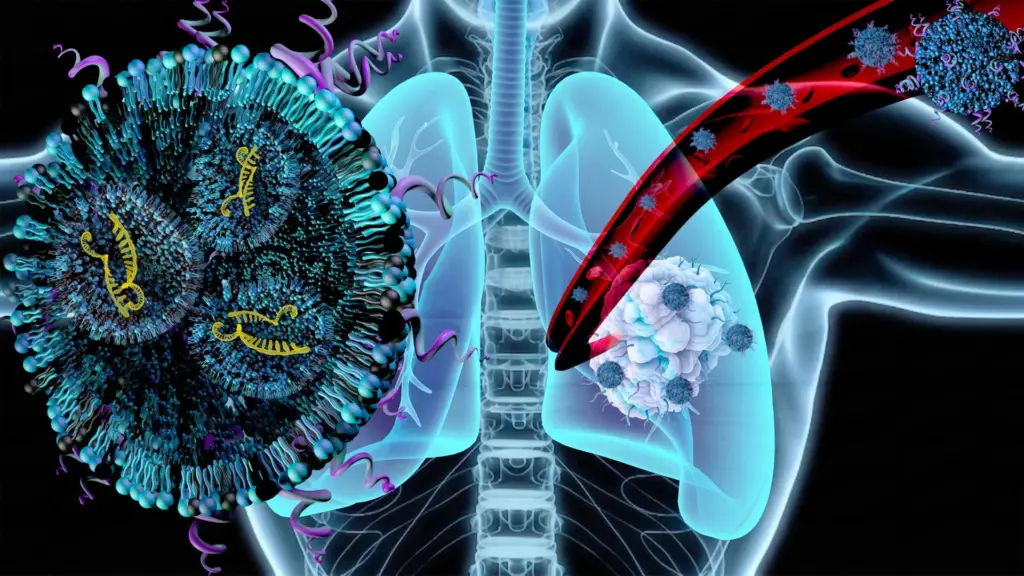
The research details an advanced method of utilizing microscopic lipid nanoparticles to transport therapeutic genetic material directly into lung tumors. Published in the Journal of Controlled Release, the study outlines a promising preclinical approach that could eventually change how oncologists approach both primary tumor growth and the aggressive secondary complications associated with advanced malignancies.
Nanoparticles Deliver mRNA to Lung Tumors
In rigorous experiments conducted using murine models, a research team spearheaded by Oleh Taratula and Yoon Tae Goo of the OSU College of Pharmacy successfully tested advanced nanocarriers loaded with messenger RNA encoding for a specific therapeutic protein. Under normal circumstances, delivering fragile mRNA molecules safely through the human circulatory system represents a monumental biochemical hurdle. However, these specially engineered lipid nanoparticles demonstrated an exceptional ability to circulate through the bloodstream, ultimately accumulating precisely within lung tumors.
Once inside the targeted cancer environment, the delivered mRNA instructs the local cells to produce follistatin. This naturally occurring protein plays a dual role, acting as an agent that can help suppress tumor growth while simultaneously supporting the growth and maintenance of healthy muscle tissue. The vehicle delivering this cargo consists of lipid nanoparticles, commonly referred to in pharmaceutical research as LNPs. Lipids are broadly defined as fatty acids and related organic compounds that naturally comprise a variety of essential oils, fats, and cellular structural waxes. Nanoparticles themselves are unimaginably small pieces of material, typically measuring between one and 100 billionths of a meter, placing them on a scale smaller than most biological viruses.
The remarkable ability of these particular LNPs to successfully navigate the body and home in on lung tumors is not a matter of random chance. Instead, it relies heavily on a cooperative interaction with vitronectin, a structural protein that is naturally and abundantly found in human blood serum.
"We found that these LNPs bind vitronectin in the bloodstream, which then directs them to lung cancer tumors by interacting with integrin receptors that are overexpressed on the tumor surface," Taratula explained while discussing the mechanics of the targeted delivery system.
Integrin receptors serve as critical biological links that help connect individual cells with their surrounding extracellular matrix. By doing so, they heavily influence how cells interpret and respond to external signals floating within their immediate microenvironment. Because lung cancer cells frequently overexpress these specific integrin receptors, the protein-coated nanoparticles are able to latch onto the tumor landscape with a high degree of biochemical specificity.
Overcoming a Major mRNA Delivery Challenge
For decades, developing reliable methods to get mRNA-based therapies to reach lung tumors after being injected directly into the bloodstream has baffled researchers and frustrated clinical developers. Traditional lipid nanoparticles have a persistent and frustrating habit of naturally building up in the liver rather than making their way to the intended cancer cells. This hepatic clearance has historically limited the systemic efficacy of numerous promising genetic and nucleic acid treatments.
"Systemic delivery of mRNA therapeutics to lung cancer tumors has been a significant challenge in our field, and this work offers a promising solution," Taratula noted, emphasizing the hurdles that genetic medicine has historically faced. "Compared to conventional LNPs, which tend to accumulate in the liver upon systemic administration, our approach achieved an approximately 2.5-fold greater reduction in tumor burden."
The urgency surrounding better treatments for lung cancer remains exceptionally high across global public health communities. According to statistical health evaluations, lung cancer stands as the third most common cancer diagnosed in the United States. Furthermore, it firmly maintains its position as the absolute leading cause of cancer-related mortality nationwide, outstripping the death tolls of numerous other malignancies. (In terms of sheer incidence, skin cancer is the most common overall, followed by prostate cancer for men and breast cancer for women).
Data compiled by the American Cancer Society underscores the staggering human toll of the disease. The organization estimates that approximately 230,000 new cases of lung cancer will be diagnosed within the United States over the course of the year. Concurrently, roughly 125,000 people are projected to lose their lives to the disease within the same timeframe. Statistical models indicate that roughly 5% of all individuals will develop lung cancer during their lifetimes, with individuals who smoke facing a substantially elevated statistical risk.
Targeting Cancer Cachexia at the Same Time
Beyond the primary devastation wrought by the tumors themselves, lung cancer is frequently accompanied by an insidious and debilitating secondary condition known as cachexia. This severe metabolic syndrome triggers profound and involuntary weight loss, alongside rapid and extensive muscle degradation. Cachexia is notoriously aggressive, and medical literature indicates it can ultimately account for the deaths of as many as 30% of the cancer patients it affects.
Unlike ordinary weight loss caused by simple dietary restrictions or reduced caloric intake, cancer-related cachexia cannot be easily reversed simply by ensuring a patient eats enough food. The pathological process drives the systematic breakdown of the body, causing patients to lose not only vital body fat stores but also significant, irreplaceable amounts of functional muscle mass. This leaves individuals too weak to tolerate standard chemotherapy regimens, surgical interventions, or radiation therapy.
Recognizing the interconnected nature of these clinical challenges, the Oregon State University researchers intentionally designed their experimental treatment to address both problems simultaneously. By packing their lipid nanoparticles with follistatin mRNA, they harnessed a biological mechanism capable of exerting positive regulatory effects on both tumor suppression and muscular hypertrophy.
"By loading our LNPs with follistatin mRNA, we developed a therapy that simultaneously targets lung cancer and cancer cachexia, all without adverse effects," Taratula said. "More preclinical work is necessary, but we’re very encouraged by what we’ve seen so far and hope that testing in humans is down the road."
More Testing Needed Before Human Trials
Despite the enthusiasm surrounding the promising preclinical results, the scientific team stresses that the research remains firmly in its early stages. Because the findings are still strictly preclinical, the novel treatment has not yet been evaluated in human clinical trials. A substantial battery of additional safety pharmacology and efficacy studies will be required before regulatory agencies and institutional review boards can even begin to consider human testing.
The comprehensive study was a collaborative effort drawing on the expertise of numerous researchers within the academic and private sectors. Alongside Taratula and Goo, the OSU College of Pharmacy research group included Vladislav Grigoriev, Tetiana Korzun, Ammar Salem, Kongbrailatpam Shitaljit Sharma, Prem Singh, Chrissa Kioussi, and Olena Taratula. The academic team also worked alongside Daniel Marks of Endevica Bio, a private biotechnology company specializing in the development of specialized peptide therapeutics.
Financial support for the investigation was provided by prominent federal and international scientific bodies, including the National Cancer Institute, the Eunice Kennedy Shriver National Institute of Child Health and Human Development, and the National Research Foundation of Korea.