


Achieving the ultimate baked potato requires abandoning the foil wrap entirely and baking the spuds directly on the oven grate at a relatively high temperature. To elevate the exterior texture even further—making it taste almost like a potato chip—culinary experts recommend scrubbing russet potatoes thoroughly, rubbing them generously with vegetable oil, and seasoning them with an abundance of salt prior to baking. Surprisingly, this direct-heat, high-temperature method does not compromise the fluffy interior texture that diners look for in a classic baked potato. According to kitchen tests, achieving that ideal, cloud-like interior comes down to a precise internal temperature rather than moisture trapped by foil. When the internal temperature of the potato reaches at least 212 degrees Fahrenheit, the starches gelatinize properly, resulting in maximum fluffiness. While taking a potato’s temperature with a meat thermometer may initially feel unconventional or overly scientific, culinary professionals maintain that it is a fail-safe route to the most enjoyable eating experience.
The debate surrounding the preparation of a baked potato extends beyond the oven and into the mechanics of how the cooked spud should be opened. Organizations such as the Idaho Potato Commission have long maintained that the method used to open a baked potato significantly affects its final texture. Rather than slicing the potato open with a sharp knife—which can compress the delicate, steaming flesh—tradition and certain culinary authorities favor using a fork to gently poke a plus sign into the surface, allowing the steam to escape while preserving the airy structure. Other notable figures in the food world have proposed more dramatic approaches. Beloved food writer and author Nigel Slater famously prefers a much more forceful method, suggesting that home cooks strike the potato as though they were participating in a martial arts demonstration. In a piece written for The Guardian, Slater described the technique, advising cooks to bring their hand down fast and sharp as if performing a karate chop, using just enough force to crack open the potato skin without crushing the tuber beneath. Whether home cooks choose to attempt this dynamic feat remains entirely in their own hands, though comprehensive kitchen testing has indicated that a single fork-pricked line down the length of the spud is often the most practical and effective method for releasing steam without causing a mess.
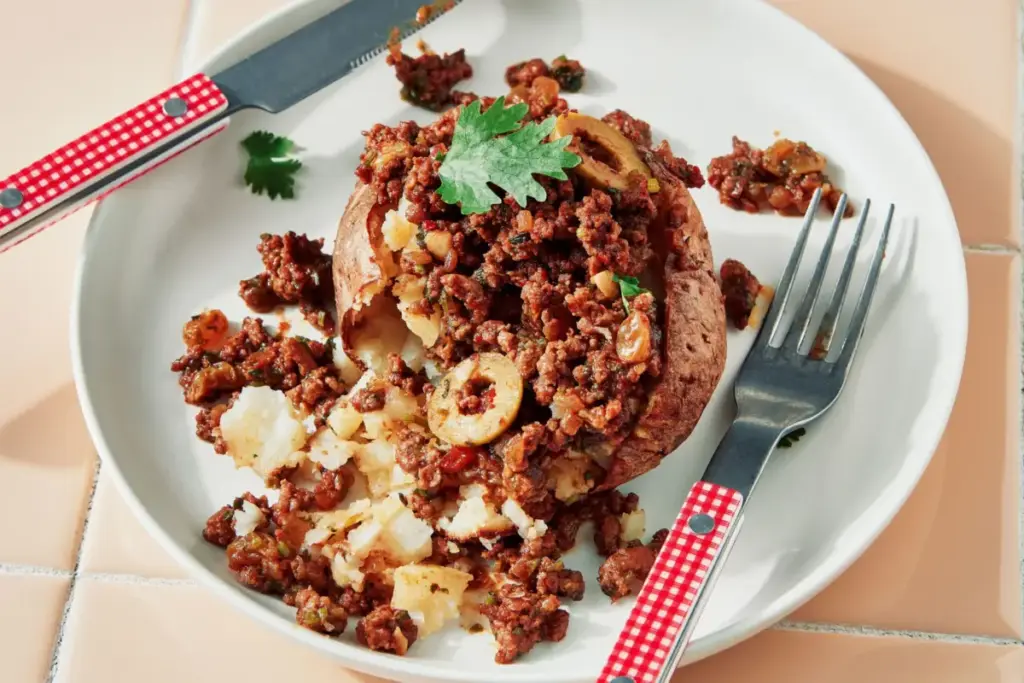
Once opened and properly fluffed, a baked potato transcends its traditional role as a simple side dish and transforms into a versatile, substantial meal capable of holding a wide variety of hearty fillings. While classic toppings like butter, chives, sour cream, and cheddar cheese remain perennial favorites, a baked potato can easily be customized with globally inspired dishes ranging from traditional tuna salad to rich, cheesy baked beans. Taking inspiration from global flavor profiles, culinary developers have recently paired the classic russet with a picadillo-inspired ground beef mixture. This savory topping is naturally packed with nutrients, offering protein, iron, and creatine, though home cooks looking for alternative proteins can easily substitute ground turkey or chicken with equally delicious results. To elevate the picadillo mixture, cooks often fold in golden raisins and stuffed olives, introducing a nuanced balance of sweetness and salinity that contrasts sharply with the earthy flavor of the potato.
When this savory, protein-rich mixture is spooned into the steaming, freshly cracked potato, it is complemented by a spicy tomato sauce that slowly soaks into the potato flesh over time, further seasoning the spud with every passing minute. To achieve the deepest and most authentic flavor profile in the sauce, culinary experts advise selecting a chili powder that represents a complex blend of spices—incorporating ground chiles, cumin, oregano, and garlic—rather than relying solely on single-ingredient dried ground chiles. This thoughtful approach to seasoning highlights a broader philosophy shared by culinary test kitchens and food editors alike: that healthy, wholesome cooking does not have to be overly complicated. In fact, culinary professionals frequently observe that the simpler a dish is, the better it ultimately tastes, proving that foundational ingredients like the white potato deserve renewed appreciation in modern home cooking.