

It is dinnertime at Allie Teilz’s home, and the soundtrack of the evening is already echoing through the rooms. Perhaps it is a cinematic film score courtesy of Italian classicist Ennio Morricone, or perhaps some smooth Italian disco beginning to weave its way into the background. One of her three-year-old twins is already moving to the rhythm, completely untroubled by the world. Phones are routinely gathered and dropped into a ceramic cow on the kitchen counter for the remainder of the evening—a specific rule that her nearly eight-year-old child appreciates and enforces. Inside, the home is a vibrant ecosystem of analog appreciation: a projector hums quietly, a record player spins vinyl, and a wall of carefully curated VHS tapes featuring classics like Yellow Submarine and The Land Before Time sits on heavy rotation. Teilz half-jokingly refers to her domestic life as a "90s-electronics household."

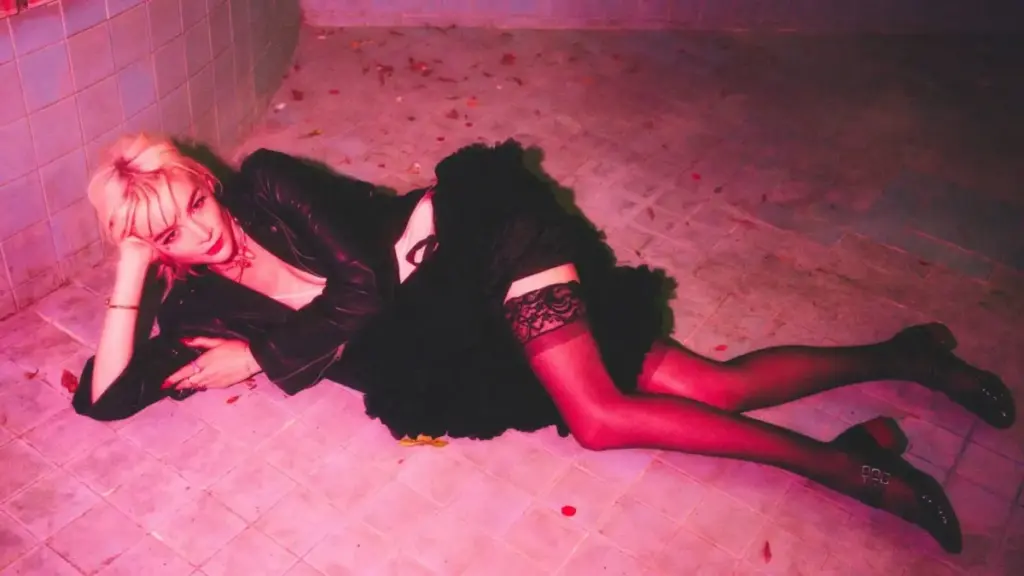
To spend time observing or speaking with Teilz is to understand why she is frequently described as effortlessly cool. A vinyl DJ and producer who cut her teeth in the bustling, high-energy nightlife of Los Angeles, she spent years sharing DJ booths with iconic figures like Grace Jones and Daft Punk. Today, rather than spinning exclusively in late-night clubs, she spends her daylight hours scouring thrift stores and estate sales for vintage VHS tapes and rare records. Yet, despite her rich background in underground music culture, she describes herself succinctly: "a mother first and an artist second." As a mother of four, she has managed a rare cultural feat, weaving those two distinct versions of her identity authentically into a single, cohesive life.

In a recent extended conversation discussing her creative journey, her domestic philosophy, and her career trajectory, the depth of her approach to parenting becomes immediately apparent. The environment she is actively building for her children—one deeply steeped in art, tactile music, physical media, and unbridled curiosity—offers a striking counter-narrative to modern, hyper-digital childhoods. Her debut album, Come to Mommy, which is out now, serves as the auditory manifestation of her reclaiming the artist within after the arrival of her children. Atmospheric, irresistibly danceable, and laced with an electronic aesthetic that feels simultaneously nostalgic and futuristic, the album’s title deliberately turns the familiar cultural phrase "come to daddy" on its head. While mainstream culture often implicitly or explicitly asks what "Daddy" wants or prioritizes, Teilz prefers to ask what "Mommy" wants, and she answers without hesitation. "Mommy wants joy," she says. "She wants to have fun and dance. She wants pleasure and joy."

We can let motherhood deepen the art
For many creative women, the cultural narrative surrounding motherhood has historically suggested that having children requires a severe contraction of artistic output—that creative wells will inevitably run dry as time and energy are siphoned away by domestic duties. Teilz actively rejects this premise. She does not treat her children as the logistical obstacles she must work around; rather, she views them as the primary catalysts that made her art profoundly deeper.

"Becoming their mom," she reflects, "only made everything bigger, not smaller." Motherhood taught her a vital lesson about efficiency and focus, revealing that "the deepest creativity can come from having very little time and knowing exactly what matters."

There is an inherent surrender required in becoming a parent, she notes—a conscious handing over of the soul to lead another human being safely through life. For Teilz, that radical surrender did not close off her creative avenues; instead, it cracked her work wide open. It liberated her in the act of creation, providing a vastly deeper well of emotional resonance to pull from. In fact, she has increasingly taken to describing motherhood as "the highest form of art I’ve ever experienced."

This profound shift in perspective inevitably transformed what she wanted to create. Looking at her own professional work through the eyes of her children, she holds her output to a clear and unyielding standard: What does she want to see more of in the world? Her answer certainly does not include the soulless, machine-driven automation she has watched creep into contemporary culture—a phenomenon she summarizes as "AI art and lobotomy chic." Instead, she wants her children to experience the unadulterated freedom she felt as a child hearing the Talking Heads for the very first time. She wants them to have the permission to flail around in an imaginary version of David Byrne’s giant suit and linger in that beautiful, generative state of play. Come to Mommy is her deliberate attempt to put that specific feeling of liberation back into the universe, and she firmly credits her children as the ultimate inspiration. "They’re the greatest teachers," she says.

We don’t have to choose a singular version of ourselves
Most modern women are intimately familiar with the subtle, pervasive shift that occurs the moment they cross the threshold into motherhood. The sense of self often grows smaller, contracting to make room for everyone else’s needs, schedules, and demands. For a period of time, Teilz felt that gravitational pull, sliding dangerously close to the kind of silent motherhood she had watched other women vanish into. She observed traditional mom groups where women continuously gave of themselves without ever pausing to consider their own fundamental needs. She watched promising careers set down with the intention of being picked back up later, only to gather dust, and she recognized the quiet panic of women who could no longer genuinely answer the foundational question: "Who am I?"

During our conversation, she pointedly calls out the insidious cultural culprits that weave self-erasure into the very fabric of childhood literature. "We’re indoctrinated by The Giving Tree and The Rainbow Fish," she observes, referencing classic children’s books that subtly sell self-sacrifice as the ultimate form of generosity. The underlying cultural message is that if you make yourself a stump, you will be loved, and if you give away all your sparkling scales, you will finally be accepted. "That’s such a dangerous thing," Teilz notes.

For a long stretch, her own personal priorities and creative ambitions became submerged beneath the endless demands of early parenting. What ultimately pulled her back to the surface was remarkably simple, yet fiercely executed: boundaries. She adopted a flip phone for the hours of the day when she refuses to be digitally reachable. Referencing a blunt piece of modern wisdom she encountered online—"have boundaries or get an autoimmune disorder"—she emphasizes that her physical health was what finally forced her to stop the cycle of depletion. "My kids don’t need a mom who disappears into anything," she asserts, "even motherhood."

We get to decide what their childhood feels like
Teilz constructs her children’s daily lives and childhood memories much like she builds a vinyl record—out of specific, deliberate, and slightly magical details. When one of her daughters recently earned a leadership award at school and was given the privilege of choosing how to celebrate, she did not ask for an extravagant trip or an expensive toy. Instead, she asked to make "ice cream mountains," featuring scoops stacked high into a castle on parchment paper, carefully modeled after a beloved local ice cream shop Teilz herself frequented as a girl. It was an exercise in being delightfully ridiculous simply for the sake of making memories.

The moments Teilz recalls most fondly from her own upbringing are rarely grand vacations or lavish milestones; rather, they are the quiet, grounding realities of living in a modest one-bedroom apartment and having a mother who let her children pick out a favorite ice cream flavor on the eve of the first day of school. Now, she intentionally crafts that same intimate, impactful brand of nostalgia for her own household.

Alongside these domestic traditions is a daily cultivation of natural wonder. Her children are regularly sent out into the home garden to harvest fresh parsley or pluck a ripe tomato, keeping their hands directly involved in the preparation of family meals. For years, she has taught them the patience required to cultivate life from seeds to fruition, believing that watching a baby artichoke push its way up from the soil is the kind of small, tangible miracle she wants them to appreciate.

Books occupy a similar, sacred space in their home daily routine. Teilz often reflects on a formative memory from long before she had children of her own, when she observed a woman on a crowded subway car reading quietly beside her small daughter while the train rattled through the tunnels—two individuals simply lost in literature amidst urban chaos. Today, one of her proudest daily accomplishments is watching her own daughter climb onto the living room couch to become completely absorbed in the pages of Harry Potter. "Stay curious about the world," she advises other mothers navigating the daily grind. "Keep reading. Stay interested in what matters to you."

None of this delicate balance was achieved without profound difficulty. Come to Mommy was written and recorded through an intensely brutal chapter of her life that included a traumatic birth experience—one that nearly claimed the lives of both Teilz and one of her twin sons. The album serves, in part, as the sonic record of her finding her way back from the edge of tragedy. Its final track, "Back From the Dead," was explicitly written for the twin she nearly lost, acting as a musical testament to her children that human beings can navigate and survive the worst imaginable trials. Translating that trauma into art was a necessary processing mechanism, but it was also tangible proof for her children that one can take an experience that shatters you and "make something beautiful out of the ashes."

Toward the end of our conversation, a vivid domestic scene is painted: A mother pulls into her driveway after a long, exhausting day, choosing to sit in the quiet darkness of her car for a few minutes before walking through the front door, while music still plays softly on the stereo. What does she want that woman to carry inside with her? Teilz does not hesitate. She wants her to reclaim the fire of her own passion, to remember the song she danced to most fiercely at her thirteenth birthday party, to feel fundamentally held, and to remember that she always possesses a valid reason to dance. Above all, she wants her to feel, unequivocally, like herself.

In a cultural landscape that has historically asked women to shrink their identities to accommodate the immense responsibilities of caregiving, Allie Teilz spends an entire album—and her daily life—prooving that the opposite is not only possible, but necessary.