

For anyone keeping an eye on the modern stock market, a familiar cycle continues to repeat itself: asset prices reach record-breaking valuations, sparking both jubilation and deep-seated anxiety. As markets scale unprecedented heights driven by the current frenzy surrounding Artificial Intelligence, many investors find themselves wondering if an imminent crash is waiting around the corner—one that could potentially dwarf the dot-com bust of the early 2000s.

Addressing these pervasive market anxieties, veteran financial independence advocate and internet commentator known as Mr. Money Mustache recently tackled the intersection of technological manias and human psychology. Drawing from his own experiences living through the early internet boom and subsequent crash—an era that nearly cost him his job and citizenship application—the long-retired blogger debuted a new presentation addressing whether current market conditions threaten long-term retirement plans. Originally delivered at the Camp FI Midwest event, the talk forms the basis of a broader discussion on how investors process financial risk and uncertainty.

Putting Market Anxiety Into Historical Perspective
Having spent more than two decades in retirement, the financial commentator notes that he frequently encounters questions from worried acquaintances and followers regarding how one can sleep at night amidst global uncertainty. Modern news cycles offer no shortage of alarming narratives, ranging from geopolitical tensions and inflationary pressures to towering national debts and the rapid rise of AI.

However, looking back reveals that economic anxiety is a permanent feature of modern life rather than a novel phenomenon unique to the present day. Twenty years ago, in 2006, the worries dominating public discourse were remarkably similar in tone, even if the specific details differed. At that time, investors fretted over geopolitical conflicts in the Middle East, rising national debt, and inflation. Back then, the overvaluation of the stock market was attributed to a roaring housing bubble rather than an AI boom, while the dominant fear regarding labor displacement centered on the outsourcing of jobs overseas to India and China rather than automated software. There was even widespread panic surrounding "Peak Oil," with many convinced that skyrocketing fossil fuel demand and dwindling supplies would spell economic doom.

Yet, the two decades that followed painted a vastly different picture. Despite the subsequent arrival of the Great Financial Crisis in 2008—the most severe economic downturn since the Great Depression—broad stock market indexes continued their upward trajectory over the long term. A hypothetical $100,000 investment made during those turbulent years would have grown substantially by current standards, absorbing subsequent shocks like the pandemic-era market drop in 2020 along the way.

Simultaneously, global standards of living improved significantly across multiple metrics. Over a twenty-year span, the global population living in extreme poverty declined sharply, while infant mortality rates were cut in half. Clean energy adoption surged, driven by a dramatic reduction in the cost of solar panels, which now account for the vast majority of newly added global power generation. Meanwhile, electric vehicle adoption transitioned from a theoretical concept into a mainstream automotive market segment.

Prosperity Roots and the Psychology of Fear
These historical comparisons point to a fundamental economic truth often overlooked by financial alarmists: true prosperity is rooted in productivity, not in abstract financial metrics or fluctuating stock market numbers. The broader capitalist system is inherently volatile, characterized by choppy waters and wild swings. Beneath the surface turbulence, however, real people continue to perform tangible work and develop genuine innovations.

The financial system itself is a human invention. When previous financial systems experienced systemic failures, society adapted by restructuring the mechanics of exchange to get back to work. Human productivity remains anchored in tools, innovation, and technological advancement, which drive economic growth and raise living standards over time.

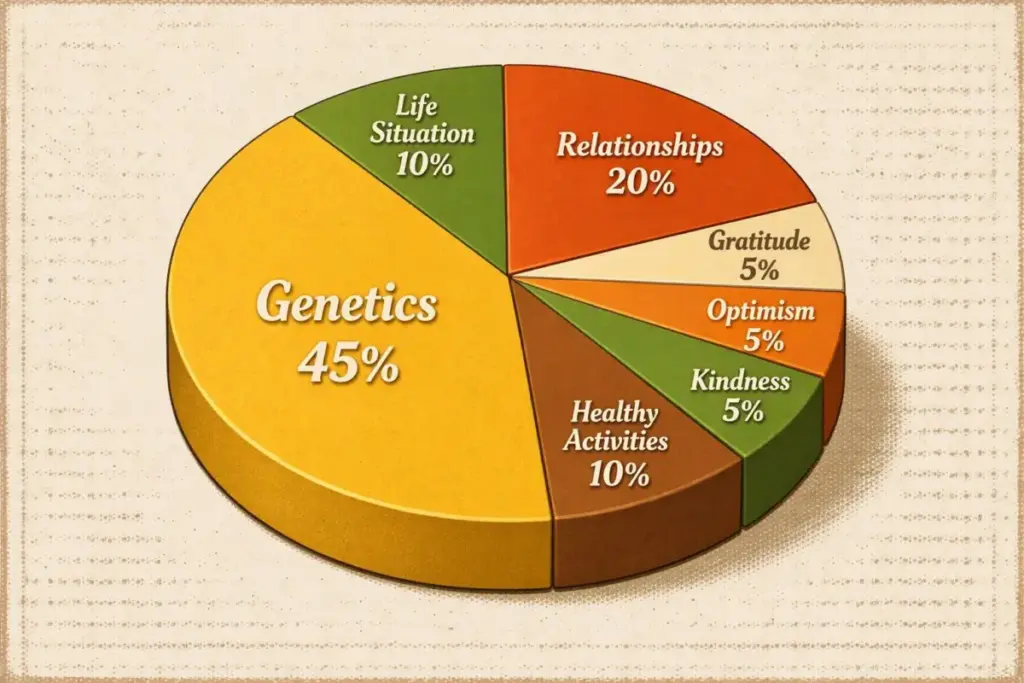
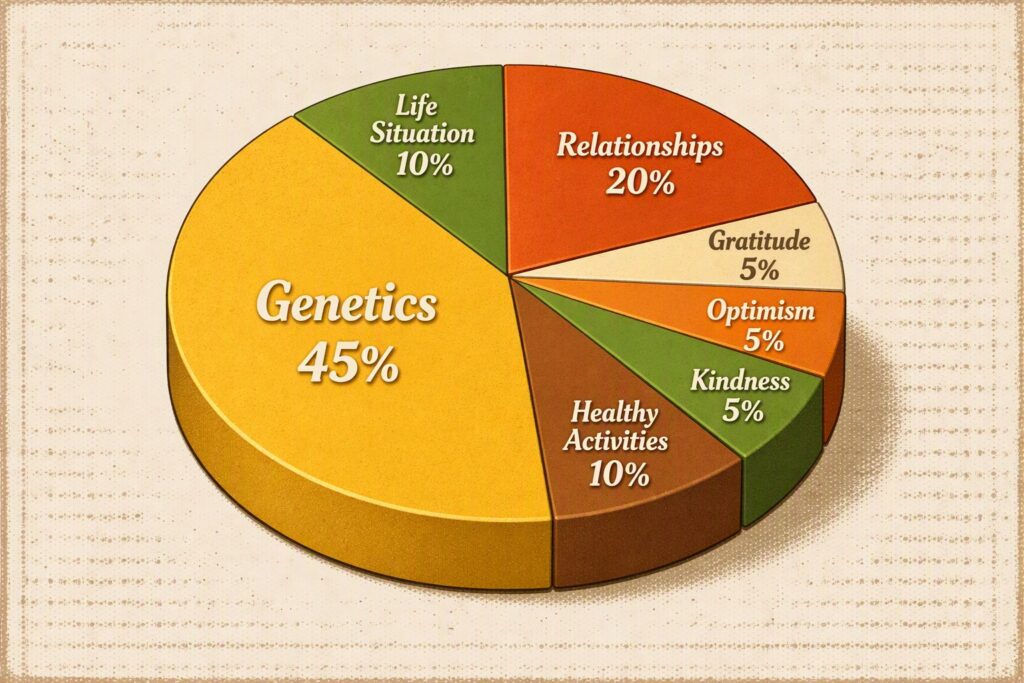
Beyond economics, human happiness tends to stabilize once basic material needs are met in developed societies. Long-term satisfaction is largely driven by non-financial factors, including close personal relationships, physical health, outdoor activity, and psychological resilience.
Yet, financial commentators and everyday investors alike remain prone to persistent anxiety, a phenomenon rooted in human evolutionary biology. Humans evolved as danger-detection machines, equipped with a psychological wiring designed to anticipate threats. Once immediate physical dangers regarding survival, scarcity, and social belonging are successfully resolved, this detection machinery does not simply turn off. Instead, it continually shifts its goalposts, moving from basic survival concerns to worries over market valuations, tax strategies, or neighborhood property standards.

The Cognitive Nail Gun and Modern Technological Shifts
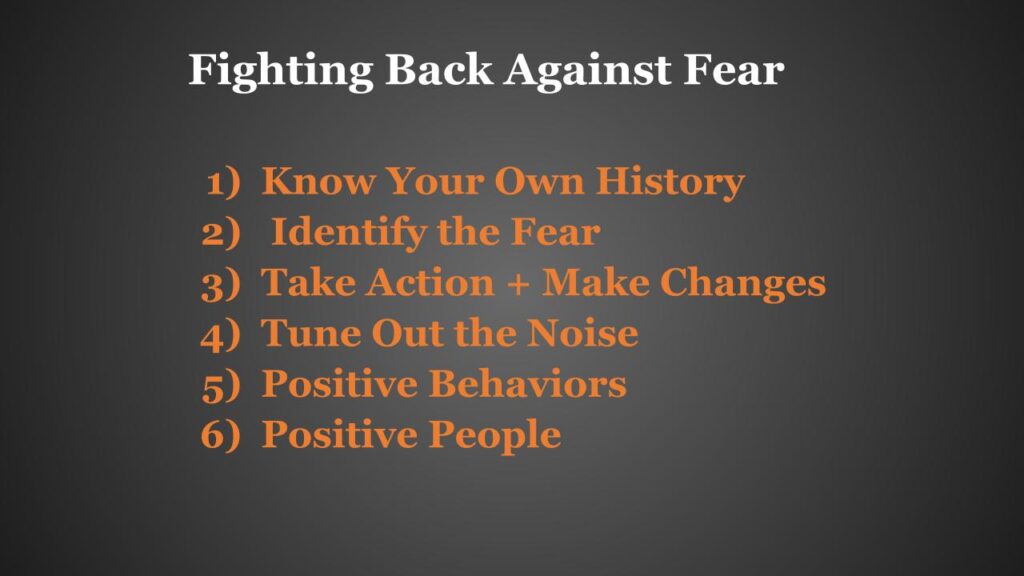
To combat this pervasive cycle of fear, advocates of financial independence suggest a shift in mindset—treating major life changes and technological transitions as manageable experiments rather than existential threats. This philosophy applies directly to the current wave of Artificial Intelligence.
Rather than succumbing to doom-scrolling and alarming media narratives, observers suggest examining the underlying mechanisms driving technological excitement. AI can be viewed constructively as a sophisticated form of "cognitive nail gun"—a tool designed to dramatically boost human efficiency, productivity, and ultimately economic prosperity by democratizing access to advanced problem-solving capabilities at a minimal cost.

Like previous technological revolutions, AI inevitably displaces certain categories of labor, particularly in entry-level administrative, financial, and routine analytical roles, while simultaneously paving the way for entirely new industries and services. Historically, the economic rewards of such innovations tend to concentrate among owners of capital and shareholders, reinforcing the importance of broad investment participation in the modern economy.

Ultimately, navigating the uncertainties of modern financial markets requires distinguishing between systemic economic reality and psychological reactivity. By recognizing fear as a natural evolutionary trait rather than an objective indicator of impending doom, individuals can better manage long-term financial plans, focus on continuous learning, and maintain perspective on what truly drives human well-being.