
When it comes to Black women’s breast health, the epidemiological data rarely tells a story of hope. According to national health statistics, Black women are diagnosed with breast cancer at a younger median age—60 compared to 62 for white women—and face a mortality rate that is 38% higher. They endure the lowest survival rates across every known stage of the disease. Furthermore, roughly one in five Black women diagnosed with breast cancer present with hard-to-treat triple-negative breast cancer (TNBC), a proportion higher than any other racial or ethnic demographic.
Yet these metrics fail to capture the human reality of the diagnosis: the middle-of-the-night phone calls, the impromptu head-shaving gatherings, the therapeutic breakthroughs, and the defining moments when a mother or grandmother gazes at her descendants and resolves to fight. Black women have always transcended mere data points. Nowhere is this more apparent than in the resilience, survival, and profound life transformations of those who confront breast cancer head-on.
The experiences of thirteen Black women illustrate a refusal to be reduced to a statistic. These individuals—navigating diverse careers, parenthood, humor, faith, frustration, and joy—discovered that their encounters with breast cancer reshaped their lives in ways both devastating and profound. By forging individual paths through treatment and beyond, they have constructed a legacy that quantitative data cannot measure: community, shared purpose, and a hard-won blueprint for survival passed down to future generations.

1. "I put my boxing gloves on and fought with everything I had."
Monique Bass, 53, had maintained a proactive approach to her health. As a single mother of twin sons and a grandmother of four, she initiated annual mammograms at age 40. However, a self-examination performed in bed at 47 revealed an abnormal lump.
Over three subsequent years, Bass underwent three tissue biopsies of the mass, each yielding benign results while physicians recommended watchful waiting. Trusting her intimate knowledge of her body and noting the lump’s continuous growth, Bass pushed for a lumpectomy to test the tissue. Histopathological analysis confirmed stage 1 invasive ductal carcinoma, an aggressive form requiring immediate chemotherapy.
Receiving the diagnosis inside a car wash during the height of the COVID-19 pandemic in 2020 compounded her isolation. Compounding the emotional toll, she was simultaneously navigating a divorce. Her rigorous treatment regimen comprised four rounds of doxorubicin, four rounds of paclitaxel, and 21 radiation sessions. The loss of her hair proved particularly difficult, though she reflects on the positive outcome: her hair returned thicker and healthier post-treatment.

Sustained by her spiritual foundation, Bass later established What’s Behind the Bra?, a New Jersey-based nonprofit that provides year-round comfort care packages to breast cancer patients, alongside a weekly advocacy podcast.
2. "I surrounded myself with love and laughter."
Jaqueline Beale, 64, inherited a family history marked by cancer, including her mother’s battle with the disease. At age 40, she detected a lump during a self-exam. Although initial sonograms and mammograms showed no abnormalities, clinical intuition prompted her to pursue a biopsy.
The radiologist delivered the stage 1 breast cancer diagnosis abruptly over the phone while hailing a NYC taxicab, urging her to find a breast surgeon immediately. Choosing humor as a coping mechanism, Beale integrated lightheartedness into her medical journey. She explicitly requested that her family surround her with laughter and levity, a dynamic illustrated when her sister casually reassured a concerned elevator passenger that Beale "just had a little bit of cancer."

3. "What once felt like the end became the beginning of something greater."
Annita White, 51, delayed her routine mammogram by five months while balancing responsibilities as a single mother, a higher education administrator, and a doctoral student. When she finally completed the screening, a new mass was detected and subsequently confirmed via biopsy.
The grueling treatment path—involving chemotherapy, bilateral mastectomy, and the loss of her signature hair—challenged her physical autonomy and triggered profound vulnerability. Grounded by her faith, White completed treatment, earned her PhD, and now serves as a survivor advocate with the African American Breast Cancer Alliance under the moniker Dr. Nita.
4. "The clouds are moving. The sun has decided to show itself."
Marylande Regis, 38, relocated to Georgia as a registered nurse, realtor, wife, and mother of three. Shortly after weaning her infant, she discovered a lump. Initial medical responses dismissed the finding as a clogged milk duct due to her youth, but Regis persisted.

Diagnosed at 36 with stage 2B, BRCA1-positive breast cancer, she underwent extensive interventions including chemotherapy, bilateral mastectomy, radiation, a total hysterectomy, and reconstruction. Supported by her husband, Kory, and her mother, Regis channeled her survival into daily milestones, cherishing family life and her children’s development.
5. "Sickness had never been my world."
Judy Fambrough-Billingsley, 75, led an exceptionally active life characterized by daily walks, swimming, Zumba, and soccer, requiring no regular medications. When she detected and subsequently ignored multiple growing lumps despite a clean mammogram, the resulting diagnosis introduced her to the medical system for the first time. Drawing on her formative experiences as an NAACP youth leader and Civil Rights activist, she applied a lifelong ethos of resistance to her medical treatment.
6. "I was so used to always being the strong one."
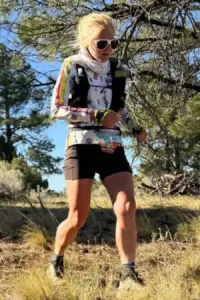
Taylor Johnson encountered resistance when seeking a mammogram at age 30 after discovering a breast lump. Following an independent biopsy, she received a stage 2 triple-negative breast cancer diagnosis. Balancing six months of chemotherapy, surgery, and radiation while maintaining stability for her young daughter tested her emotional endurance. Supported by her family, prayer circles, and her medical team at the Mayo Clinic in Arizona, Johnson redefined strength to encompass mental and emotional resilience.

7. "I wanted to feel supported through it, not just survive it."
Jessica Ncube, 41, a licensed clinical social worker and mental health practice co-owner, received a silent diagnosis via a routine mammogram. Following an initial lumpectomy with unclear margins, she elected to undergo a double mastectomy and reconstructive surgery. The experience forced Ncube to transition from perpetually caring for others to accepting vulnerability, balancing her inherent resilience with emotional softness.
8. "Cancer doesn’t define you. You define you."
Ameiko Newman, 40, received her diagnosis unexpectedly following hospitalization for abdominal pain. Undergoing weekly chemotherapy and immunotherapy, Newman channeled her experience into advocacy by founding a business designing specialized scarves for chemotherapy patients. Her daily routine, anchored by faith and family, underscores her message that patients retain agency over their identity despite severe illness.
9. "I shifted to being overly optimistic."
Charlotte Connor, 38, discovered a lump following a breast augmentation at age 30. Initial clinical dismissals delayed diagnosis until the mass tripled in size one year later, confirming stage 2A ductal carcinoma. Adopting an intentional mindset of radical optimism for the sake of her young daughter, Connor relied on close friends and family—who hosted a pre-treatment head-shaving party—to navigate her therapy.

10. "We have been through challenges our whole lives. This is just one more."
Donna Culmer, 73, was diagnosed with stage 1 breast cancer in 1999 following imaging that investigated a separate fibrocystic finding. Serving as a military trainer while raising three children, she underwent chemotherapy and a mastectomy. Supported by her father and her church community, Culmer reflects on over two decades of survivorship, advising patients to actively engage with medical professionals and embrace modern therapeutic advancements.
11. "Therapy fortified me to get through cancer."
Patricia Fox, 38, discovered a breast lump at age 26, initially facing dismissive assessments from providers citing her age and dense breast tissue. A subsequent biopsy confirmed stage 2A estrogen receptor-positive breast cancer. Overwhelmed by psychological distress, Fox utilized professional therapy to process her diagnosis and address behavioral patterns, ultimately establishing an advocacy mission to destigmatize mental health support within the Black community.
12. "I turned to prayer to remain calm."
Annette Colden, 63, was motivated to pursue consistent screenings after supporting her sister through multiple cancer battles. Following initial ambiguous imaging, a subsequent mammogram at age 42 confirmed stage 0 breast cancer. Sustained by faith and a sense of profound calm, Colden dedicated her recovery to peer support, offering counseling and practical assistance to fellow patients through the Roswell Park Comprehensive Cancer Center.

13. "I quit my life and started a new one as an advocate."
Ricki Fairley, 69, received a diagnosis of aggressive stage 3A triple-negative breast cancer while traveling for work at age 55. The diagnosis prompted a radical life restructuring: she underwent a double mastectomy, chemotherapy, and radiation, while simultaneously leaving her corporate position, filing for divorce, and selling her home to eliminate chronic stress.
When subsequently diagnosed with metastatic breast cancer, Fairley secured specialized second-opinion care that enabled her to achieve remission a second time. She later co-founded The Black Breast Cancer Alliance, dedicating her life to systemic advocacy aimed at reducing mortality rates among Black women.