




In an era defined by relentless demands for convenience, automated appliances, and digital entertainment, a growing counter-movement is urging modern society to reconsider its relationship with comfort. This cultural critique has found a resonant voice within the personal finance and lifestyle blogging community, notably championed by prominent figures advocating for financial independence and intentional living. Drawing inspiration from recent scientific literature and grueling personal expeditions into the American wilderness, commentators are increasingly pointing out that the relentless pursuit of ease may be doing more harm than good to our collective physical and mental well-being.

The conversation around modern overindulgence often begins in unexpected places. For many, a recent catalyst was an extensive discussion on a popular medical and wellness podcast featuring author Michael Easter, a former journalist for Men’s Health. Easter’s book, The Comfort Crisis, introduces a concept that mirrors many of the core philosophies long promoted by advocates of minimalist and self-sufficient lifestyles: while mainstream headlines frequently fixate on financial debt or public health crises, the underlying problem for the average citizen in developed nations is often the opposite. Instead of a shortage of resources, society faces a surplus of artificial ease, leading to a pervasive disconnect from the fundamental physical and psychological challenges that humans evolved to handle.
Easter’s perspective is shaped in part by his personal background, including a hard-won battle against alcohol addiction—a struggle mirrored in his family history. Overcoming this severe trial provided him with a unique lens through which to examine the broader spectrum of human behavior, specifically the perpetual tension between comfort and hardship. In his writing, Easter employs a dual narrative structure, weaving together the harrowing account of an intensely difficult caribou hunting expedition in the remote wilderness of Alaska with scientific research, psychological insights, and cultural analysis. This framework allows readers to digest complex studies on human nature and apply them directly to their everyday lives.

One of the central psychological phenomena explored in the literature is humanity’s innate tendency to continuously scan the environment for threats, regardless of how secure and comfortable that environment actually is. Behavioral studies referenced in the book demonstrate that when human beings run out of genuine dangers to confront in a safe and prosperous setting, they do not simply become more satisfied. Instead, the brain lowers its threshold for what constitutes a problem, effectively beginning to invent complaints out of minor inconveniences. This mechanism helps explain why suburban communities can become consumed by trivial disputes over landscaping or minor neighborhood infractions, and why political systems frequently amplify manufactured cultural grievances to capture the attention of an under-stimulated populace.
Conversely, individuals embedded in genuinely harsher environments often display greater resilience and a significantly lower propensity for habitual complaining. Interviews conducted in active conflict zones, for instance, reveal that residents frequently report a high degree of perceived safety relative to their circumstances, while immigrants moving from less affluent regions to Western nations often find the prevailing conditions remarkably easy to navigate. This baseline adaptation allows first-generation arrivals to build businesses and accumulate wealth through disciplined saving, while subsequent generations, accustomed to immediate gratification and absolute comfort, run the risk of complacency.
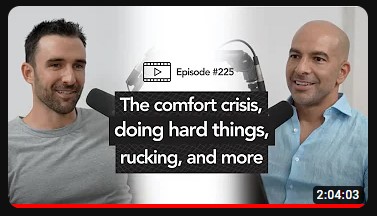
Beyond the sociological implications, the literature offers profound insights into the physiological necessity of nature and physical exertion. Biological wiring dictates an immediate, positive response to natural surroundings, a phenomenon underscored by research showing that even a single houseplant placed in a hospital room can measurably accelerate patient recovery. Scaling that exposure up to a living forest yields exponential benefits for mental and physical health, contrasting sharply with the sedentary, indoor existence dominated by office cubicles and automobile commutes.
Furthermore, human physiology is deeply tied to the ratio of effort to reward. Scientific data indicates that individuals derive greater happiness from endeavors that require significant physical or mental exertion. Yet, modern infrastructure is overwhelmingly designed to bypass physical exertion wherever possible, a reality illustrated by statistics showing that only a minuscule fraction of people choose to take the stairs when an escalator is readily available. This systemic avoidance of movement carries massive costs, contributing heavily to the prevalence of preventable chronic conditions and general malaise.

Health and wellness experts argue that addressing these foundational elements—prioritizing outdoor exposure, engaging in heavy weight-bearing physical exertion, minimizing sedentary habits, and reducing the intake of processed foods and alcohol—should always precede reliance on niche medical interventions or complex lifestyle treatments. While medical guidance should never be casually dismissed, the uncomfortable truth remains that engaging in physically and mentally demanding tasks often yields the highest returns on personal well-being.
These theoretical concepts are frequently put to the test in real-world scenarios. For long-time proponents of intentional living, a temporary retreat into the mountains of Southwestern Colorado provided a practical proving ground for the principles outlined in Easter’s work. Navigating remote construction projects, managing limited resources without indoor plumbing, and enduring unpredictable weather events can initially trigger stress in individuals accustomed to the climate-controlled stability of modern residential life. However, physical labor in high-altitude desert environments, accompanied by sparse food supplies and demanding daily routines, tends to foster a deep sense of resilience and vitality.

Activities such as navigating rough waters on a remote reservoir without modern conveniences or communication devices serve to reinforce the psychological benefits of stepping outside structured safety nets. Although initial physical exertion in adverse weather conditions can appear daunting, the resulting state of mind often transforms from apprehension into deep appreciation and mental clarity. Such experiences highlight a fundamental biological truth: humans are not engineered to exist in a state of perpetual ease and artificial satiety. Experiencing mild hunger, physical fatigue, and environmental exposure are normal components of the human condition that make moments of rest and sustenance profoundly rewarding.
As contemporary discussions surrounding financial independence and lifestyle design continue to evolve, critics frequently examine the balance between disciplined saving and the intentional use of financial resources. While accumulating excessive capital without enjoying the fruits of one’s labor can lead to unnecessary deprivation, the broader philosophical challenge lies in avoiding the trap of lifestyle inflation that merely seeks softer chairs and easier routines. True personal enrichment often comes not from purchasing items that diminish daily challenges, but from investing in robust tools, meaningful adventures, and purposeful endeavors that preserve a healthy degree of productive struggle in an increasingly comfortable world.