

In the vast and enduring universe of Star Wars, few background mechanicals are as instantly recognizable—or as delightfully unassuming—as the MSE-6 series, colloquially known as the mouse droid. First introduced scurrying down the sterile corridors of the Death Star in the original 1970s cinematic classic, these compact, low-profile robots resemble little more than rolling toasters with a penchant for frantic scurrying and high-pitched beeps. They are functional, utilitarian, and firmly stamped with the bureaucratic authority of the Galactic Empire.
Down across the galaxy of fan creations, however, the strict rules of the Empire rarely apply. Enter Cass, a talented Canadian maker operating under the moniker Chaos Theory, who decided to pose a wonderfully disruptive question: What would happen if an Imperial mouse droid fell into the hands of Sabine Wren? For those keeping track of galactic lore, Sabine Wren is the celebrated Mandalorian warrior, graffiti artist, and explosives expert featured in the animated series Star Wars Rebels. Known for splashing vibrant, rebellious artwork across anything and everything the Empire held sterile and uniform, Sabine’s artistic touch is unmistakable.
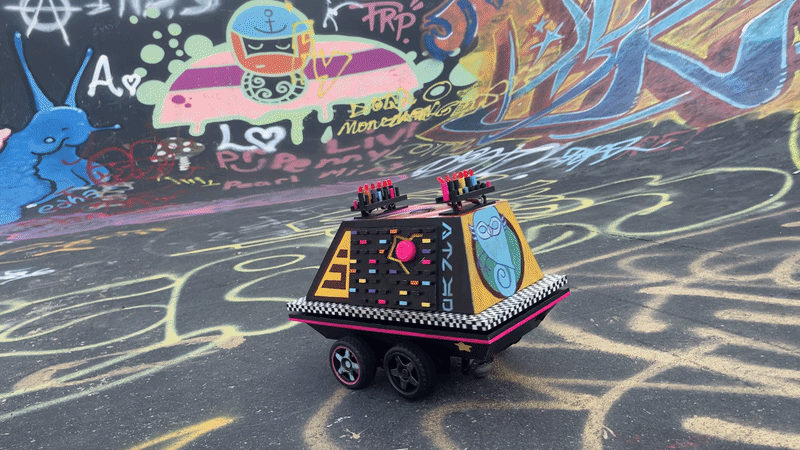
The result of Cass’s creative inquiry is nothing short of a spectacle—a fully autonomous, 3D-printed, open-source mouse droid that has decisively abandoned its Imperial duties to become a graffiti-splattered rebel rave machine.
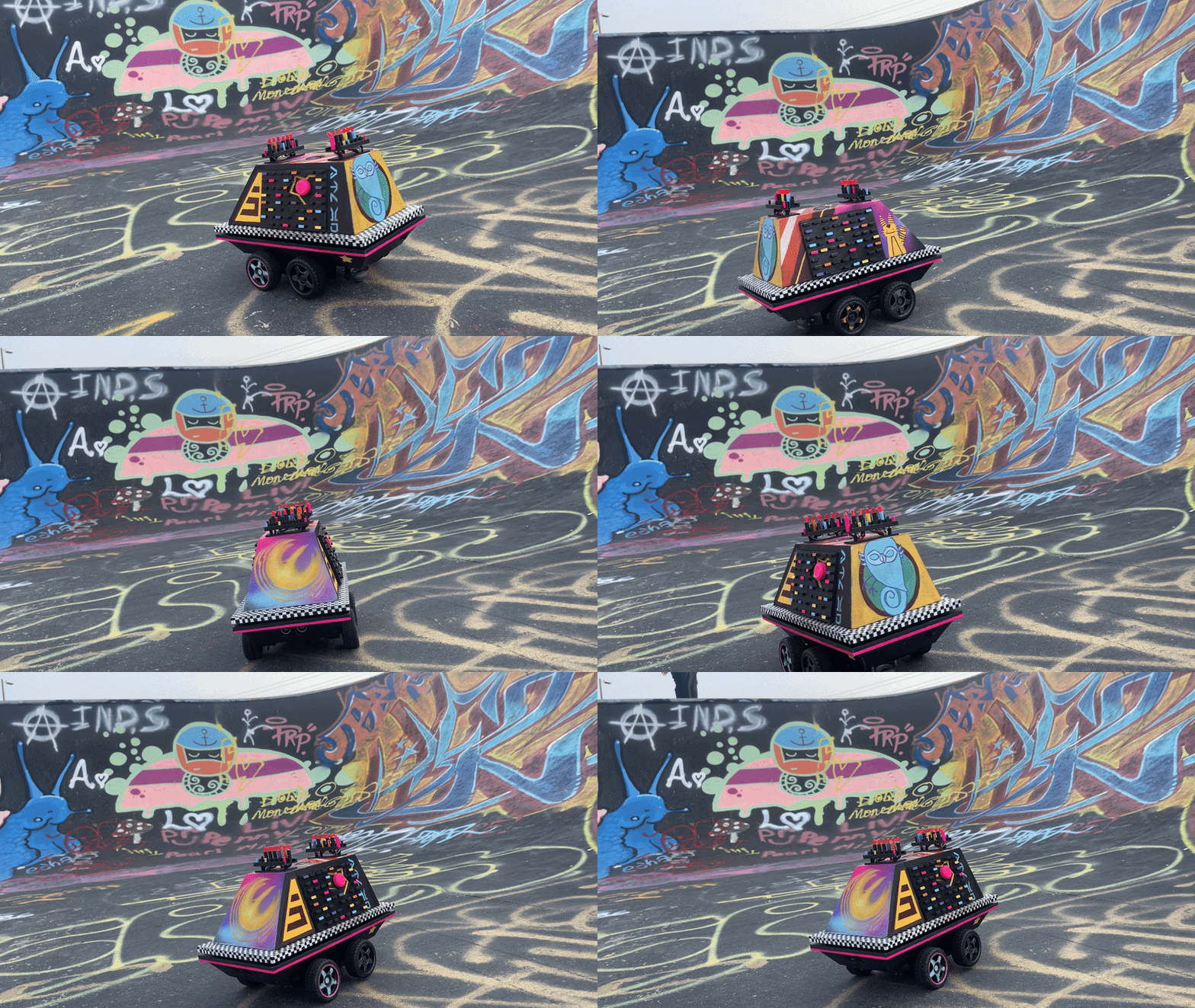
Bringing this unorthodox vision to life was far from a simple cosmetic weekend project. For Cass, wrapping a new aesthetic shell around an existing off-the-shelf remote-controlled car chassis simply would not cut it. The project demanded deeper engineering integrity and a richer suite of behaviors. This custom droid was designed not only to look the part of a rebel-customized artifact, but to navigate its environment entirely on its own, respond dynamically to sudden obstacles with a dedicated panic mode, and, crucially, feature a dedicated party button for maximum atmospheric impact.
Underneath the vibrant, graffiti-covered exterior lies a carefully curated suite of modern maker electronics. The intellectual core of the machine is driven by a reliable Arduino UNO microcontroller, paired with a DFPlayer Mini MP3 module to handle the audio output—ensuring the droid can chirp, panic, and drop beats with authentic audio flair. To ensure the autonomous vehicle could safely traverse real-world environments without crashing into furniture or unsuspecting bystanders, Cass integrated an ultrasonic distance sensor to help the machine feel its way around obstacles.
Because standard commercial remote-controlled cars do not come equipped with this specific configuration of brains and sensory equipment, Cass determined from the outset that building the vehicle completely from scratch was the most logical path forward.

Reflecting on the design and construction process, Cass detailed the mechanics of the chassis development. It relies primarily on a custom chassis design that was meticulously modeled and 3D-printed specifically for the project. However, to ensure a solid and reliable foundation during the development phase, an existing flat metal Mecanum chassis was incorporated underneath purely as a structural mounting point to secure the motors. It provided a sturdy backbone for the motors to screw into while the rest of the upper components were being designed and fabricated. Looking ahead to potential future iterations, Cass noted that a hypothetical version two would likely eliminate the Mecanum support structure entirely, opting instead to mount the motors directly via custom brackets attached using heat-set inserts.
Opting to design the entire structure from scratch also brought significant practical advantages for the broader maker community. By creating a fully customized, 3D-printable architecture, Cass has ensured that the project is remarkably replicable. Enthusiasts and fellow makers who have access to a 3D printer can easily download the open-source files and construct their own autonomous rebel rave droids without the headache of tracking down a specific, increasingly rare vintage RC car or struggling to adapt an incompatible commercial platform.
Beyond the logistical benefits of open-source sharing, there was also a purely artistic and personal motivation behind the scratch-built approach. Cass simply relishes the challenge of building complex objects from the ground up and pushing personal fabrication skills to new heights. This particular build marked a significant milestone as Cass’s first foray into utilizing heat-set inserts to secure components directly into 3D-printed parts—a technique that ultimately proved exceptionally successful and satisfying to implement.

For those inspired by the fusion of classic science fiction aesthetics, autonomous robotics, and street art culture, the complete documentation, code, and build files have been shared publicly. Makers interested in constructing their own autonomous rebel rave machine can find comprehensive instructions and guides hosted on Instructables, inviting a new wave of custom droids to join the rebellion, one beep and bass drop at a time.