

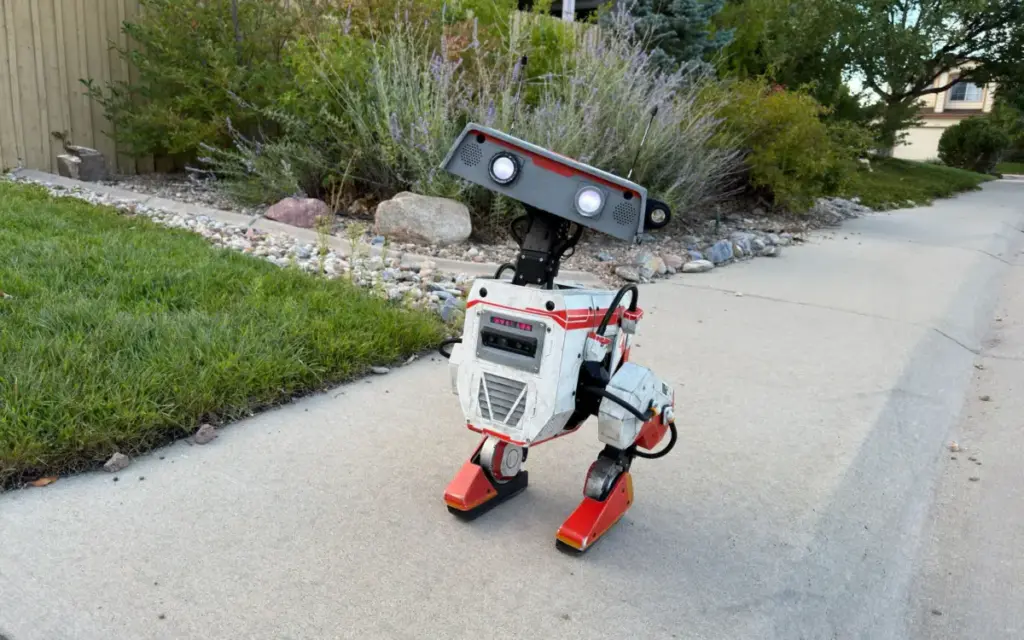
When Disney Research first showcased its advanced bipedal BDX droids at the Nvidia GTC conference in San Jose, California, they instantly captivated audiences. Featuring vibrant colorways—Besh in blue, Grek in green, and Oskar in orange—these expressive machines were unlike standard industrial robots. Rather than simply performing programmed tasks, they evoked immediate, visceral reactions from onlookers who quickly looked past the visible motors and control loops to see lifelike characters with distinct personalities.
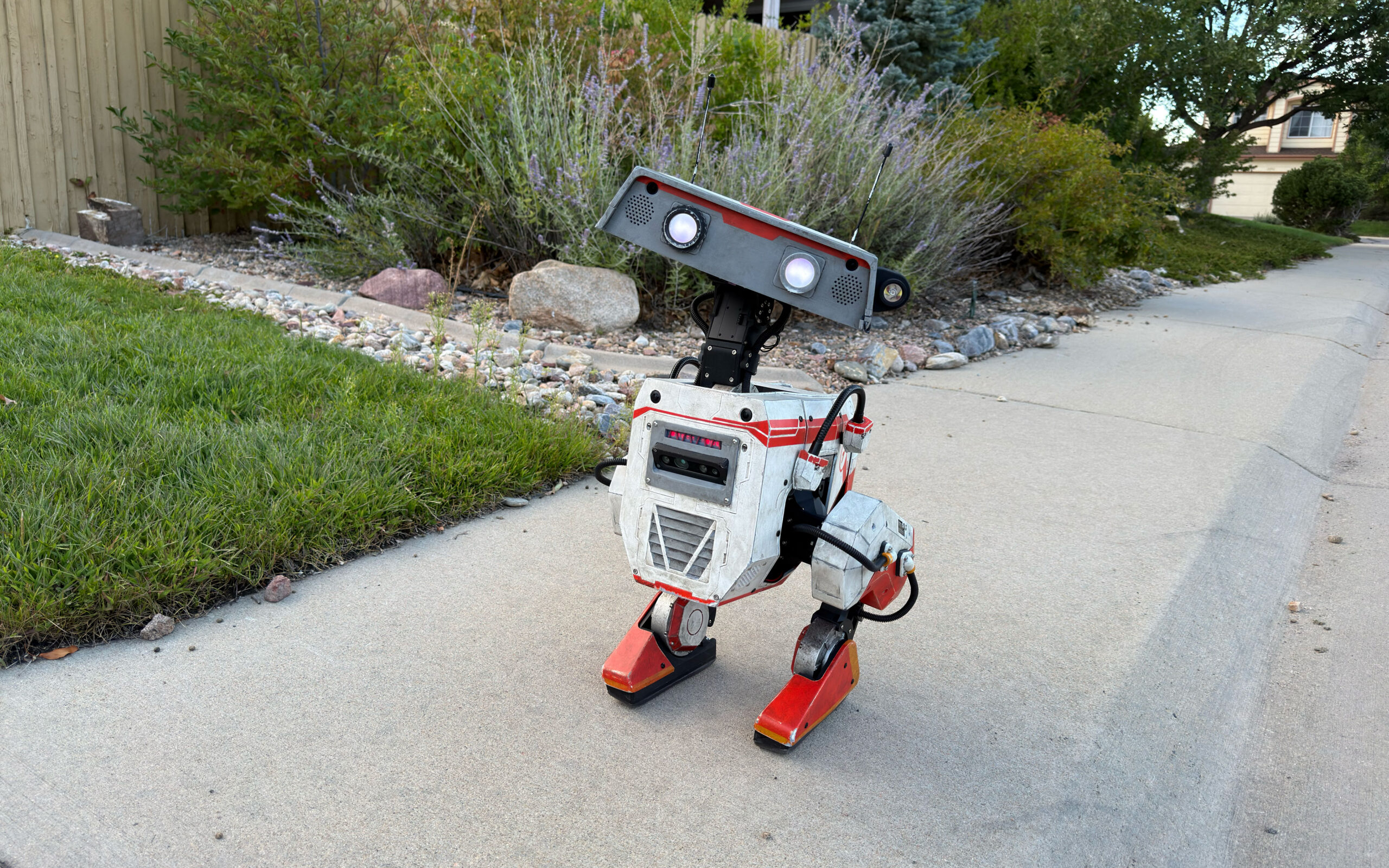
For many who witnessed them, the droids seemed destined for children’s hospitals or appearances alongside costuming groups at public events. But while most observers simply admired them from afar, a dedicated collective of makers and engineers decided to attempt the seemingly impossible: building their own functional, open-source replicas. What started as an ambitious individual experiment has now blossomed into a rapidly growing global community known as OpenBDX, providing builders worldwide with the blueprints, code, and simulation tools needed to bring these charismatic characters to life.
The Genesis of an Open-Source Robot
The foundational roadmap for the project came from an academic paper published by Disney Research detailing the design and control of their bipedal robotic characters. While the paper provided crucial insights into actuation, mechanical design, and control strategies, it intentionally left many practical implementation details unresolved. Translating those academic concepts into physical hardware required bridging massive gaps in mechanical engineering, electronics, firmware, and software.
Initial efforts focused on replicating the core hardware direction outlined in the Disney documentation to reduce variables and establish a baseline system. For software engineers entering the mechanical domain, tools like Shapr3D running on an iPad provided an approachable yet precise entry point into computer-aided design, allowing creators to map out leg structures around specified actuators.

As the project expanded beyond a solo endeavor, key collaborators joined to tackle its immense multidisciplinary challenges. Mimir Reynisson brought vital hardware and firmware expertise, designing custom printed circuit boards—including the PuddleDuck chest board—that allowed Nvidia Jetson modules to communicate seamlessly with the motor buses while managing audio, lighting, and sensor feeds. Later, mechanical engineer Florian Bieregger stepped in to address structural weaknesses in printed components, spearheading a comprehensive mechanical redesign utilizing CNC-machined parts and establishing a rigorous build guide.
Anatomy and Complex Engineering
While OpenBDX droids share the aesthetic familiarity of beloved sci-fi companions, their underlying mechanics mirror advanced humanoid robotics. Unlike traditional astromech droids that rely on a rolling base and remote-triggered animations, these bipedal characters must constantly solve complex balance equations, shift weight dynamically, and coordinate dozens of joints simultaneously.

Each leg features five degrees of freedom covering hip yaw, hip roll, hip pitch, the knee, and the ankle. Because the foot lacks a dedicated ankle roll joint, an angled foot pad is utilized to compensate mechanically. The upper body incorporates an additional four degrees of freedom for neck pitch, head pitch, head yaw, and head roll, alongside micro-servos dedicated to animating the antennas.
Actuation relies on high-performance components: Unitree A1 motors drive the knees, hip pitch, and hip roll, while Unitree Go-M8010-6 actuators handle the ankles, hip yaw, and neck pitch. The head is powered by Dynamixel XH540 servos operating on 12-volt or 24-volt systems, with smaller XC330 or XL330 servos managing the delicate movements of the antennas.

Processing power is distributed across two Nvidia Jetson Orin NX modules housed in the chest and head, connected via Ethernet. This dual-computer architecture reserves ample processing overhead for advanced perception, visual odometry, mapping, and navigation tasks without compromising the timing-critical demands of motor control. Communication and hardware interfacing are centralized through the PuddleDuck custom chest board, which acts as a bridge between the central processing units and independent RS485 motor buses while interfacing with an onboard frame-mounted BNO085 inertial measurement unit and depth cameras.
Training Stability Through Reinforcement Learning
Achieving stable locomotion for a bipedal robot of this scale is a formidable task that defies traditional manual remote control. Because a human operator cannot simultaneously pilot fourteen individual joints in real-time while maintaining balance, the robot must autonomously compute its own continuous joint motions.

To solve this challenge, OpenBDX utilizes reinforcement learning frameworks such as MJLab and Isaac Lab to train walking policies within simulation environments. Using polynomial imitation references derived from custom gait-authoring tools, the training pipeline subjects the virtual robot to a rigorous curriculum involving physical disturbances, variable terrain, and recovery maneuvers. Furthermore, domain randomization is heavily employed, introducing variations in weight, friction, and motor responses to ensure the resulting control policy remains robust when transferred from simulation to the physical hardware.
Once trained, the resulting policy is exported as an ONNX model and executed locally on the chest-mounted Jetson Orin NX. Rather than issuing direct motor commands, human operators send high-level velocity vectors and pose directives, which the neural network translates into coordinated joint actions while reacting dynamically to sensor feedback.

This architecture also accommodates expressive animations through an ecosystem tool called Duckmation. By layering emote scripts on top of the active control policy, operators can command the droid to walk or turn across a room while simultaneously executing expressive head movements, antenna twitches, and lighting changes without disrupting locomotion.
Simulating and Authoring Character Performance
Before deploying policies or animations to physical hardware, developers rely on advanced simulation tools to mitigate the risk of costly mechanical failures. WaddleScope serves as the project’s browser-based MuJoCo simulator and policy player, allowing builders to test navigation commands, verify control modifications, and preview integrated behaviors in a risk-free virtual environment.

Through this simulation platform, community members from around the world can test and share policies or emotes directly through the project’s web hub, reviewing how an animation will look on the droid before committing it to physical hardware. Additional ecosystem software like Duckmation provides a dedicated timeline editor for authoring complex performance sequences, coordinating body postures, audio cues, eye states, and lighting commands into cohesive character expressions.
Since its official launch, the OpenBDX platform has expanded into a thriving collaborative hub. With thousands of registered users and dozens of droids actively under construction across the globe, the project continues to evolve through shared contributions in software development, mechanical refinement, documentation, and design. By transforming academic research into an accessible, open ecosystem, the community is successfully bringing cinematic characters out of the laboratory and into the real world.