



As dogs enter their senior years, many owners begin to notice subtle changes in their pets’ daily routines. A beloved companion may take longer to stand up after a nap, hesitate before climbing stairs, or show less enthusiasm for their daily walk. While these behavioral shifts are common indicators of aging, they do not pinpoint a specific underlying cause.
Veterinary professionals emphasize that the critical first step in addressing these changes is a comprehensive medical evaluation. Rather than assuming a slowing pet is simply experiencing the unavoidable effects of old age, a formal diagnosis allows owners to establish a targeted care plan. Once a veterinarian identifies the source of discomfort, owners can explore a combination of lifestyle adjustments, environmental modifications, and supportive supplements, including cannabidiol (CBD).
With a growing market of cannabinoid products designed for pets, making an informed choice requires understanding the science behind these options, how to read product labels, and how to track a dog’s daily comfort.
Understanding the Evolving Wellness Needs of Aging Dogs
The aging process in canines is highly individualized, meaning there is no single chronological age at which a dog officially becomes a "senior." A dog’s breed, size, genetics, and medical history all influence how they age. Consequently, a pet’s functional health is a far more reliable indicator of their needs than a number on a calendar. For example, a dog that has naturally preferred short walks throughout its life is very different from a dog that suddenly refuses to walk along its favorite route.
Veterinary experts advise owners to distinguish between gradual, long-term patterns and sudden behavioral shifts. A gradual decline in stamina over several months, an acute limp that appears overnight, or a new habit of restless pacing after dark represent distinct clinical scenarios. Each observation provides a veterinarian with specific diagnostic clues that are far more useful than a general report that a pet is "getting old."

When preparing for a veterinary consultation, owners should document specific changes in:
- Mobility and posture: This includes stiffness after rest, changes in gait, or difficulty finding a comfortable sleeping position.
- Daily behavior and engagement: Shifts in how a dog interacts with family members, changes in play behavior, or a reluctance to navigate familiar obstacles can signal discomfort.
- Sleep-wake cycles: Restlessness, panting, or pacing at night can indicate pain, anxiety, or cognitive changes.
- Elimination habits: Difficulty posturing to eliminate or accidents in the house may stem from physical discomfort or mobility limitations.
Identifying the precise cause of these changes ensures that any subsequent intervention, whether it involves prescription medication, environmental support, or a supplement like CBD, is tailored to the dog’s actual needs.
Identifying and Tracking Mobility Changes at Home
To evaluate whether any joint support plan is working, owners must observe and record their dog’s behavior during ordinary, everyday activities. Testing a dog’s physical limits or deliberately provoking discomfort to see how they react should always be avoided. Instead, focus on repeatable, low-impact observations in the home environment.
Helpful observations include noting how many attempts a dog needs to stand up from their bed, tracking how far they can comfortably walk before slowing down, and observing whether they require assistance to navigate a low step or threshold.
These physical signs do not automatically point to osteoarthritis. Joint discomfort, neurological conditions, soft-tissue injuries, and general muscle weakness can all manifest as stiffness or hesitation. A veterinary examination is necessary to rule out acute injuries or progressive diseases before introducing joint supplements or CBD.
In cases where a dog experiences a sudden inability to stand, severe pain, collapse, or a rapid deterioration in health, owners should seek immediate veterinary care rather than attempting to manage the issue with over-the-counter wellness products. A mobility supplement is designed for long-term support, not acute emergency care.
When tracking these changes, categorizing observations can help structure the information for a veterinary visit:
- Stiffness after resting: Note if the hesitation occurs primarily in the morning or after long periods of sleep, and observe whether the stiffness improves as the dog moves around.
- Sudden limping: Record exactly when the limp began, which leg is affected, and whether any specific activity or jump preceded the change.
- Nighttime restlessness: Document patterns of pacing, vocalization, or disorientation, which help veterinarians distinguish between physical joint pain and cognitive decline.
Structuring these notes chronologically prevents owners from treating every restless night as a joint issue, allowing for a more balanced approach to both physical and cognitive care.
Evaluating the Science: Does CBD Benefit Senior Canines?
While CBD has become a popular topic of discussion among pet owners, it is important to understand that it is not a universal treatment for aging itself. The primary scientific interest in veterinary CBD stems from clinical research focused on canine osteoarthritis rather than broad studies on general aging.
In a 2018 controlled crossover trial published in Frontiers in Veterinary Science, researchers evaluated the effects of a specific CBD-based oil on dogs diagnosed with osteoarthritis. The study reported improvements in some owner-assessed pain and activity metrics during the period when dogs received the active CBD formulation.

While these findings are encouraging, veterinary pharmacologists note several practical limitations:
- Product non-equivalence: The specific formulation used in a clinical trial cannot be assumed to perform identically to every CBD oil or chew available on the market.
- Variable manufacturing standards: Differences in extraction methods, carrier oils, and active ingredient concentrations mean that retail products vary widely.
- Limited long-term data: Small, short-term studies do not provide comprehensive data on the long-term safety, optimal dosing, or potential side effects of lifetime administration.
When considering commercial options, such as the mobility products offered by Bailey’s CBD, owners should separate general clinical research from specific product formulations. Discussing the scientific literature with a veterinarian helps establish realistic expectations rather than viewing a specific brand as a guaranteed clinical cure.
A Holistic Approach to Joint Support and Home Environment
An effective mobility plan for a senior dog rarely relies on a single supplement. Improving an older dog’s quality of life typically requires a multi-faceted approach that addresses their physical environment, body condition, and daily routine.
Simple modifications to the home can significantly reduce the physical stress placed on an aging dog’s joints:
- Traction on slick surfaces: Placing non-slip rugs, runners, or interlocking foam mats over hardwood or tile floors helps prevent slips and reduces the effort required to stand.
- Access to elevated areas: Utilizing sturdy ramps or pet stairs allows dogs to reach favorite resting spots or vehicles without jumping.
- Optimized bedding: Providing supportive, orthopedic beds that are easy to step into helps distribute body weight evenly and minimizes pressure points.
- Elevated feeding stations: Raising food and water bowls slightly can reduce strain on a dog’s neck and forelimbs during meals.
Implementing these environmental changes also makes it easier to evaluate the effectiveness of any supplements. If a dog stops slipping primarily because traction has been added to the floor, owners can record that improvement accurately rather than attributing the progress entirely to a newly introduced product.
Ultimately, "joint comfort" should be defined by clear, realistic daily goals. For a senior dog, success might mean standing up with less effort, completing a short walk around the block comfortably, or sleeping through the night without shifting positions. Setting these micro-goals ensures that the care plan respects the dog’s physical limits.
Comparing Delivery Methods: CBD Oils vs. Joint Chews
When choosing a CBD product, pet owners generally choose between liquid oils and soft chews. The ideal format is not necessarily the one with the highest concentration, but rather the one that can be administered consistently and fits seamlessly into the dog’s existing routine.
Liquid CBD Oils
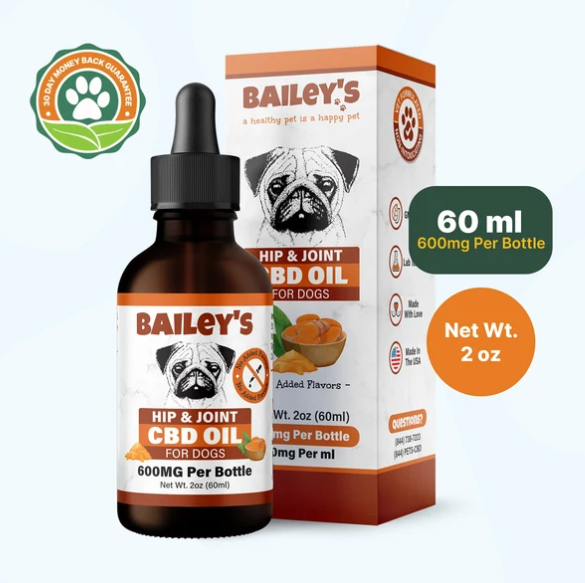
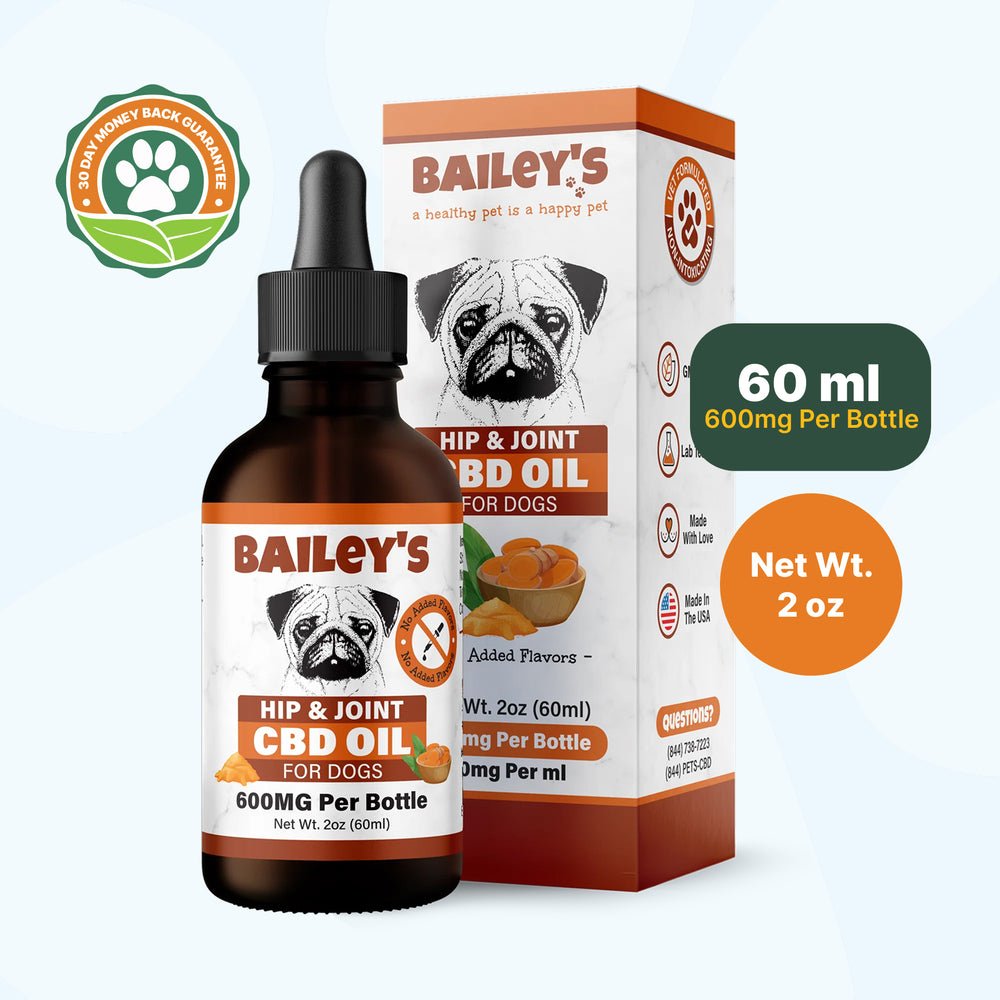
Liquid oils offer high precision, allowing owners to measure exact doses down to the fraction of a milliliter. This format is particularly beneficial for dogs on highly restricted diets, as pure oils typically contain very few ingredients. For example, Bailey’s Hip & Joint CBD Oil utilizes a simple formulation consisting of CBD, turmeric extract, and a medium-chain triglyceride (MCT) carrier oil.
When evaluating liquid options, owners should check the concentration of CBD per milliliter rather than relying solely on the total milligrams listed on the bottle. This ensures that the physical volume administered matches the veterinarian’s recommendation.
CBD Soft Chews
Soft chews are often preferred for their convenience and palatability, making them an excellent option for dogs that view them as a treat. However, chews are more complex formulations. They often combine CBD with traditional joint-support ingredients, such as glucosamine, methylsulfonylmethane (MSM), and green-lipped mussel, or essential fatty acids, as seen in Bailey’s Omega Hemp CBD Soft Chews.

Because these chews contain active secondary ingredients, owners must carefully review the entire ingredient panel to avoid duplicating supplements already in the dog’s diet. Combining a standard joint chew with a CBD joint chew can lead to accidental over-supplementation of ingredients like glucosamine.
To keep the veterinary team fully informed, owners should avoid stacking multiple mobility products without a clear plan. Keeping a single, comprehensive list of all supplements, vitamins, and medications prevents unnecessary overlap and allows for safer adjustments.
Deciphering Ingredient Labels and Product Quality
The presence of joint-support ingredients on a product label does not guarantee that they are present in therapeutic amounts or that the overall formulation is effective. A detailed review of product labels and independent testing is essential to verifying what a dog is actually consuming.
When reviewing a product, look for:
- Specific active ingredient amounts: The label should clearly state the exact milligrams of CBD, glucosamine, or active omega-3 fatty acids (specifically EPA and DHA) per serving, rather than using vague terms like "rich in hemp."
- The distinction between hemp seed oil and active cannabinoids: Hemp seed oil is a nutritious source of fatty acids but does not contain CBD, whereas full-spectrum or broad-spectrum hemp extracts supply active cannabinoids.
- Independent laboratory verification: Reputable manufacturers provide a Certificate of Analysis (CoA) for each product batch. This document, which brands like Bailey’s maintain on public lab-results pages, verifies the exact cannabinoid potency and confirms the absence of harmful contaminants such as heavy metals, pesticides, and residual solvents.
Keeping the original packaging or taking a photo of the ingredient label is a practical way to track changes over time, especially if a manufacturer updates its packaging, strength levels, or ingredient sources.

Determining Safe Dosage and Managing Drug Interactions
There is no universal, weight-only dose for CBD in senior dogs. A dog’s overall health, liver and kidney function, current medications, and the specific product formulation all influence how they metabolize cannabinoids.
Before introducing CBD, pet owners should consult their veterinarian to discuss:
- The dog’s complete health profile: Underlying organ dysfunction can alter how a dog processes supplements and medications.
- Potential drug interactions: CBD can affect how the liver metabolizes other drugs, which is a critical consideration for senior dogs taking prescription pain relievers, anti-inflammatory medications, or cardiac therapies.
- The distinction between regulatory status and marketing: Under current FDA guidelines, cannabis-derived products are not officially approved for use in animals. Understanding this distinction helps owners approach product claims with appropriate caution.
Owners should never alter or discontinue a veterinarian’s prescribed medical treatment plan in favor of a supplement trial. If CBD is introduced, it should be treated as a supportive addition to, rather than a replacement for, established veterinary care.
Implementing a Structured Observation Log
To objectively assess whether a senior dog is benefiting from a new care routine, owners should establish a simple, consistent tracking method. Introducing multiple changes simultaneously—such as changing a dog’s diet, adding a new supplement, and starting physical therapy all in the same week—makes it impossible to determine what actually helped or what might have caused an adverse reaction.
Instead, select two or three daily activities to observe under consistent conditions, such as using the same walking route or observing the dog rise from the same bed. Keeping a brief daily or weekly log can help track these patterns over time:

- Initial Baseline: Before starting any new supplement, record the dog’s current behavior, noting any hesitation when rising, their comfort level on walks, and their current medication and diet routine.
- Daily Log: Note the specific product administered, the exact measured serving size, the time of day, and any notable physical activities or observations.
- Weekly Review: Compare the dog’s overall comfort to the previous week, noting whether their mobility seems improved, unchanged, or worse under similar weather and exercise conditions.
A clear, descriptive note, such as "needed assistance climbing the back steps on three mornings," provides a veterinarian with far more actionable clinical information than a generic rating scale. If a dog’s condition deteriorates or if they show signs of digestive upset, owners should pause the supplement and contact their veterinary team immediately rather than waiting for a scheduled review. This structured approach ensures that the dog’s care plan remains safely aligned with their actual daily needs.