



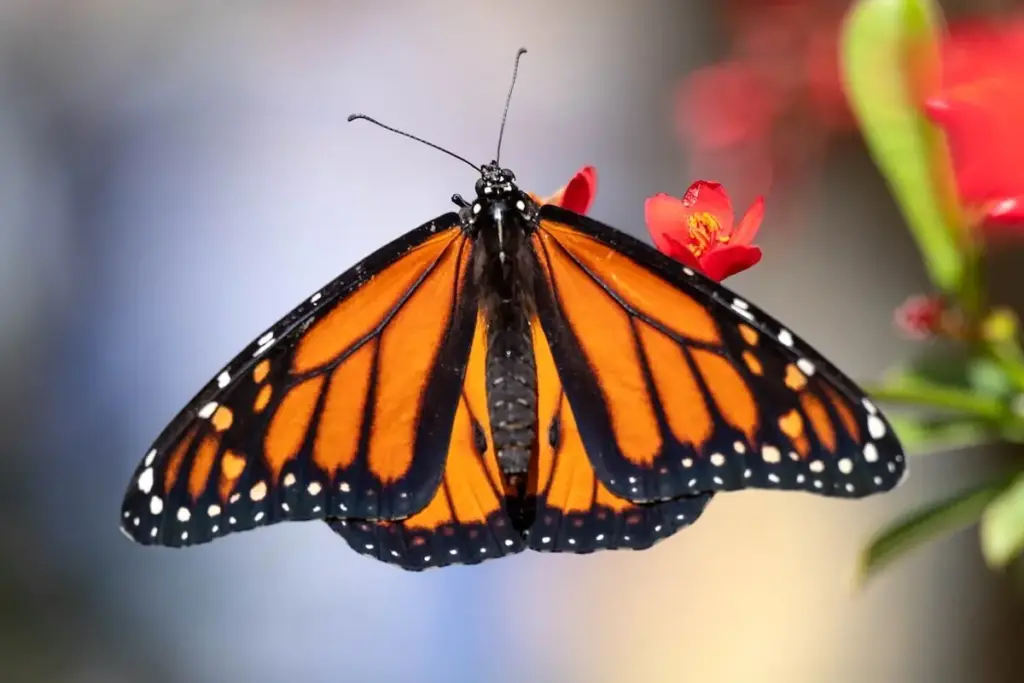
A new peer-reviewed study has officially linked agricultural and urban chemicals to a mass die-off of Western monarch butterflies, providing definitive evidence in a mystery that has long troubled conservationists and scientists alike. The research sheds vital light on the hidden dangers that migrating and overwintering pollinators face across their fragile habitats.
In January 2024, researchers made an alarming discovery near the Pacific Grove Monarch Sanctuary in California, a historic haven where Western monarch butterflies typically gather to overwinter. Scattered across the ground were hundreds of dead or dying monarch butterflies, prompting an immediate investigation into the potential causes behind the sudden and localized tragedy.
Initial reports from the scene, as detailed by The Guardian, revealed that the stricken butterflies were displaying clear signs of neurotoxic pesticide poisoning. These distressing observations triggered further testing and sophisticated laboratory analysis, the results of which have now been officially published in the academic journal Environmental Toxicology and Chemistry.
To uncover the exact cause of the mortality event, the research team subjected the collected specimens to advanced scientific testing procedures, including liquid and gas chromatography, as well as mass spectrometry. These precise analytical methods allowed scientists to screen for a wide spectrum of chemical residues. The results were startling: the team detected a complex chemical cocktail consisting of 15 different insecticides, herbicides, and fungicides present on the butterflies.
“We found an average of seven different pesticides per butterfly, including multiple insecticides that are highly toxic to insects,” Staci Cibotti, lead author of the study and a pesticide risk prevention specialist at the Xerces Society for Invertebrate Conservation, said in a statement. “Although a review by Monterey County could not determine the source of the chemicals, the high levels detected suggest that insecticides were likely responsible for the monarch deaths.”
According to the study’s detailed findings, three human-made pyrethroid insecticides—namely bifenthrin, cypermethrin, and permethrin—were detected at or dangerously near their lethal doses. Furthermore, the data showed that every single butterfly sample tested positive for bifenthrin and cypermethrin, while all but two samples contained residues of permethrin.
Cibotti explained that while Western monarch butterflies spend their winters gathered in protective clusters along the Pacific coast, they remain dangerously vulnerable to pesticide residue and chemical drift originating from nearby agricultural lands and urban areas.

The timing of this die-off compounds an already precarious situation for the species. According to the Xerces Society for Invertebrate Conservation’s annual Western Monarch Count, monarch populations plummeted to the second-lowest number ever recorded in 2024. By 2025, the total count of overwintering Western monarchs dropped even further, tallying a meager 9,119 individuals across their traditional Californian sanctuaries.
The long-term outlook for the Western population is stark. The Xerces Society reports that the Western monarch butterfly population has declined by nearly 95 percent since the 1980s. Consequently, migratory monarch butterflies are classified as endangered by the International Union for Conservation of Nature (IUCN). Furthermore, the U.S. Fish and Wildlife Service has previously estimated that Western monarch butterflies face a staggering 99 percent chance of functional extinction by the year 2080, as reported by the Los Angeles Times.
Given these grim projections, mitigating the lethal effects of chemical exposure has become an absolute priority for wildlife conservationists. In the wake of the newly published study results, the Xerces Society has outlined several crucial recommendations aimed at protecting the remaining population. These proposed actions include increasing public education regarding pesticide risks and safer alternatives, establishing strict pesticide-free buffer zones around known overwintering sites, integrating stronger chemical exposure protections into official conservation and recovery plans, and fostering better coordination and tracking of pesticide-related risks by public officials.
“Protecting monarchs from pesticides will require both public education and policy change,” Emily May, co-author of the study and agricultural conservation lead at the Xerces Society, said in a statement. “Estamos committed to working with communities and decision-makers to ensure that overwintering sites are healthy refuges for these butterflies.”
Expanding on the implications of the research, lead author Staci Cibotti noted that while the specific incident took place in California, the threat of pesticide exposure is a widespread hazard that follows monarchs across their entire geographic range. These chemical agents are not exclusively confined to large-scale agriculture; they are routinely utilized across highly developed landscapes for structural pest control, home gardening, residential landscaping, turf management, mosquito abatement, and various other municipal applications. In some instances, pesticides are even deliberately applied in natural areas to manage forest pests and disease vectors, creating unexpected hazards for beneficial insects.
Cibotti emphasized that another critical takeaway from the Pacific Grove incident is the extreme vulnerability of monarchs during the specific phases of migration and overwintering. Because these migratory insects naturally gather together in immense numbers during these periods, even a single localized pesticide application carries the devastating potential to wipe out hundreds—or even thousands—of individuals in a single event.
This catastrophic scenario is not unprecedented. A remarkably similar mass mortality event occurred in North Dakota in September 2020, when hundreds of monarch butterflies were discovered dead in the wake of aerial mosquito control spraying conducted during their autumn migration. Because migration and overwintering represent exceptionally sensitive windows in the biological cycle of the monarch, minimizing chemical exposure during these critical phases is imperative not only for preventing immediate, localized losses, but also for preserving the population’s overall capacity to rebound in the spring and achieve long-term recovery.