


Wildlife photography has undergone a profound transformation over the last three decades, shifting from a painstaking exercise in manual settings and high-stakes film processing into an era defined by lightning-fast digital automation. Yet, according to long-time wildlife photographer and international salon judge Johan J. Botha, this technological leap has created an unexpected dilemma for the community: while capturing technically flawless images has never been easier, standing out in an increasingly crowded field requires moving far beyond the conventional aesthetics of the past.
Drawing on 35 years of personal experience in the field—as well as extensive recent observations as a judge for photographic clubs and salons, an honours assessor for the Photographic Society of Southern Africa (PSSA), and a chair for Photographic Society of America (PSA) portfolios recognition—Botha has mapped the evolution of the craft. His perspective traces a direct line from the restrictive discipline of the slide-photography era to the democratized, high-speed capabilities of modern mirrorless systems, raising critical questions about the future of creative vision in nature photography.
The Slide Photography Era
During the slide-photography period spanning from 1993 to 2004, achieving recognition at a photographic club or salon demanded absolute mastery of the fundamentals. Good light, typically found only during the narrow windows of early morning or late afternoon, was an absolute prerequisite. In many instances, the quality of the light outweighed even the composition itself, which traditionally adhered strictly to the rule of thirds.
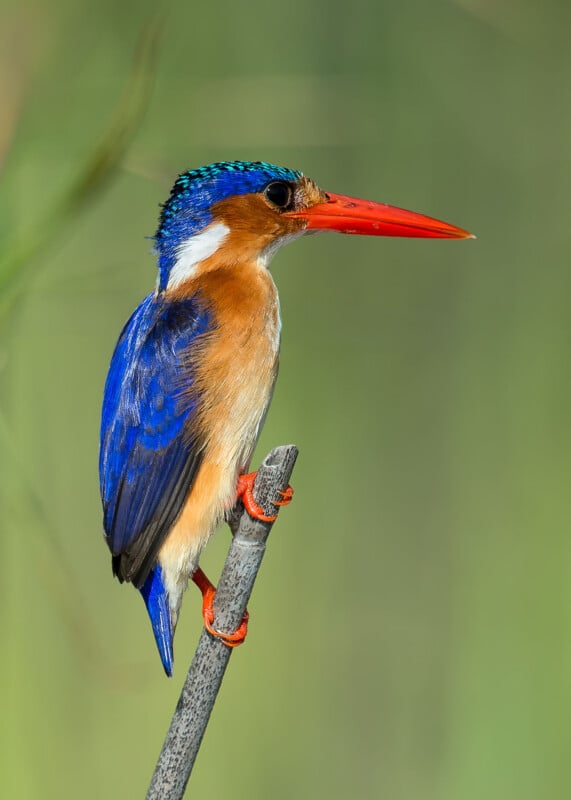
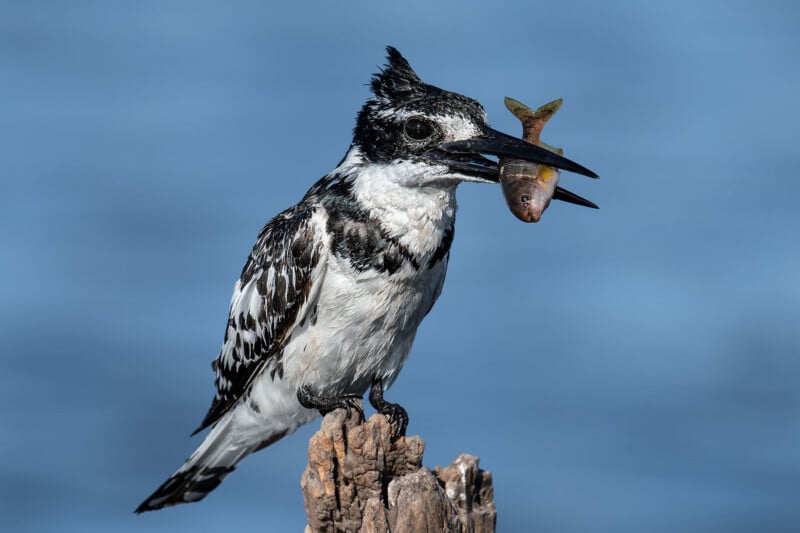
Photographers during this era had to ensure absolute sharpness and capture a distinct catchlight in the subject’s eye, often relying on full-frame compositions or tight cropping. The prevailing subject matter frequently centered around what is colloquially known as a "voëltjie op ’n stokkie"—a solitary bird perched on a twig—or a swimming waterbird. A kingfisher holding a catch while perched on a clean branch against an uncluttered background was often all it took to secure a salon award.
Success on film left virtually zero room for error. Operating during this period required a deep, practical understanding of the intricate relationships between shutter speed, aperture, and film speed, commonly known as ISO. Photographers had to change these settings manually and rapidly in the field, often while relying entirely on manual focus. Once the shutter was released, the exposure was permanently recorded onto physical film, leaving the photographer waiting anxiously for processing to find out whether the shot had succeeded.
The Transition to Digital and the Mirrorless Revolution
The advent of digital photography introduced a paradigm shift, bringing basic autofocus systems that unlocked entirely new possibilities. Birds in flight became more accessible subjects, allowing dynamic action images to enter the mainstream. Subsequent technological leaps rapidly followed, introducing larger, higher-resolution sensors, significantly faster shutter speeds, more advanced autofocus tracking, and drastically reduced digital noise at higher ISO sensitivities.
Cropping photographs became increasingly practical without incurring catastrophic losses in fine detail, a development that proved especially transformative for action and avian photography. The capability to shoot cleanly at ISO 12,800 or higher stands in stark contrast to the ISO 50 limits of high-quality slide film, fundamentally altering how photographers handle challenging lighting conditions.
However, Botha argues that the true equalizer between the novice and the veteran wildlife photographer arrived with the rise of modern mirrorless cameras. The elimination of the mechanical mirror, paired with ultra-fast processors, introduced an extraordinary level of automation. Advanced features such as subject and eye recognition, predictive tracking, pre-capture modes, shutter speeds exceeding 1/8,000 of a second, high-resolution sensors, and continuous shooting speeds of 30 frames per second or more have established a new baseline for high-end equipment.
Once a modern mirrorless system is properly configured, the primary mechanical challenge for the operator is frequently reduced to keeping a moving subject within the viewfinder and depressing the shutter. The technology no longer demands a seasoned or uniquely innovative operator to secure technically crisp action images of birds in flight or complex animal behaviors, fundamentally altering the competitive landscape.
When Technical Excellence Is No Longer Enough
Because modern camera systems have raised the technical floor so dramatically, capabilities that were once considered extraordinary are now commonplace. Photographs of a goshawk carrying prey or a heron transporting nesting material—feats that demanded immense patience and precision twenty or thirty years ago—are now routinely captured by thousands of hobbyists.
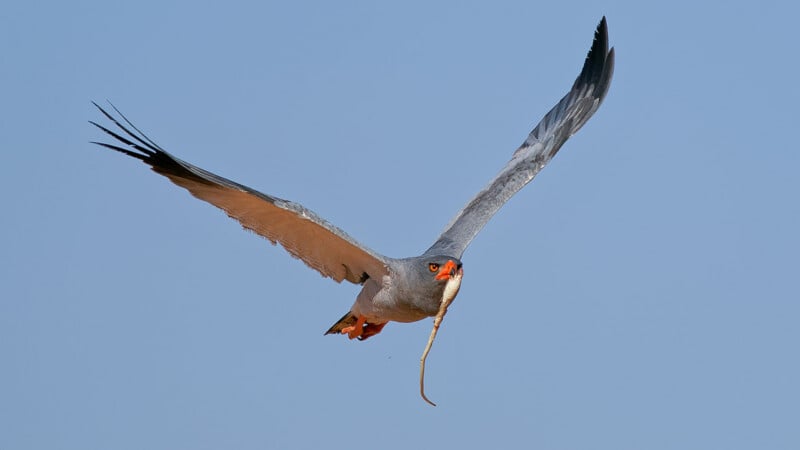
This widespread technical proficiency forces a critical re-evaluation of contemporary wildlife imagery. Photographers must confront the reality that thousands of peers are producing remarkably similar work, often anchored to the visual standards established decades ago. Despite having access to advanced tools, many practitioners continue to produce imagery heavily influenced by the aesthetic conventions of the slide era.
Botha attributes this persistence partly to the feedback loops within local photographic clubs, where judges frequently reward conventional compositions and may not always encourage members to push beyond established criteria. Furthermore, many club and salon judges do not specialize in wildlife photography, leading them to evaluate nature images through the lens of general photographic rules rather than advanced wildlife aesthetics. Additionally, the sheer complexity of modern camera menus often discourages photographers from venturing beyond default settings to explore the full creative potential of their gear.
Competing at an Elite Level
Having navigated the transition from local club competitions to serious national and international arenas in the early 2000s, Botha observed a stark contrast in evaluation standards. Conventional club and salon systems often operate on predetermined acceptance quotas, where a fixed percentage of entries—frequently around 20 to 25 percent—receive acceptances regardless of the broader pool’s overall quality. Under such frameworks, adequate images that fall short of rigorous standards can still secure acceptance to satisfy statistical quotas.
Elite international competitions operate under an entirely different philosophy. Prestigious platforms such as the Natural History Museum’s Wildlife Photographer of the Year do not rely on acceptance quotas; instead, standards are dictated purely by the extraordinary quality of the submissions, where only a tiny fraction of tens of thousands of entries are selected. In these environments, technical correctness, sharp focus, and clean exposure are no longer distinguishing factors—they are merely baseline expectations. Success in this tier demands originality, a distinct personal vision, and, above all, visual impact.
Creating Beyond Capturing
Faced with an environment where technical excellence is widely accessible, Botha altered his own photographic philosophy. Rather than focusing strictly on capturing a sharp, well-exposed subject, his approach centers on creating a deliberate visual statement. This shift involves looking beyond the animal itself to incorporate environment, behavior, interaction, atmosphere, and narrative context through intentional camera settings.
Studying winning portfolios from major international competitions reveals a recurring theme: giving the subject space. Avoiding the instinct to crop tightly allows the surrounding environment to contribute vital context, atmosphere, scale, and emotional depth. While tight cropping remains a powerful tool when the goal is to isolate a subject, it should be treated as a deliberate artistic choice rather than a fallback solution for distance.
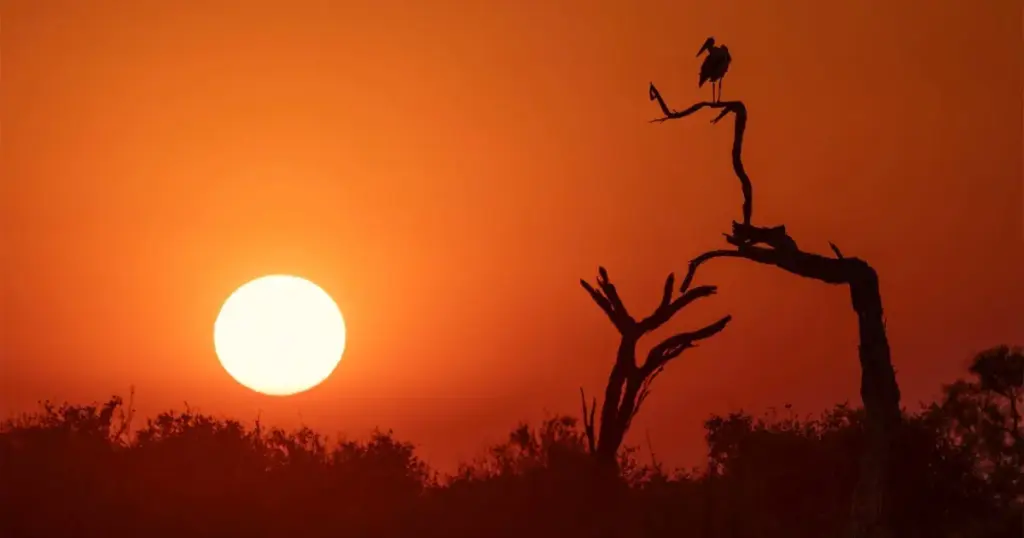
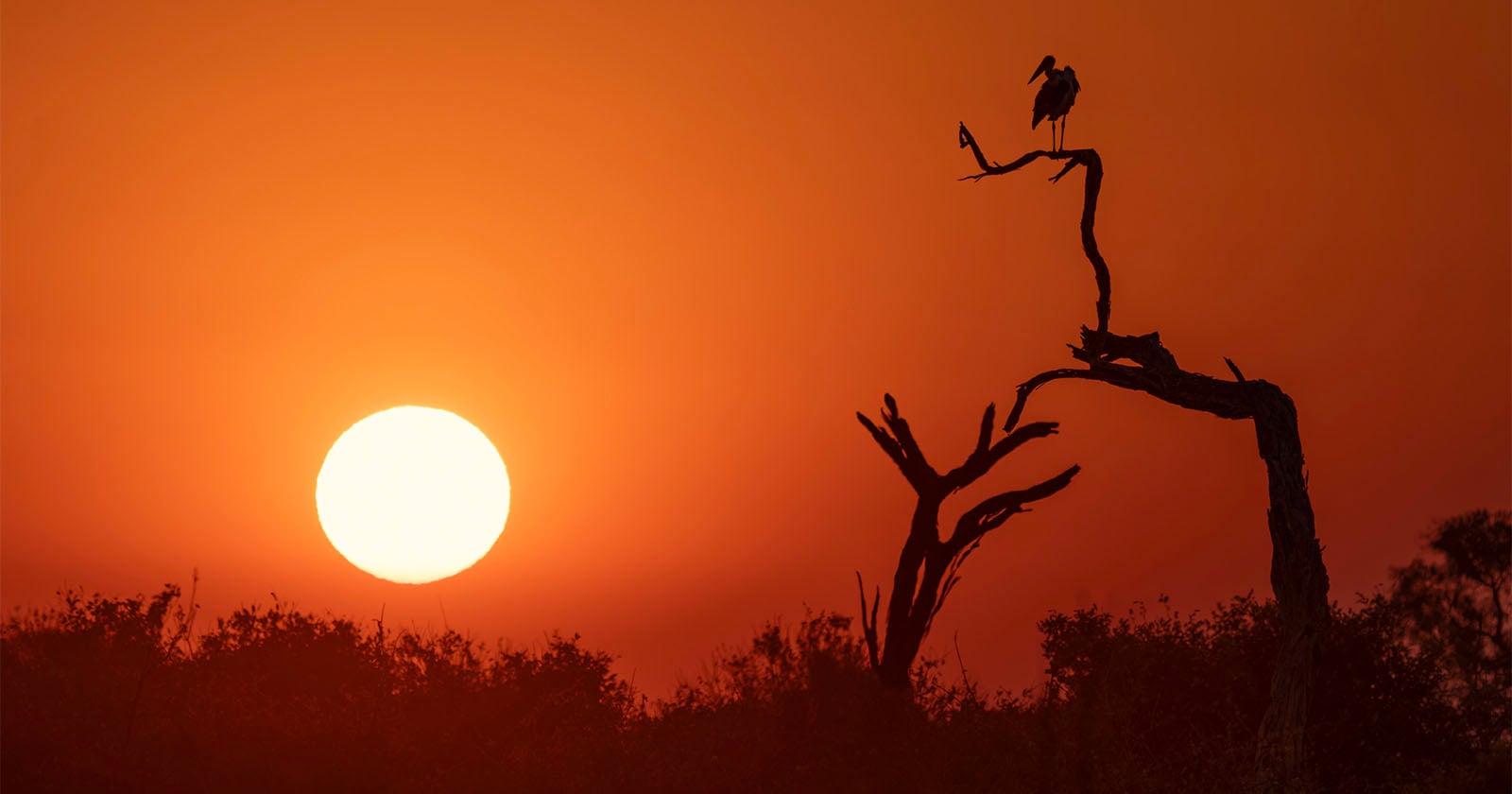
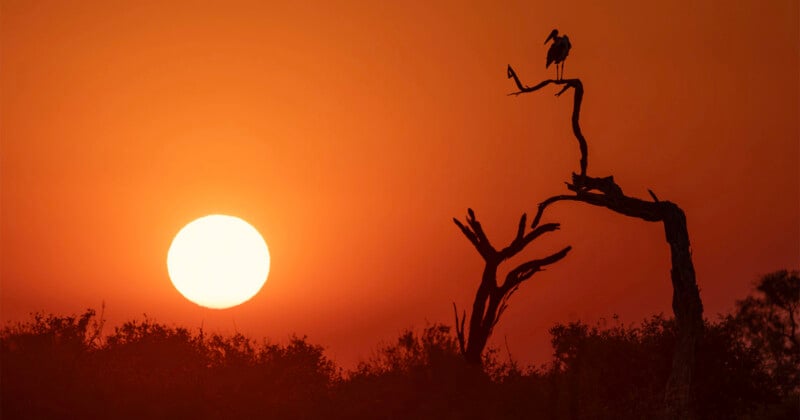
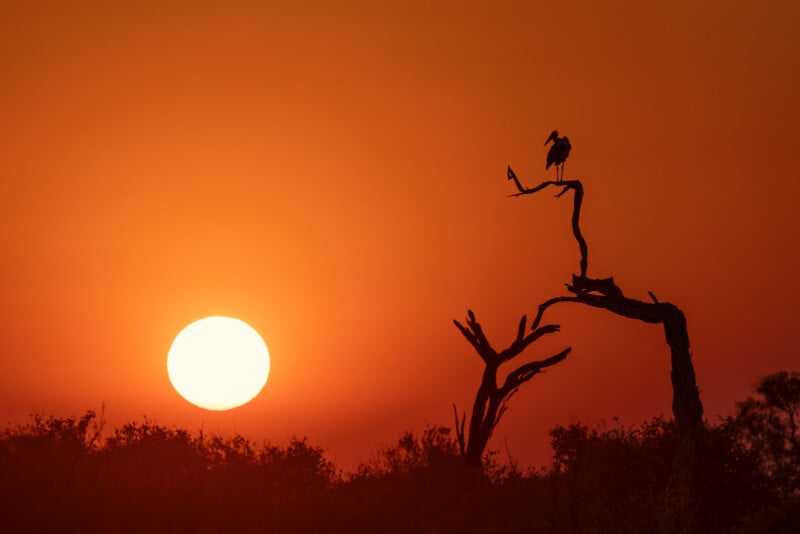
Botha’s modern portfolio reflects this philosophy in practice. By patiently observing a persistent perch over multiple game drives and waiting patiently as the sun dipped toward the horizon, he photographed a solitary marabou stork settling into a glowing red sky against a dead tree. Though the bird occupies only a small portion of the frame, the expansive atmosphere transforms a simple documentation into a narrative about the passage of time.
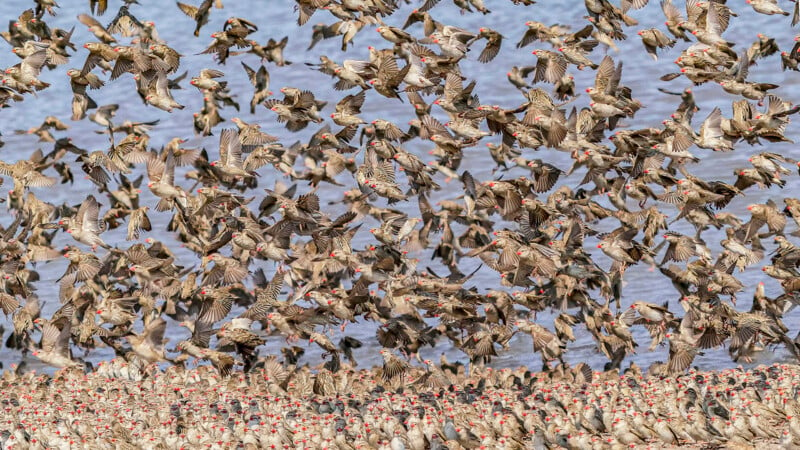
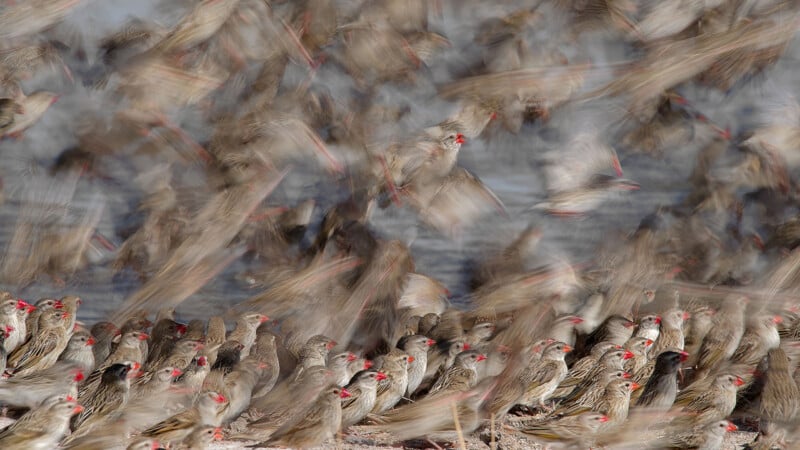
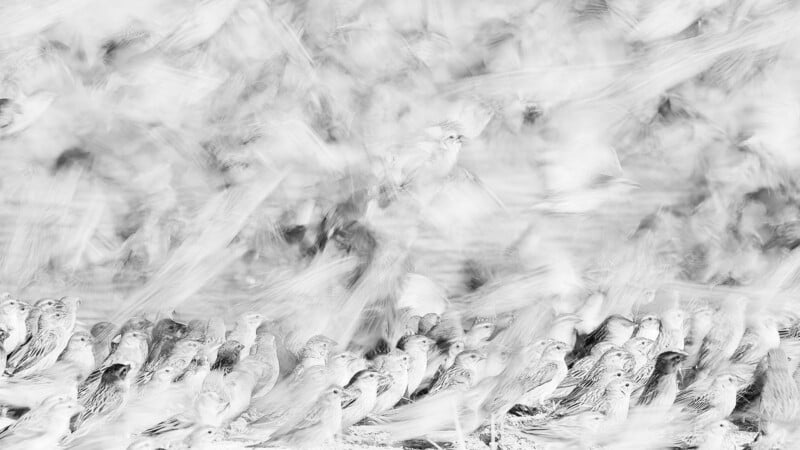
Similarly, when photographing massive flocks of red-billed queleas, Botha experimented with varying technical approaches to elicit different emotional responses. Using ultra-fast shutter speeds froze the birds sharply in mid-air and upon landing, while slowing the shutter speed down to 1/20 of a second intentionally blurred the airborne subjects while maintaining sharpness on the ground. Subsequent post-processing experiments, including high-key black-and-white conversions, further demonstrated how technical choices and post-capture vision can elevate a standard wildlife scene into a more evocative piece of art.
Similar intentionality shapes his work with other difficult subjects, such as wild ostriches. Rather than relying solely on standard action framing, experimenting with backlit underexposure in dusty conditions or utilizing a long lens to focus tightly on chicks finding shelter beneath a parent’s wings yields far more compelling visual storytelling. For action sequences, such as a secretary bird tossing a lizard into the air before swallowing it, being prepared after hours of observation ensures that the resulting frame captures a fleeting, high-impact moment in its natural context.
Ultimately, while modern mirrorless systems have democratized the mechanics of capturing sharp, well-exposed wildlife scenes, the enduring challenge for photographers lies in vision. Technical mastery remains an essential foundation, but it is original composition, environmental storytelling, and creative intent that separate routine documentation from enduring imagery.