


The modern pet food aisle presents dog owners with an unprecedented variety of choices, ranging from traditional dry kibble and canned stews to refrigerated fresh meals, raw diets, and shelf-stable dehydrated options. However, this abundance of choice often leads to confusion. The classification of dog food is not standardized; a single product might be categorized by its moisture content, its manufacturing process, or its storage requirements.
Understanding the differences between these formats is essential for selecting a diet that meets a dog’s specific nutritional needs while fitting the practical constraints of a household. Crucially, a food’s format—whether it is a crunchy kibble or a gently cooked fresh meal—does not inherently dictate its nutritional quality. To make an informed decision, pet owners must look past marketing terminology and evaluate how a food is prepared, how it is preserved, and whether it is formulated to serve as a complete daily diet.
This article is sponsored by JustFoodForDogs. Vetstreet maintains editorial control and may earn a commission from qualifying purchases, at no extra cost to you.
Decoding the Dog Food Landscape: A Guide to Formats
When evaluating dog food, pet owners often ask how many distinct categories exist. The answer depends entirely on the classification system used. Some systems group diets by water content, dividing them into dry, semi-moist, and wet foods. Others focus on manufacturing methods, separating extruded kibble from baked, air-dried, or freeze-dried options. Additionally, some classifications incorporate therapeutic diets or supplemental toppers, which describe the food’s intended function rather than its physical texture.
To simplify the selection process, the market can be organized into six primary shopping formats: dry kibble, wet food, cooked fresh meals, raw diets, freeze-dried formulations, and dehydrated or air-dried products. These categories frequently overlap. For example, a raw diet may be sold frozen or freeze-dried, while a cooked fresh meal might require refrigeration or be packaged in a shelf-stable pouch.
To navigate these overlaps, pet owners should evaluate any given product by asking three fundamental questions:
- Is the food cooked or raw?
- How is the food preserved?
- Is the recipe designed to be the sole source of nutrition, or is it a supplement?
Evaluating these factors allows owners to understand the practical requirements of each format. Dry kibble, typically formed through extrusion, offers convenience and easy dry storage, but requires careful attention to calorie density and nutritional adequacy. Wet food, often packaged in cans, trays, or pouches, provides high moisture levels but demands proper refrigeration once opened.
Cooked fresh meals deliver highly palatable, moist nutrition, but typically rely on cold storage. Raw diets, consisting of uncooked animal ingredients, require strict hygiene protocols due to potential pathogen exposure. Freeze-dried foods have had their moisture removed under reduced pressure, preserving the ingredients while requiring careful rehydration. Finally, dehydrated and air-dried foods use controlled airflow and heat to remove moisture, offering a shelf-stable alternative that may or may not include a cooking step.
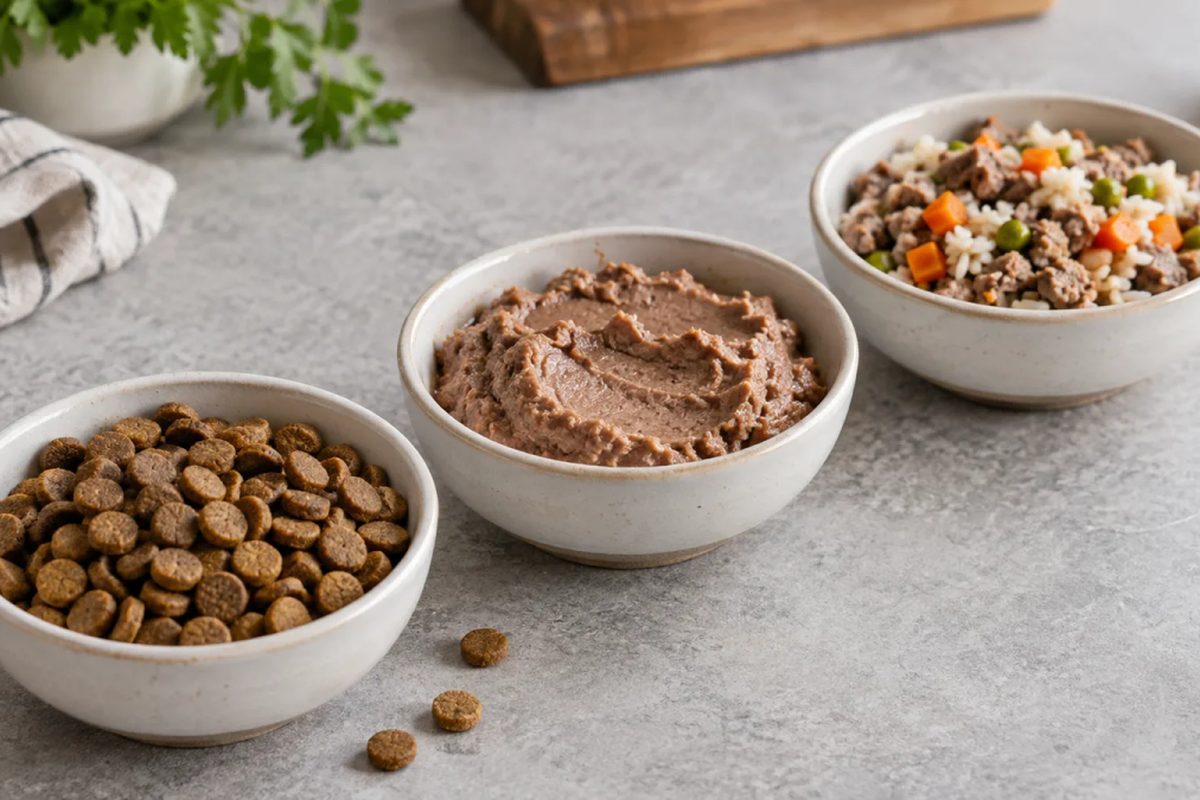
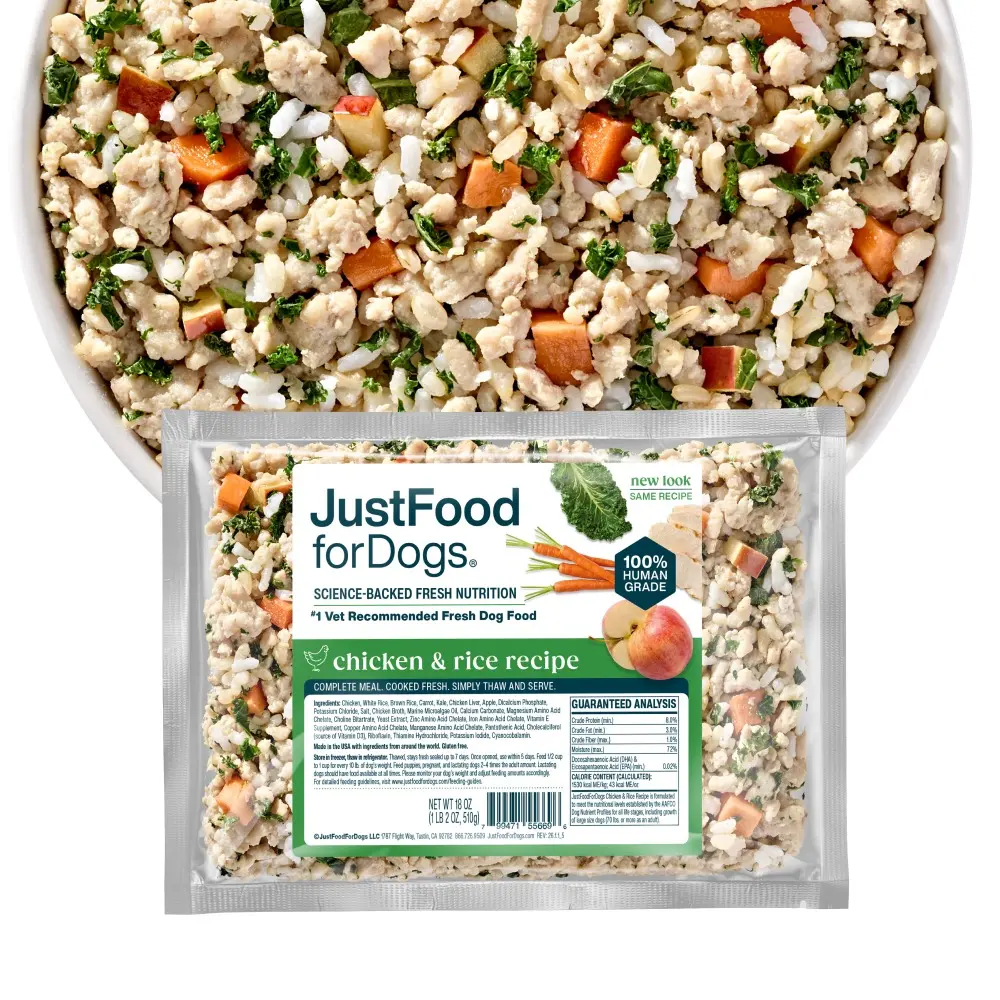
A clear example of how these characteristics intersect can be seen in commercial options like JustFoodForDogs Fresh Frozen meals. This product line combines the nutritional profile of a gently cooked, fresh-style meal with the preservation benefits of freezing. Identifying the format is only the first step; pet owners must still review the product’s nutritional adequacy statement and feeding guidelines to ensure it matches their dog’s life stage and energy requirements.
The Pillars of Traditional Feeding: Dry Kibble and Wet Food
Dry kibble and wet food remain the most widely used formats in the pet industry. Both categories encompass a vast range of formulations, from budget-friendly grocery brands to specialized veterinary diets. When properly formulated, either format can provide complete and balanced daily nutrition.
The most significant practical difference between dry and wet food is moisture content, which directly impacts serving weight, caloric density, and storage requirements. Dry kibble is highly concentrated; because the water has been removed, a small volume of kibble can contain a high number of calories. This makes precise portion control essential, as minor measuring errors can lead to accidental overfeeding. Kibble pieces can also vary widely in shape, size, and density, meaning that a single measuring scoop of one recipe may not contain the same caloric value as a scoop of another.
Wet dog food, which includes purées, pâtés, stews, and chunks in gravy, is characterized by its high water content. This format is often highly palatable and can be beneficial for dogs requiring additional hydration or those with dental issues that make chewing hard kibble difficult. Wet food is packaged in cans, trays, or convenient pouches. However, the size of the container does not automatically indicate its nutritional value or calorie content. A large can of a high-moisture stew may contain fewer total calories than a smaller, more nutrient-dense tray of pâté. Pet owners must compare products by caloric content rather than package weight to determine actual feeding value.
The texture of a food is also a key consideration. "Soft" dog foods include highly moist wet foods as well as semi-moist kibbles. However, softness is merely a physical description, not a nutritional standard. A soft treat or topper cannot replace a complete and balanced wet food.
If a dog suddenly begins rejecting dry kibble in favor of softer textures, owners should consult a veterinarian. While a softer food may make eating easier for a dog experiencing dental discomfort or oral pain, a change in food texture is a temporary accommodation, not a diagnosis or treatment for an underlying medical condition.
Managing these traditional formats requires a consistent routine. For kibble, owners must store the food in a cool, dry place and seal the bag tightly to prevent oxidation and nutrient degradation. For wet food, any unused portion must be refrigerated immediately and consumed within the timeframe specified on the manufacturer’s label. This is particularly important for owners of small dogs, where a single large can may represent several days’ worth of food.
The Growth of Fresh and Gently Cooked Diets
In recent years, fresh and gently cooked dog foods have emerged as a prominent category. These meals are designed to resemble home-cooked food, often featuring recognizable pieces of meat, grains, and vegetables. They typically maintain a high moisture content and are preserved through refrigeration or freezing rather than high-heat processing or chemical preservatives.
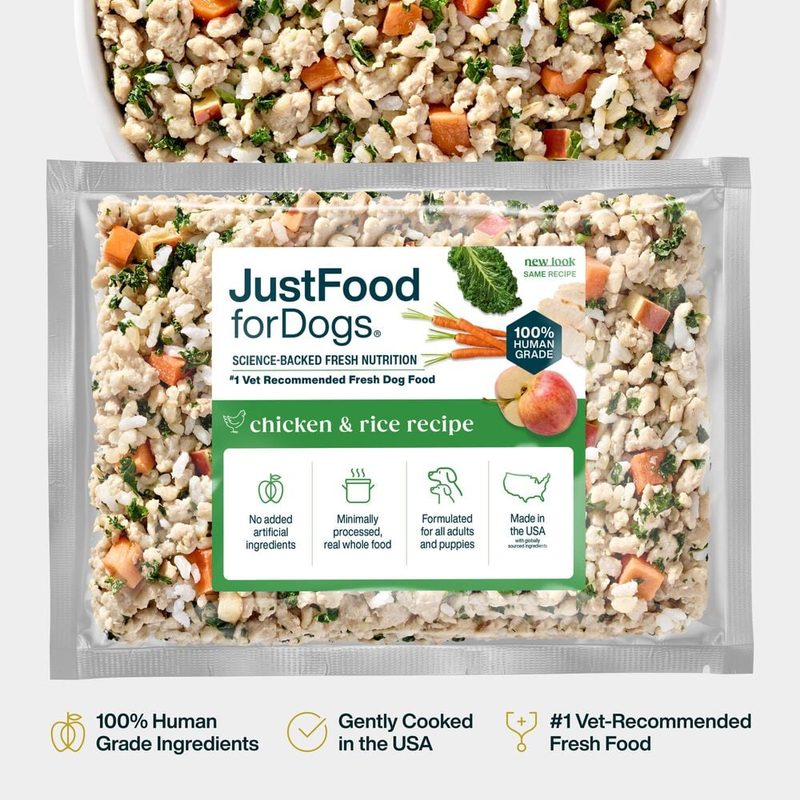
It is important to distinguish fresh cooked food from raw food. A "gently cooked" meal has undergone a thermal process designed to eliminate harmful pathogens while preserving the structural integrity and palatability of the ingredients. Freezing a raw meal preserves it, but it does not make it cooked. For owners who want the high moisture and appealing texture of a fresh diet without the microbial risks associated with raw meat, cooked fresh meals offer a practical solution.
While some owners choose to prepare fresh meals at home, formulating a balanced canine diet is highly complex. A simple mixture of chicken, rice, and broccoli lacks the precise ratios of essential vitamins, minerals, and fatty acids that dogs require for long-term health. Commercial fresh food manufacturers address this challenge by developing recipes in collaboration with veterinary nutritionists to ensure they meet established nutritional standards.
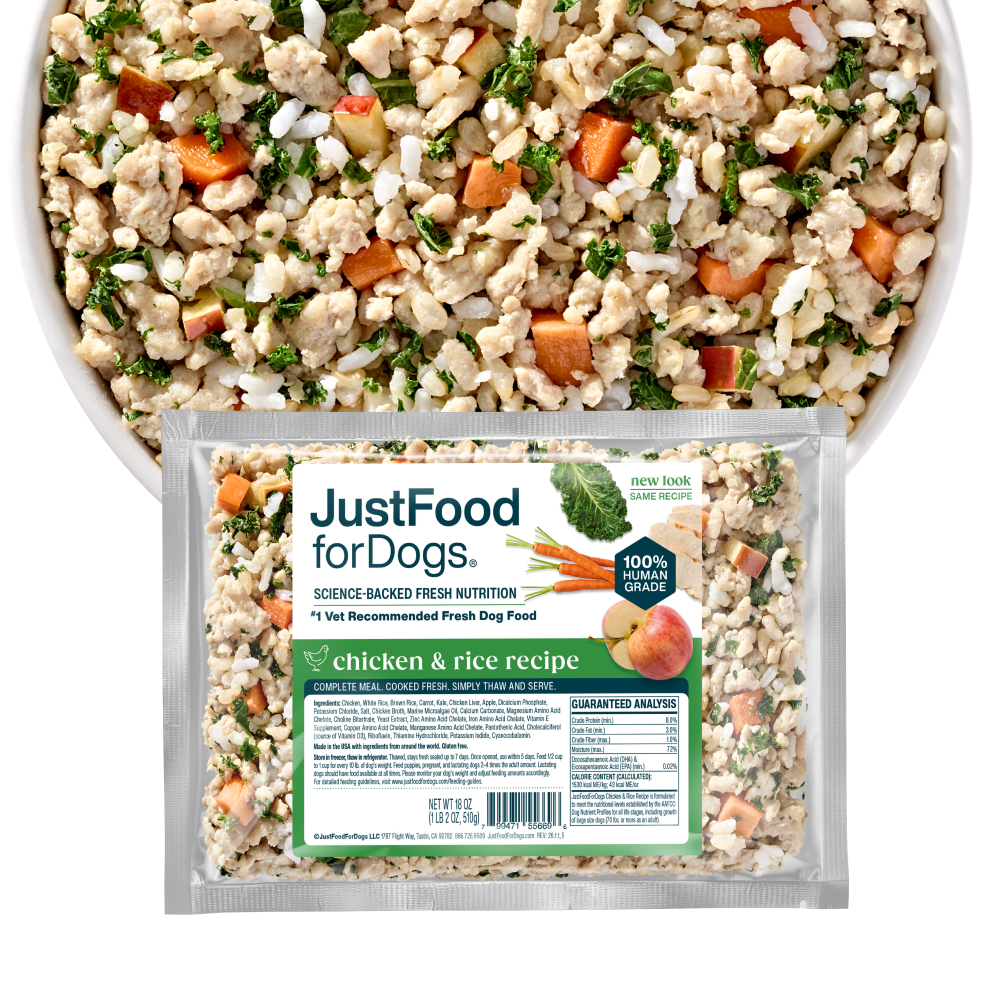
Products like JustFoodForDogs Chicken & Rice provide a prepared, Fresh Frozen option that eliminates the guesswork of home cooking. These meals are formulated to be complete and balanced, allowing owners to serve a fresh diet with scientific backing.
Because fresh foods generally lack synthetic preservatives, they have specific storage requirements. Frozen meals must be thawed in the refrigerator before serving, and thawed portions must be used within a few days. For households with limited freezer space or those who travel frequently, frozen storage can be a logistical challenge.
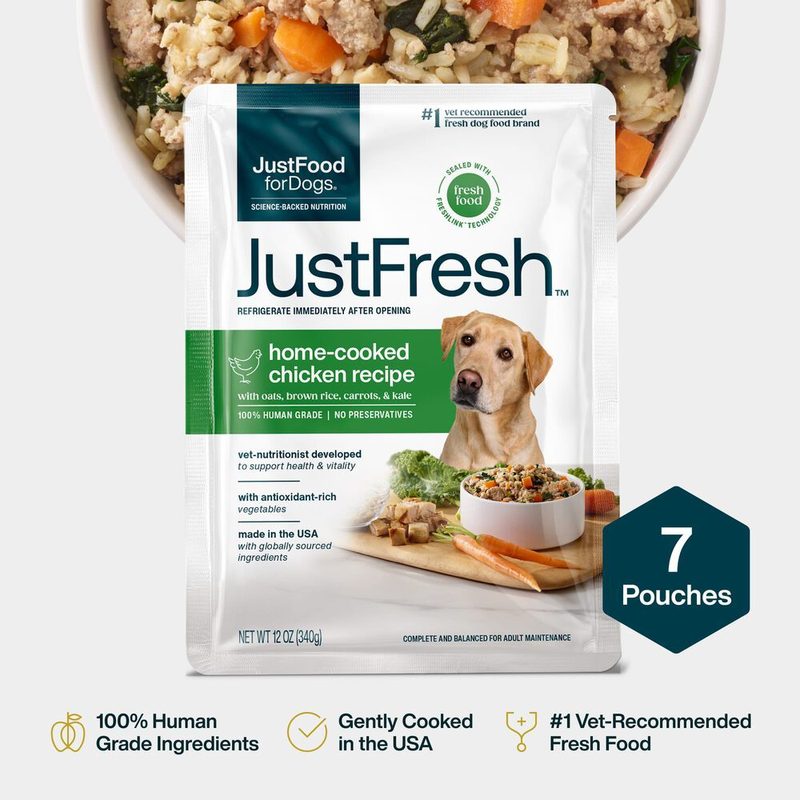
To address this, some manufacturers offer shelf-stable fresh options, such as JustFoodForDogs JustFresh Chicken. These products utilize specialized packaging and mild heat processing to allow for pantry storage before opening, combining the nutritional benefits of fresh food with the convenience of a shelf-stable product.
Understanding Raw, Freeze-Dried, and Dehydrated Formats
Alternative preservation methods have led to the rise of raw, freeze-dried, air-dried, and dehydrated pet foods. These formats are frequently grouped together because they often undergo less intensive heat processing than traditional kibble, but they rely on entirely different technologies and present distinct safety profiles.
Raw dog foods consist of uncooked animal tissues, bones, and organs. They are typically sold frozen or freeze-dried. Proponents of raw feeding often point to its ancestral appeal, but major public health organizations, including the Centers for Disease Control and Prevention (CDC) and the Food and Drug Administration (FDA), advise against raw diets. The primary concern is the risk of pathogen contamination, such as Salmonella and Listeria, which can cause severe illness in both pets and the humans who handle the food or share a living space with them. A raw diet may be formulated to meet nutritional standards, but this balance does not eliminate the biological risks of uncooked meat.
Freeze-drying is a preservation process that removes water from frozen food through sublimation—the transition of water directly from solid ice to vapor under reduced pressure. This process preserves the raw or cooked state of the ingredients while dramatically reducing weight and extending shelf life.
Some freeze-dried foods are designed to be fed dry, while others must be rehydrated with water before serving. Rehydration changes the volume and texture of the meal, but it does not alter its caloric content. Owners must measure freeze-dried food using the dry weight specified on the label to avoid overfeeding or underfeeding.
Dehydrated and air-dried foods use a different moisture-removal process, exposing ingredients to gentle heat and circulating air over an extended period. Because manufacturers use varying temperatures and drying times, some dehydrated foods are thoroughly cooked during the process, while others remain technically raw. Pet owners should contact the manufacturer directly if a product’s cooking status is not clearly defined on the packaging.
Like freeze-dried diets, dehydrated foods often require the addition of warm water before serving, forming a soft, oatmeal-like consistency that is highly appealing to many dogs. Leftovers of rehydrated food must be treated like wet food and refrigerated promptly.
Function Over Format: Complete Diets, Toppers, and Therapeutic Foods
A dog food’s physical format is separate from its nutritional function. A canned food, a dry nugget, or a fresh-frozen recipe can each serve entirely different dietary roles. To ensure a dog’s nutritional needs are met, owners must distinguish between complete diets, supplemental toppers, and therapeutic foods.
A complete and balanced diet is formulated to serve as the sole source of nutrition for a specific life stage. The Association of American Feed Control Officials (AAFCO) establishes the nutritional profiles that these diets must meet. If a product label states that the food is intended for "intermittent or supplemental feeding," it lacks the necessary balance of nutrients to be fed as a main diet.
Supplemental products, commonly referred to as toppers, mixers, or broths, are designed to enhance the flavor or texture of a dog’s existing meal. While toppers can be highly useful for encouraging picky eaters, they should not displace a significant portion of a dog’s complete diet. As a general rule, supplemental foods and treats should make up no more than 10% of a dog’s daily caloric intake to prevent nutritional imbalances.
Puppy nutrition requires particularly strict standards. Puppies undergo rapid skeletal and muscular development, demanding precise ratios of calcium, phosphorus, and energy. A complete adult maintenance diet is not suitable for a growing puppy, regardless of whether the food is soft, fresh, or dry. Furthermore, large-breed puppies require specialized formulations to prevent rapid growth rates that can lead to developmental orthopedic diseases. Owners must verify that a product’s AAFCO statement explicitly includes growth or "all life stages," including growth of large-size dogs, before feeding it to a puppy.
Therapeutic or veterinary-prescribed diets are formulated to manage specific medical conditions, such as kidney disease, urinary tract issues, or food allergies. These diets are available in various formats, including wet and dry. The therapeutic value of these foods lies in their precise nutrient modifications, such as controlled protein, sodium, or mineral levels.
Adding unauthorized toppers, mixing a therapeutic diet with standard commercial food, or switching formats without veterinary guidance can dilute these precise nutrient ratios, potentially compromising the management of the dog’s medical condition. When selecting a diet for a dog with health concerns, the veterinarian’s recommendation should focus on the exact formulation rather than a generalized preference for a specific texture.
When transitioning a dog to a new diet or incorporating multiple formats—such as feeding a mix of kibble and fresh food—owners must calculate portions based on caloric density rather than volume. A cup of fresh food typically contains a different number of calories than a cup of dry kibble. Tools like the JustFoodForDogs feeding calculator can help owners estimate the appropriate daily caloric intake for their dog, allowing for precise adjustments when combining different food formats.
Establishing a Practical and Safe Feeding Routine
Choosing the right dog food format involves balancing the biological needs of the dog with the lifestyle and resources of the household. A high-quality fresh diet may be an excellent choice, but only if the owner has the freezer space to store it and the budget to purchase it consistently. Similarly, a dry kibble routine is highly efficient, provided the owner measures portions accurately and stores the food in airtight containers to prevent spoilage.
To determine the most suitable format, pet owners can utilize a simple decision checklist:
- Does the household have adequate storage space (freezer, refrigerator, or pantry) for this format?
- Can the owner commit to the preparation and hygiene requirements of the food?
- Is the recipe certified as complete and balanced for the dog’s current life stage?
- Does the cost of the food align with the household’s long-term budget?
- How will the food be managed during travel or boarding?
- Does the dog tolerate the food’s texture and ingredients without digestive upset?
When introducing any new food format, a gradual transition is essential. Sudden dietary changes can disrupt the canine gastrointestinal microbiome, leading to vomiting, diarrhea, or food aversion. Owners should slowly mix increasing amounts of the new food with decreasing amounts of the old food over a period of seven to ten days.
During this transition, owners should monitor their dog’s appetite, stool quality, energy levels, and body weight. If gastrointestinal upset persists, the transition should be paused, and a veterinarian should be consulted to rule out underlying sensitivities or medical issues.
Ultimately, there is no single "best" dog food format. Excellent nutrition can be achieved through dry, wet, fresh, or dehydrated diets, provided the specific recipe is well-formulated, safely processed, and fed in appropriate portions. By understanding the mechanical and nutritional differences between these formats, pet owners can design a feeding routine that promotes long-term health and fits seamlessly into their daily lives.
Frequently Asked Questions
What is the healthiest type of dog food?
There is no single healthiest format of dog food. A dog’s individual health status, life stage, and medical history are far more important than whether the food is dry, wet, or fresh. A high-quality, complete, and balanced recipe from a reputable manufacturer can provide excellent nutrition in multiple formats. While gently cooked fresh foods and high-quality wet foods offer excellent hydration and palatability, well-formulated dry kibbles are also capable of supporting long-term health. Raw diets, while popular, carry significant safety risks that must be carefully weighed against any perceived benefits.

What are the different categories of dog food?
Dog food categories can be defined by moisture content, processing methods, or intended use. In terms of moisture, diets are grouped into dry, semi-moist, and wet. Based on manufacturing and preservation, the primary categories are kibble, wet (canned or pouched), cooked fresh, raw, freeze-dried, and dehydrated or air-dried. Functionally, foods are categorized as complete diets (designed as a primary food source), supplemental toppers or treats (intended for occasional use), and therapeutic veterinary diets (formulated to manage medical conditions).
What are the different types of fresh dog food?
Fresh dog food primarily refers to gently cooked meals made from whole-food ingredients without synthetic preservatives. These are typically sold in frozen or refrigerated formats to maintain freshness. Some fresh diets are packaged using specialized preservation techniques that make them shelf-stable until opened, offering a convenient option for travel or limited freezer space. It is important to distinguish fresh cooked food from raw fresh diets, which contain uncooked meats and require different handling procedures.
Are dehydrated dog foods always raw?
No, dehydrated dog foods are not inherently raw. Dehydration simply refers to the process of removing moisture using warm air. Depending on the manufacturer’s specific processing temperatures and methods, the ingredients may be cooked before or during the drying process, or they may remain raw. Pet owners should check the product packaging or contact the manufacturer to confirm whether a specific dehydrated food has undergone a pathogen-eliminating cooking step.
Can a topper replace a complete dog food?
No, a product labeled as a topper, mixer, or supplement is not formulated with the complete spectrum of vitamins, minerals, and amino acids a dog needs to thrive. Using a topper as a primary diet will lead to severe nutritional deficiencies over time. Toppers should only be used as a complement to a complete and balanced main diet, and their caloric contribution should be factored into the dog’s total daily energy allowance to prevent unwanted weight gain.