


Ceramists tend to have an easygoing embrace of fate. Misfirings happen in the kiln, and happy accidents do too. Last year, as the New York City–based designer Danny Kaplan began canvassing for a larger Brooklyn workshop—a search complicated by steep rents and necessary buildouts—his longtime production manager, Val Shamma, shared that he and his wife were moving to North Adams, Massachusetts.
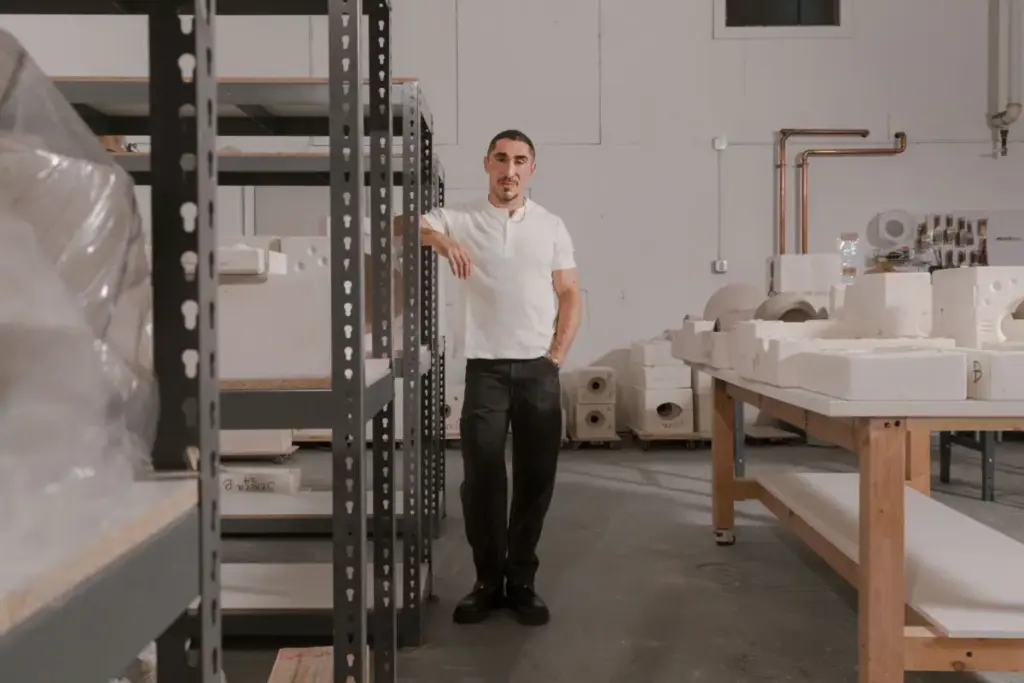
The coincidence prompted a major pivot for the studio. "It occurred to us that maybe the solution was actually to follow him," says Kaplan, best known for his distinctive sculptural lighting and furniture pieces that have captured the attention of the design world. The Berkshires city, like so many once-bustling industrial mill towns, had experienced a severe economic downturn in the mid-20th century before cultural institutions like MASS MoCA helped put it back on the map as a vibrant hub for contemporary art. Former industrial spaces beckoned with open floor plans and architectural character. "Once the pieces started to fall into place, it made perfect sense," Kaplan notes. He eventually landed on a roomy, ground-floor warehouse situated within a thoughtfully converted historic textile mill.
Now, with its electrical system entirely updated to safely support three heavy-duty kilns and a modern glass garage door added to flood the interior with natural light, this is where Kaplan does much of his ceramic casting and larger sculptural work. Meanwhile, his original Bushwick workshop maintains its vital role, continuing to produce lamps and other delicate hand-built pieces that require specialized urban oversight.

This past summer in the Berkshires, the newly expanded studio was already churning out slim, colorful tiles for his Delf collection—a collaborative endeavor with Vince Patti’s furniture firm, Lesser Miracle. Derived from the Dutch word for canal or ditch, delf refers specifically to the grooved wood framework designed to hold the tile securely in place. The creative partnership between Kaplan and Patti began in 2024, when they first teamed up on a custom bed for Kaplan featuring a striking wraparound headboard accented by a precise border of inset tiles.
This fall, the expansion of that design language into Delf II extends the collaboration to a console table, a coffee table, a desk, and a nightstand, all expertly crafted in oiled oak with sophisticated octagonal tops. The ceramic components, meticulously produced in a wide range of custom glazes at the North Adams warehouse, are carefully packed and shipped to Lesser Miracle’s woodshop in Brooklyn, where Patti oversees the final assembly and integration of wood and clay.
While this new regional workspace has dramatically increased Kaplan’s production capability, the designer is ultimately more interested in the broader opportunities it poses for expansive, unhurried thinking. In time, he envisions hosting visiting artists who find themselves in need of a creative scene change, all while weaving himself into the fabric of the North Adams neighborhood.

"It’s very serene," he says, reflecting on the transition from the relentless pace of New York City to the quiet expanses of western Massachusetts. "And ceramic people love community."