

Determining the ideal dietary regimen for a Greyhound requires balancing complete, life-stage-appropriate nutrition with precise, individualized caloric management. For owners of retired racing Greyhounds, navigating the transition from a structured athletic diet to home life presents unique considerations. While an ex-racer’s feeding history provides valuable baseline context, a dog’s past performance routine does not establish a permanent calorie target for life as a companion animal.
A successful feeding plan begins by establishing what the dog currently eats, evaluating physical parameters through separate body condition and muscle condition assessments, and converting specific recipe calorie densities into measured daily rations. Comparing distinct formulations—such as four key diets offered by fresh pet food manufacturer JustFoodForDogs—demonstrates how recipe selection, caloric concentration, and portion control interact to support a Greyhound’s individual routine.
Evaluating Nutritional Suitability for Greyhounds
Selecting the best food for a Greyhound depends on identifying a complete and balanced diet tailored to the dog’s current life stage, physical health, and daily activity. A pet Greyhound does not automatically require specialized racing rations, raw feeding plans, or fixed volumetric servings simply because other Greyhounds thrive on those routines.
When evaluating dog food options, examining exact recipe specifications is essential. Formulations from the same manufacturer frequently vary in energy density and official life-stage adequacy statements. Complete nutritional evaluation requires looking beyond the ingredient deck. Understanding food labels involves looking at the official adequacy statement and precise caloric content, which allow owners and veterinary professionals to translate a candidate recipe into a usable, reproducible daily ration.
While general breed profiles offer broad background context, individual medical history, body composition, and physical condition take precedence over generalized breed traits when constructing a daily routine.
Comparing Four Fresh and Shelf-Stable Recipe Options
A comparison of four JustFoodForDogs recipes illustrates how differences in growth eligibility, energy density, and storage formats impact daily meal planning. Each product serves specific functional roles within a feeding routine, though no single recipe represents a universal solution for every dog.
Fresh-Frozen Chicken & Rice
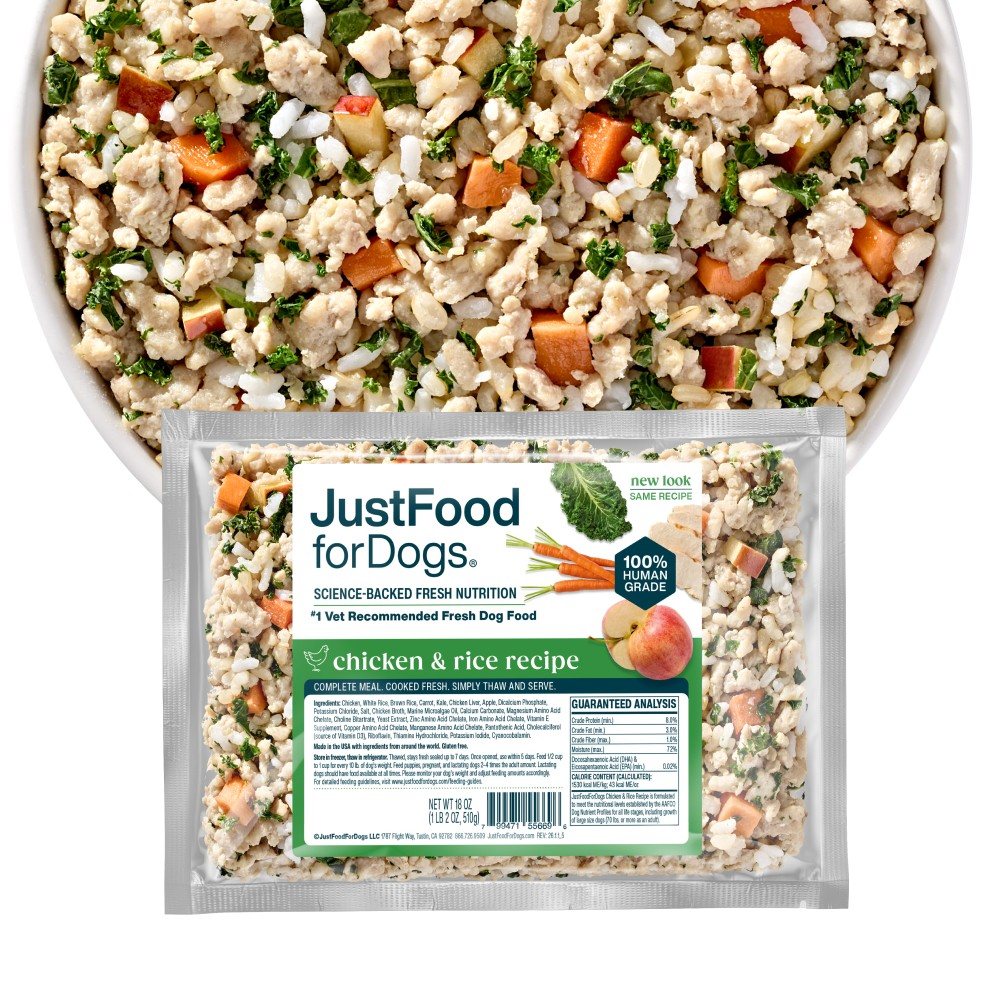
JustFoodForDogs Chicken & Rice is a fresh-frozen, grain-inclusive option suitable for both growing puppies and adult dogs. Its current formulation features chicken alongside white and brown rice. According to current manufacturer specifications, the diet provides 1,530 kilocalories per kilogram, which translates to 1.530 calories per gram.
Its broad adequacy statement covers all life stages, including the growth of large-breed dogs expected to reach 70 pounds or more as adults. However, growth eligibility does not imply that an adult dog should consume puppy-level portions, nor should a portion remain static as an adult Greyhound’s activity levels fluctuate. Furthermore, while the commercial product provides balanced nutrition, a homemade meal prepared with basic chicken and rice does not replicate this nutrient profile without identical formulation and balance.
Fresh-Frozen Fish & Sweet Potato
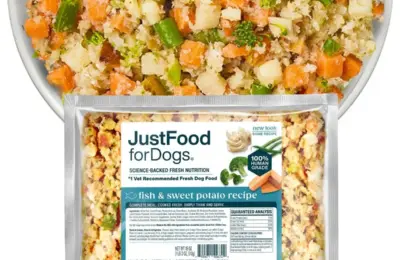
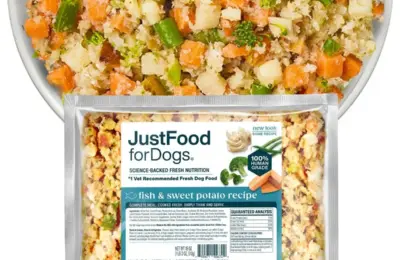
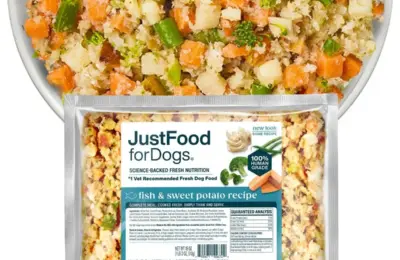
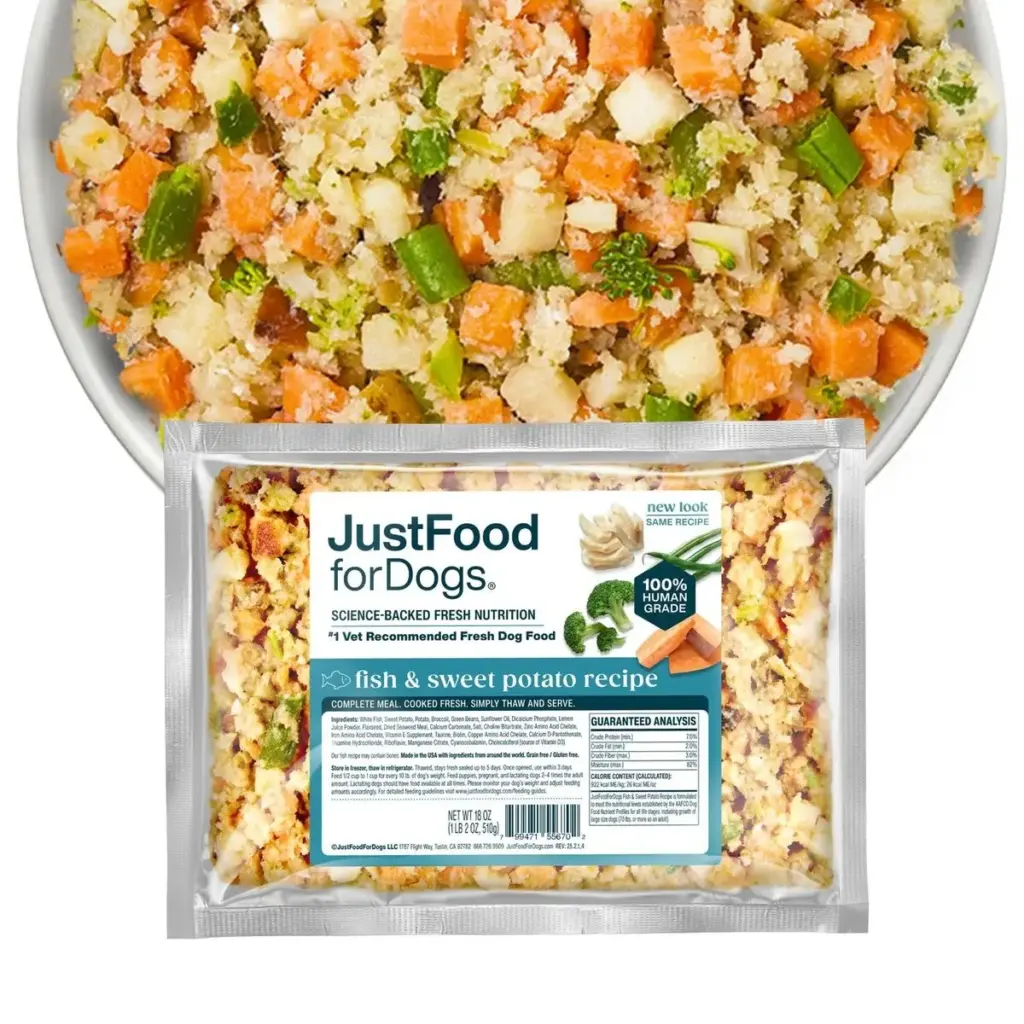
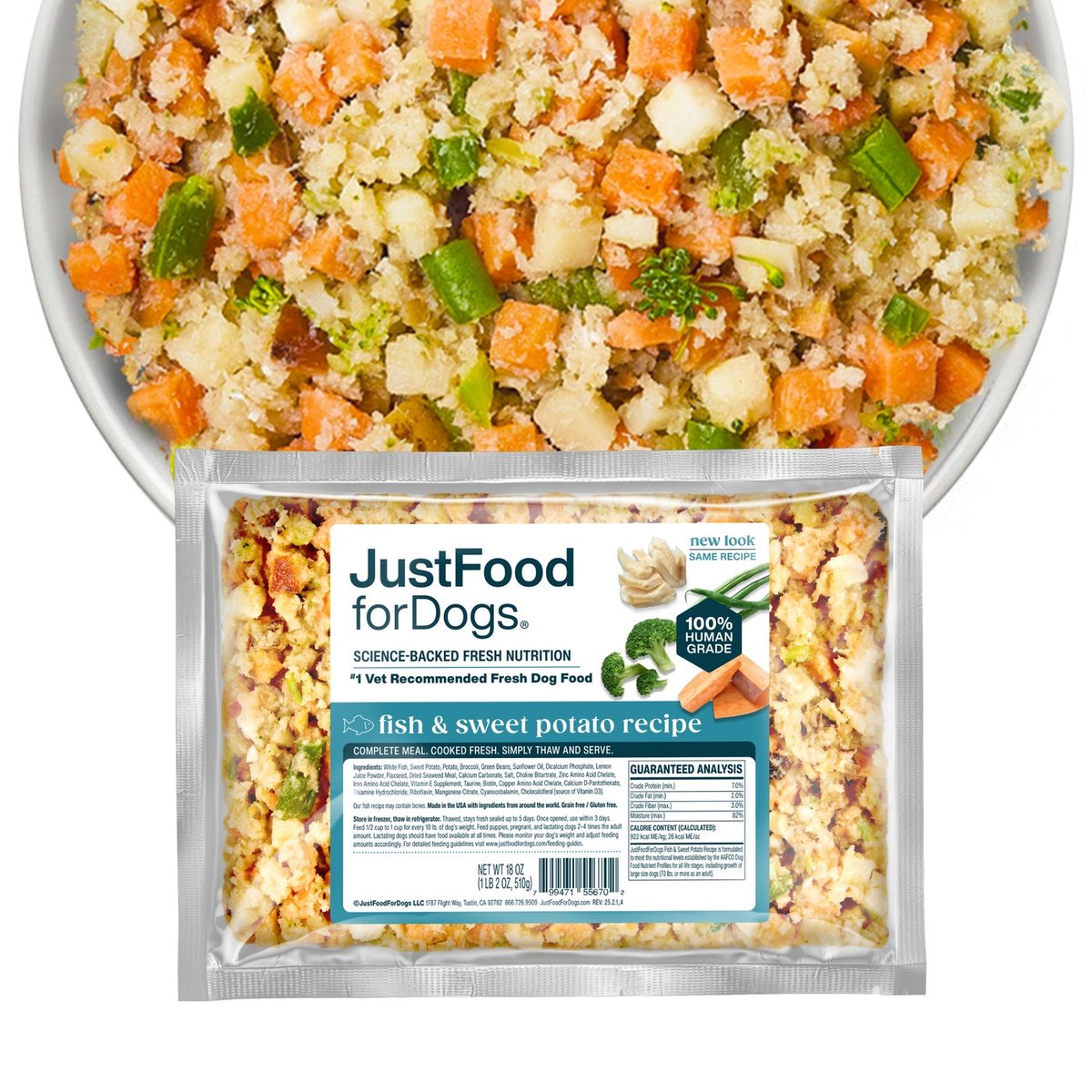
JustFoodForDogs Fish & Sweet Potato offers another option verified for all life stages, including growth. The fish component features a blend of cod, pollock, and haddock. With a caloric density of 922 kilocalories per kilogram—or 0.922 calories per gram—this recipe exhibits the lowest energy concentration among the four choices examined.
Because of this lower caloric density, a Greyhound assigned a specific daily calorie allowance will receive a larger volume and heavier weight serving of this diet compared to more energy-dense alternatives. While larger serving sizes affect package utilization and meal prep routines, a lower calorie density does not mean the food is nutritionally deficient, nor does lower energy concentration inherently classify the recipe as a therapeutic weight-loss diet. Similarly, the inclusion of fish ingredients does not automatically render a standard commercial diet a medical treatment for diagnosed food allergies.

Fresh-Frozen Beef & Russet Potato
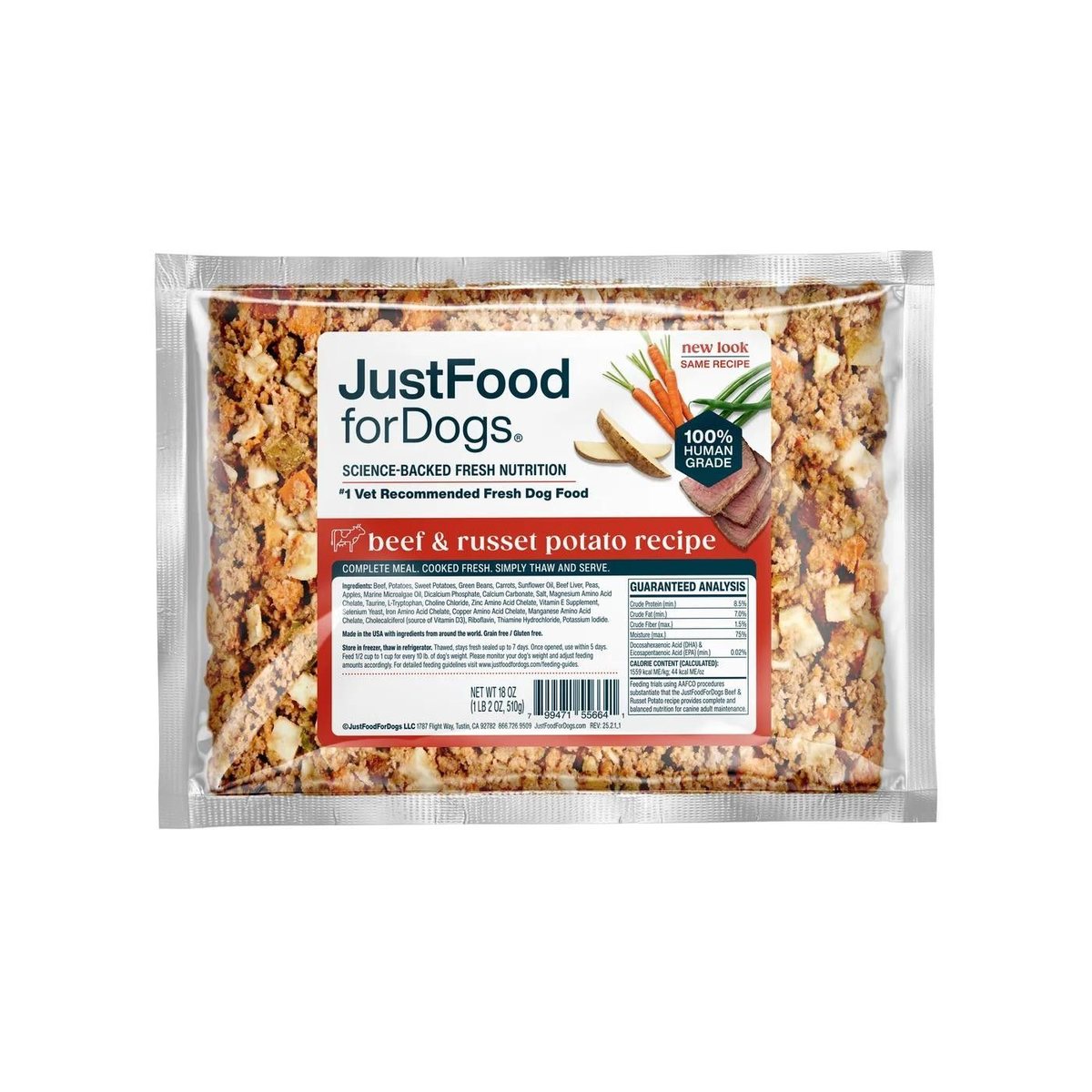
Formulated strictly for adult maintenance, JustFoodForDogs Beef & Russet Potato is designed for mature dogs and is not suitable as a primary diet for growing puppies. The manufacturer lists its caloric content at 1,559 kilocalories per kilogram, equivalent to 1.559 calories per gram, making it the most energy-dense option among these four recipes.
The recipe’s nutritional adequacy for adult maintenance has been substantiated through standardized Association of American Feed Control Officials (AAFCO) feeding trials. Although it provides a high caloric concentration, this characteristic alone does not establish it as a specialized athletic performance diet. For retired Greyhounds, current daily energy expenditure and physical condition remain the governing criteria for portioning.
JustFresh Home-Cooked Chicken
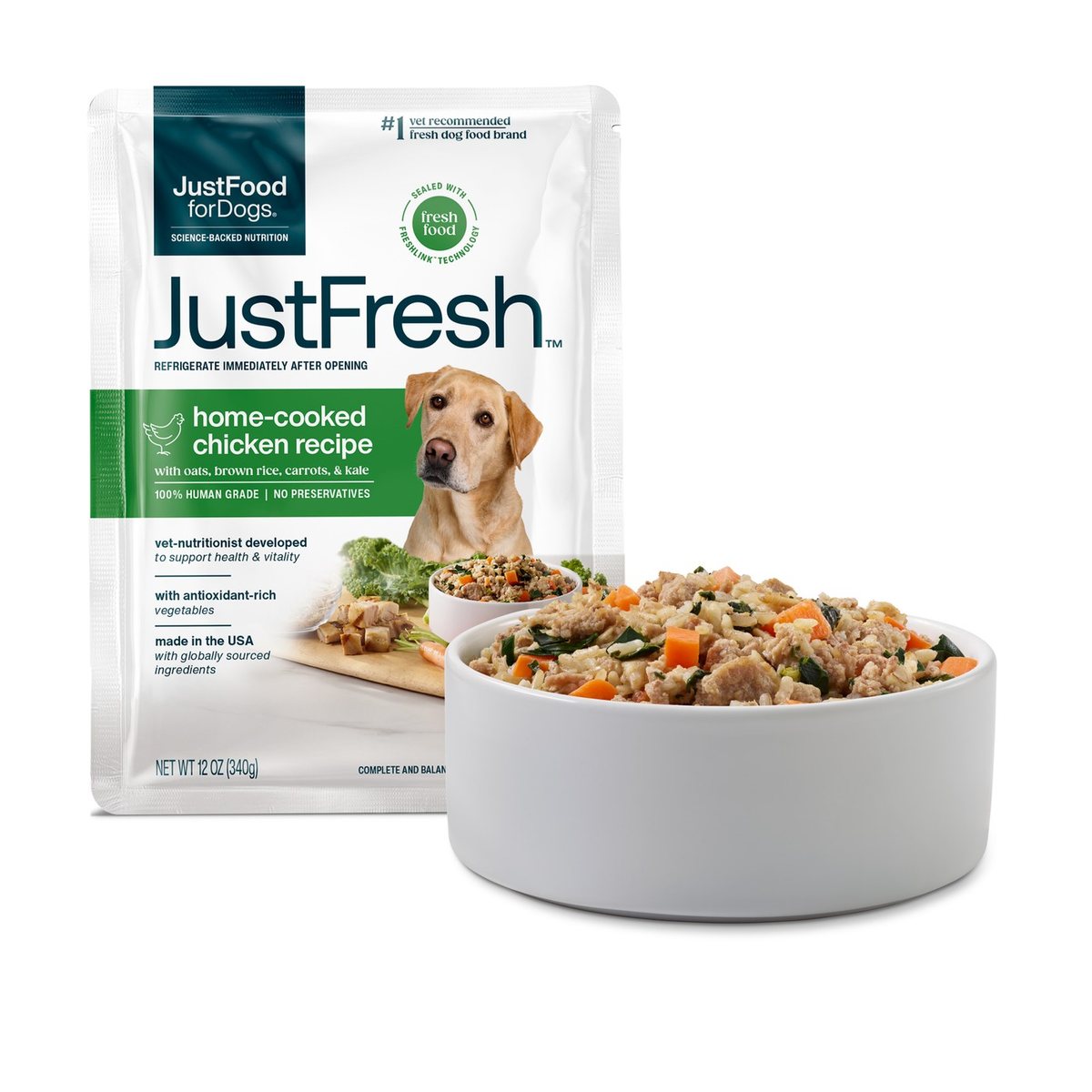
JustFresh Home-Cooked Chicken provides shelf-stable convenience prior to opening, simplifying long-term storage and supply planning for households with limited freezer space. Its recipe incorporates chicken, oats, and brown rice, yielding a caloric density of 1,254 kilocalories per kilogram (1.254 calories per gram).
Formulated specifically for adult maintenance, this shelf-stable product is distinct from the fresh-frozen Chicken & Rice formulation and is not approved for puppy growth. While ambient storage simplifies inventory management, owners must still weigh portions accurately and follow proper handling and refrigeration practices once the packaging is opened.
Establishing a Post-Racing Baseline and Feeding Record
For retired racing Greyhounds, establishing nutritional continuity is critical when moving into a foster or permanent home. Before altering a dog’s diet, owners should secure detailed feeding history from the adoption agency, rescue group, or previous handler. The most appropriate starting point is often the balanced diet the dog is already eating successfully.
To prevent digestive upset and establish a clear reference point, adoption handovers should ideally collect structured feeding data. Key details include the precise product name and brand, exact daily portions by weight or validated measure, actual intake patterns (such as whether meals are routinely finished or partially left), all extras (including treats, training rewards, and medication toppers), and recent body weight measurements along with scale details.
It is vital to recognize that historical racing rations reflect past athletic demands, not modern pet calorie needs. Many retired dogs undergo transitional periods in foster care where their activity levels shift prior to final adoption. Capturing recent real-world routines prevents owners from mistakenly feeding an active athletic ration to a sedentary companion.
Creating a dedicated baseline feeding record helps bridge the gap between initial handover notes and ongoing veterinary care. A comprehensive baseline record documents essential parameters:
- Administrative Details: Date and information source to distinguish recent routines from older history.
- Dietary Baseline: Complete product names, exact historical serving weights, actual consumed amounts, and all daily treats or extra food sources.
- Physical Assessments: Recorded body weight, professional body condition scores, muscle condition evaluations, and current daily activity levels.
- Current Strategy: Exact calories per gram of the target recipe, calculated daily gram allowances, split meal portions, and scheduled review dates.
Informal serving descriptions such as "one scoop" or "a rounded bowl" introduce significant measurement variance between caregivers. Whenever possible, owners should ask departing handlers to weigh a typical serving on a digital scale to establish a true baseline in grams. If historical data is missing, owners should collaborate with their veterinarian and adoption organization to set a conservative starting plan rather than guessing previous caloric intakes.
Crucially, past weight records should be treated as historical context rather than absolute lifelong targets. Ideal weight must be determined individually through physical examination, ensuring that decisions to alter body composition are based on health rather than arbitrary historical metrics.
Assessing Body Condition and Muscle Condition Separately
Evaluating a Greyhound requires looking beyond standard weight scale readings. Because Greyhounds possess a naturally lean, deep-chested anatomy, body composition must be systematically evaluated by distinguishing fat stores from lean muscle mass.
The World Small Animal Veterinary Association (WSAVA) provides distinct visual and tactile evaluation tools for Body Condition Score (BCS) and Muscle Condition Score (MCS). BCS evaluates subcutaneous and abdominal fat deposits, examining rib palpability, waistline tuck, and abdominal contours. Conversely, MCS assesses muscle mass over the spine, skull, shoulder blades, and hips.
A lean appearance does not preclude the need for routine physical assessments. Dogs maintaining a stable weight can still experience underlying shifts in muscle mass or fat proportion. Regular, hands-on evaluations under standardized conditions—such as standing upright on a flat surface before meals—provide actionable monitoring data.
Certain physical or behavioral changes should prompt a formal dietary review with a veterinarian. Important triggers include:
- Unexplained weight gain or progressive weight loss.
- Changes in rib prominence or noticeable muscle wasting over the back and hips.
- Persistent refusal to finish meals or changes in stool consistency.
- Shifts in daily energy, coat quality, or general health.
Senior Greyhounds require particular attention during dietary reviews. Advanced age does not automatically dictate an immediate drop in calories or protein reduction. Instead, senior diet adjustments should reflect individual physical condition, activity changes, and clinical health status evaluated during routine veterinary checkups.
Calculating Daily Portions from Recipe Calorie Density
Determining proper food portions requires calculating the total daily grams needed to deliver an individual dog’s targeted energy intake. Relying on generic volume cups across different commercial recipes frequently results in significant over- or under-feeding.
Starting calorie targets can be estimated using recognized standards, such as the WSAVA calorie guidelines for healthy adult dogs, and refined based on veterinary guidance. Once a target daily caloric intake is determined, the daily food allocation in grams is calculated using a straightforward formula:
$$textDaily Grams = fractextTarget Daily CaloriestextRecipe Calories per Gram$$
To calculate calories per gram from a label listing kilocalories per kilogram (kcal/kg), divide the figure by 1,000. For example, a recipe supplying 1,530 kcal/kg yields 1.530 calories per gram.
Illustrative Portion Differences Across Recipes
To highlight how energy density alters physical serving weights, consider a hypothetical daily allowance of 1,000 calories derived entirely from a single recipe. The required weight varies considerably across formulations:
- Chicken & Rice (1.530 kcal/g): $1,000 div 1.530 approx 654text grams$
- Fish & Sweet Potato (0.922 kcal/g): $1,000 div 0.922 approx 1,085text grams$
- Beef & Russet Potato (1.559 kcal/g): $1,000 div 1.559 approx 641text grams$
- JustFresh Home-Cooked Chicken (1.254 kcal/g): $1,000 div 1.254 approx 797text grams$
These calculations illustrate that substituting one diet for another using equal weights or equal volumetric scoops will drastically alter total energy intake. Portions must be recalculated whenever the base recipe changes.
Accounting for Treats and Extras
A dog’s total daily energy intake encompasses everything consumed throughout the day, including training treats, dental chews, and food used for medication administration. According to American Animal Hospital Association (AAHA) nutritional guidelines, unbalanced non-complete foods should not exceed 10% of a dog’s total daily caloric allowance.
To maintain balanced nutrition, owners should establish the daily calorie goal, subtract the planned calories reserved for treats (up to the 10% limit), and allocate the remaining calories to the primary complete diet.
For example, if an adult Greyhound requires 1,100 total calories daily, reserving 50 calories for training treats leaves 1,050 calories for complete dog food. If this complete ration is split between fresh food and kibble—assigning 650 calories to JustFoodForDogs Chicken & Rice (1.530 kcal/g) and 400 calories to a standard dry kibble providing 4.0 kcal/g—the daily gram breakdown is calculated as:
- Fresh Food portion: $650 div 1.530 approx 425text grams$
- Dry Kibble portion: $400 div 4.0 = 100text grams$
This combination replaces a portion of the fresh food allocation with dry food energy; it does not add dry food on top of an already complete daily ration.

Daily Portioning and Cost Comparisons
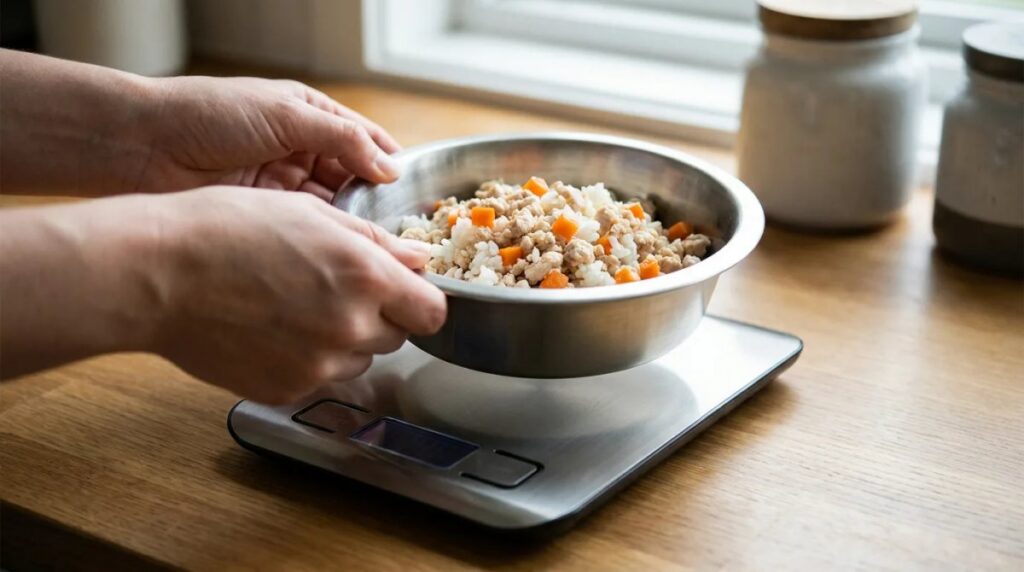
Using a digital kitchen scale ensures reproducible portioning across different household members. Placing an empty bowl on the scale, taring the display to zero, and weighing meals in grams eliminates the inconsistencies inherent in volume-based measuring cups.
Caloric calculation also enables accurate daily cost comparisons between products. Rather than comparing retail package prices directly, daily feeding costs should be evaluated using actual required intake:
$$textDaily Cost = textPackage Price times left( fractextDaily Grams RequiredtextTotal Package Grams right)$$
This calculation provides a true financial comparison based on the specific dog’s nutritional requirements, provided the package contents are fully consumed within safe handling timeframes.
Meal Frequency and Health Considerations
For adult Greyhounds, dividing the total daily food allocation into at least two separate meals represents a practical baseline routine. Dividing daily intake helps manage stomach volume and supports routine digestive function.
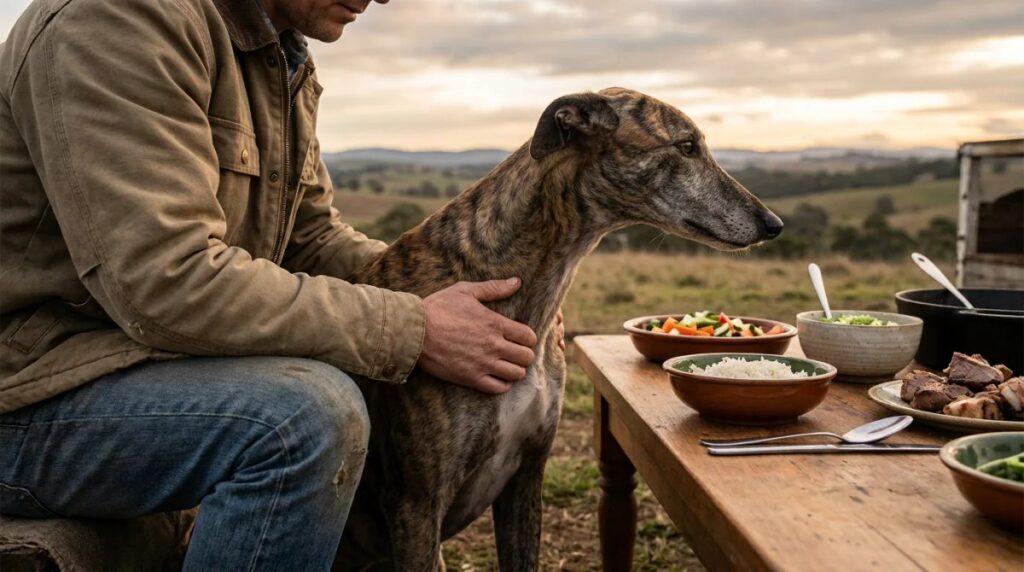
Guidelines published by Cornell University’s Riney Canine Health Center regarding Gastric Dilatation-Volvulus (GDV), or bloat, support feeding two or more meals daily rather than a single large meal. While meal frequency is one factor in overall dietary management, multi-meal schedules do not eliminate bloat risks entirely.
Establishing consistent meal times helps caregivers track appetite trends, coordinate medication schedules, and ensure that household members do not accidentally double-feed the dog. Any non-productive retching, abdominal distension, severe restlessness, or weakness indicates a potential medical emergency requiring immediate veterinary intervention.
Safe Food Transitions, Storage, and Handling Rules
When changing a Greyhound’s diet, a gradual, measured transition over several days helps prevent gastrointestinal upset while keeping caloric intake stable. Unless an immediate dietary swap is medically ordered by a veterinarian, transitioning involves shifting caloric proportions incrementally from the old diet to the new diet.
Because different recipes contain varying energy densities, transition proportions should ideally be calculated by calories rather than equal weight. For instance, during a 50/50 transition phase for a dog targeted at 1,000 daily complete-food calories, 500 calories should be calculated from the original food weight, and 500 calories calculated from the target recipe weight.
Food Safety and Refrigerator Life
Fresh food products require strict adherence to food safety guidelines to prevent spoilage:
- Unopened Thawing: JustFoodForDogs estimates refrigerator thawing times at up to 24 hours for 18-ounce packages and up to 48 hours for 72-ounce packages.
- Refrigerated Shelf Life: Once thawed and opened, non-fish fresh-frozen meals must be consumed within five days. Fish-based fresh recipes and opened JustFresh shelf-stable meals must be consumed within three days.
- Storage Standards: The U.S. Food and Drug Administration (FDA) recommends maintaining refrigerator temperatures at or below 40°F (4°C) and promptly refrigerating or discarding uneaten fresh pet food. Clean bowls and utensils should be used for every meal.
Greyhound Feeding Questions
Should Greyhounds eat from raised bowls?
Elevated food bowls are not a universal requirement for Greyhounds, nor are they proven to prevent GDV. In fact, veterinary guidance from Cornell University notes elevated feeding stations as a potential risk factor associated with bloat in certain dogs. Unless a veterinarian specifically prescribes an elevated feeder to manage an orthopedic or esophageal issue, Greyhounds can safely eat from stable, floor-level bowls.
What foods are unsafe for Greyhounds?
Greyhounds share the same biological sensitivities to toxic foods as other canine breeds. According to FDA guidance, items to avoid include chocolate, grapes, raisins, onions, garlic, macadamia nuts, alcohol, and products containing the sweetener xylitol (birch sugar). Suspected ingestion of toxic substances requires immediate veterinary attention.
Are bananas suitable treats for Greyhounds?
Small pieces of plain, peeled banana can serve as occasional treats, as recognized in canine treat guidance from UC Davis Health Topics. However, banana treats must be calculated within the dog’s 10% daily treat calorie allowance rather than added as an unmeasured addition to the daily diet.
Does visible rib definition mean a Greyhound is underfed?
Not necessarily. Greyhounds naturally possess a lean anatomy where the faint outline of the rear ribs may be visible at an ideal weight. Dietary changes should be based on systematic hands-on body condition scoring, weight tracking, and professional veterinary evaluation rather than rib visibility alone.
Is specialized racing food required for a retired Greyhound?
No. A retired Greyhound’s diet should match its current life stage, home activity level, and health status. A dog’s past athletic career does not mandate continuing high-calorie performance feeds in a home environment.