

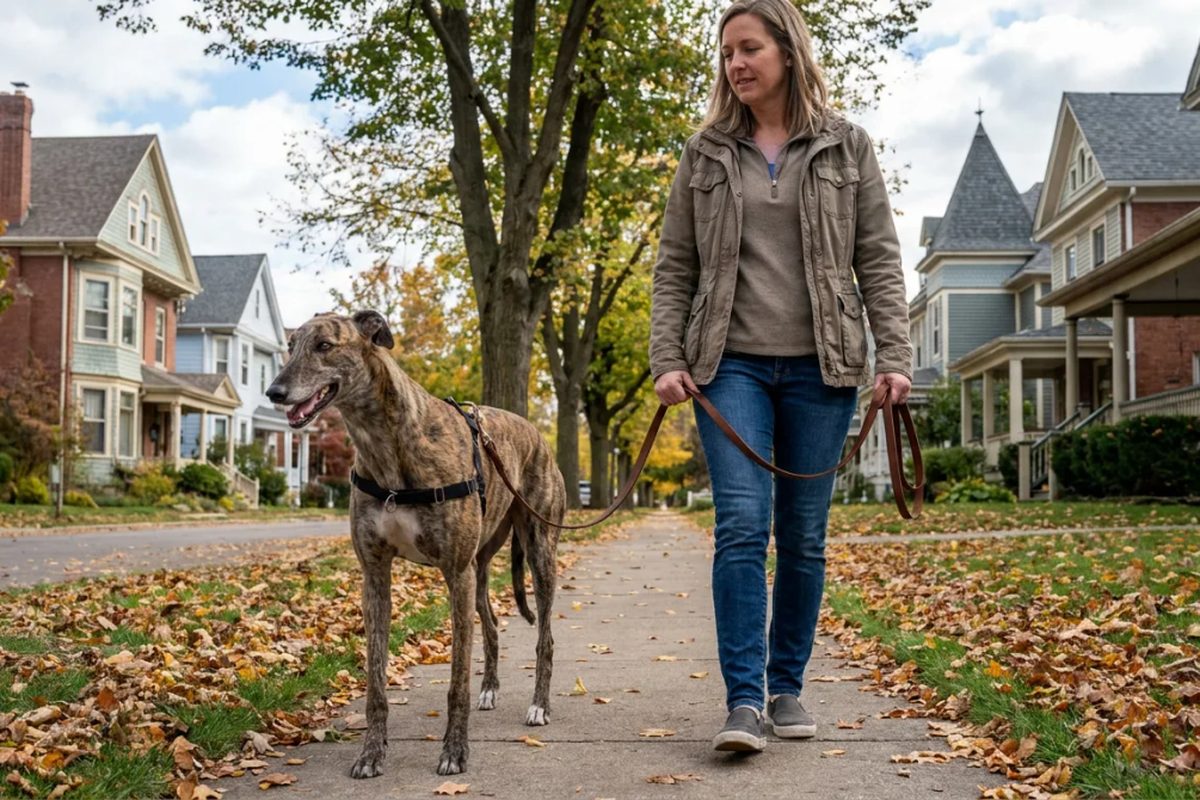
The nutritional needs of Greyhounds—particularly retired racing dogs transitioning into household environments—require a deliberate, individualized approach rather than reliance on breed generalized cup measurements or static feeding guidelines. Complete and balanced nutrition must account for an individual dog’s current life stage, physical condition, and daily routine. While a retired racing Greyhound’s prior feeding history provides essential context, it does not dictate a permanent calorie allowance for life as a companion animal.
Determining an appropriate daily ration begins with establishing what the dog currently eats, evaluating both body condition and muscle mass, and converting specific recipe calorie densities into measured daily portions by weight. A comparative review of four distinct recipes from JustFoodForDogs demonstrates how differences in formula composition, caloric density, storage requirements, and life-stage designations influence daily meal planning for Greyhounds.
What Kind of Food Is Best for a Greyhound?
The ideal diet for a Greyhound is a complete and balanced recipe tailored to the animal’s exact life stage, medical history, and present lifestyle. A household Greyhound does not automatically require performance-oriented racing feed, raw rations, or an arbitrary number of scoops simply because another dog thrives on such a regimen.
When evaluating dog food formulations, caregivers and veterinary professionals must examine specific recipe metrics. Products manufactured by the same company frequently vary in caloric concentration and American Association of Feed Control Officials (AAFCO) adequacy statements. Comprehensive dietary recommendations must establish both the nutritional suitability of a given recipe and the precise methodology used to calculate daily servings.
Analyzing official pet food labels provides essential context that ingredient panels alone cannot supply. While ingredient lists reveal individual components, the adequacy statement and caloric density figures determine how a recipe fits into an actionable feeding program. Although general breed characteristics offer background context, an individual animal’s documented history and physical assessment remain the primary determinants of its dietary plan.
Comparative Analysis of Four JustFoodForDogs Recipes
Selecting an appropriate diet requires analyzing growth eligibility, energy density, and storage formats. Commercial fresh food recipes offer distinct logistical and nutritional profiles, meaning no single formulation serves as a universal choice for every Greyhound.
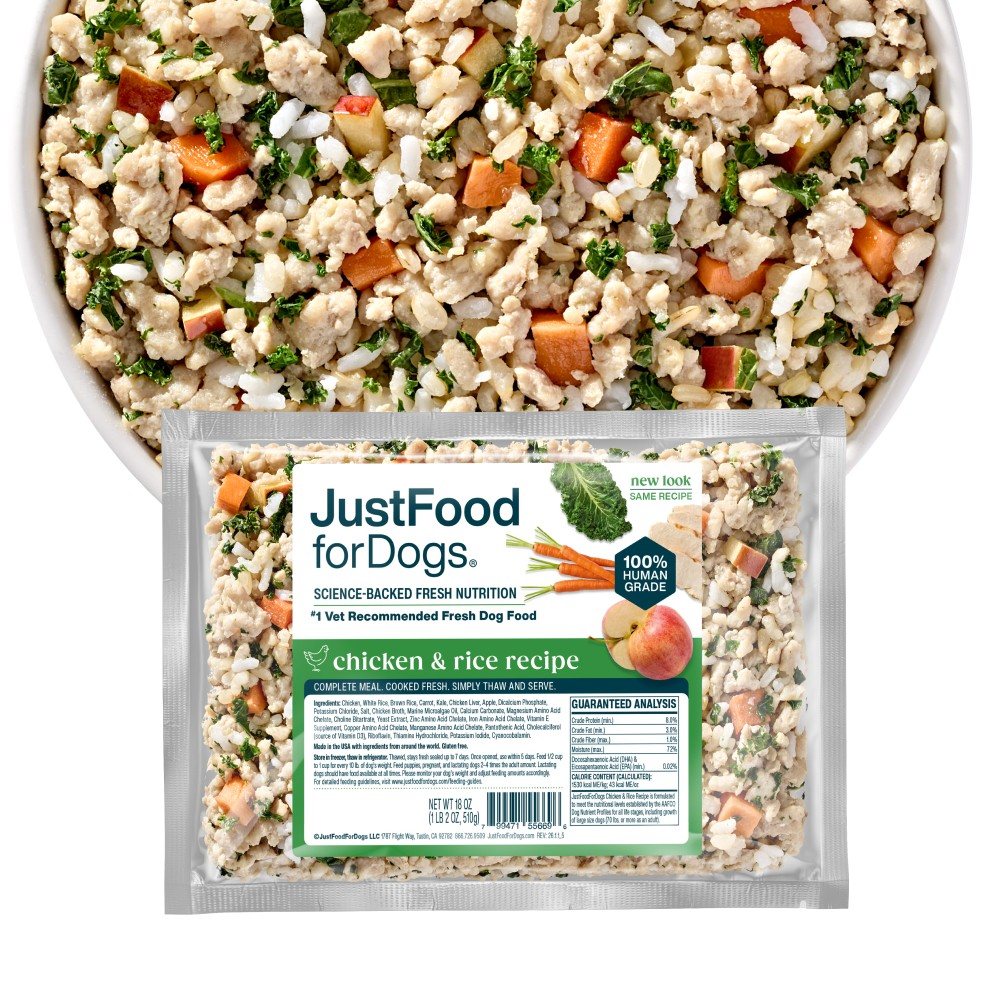
JustFoodForDogs Chicken & Rice
JustFoodForDogs Chicken & Rice is a fresh-frozen, grain-inclusive option formulated with chicken, white rice, and brown rice. It is designed for households seeking a complete ration suitable for both adult maintenance and canine growth.
The manufacturer lists its caloric density at 1,530 kilocalories per kilogram, which translates to 1.530 calories per gram. Its AAFCO all-life-stages adequacy statement explicitly includes the growth of large-size dogs expected to weigh 70 pounds or more as adults.
Growth eligibility does not imply that adult dogs should receive puppy-sized portions, nor should a daily ration remain unadjusted when activity levels change. Because this is a scientifically formulated, complete meal, homemade preparation using basic chicken and rice does not replicate its nutritional balance.
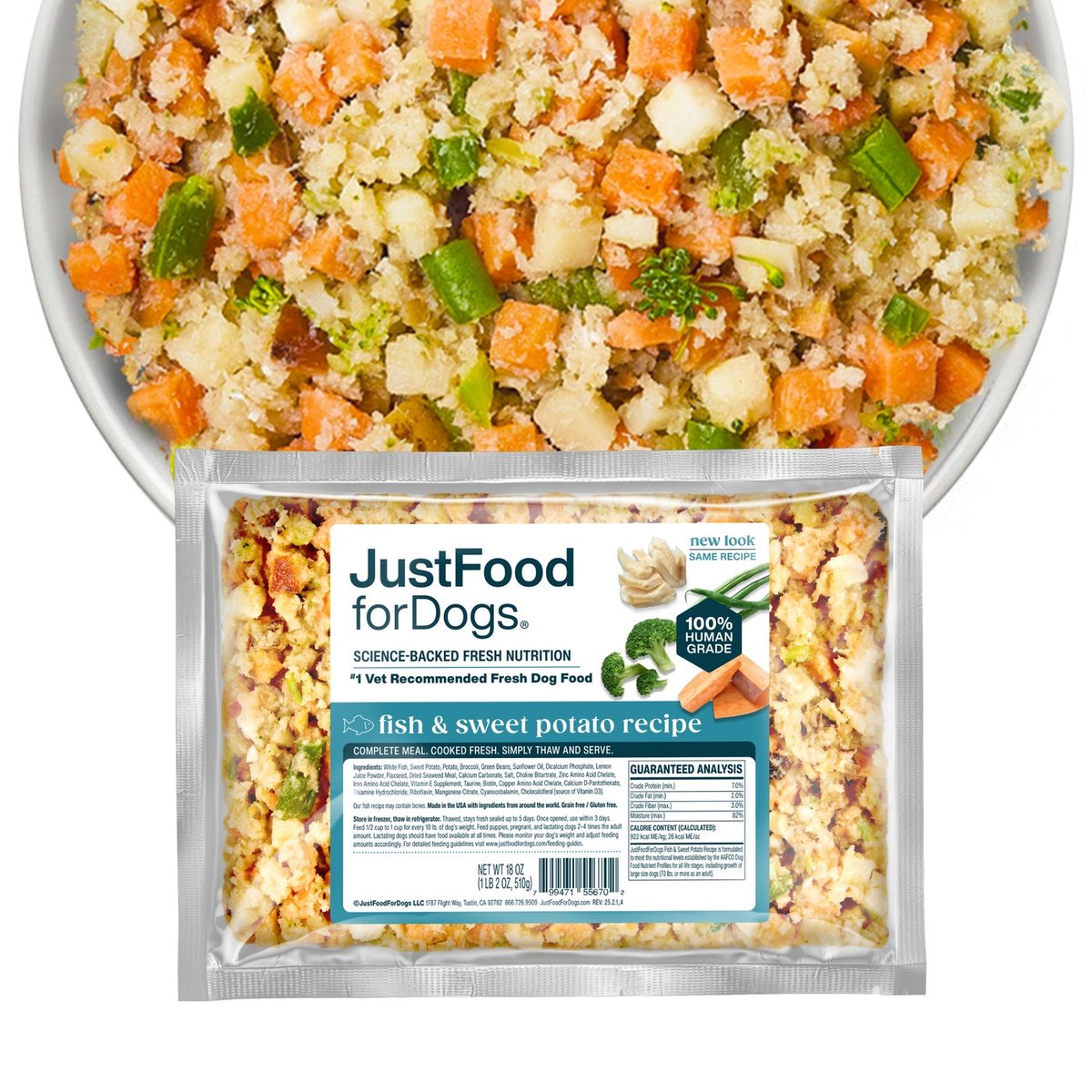
JustFoodForDogs Fish & Sweet Potato
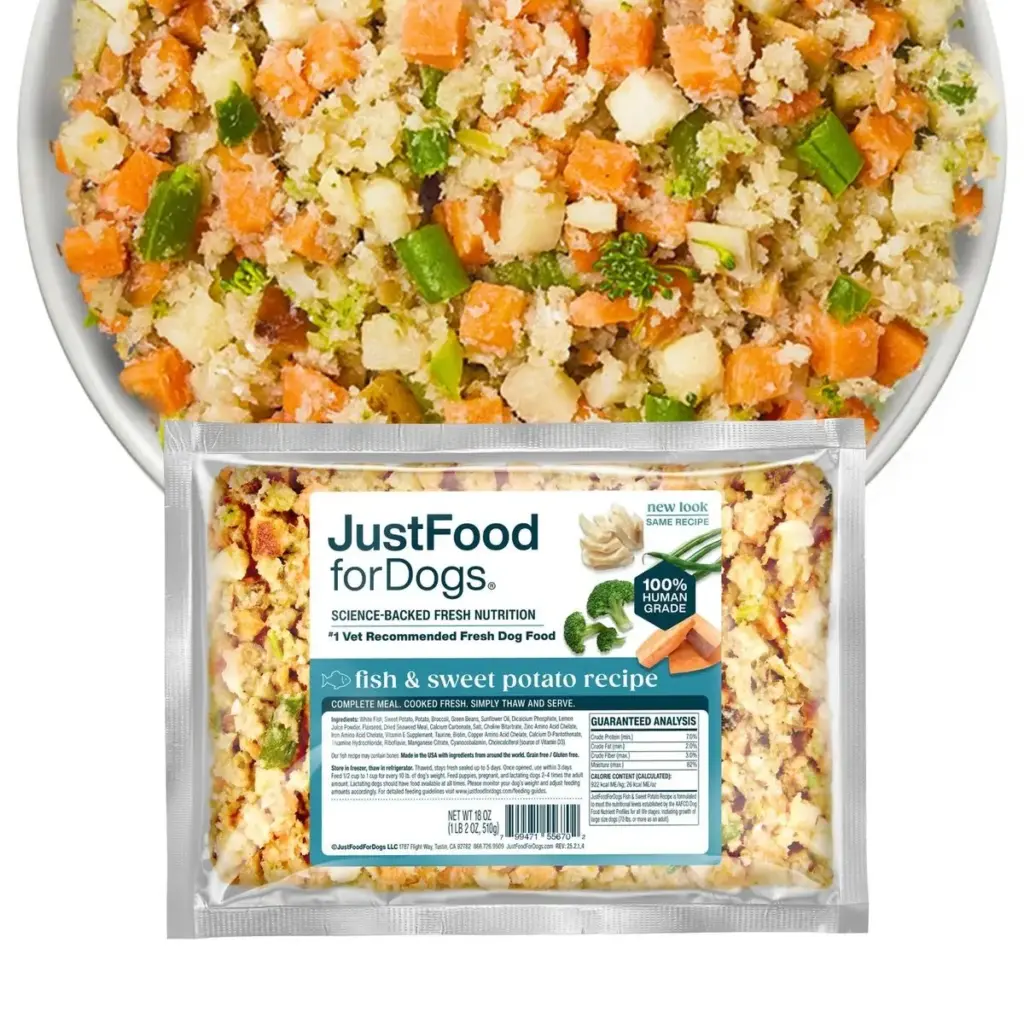
JustFoodForDogs Fish & Sweet Potato offers another growth-appropriate formulation suited for large breeds. Its current protein composition utilizes a fish blend consisting of cod, pollock, and haddock, alongside sweet potatoes.
This recipe maintains a energy density of 922 kilocalories per kilogram, or 0.922 calories per gram—substantially lower than many standard fresh formulations. Consequently, a dog requiring a specific daily caloric threshold will consume a larger portion by weight when fed this diet.
A higher volume serving by weight impacts meal preparation schedules and inventory management, but it does not signal nutritional inferiority. Furthermore, lower energy density alone does not turn a standard maintenance diet into a therapeutic weight-loss protocol, nor does the inclusion of fish automatically render a non-prescription food a clinical treatment for diagnosed food allergies.
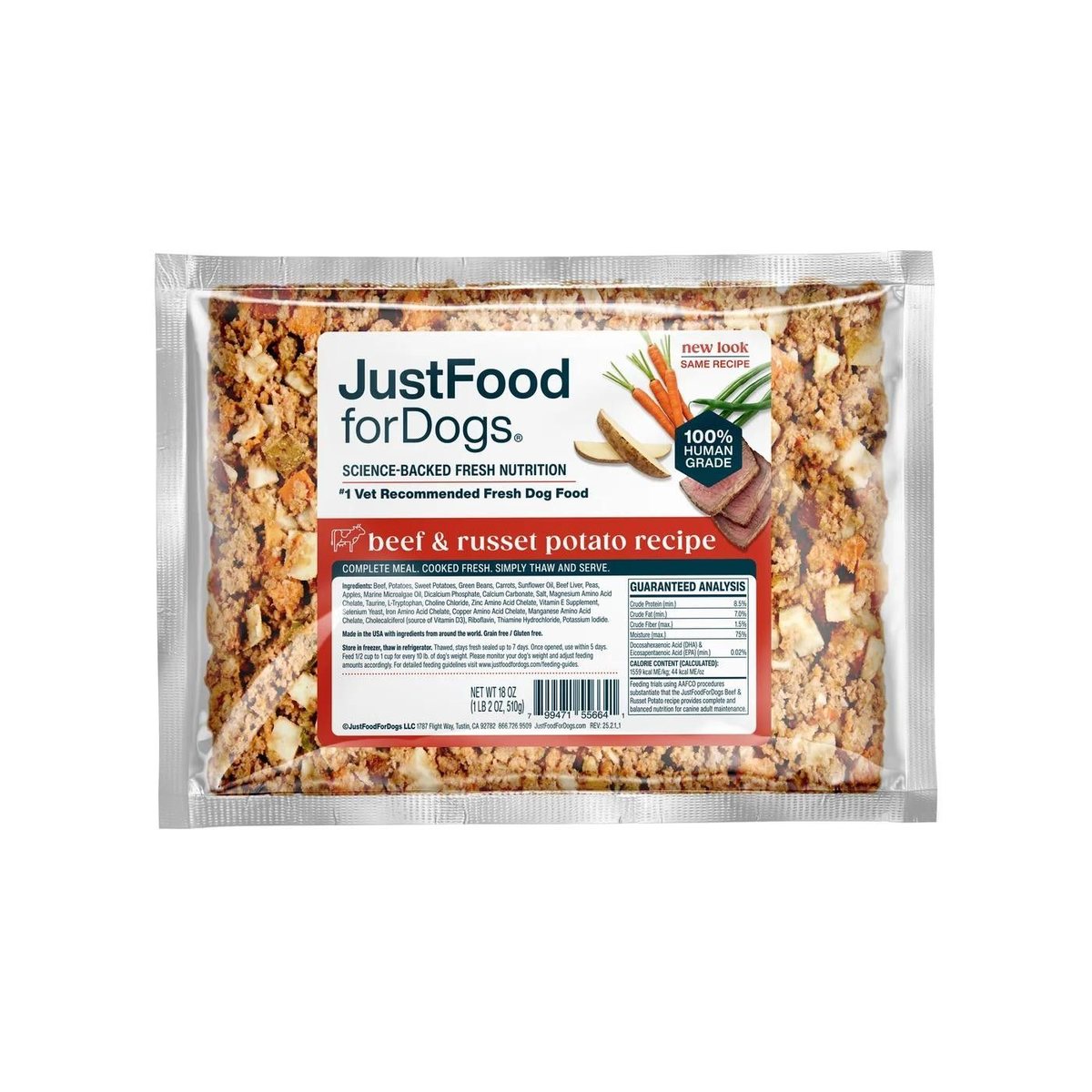
JustFoodForDogs Beef & Russet Potato
JustFoodForDogs Beef & Russet Potato is an adult-maintenance formulation designed specifically for fully grown dogs. It is not formulated to support the growth phases of developing Greyhound puppies.
Its published energy density stands at 1,559 kilocalories per kilogram, or 1.559 calories per gram, with nutritional adequacy established through standardized AAFCO feeding trials.
While this recipe features the highest energy density among the four compared options, that distinction does not inherently make it an athletic performance diet. An adult Greyhound’s current metabolic needs remain the deciding factor. If a dog is thriving on an existing, complete maintenance food, transitioning to a beef-based recipe represents an optional change that requires calculated portioning rather than a mandatory adjustment for companion life.
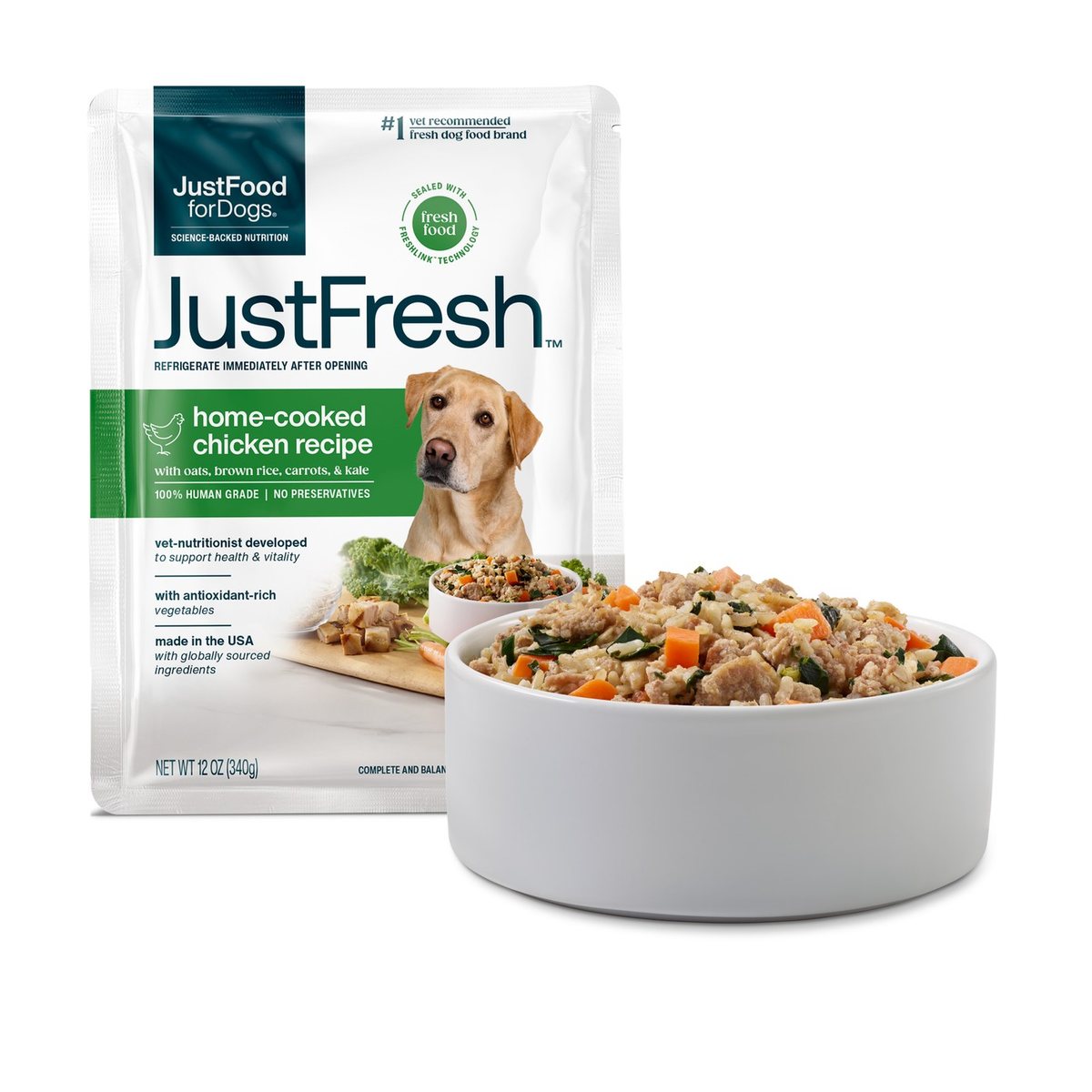
JustFoodForDogs JustFresh Home-Cooked Chicken
JustFoodForDogs JustFresh Home-Cooked Chicken provides shelf-stable storage prior to opening, simplifying supply logistics for adult maintenance feeding. Its formulation incorporates chicken alongside oats and brown rice.
The recipe supplies 1,254 kilocalories per kilogram, or 1.254 calories per gram. This product remains distinct from the fresh-frozen Chicken & Rice recipe and is not validated for growing puppies.
Pantry-safe storage reduces freezer space demands, but opened containers still require standard refrigeration and precise weight measurement. For today’s feeding strategies, pet owners should consult current product labels for updated feeding guidelines and life-stage verifications.
Establishing Baseline Feeding Records for Retired Racing Greyhounds
Constructing a reliable feeding routine for a retired racing Greyhound requires continuity. Securing historical diet details and portion instructions prior to introducing new food helps ease transitions, particularly when adopting directly from racing kennels, rescue organizations, or foster care.
The baseline diet an ex-racing Greyhound consumes successfully often serves as the safest starting point. When dietary changes are warranted, selecting a replacement becomes significantly more reliable when the historical intake is thoroughly documented.
Adopters should secure detailed dietary records from prior handlers, including:
- The precise name and brand of the primary complete food.
- The exact quantity offered per meal and the total daily frequency.
- The dog’s actual voluntary intake, noting whether meals were finished entirely or partially left.
- All external items consumed, including treats, training rewards, table scraps, and food used for medication delivery.
- The dog’s most recent recorded body weight, scale type, and measurement date.
A dog’s past racing intake does not define its long-term domestic energy requirement. Many animals spend time in foster care adapting to lower activity levels before final adoption. Establishing recent routine data prevents adopting handlers from mistakenly applying high-calorie athletic rations to sedentary home environments.

Creating an Adoption-Baseline Feeding Record
Maintaining a centralized record connects historical care with new feeding protocols. This record should distinguish verified data from estimates and serve as a structured foundation for veterinary reviews.
A complete feeding card documents several key parameters:
- Date and Source: Records who provided the information and when, separating current operational directions from historical records.
- Previous Complete Food: Lists the full manufacturer product name, as similar brand names often carry different caloric values.
- Previous Offered Amount: Captures grams, ounces, or exact volumetric measures to make historical feeding reproducible.
- Actual Consumption: Tracks whether food was eaten completely or variable, distinguishing offered calories from ingested calories.
- Supplemental Extras: Documents treats, toppers, chews, and pill wraps to quantify intake outside primary meals.
- Baseline Weight and Date: Establishes reference points using documented scale measurements.
- Body and Muscle Condition: Details clinical assessments or observations regarding fat cover and lean muscle mass.
- Activity Level: Reflects true daily exercise routines rather than historical racing schedules.
- New Recipe Metrics: Records the selected food’s exact name, adequacy statement, and caloric density per gram.
- Operational Portion Plan: Specifies total daily grams divided clearly across planned daily feedings.
- Reassessment Triggers: Sets clear review dates and clinical metrics to prevent initial plans from becoming static routines.
If previous feeding metrics are missing, labeling those fields as unknown avoids guessing. Handlers can then establish an empirical starting point alongside shelter staff or a veterinarian. Vague statements such as "one scoop twice daily" must be verified by weighing the actual food volume.
Converting Informal Feeding Directions
Handover instructions frequently utilize casual household terms like "one bowl," "a heap," or "a spoonful." These descriptions are rarely reproducible across different kitchens.
When possible, handlers should weigh actual historical servings on a gram scale. Keeping label data from previous feeds alongside written notes prevents unintended intake spikes or drops caused by scoop size variations.
Utilizing History Without Over-Targeting
Historical weights offer context, but they do not automatically represent an individual dog’s ideal long-term weight. The same rule applies to historical calorie numbers. Veterinarians evaluate historical records alongside hands-on physical exams, helping households determine realistic body composition goals without assuming every retired athlete must gain weight or preserve maximum racing musculature.
Veterinary discussions should address:
- The dog’s physical transition from high-intensity exercise to domestic activity.
- Current body fat distribution compared to lean muscle mass.
- Target body condition parameters specific to pet life.
- Scheduled reassessment dates to evaluate dietary response.
For Greyhounds adopted without athletic backgrounds, the same methodology applies, substituting rescue, foster, or shelter documentation for racing histories.
Separate Assessment of Body Condition Score and Muscle Condition Score
A Greyhound’s naturally lean silhouette makes objective evaluation essential. Body condition scoring (BCS) and muscle condition scoring (MCS) measure distinct physiological components, neither of which can be fully captured by weight scale readings alone.
Body condition scoring evaluates subcutaneous and abdominal fat stores, whereas muscle condition scoring measures lean muscle mass over bony prominences. Standardized veterinary guidelines, such as those provided by the World Small Animal Veterinary Association (WSAVA), maintain separate scoring systems because fat accumulation and muscle wasting represent different clinical indicators.
Key points of distinction include:
- Body Condition Score (BCS): Evaluates fat tissue presence using visual examination and palpation of the rib cage, waistline, and abdominal tuck.
- Muscle Condition Score (MCS): Assesses lean muscle tissue through direct palpation of the temporal bones, scapulae, thoracic vertebrae, and pelvic bones.
Even highly athletic dogs require objective body composition monitoring. An animal can maintain a stable scale weight while simultaneously losing muscle mass and gaining subcutaneous fat. Caregivers should avoid relying solely on visual appearance or broad descriptions like "lean" to monitor long-term health.
Conducting Repeatable Physical Evaluations
Caregivers can learn standardized evaluation techniques under veterinary supervision. The WSAVA canine body condition chart provides a systematic approach to assessing rib coverage and abdominal contours, offering far more clinical value than arbitrary guidelines about how many ribs should remain visible.
For home monitoring, consistent evaluation methods yield useful, objective records. Notes such as "rib cage feels more prominent than last month" provide actionable information for veterinary visits, whereas attempting to match a pet to online photos of other Greyhounds can be misleading.
Standardized observation conditions require:
- Evaluating the dog in a standing posture on a flat, non-slip surface.
- Using light, flat-handed palpation along the thoracic rib cage.
- Viewing the animal from directly above to check waistline indentation.
- Viewing the animal from the side to assess abdominal tuck.
- Conducting evaluations at consistent times relative to meal schedules.
No universal ideal weight exists for the Greyhound breed. Differences in frame size, height, sex, and structural conformation mean that broad weight ranges cannot replace hands-on evaluation of individual dogs.
Triggers for Dietary Review
A feeding program should include structured review points. Re-evaluating a plan early is warranted if a dog consistently leaves food, exhibits unplanned weight changes, or shows shifts in muscle coverage.
Clinical triggers for reassessment include:
- Unexplained weight fluctuations exceeding 5 percent of total body weight over a four-week period.
- Observable muscle loss over the spine, shoulders, or hips.
- Shifts in stool consistency lasting longer than 48 hours.
- Changes in appetite, such as meal refusal or sudden food-seeking behavior.
- Modifications to daily exercise routines or overall health status.
A detailed feeding log helps veterinarians determine whether physical changes stem from actual metabolic shifts or inconsistencies in daily portioning. Caregivers should avoid automatically increasing rations in response to a visible rib, just as they should avoid ignoring progressive weight loss under the assumption that Greyhounds are naturally thin.
Evaluating Senior Greyhound Nutrition
Senior dietary adjustments should reflect an aging dog’s clinical condition and activity levels. Reaching a specific age threshold does not automatically require dropping calories, changing protein ratios, or switching recipes.
Some older Greyhounds thrive on their established maintenance diets with adjusted portion sizes, while others require targeted dietary changes to support specific health conditions.
During senior feeding consultations, handlers should provide:
- Up-to-date scale weights and condition score histories.
- A detailed record of all foods, treats, and supplements given.
- Documented changes in mobility, activity patterns, or sleep cycles.
- Diagnostic findings from recent veterinary bloodwork or urinalysis.
Unexpected weight loss in senior dogs must be distinguished from intentional weight management. If an aging Greyhound displays decreased appetite or progressive muscle loss, veterinary diagnostics are needed to determine the underlying cause.
Calculating Portion Sizes from Recipe Caloric Density
A properly calculated portion supplies a dog’s target daily calories based on the specific food served. Standard volumetric measuring cups vary significantly, making precise caloric calculations and scale weighing essential.
Determining initial energy requirements begins with a target caloric allowance. Baseline calculations, such as the WSAVA calorie guidance for healthy adult dogs, provide helpful starting points for animals at ideal body weights. However, these figures serve as general benchmarks rather than fixed requirements for every dog.
Daily portion weight is calculated using the following formula:
$$textDaily Grams = fractextAssigned Caloric AllowancetextCalories per Gram of Specific Recipe$$
To convert product labels listing kilocalories per kilogram (kcal/kg) into calories per gram (kcal/g), divide the total figure by 1,000. For example, a recipe rated at 1,530 kcal/kg yields 1.530 kcal/g.
Caloric Equivalent Comparisons Across Recipes
To illustrate how energy density dictates portion size, consider a hypothetical daily requirement of 1,000 calories derived entirely from a single recipe. Portion sizes vary noticeably across different formulations:
- Chicken & Rice (1.530 kcal/g): $frac1,0001.530 = 654text grams daily$
- Fish & Sweet Potato (0.922 kcal/g): $frac1,0000.922 = 1,085text grams daily$
- Beef & Russet Potato (1.559 kcal/g): $frac1,0001.559 = 641text grams daily$
- JustFresh Home-Cooked Chicken (1.254 kcal/g): $frac1,0001.254 = 797text grams daily$
Note: The 1,000-calorie baseline above serves as an illustrative mathematical model rather than a universal feeding recommendation.
These differences highlight why feeding portions cannot be transferred directly when switching products. Substituting equal weights of two different formulas can lead to significant overfeeding or underfeeding.
Accounting for Daily Treat Caloric Limits
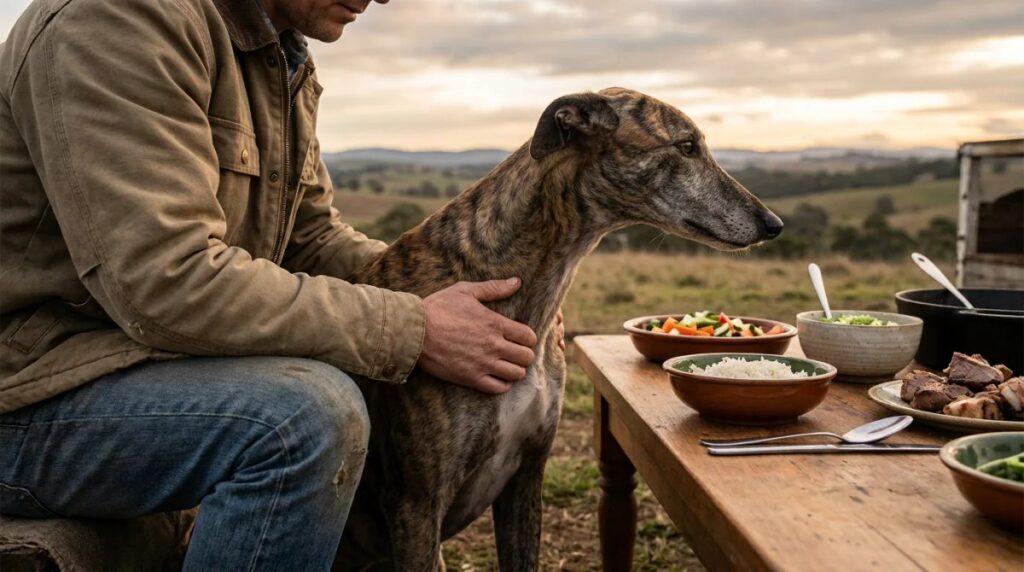
A dog’s total daily intake includes meals, treats, training rewards, dental chews, and food used to administer medications.
To maintain nutritional balance, non-complete extras should generally not exceed 10 percent of total daily calories, unless otherwise directed by a veterinarian. According to American Animal Hospital Association (AAHA) guidelines, exceeding this threshold increases the risk of nutrient imbalances.
Daily meal portioning should follow a structured sequence:
- Establish the total daily energy requirement with a veterinarian.
- Calculate total treat and extra calories, keeping them at or below 10 percent of the daily allowance.
- Deduct treat calories from the overall allowance to determine remaining meal calories.
- Divide the remaining meal calories by the recipe’s kcal/g rating to calculate daily meal weight in grams.
- Divide total daily meal weight evenly across scheduled feedings.
The 10 percent limit represents an upper ceiling rather than a required addition. This limit applies to all treats combined across all household members.
Practical Calculation Example for Mixed Feeding
Consider a hypothetical adult Greyhound with an established target allowance of 1,100 total calories per day. The household allocates 50 calories to treats, leaving 1,050 calories for complete feeds.
If the owner feeds a combination of fresh food and commercial kibble—assigning 650 calories to JustFoodForDogs Chicken & Rice and 400 calories to a complete dry food providing 4.0 kcal/g—the portion weights are calculated as follows:
- Chicken & Rice Portion: $frac6501.530 approx 425text grams daily$
- Dry Kibble Portion: $frac4004.0 = 100text grams daily$
This mixed plan splits the caloric allowance between two complete foods rather than adding dry food on top of a full fresh food portion. Both foods must be appropriate for the dog’s life stage and health status.
Standardizing Kitchen Measurement
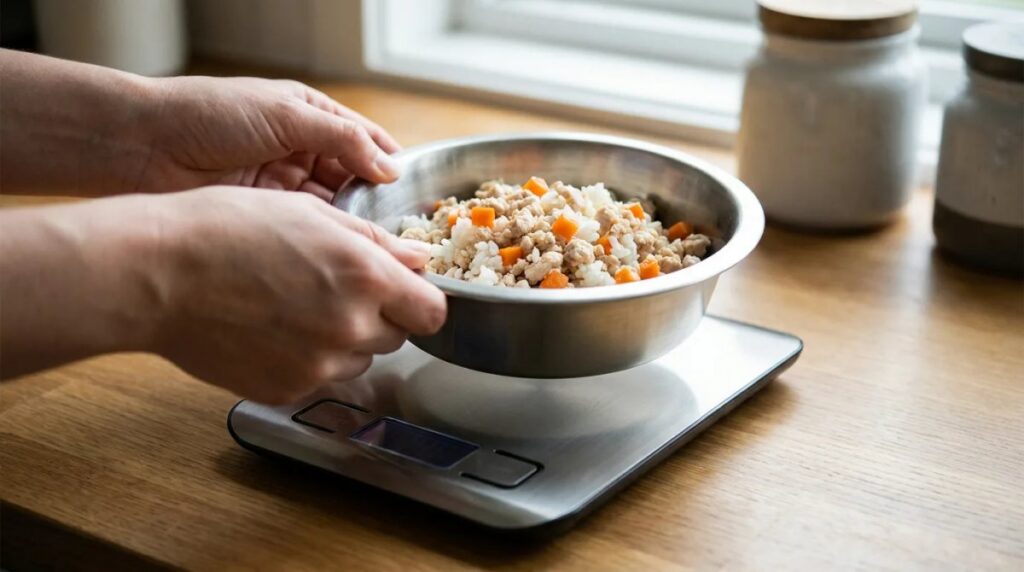
Using a digital kitchen scale ensures accurate, repeatable portioning across all household members.
Caregivers should place the empty food bowl on the scale, clear the display to zero using the tare function, and weigh the exact calculated portion in grams. When feeding mixed diets, each component should be weighed separately to maintain consistency and track leftovers accurately.
Consistent feeding practices include:
- Calibrating digital scales periodically and keeping backup batteries on hand.
- Leveling containers and using clean utensils for every meal.
- Weighing meals consistently before adding liquid toppers or warm water.
- Documenting recipe changes immediately on the household feeding card.
Simple, repeatable weighing routines prevent portion creep and ensure every caregiver provides identical servings.
Analyzing Daily Feeding Costs
Understanding calorie density helps handlers calculate true daily feeding costs rather than relying on total package price alone. Net weight does not indicate how many days a bag or pouch will last, as energy density varies across formulations.
Daily cost is calculated using the following formula:
$$textDaily Feeding Cost = textPackage Price times left( fractextDaily Serving in GramstextNet Package Weight in Grams right)$$
This calculation assumes complete utilization within recommended storage timelines. Discarding expired or improperly stored food increases the effective daily cost.
Before comparing feeding costs, handlers should confirm:
- The current retail price per package.
- The net weight listed on the package in grams.
- The specific daily calorie allocation assigned to that food.
- Storage limitations to prevent food spoilage before use.
Comparing options based on daily serving cost provides an accurate metric for budgeting while meeting a dog’s nutritional requirements.
Meal Schedules and Bloat Risk Considerations
Dividing an adult Greyhound’s daily food allowance into at least two meals offers a practical, safe baseline routine. Splitting meals manages digestion without increasing total daily calories.
Guidance from the Cornell Riney Canine Health Center supports feeding two or more meals daily rather than a single large meal to help reduce Gastric Dilatation-Volvulus (GDV or bloat) risks. However, meal frequency is only one factor in managing GDV, not a guaranteed preventative measure.
A consistent meal schedule helps owners:
- Monitor appetite changes and consumption speed.
- Coordinate meal times around medication schedules.
- Prevent hunger-induced bile vomiting during extended gaps between meals.
- Recognize digestive changes early.
Individual meals do not need to be identical in size, provided the total daily calorie target is met and specific veterinary instructions are followed.
Maintaining Shared Schedule Records
A shared kitchen record helps prevent accidental double feeding. An empty bowl indicates that a dog finished eating, but it does not tell other family members whether breakfast was already served.
Logging meal times and portion weights keeps all caregivers aligned, especially when multiple people share feeding duties or give treats.
Log entries should record:

- The exact time and date food was served.
- The recipe name and portion weight offered.
- The weight or estimated percentage of any leftover food.
- The initials of the caregiver who fed the dog.
If a dog consistently leaves meals unfinished at specific times, documenting the pattern helps identify potential schedule issues or portion overestimations before changing diets entirely.
Exercise Timing and Emergency Indicators
Meal timing around vigorous activity should be discussed with a veterinarian, particularly when introducing new exercise routines. While post-meal rest periods are common practice, fixed waiting times alone do not guarantee bloat prevention.
Handlers must distinguish between normal post-meal resting behavior and medical emergencies. Signs of GDV include:
- Non-productive retching or attempts to vomit.
- Visible abdominal distension or swelling.
- Marked restlessness, pacing, or inability to settle.
- Rapid breathing, pale gums, or sudden collapse.
These symptoms require immediate emergency veterinary evaluation. GDV cannot be managed at home by altering food or waiting for symptoms to pass.
For daily management, consistency remains the goal. A stable schedule makes subtle changes in behavior or appetite easier to spot.
Safe Diet Transitions and Storage Guidelines
Dietary transitions should be managed deliberately to maintain digestive health and accurate intake tracking. Rescue organizations, foster networks, and veterinarians can provide tailored transition schedules.
Unless an urgent health condition requires an immediate veterinary-directed diet change, a gradual transition allows the digestive system to adapt while keeping total calories consistent.
Transition planning should reference the baseline card:
- Preserve total daily caloric intake during the transition period.
- Calculate portions for both old and new foods by weight using their respective kcal/g values.
- Avoid introducing new treats, supplements, or toppers during the transition.
- Monitor stool consistency and document any digestive variations.
Avoid changing main foods, treats, supplements, and feeding schedules simultaneously. Staggering changes makes it easier to identify the cause if digestive upset occurs.
Caloric Ratio Calculations During Transitions
Transition ratios like "50% old food and 50% new food" should be calculated by calories rather than weight or volume. Because energy densities differ, equal weights will not yield equal calorie splits.
For example, if a transitional step calls for 500 calories of old food (at 4.0 kcal/g) and 500 calories of JustFoodForDogs Chicken & Rice (1.530 kcal/g), the required weight for each component is calculated as follows:
- Old Food Portion Weight: $frac5004.0 = 125text grams$
- Chicken & Rice Portion Weight: $frac5001.530 approx 327text grams$
Calculations should reflect the specific kcal/g values of the products used. If a dog picks out one food and leaves the other, recording the actual amount consumed ensures intake logs remain accurate.
Tracking Digestive Responses Accurately
Caregivers should log clear, objective observations during transitions. Notes like "left 50 grams of morning meal" or "loose stool noted 12 hours after treat change" provide far more context for a veterinarian than vague statements about food intolerance.
Daily logs should track:
- Stool consistency using a standard visual scale.
- Feeding enthusiasm and consumption speed.
- Any instances of gas, burping, or stomach noises.
- Physical changes, including energy levels and coat condition.
Persistent digestive upset or appetite loss requires veterinary review. Frequently switching diets without guidance can mask underlying medical issues. Complete commercial fresh foods are balanced maintenance options, not medical therapies for acute digestive conditions.
Fresh Food Storage and Handling Protocols
Calculating daily portions helps handlers determine storage needs. For large breeds like Greyhounds, fresh meal portions require adequate refrigerator and freezer capacity.
Food safety protocols depend on proper storage and thawing routines:
- Refrigerated Post-Thaw Lifespan: According to JustFoodForDogs, thawed non-fish fresh-frozen meals must be used within five days of refrigeration. Fish-based recipes must be used within three days, and opened JustFresh packaging must be used within three days.
- Refrigerator Thawing Times: Standard 18-ounce packages typically require up to 24 hours to thaw in the refrigerator, while larger 72-ounce packages can take up to 48 hours.
- FDA Storage Standards: U.S. Food and Drug Administration guidelines recommend maintaining refrigerator temperatures at or below 40°F (4°C) and promptly refrigerating or discarding uneaten fresh food. Meals should never be left at room temperature for extended periods.
Thawing meals in the refrigerator helps preserve food safety. Once opened, food safety timelines begin immediately, regardless of how long the package was previously stored frozen.
Updating Handover Instructions
Once a new diet is established, update the baseline card to reflect current feeding metrics. Clear instructions allow pet sitters, family members, or boarding facilities to maintain the routine accurately.
Updated cards should record:
- Current verified body weight and condition scores.
- Exact product names, recipe details, and kcal/g values.
- Daily meal weights in grams and feeding schedules.
- Approved treats, maximum daily treat limits, and storage instructions.
Historical notes should be preserved with dates for future reference, ensuring the active card remains clean and easy to follow. A reliable feeding routine relies on appropriate recipe selection, consistent weighing, and accurate recordkeeping.
Frequently Asked Questions
Should Greyhounds eat from raised food bowls?
There is no universal bowl height that applies to all Greyhounds, and elevated feeders should not be used as a bloat-prevention measure. Research from the Cornell Riney Canine Health Center identifies raised food bowls as a potential risk factor for Gastric Dilatation-Volvulus (GDV).
If a Greyhound has a specific medical or orthopedic condition that affects its ability to eat comfortably, a veterinarian should evaluate the dog and provide individualized feeder height recommendations. Otherwise, a stable, floor-level bowl that is easy to clean offers a safe default option. Long legs alone do not make elevated bowls necessary.
What foods are toxic to Greyhounds?
Greyhounds require the same protections against toxic foods as all other canine breeds. The U.S. Food and Drug Administration maintains guidance on hazardous items—including chocolate, grapes, raisins, onions, garlic, xylitol/birch bark extract, and macadamia nuts.
Suspected ingestion of toxic substances requires immediate veterinary attention or contact with an animal poison control service. Broad, unsubstantiated claims about breed-specific food bans should not be confused with legitimate toxicological hazards or veterinarian-diagnosed dietary sensitivities.
Are bananas safe for Greyhounds?
A small piece of plain, peeled banana can serve as an occasional treat for dogs that tolerate it, provided it fits within their overall dietary plan. UC Davis Veterinary Medicine includes plain banana in its guidance on safe canine treats.
Banana portions must be factored into the dog’s 10 percent daily limit for non-complete treats rather than given as an unrestricted addition. Bananas are