


For retired racing Greyhounds, the transition from an athletic career to life as a household companion brings significant changes in physical demand, daily routine, and nutritional requirements. While a dog’s past feeding history provides crucial context during adoption, a former racing diet does not establish a permanent calorie allowance or feeding format for home life. Veterinary nutrition experts emphasize that identifying the best diet requires matching a complete and balanced recipe to the individual dog’s life stage, current health status, and real-time energy expenditure.
To help pet owners navigate these nutritional choices, fresh-food manufacturer JustFoodForDogs has highlighted four distinct formulations that offer varied approaches to daily feeding. By evaluating parameters such as calorie density, storage format, and life-stage eligibility—and pairing those options with detailed feeding records—caregivers can build a precise, reproducible meal plan tailored to their dog’s specific needs.
Tailoring Nutrition to the Greyhound’s Unique Life Stage
A common misconception among new owners of ex-racers is that Greyhounds require specialized high-energy performance diets, raw racing feeds, or rigid daily volumetric portions simply due to their breed lineage. In reality, a pet Greyhound requires a complete and balanced commercial diet appropriate for its current life stage.
When evaluating dog food options, veterinary experts recommend examining the exact recipe rather than relying solely on brand reputation or general ingredient panels. Products manufactured by the same company often vary significantly in caloric density and nutritional adequacy statements. Understanding dog food labels involves reviewing the Association of American Feed Control Officials (AAFCO) adequacy statement and the listed calorie content, both of which are critical for translating a recipe into an accurate daily ration.
While breed characteristics provide baseline context, an individual Greyhound’s health history, metabolic rate, and current physical condition carry far greater weight than general breed descriptions when establishing a long-term feeding plan.
Evaluating Four JustFoodForDogs Recipe Formulations
The four highlighted JustFoodForDogs recipes demonstrate how commercial fresh-food options differ in caloric concentration, life-stage eligibility, and storage requirements. No single recipe serves as a universal choice for every Greyhound, making a comparative analysis essential.
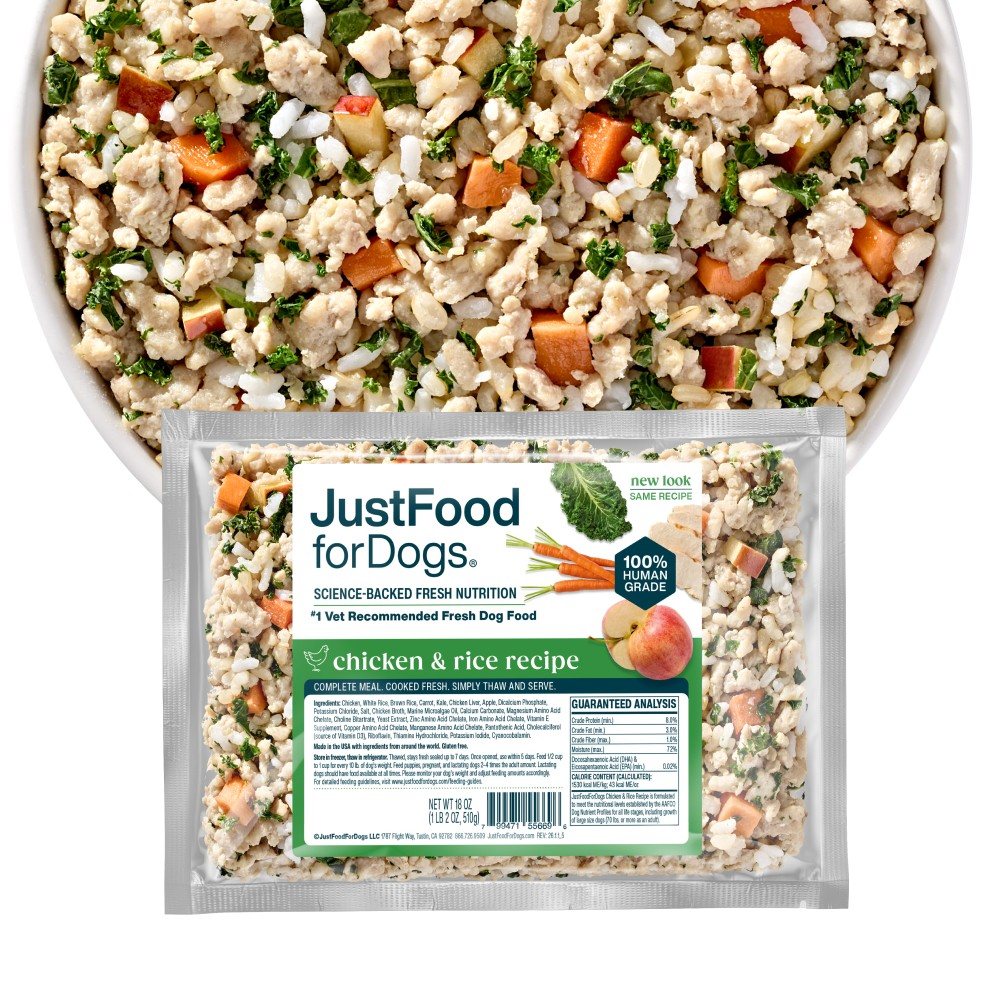
JustFoodForDogs Chicken & Rice
Formulated as a grain-inclusive fresh-frozen option, the Chicken & Rice recipe uses chicken, white rice, and brown rice. It meets AAFCO nutritional profiles for all life stages, including the growth of large-size dogs expected to reach 70 pounds or more as adults.
With a caloric density of 1,530 kilocalories per kilogram (1.530 kcal/g), it represents a concentrated energy source. While its growth eligibility makes it suitable for young, developing dogs, adult Greyhounds consuming this recipe must have their portions carefully controlled to prevent unwanted weight gain as their activity levels taper off in a home environment. Furthermore, cooked chicken and rice prepared in a home kitchen does not replicate the complete and balanced nutrient profile of this formulated diet.
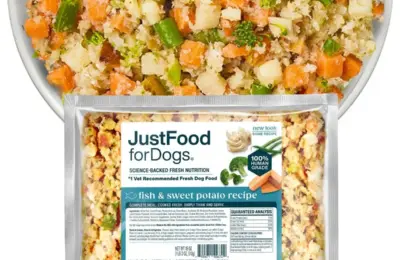
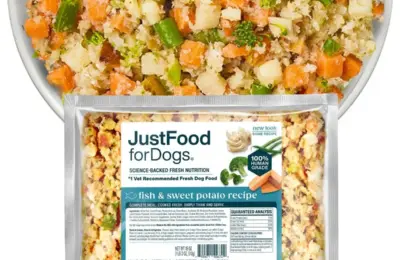
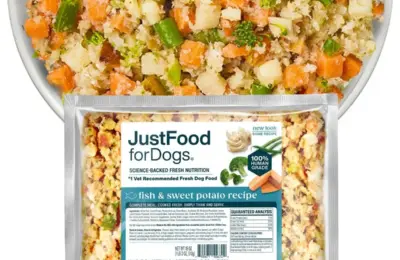
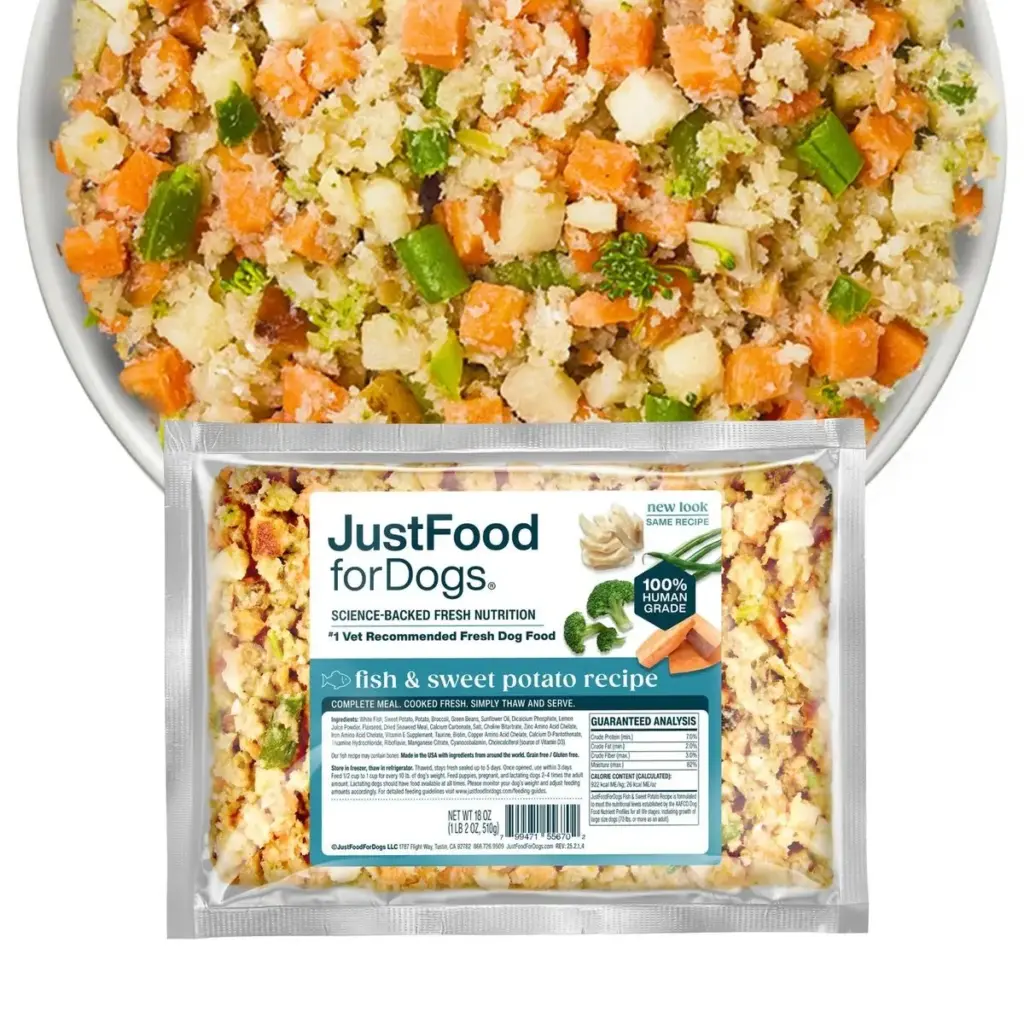
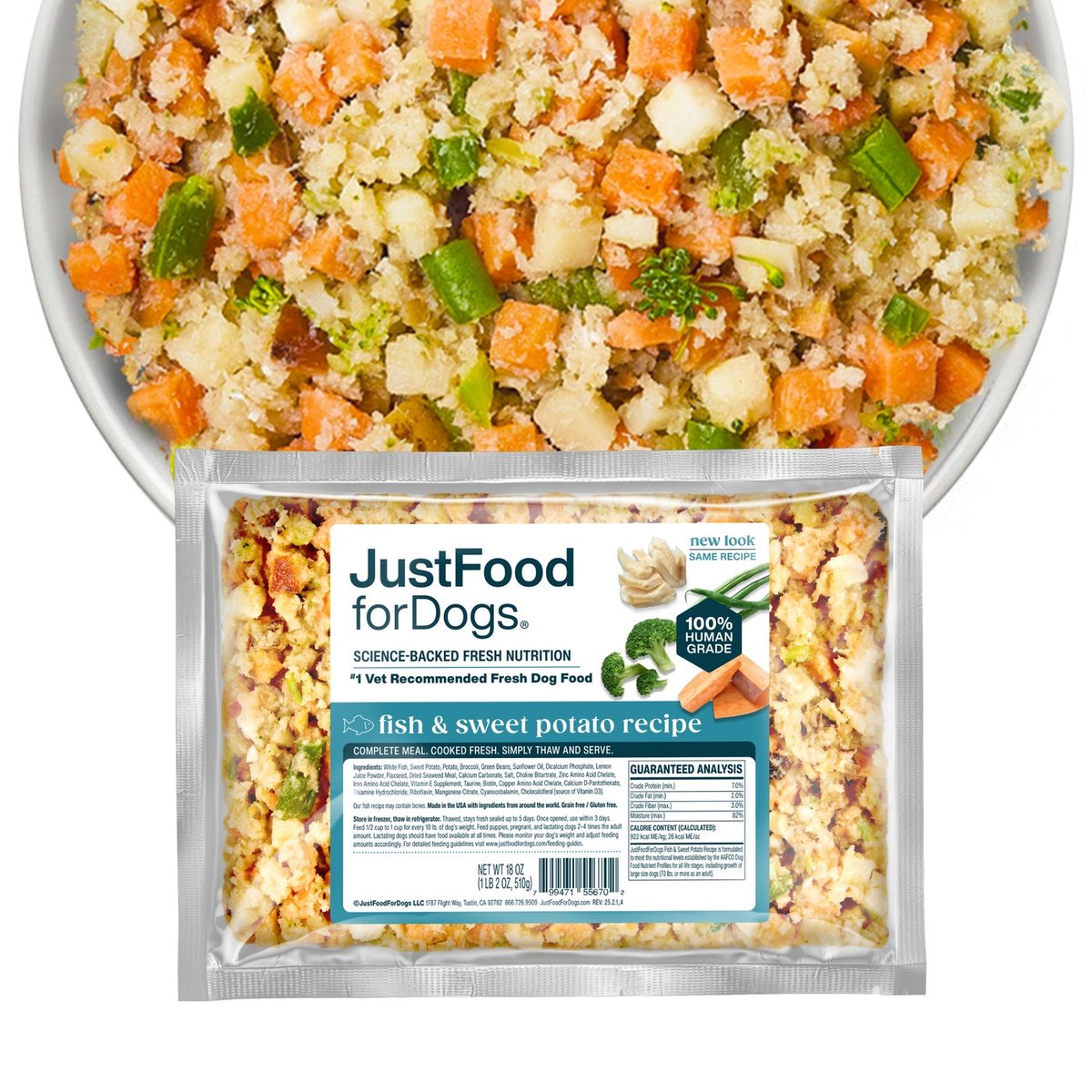
JustFoodForDogs Fish & Sweet Potato
Featuring a whitefish blend of cod, pollock, and haddock combined with sweet potatoes, this recipe is also certified for all life stages, including growth. However, its energy density is substantially lower, coming in at 922 kcal/kg (0.922 kcal/g).
Because of this lower caloric concentration, a Greyhound assigned a specific daily calorie intake will consume a significantly larger volume of food by weight compared to higher-calorie recipes. This larger serving size affects daily meal preparation and package usage rates. However, a lower calorie density does not make the recipe a specialized therapeutic weight-loss diet, nor does the inclusion of fish automatically turn a standard recipe into a treatment for diagnosed food allergies.

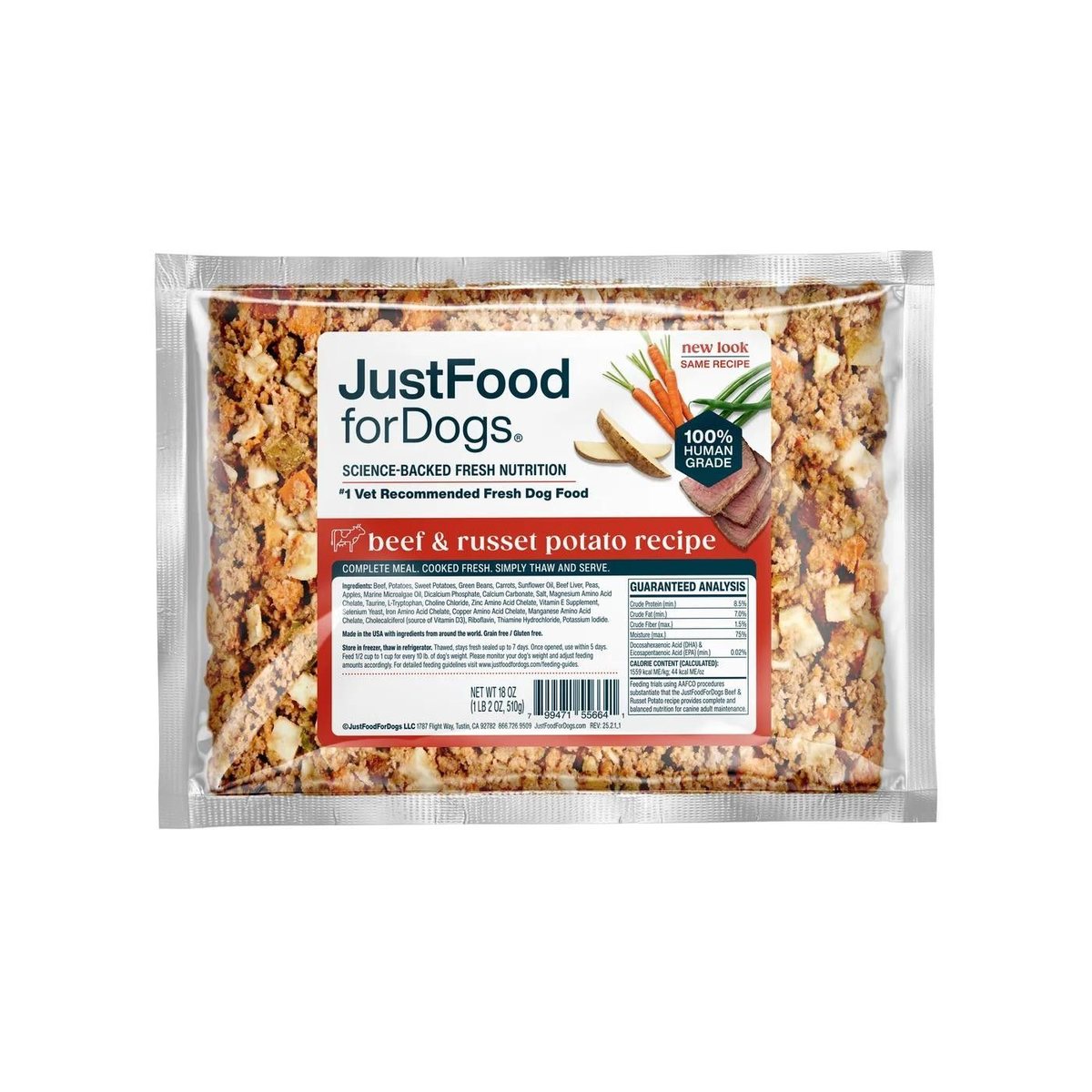
JustFoodForDogs Beef & Russet Potato
Designed specifically for adult maintenance, the Beef & Russet Potato recipe is not intended for growing puppies. Its adequacy for adult dogs is substantiated through standardized AAFCO feeding trials.
This formulation carries the highest energy density among the four options, providing 1,559 kcal/kg (1.559 kcal/g). Despite its relatively high caloric concentration, this metric alone does not designate it as an athletic performance food. A retired Greyhound’s current baseline requirement remains the primary factor in determining whether a concentrated beef recipe is appropriate. If a dog is already thriving on another balanced diet, switching to a high-density beef option is a choice that requires careful volumetric adjustment rather than a necessary step in adjusting to retirement.
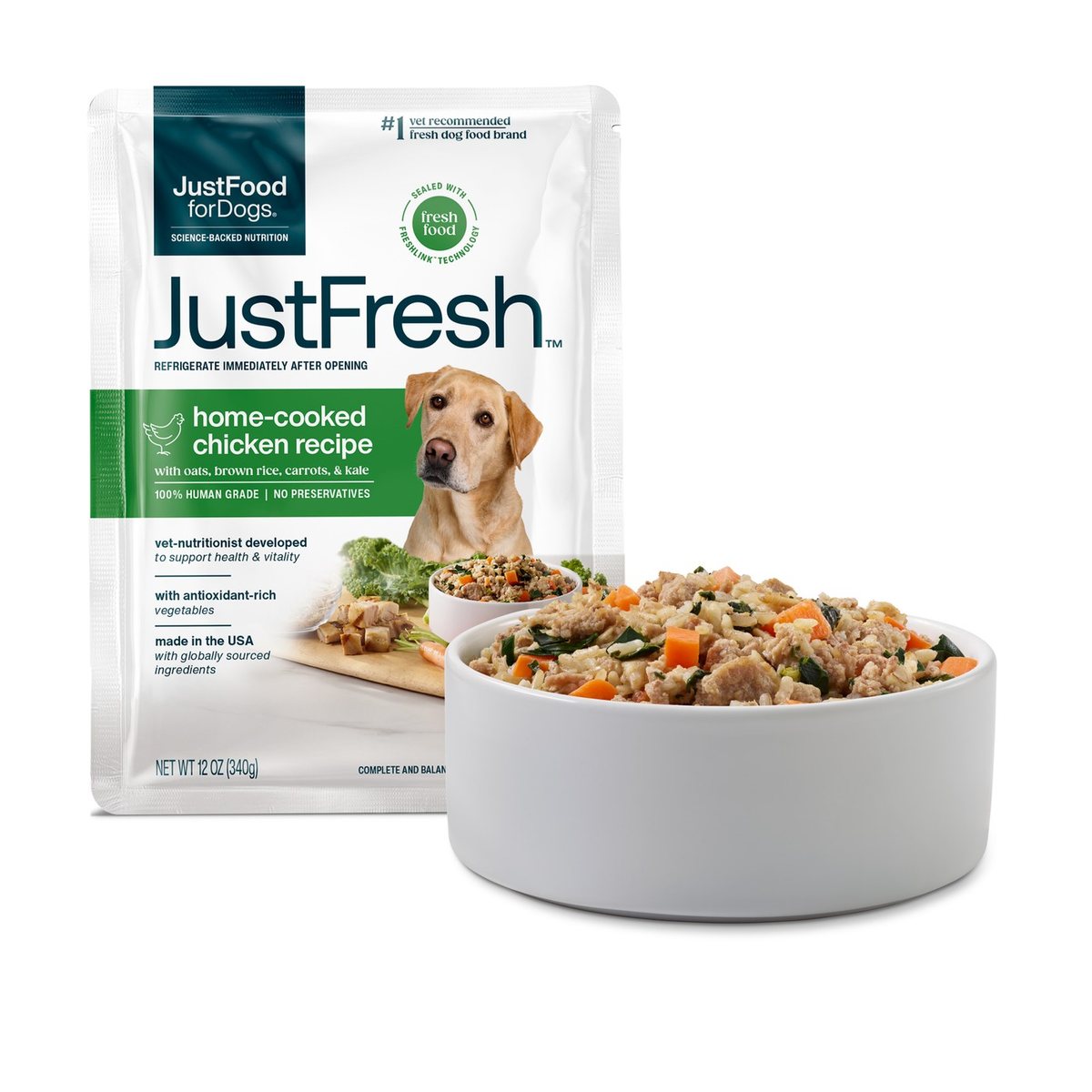
JustFoodForDogs JustFresh Home-Cooked Chicken
Unlike fresh-frozen diets, JustFresh Home-Cooked Chicken offers shelf-stable convenience before opening, simplifying inventory management for households with limited freezer capacity. The recipe includes chicken, oats, and brown rice, and is formulated strictly for adult maintenance.
The manufacturer lists its calorie content at 1,254 kcal/kg (1.254 kcal/g). Though both feature chicken, this product is distinct in formulation and density from the fresh-frozen Chicken & Rice recipe. While shelf-stable packaging eases storage logistics, caregivers must still weigh portions accurately and manage refrigeration carefully once the package is unsealed.
Establishing an Adoption-Baseline Feeding Record
When bringing a retired racing Greyhound home, maintaining dietary continuity during the initial transition period is critical. Caregivers should obtain exact records of the dog’s previous diet and feeding schedule from the rescue organization or foster home before considering any diet modification.
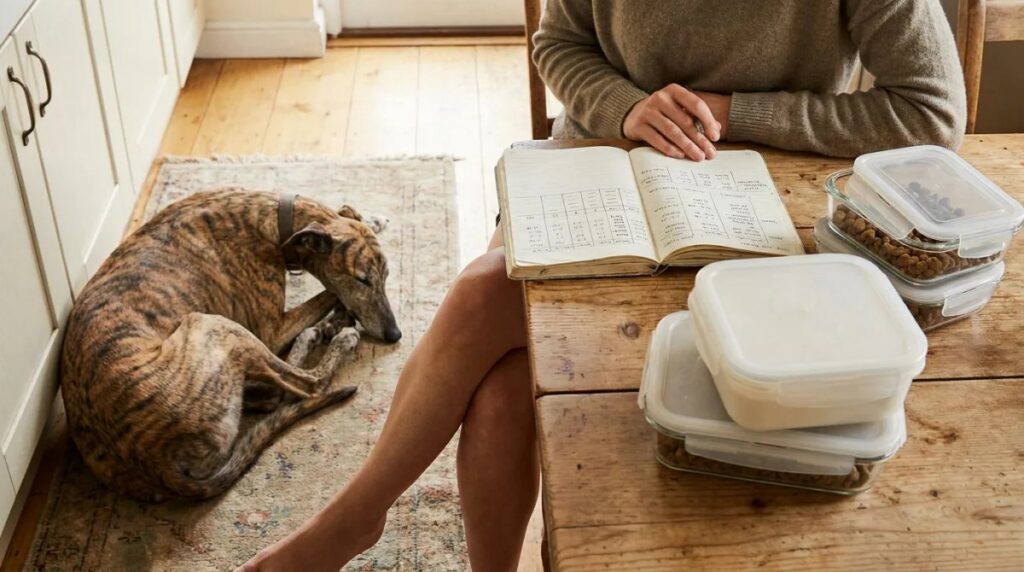
Handover instructions frequently utilize informal household terms such as "one scoop," "a bowl," or "a generous cup." These measures lack consistency and can lead to overfeeding or underfeeding when replicated in a new environment. To prevent unintended caloric shifts, owners should weigh the existing food on a digital kitchen scale to convert volumetric estimates into precise grams.
Veterinary nutritionists advise creating an adoption-baseline feeding record that tracks key variables:
- Source and Date: Documenting who provided the historical information and when it was recorded.
- Product Details: Listing the exact brand, recipe name, and caloric density (kcal/g) to distinguish between products with similar titles.
- Intake and Extras: Distinguishing between food offered and food actually consumed, while tracking all treats, dental chews, and pill-wrapper foods.
- Physical Metrics: Recording scale weight, veterinary-evaluated Body Condition Score (BCS), and Muscle Condition Score (MCS).
- Activity Levels: Noting current daily exercise routines rather than relying on historical performance data from the track.
A blank entry in a feeding record is preferable to an educated guess. If historical feeding quantities are unknown, owners should collaborate with their veterinarian and adoption group to establish a calculated starting baseline rather than arbitrarily selecting a portion size.
Assessing Body Condition and Muscle Condition Separately
Evaluating a Greyhound’s physical status requires looking beyond the scale. Because weight alone does not reveal whether a dog is carrying excess fat or losing lean tissue, veterinary protocols emphasized by the World Small Animal Veterinary Association (WSAVA) treat Body Condition Score (BCS) and Muscle Condition Score (MCS) as distinct clinical assessments.
Body Condition Scoring focuses on evaluating subcutaneous body fat over the ribs, waistline, and abdominal tuck. Conversely, Muscle Condition Scoring assesses muscle mass over the spine, skull, hips, and shoulder blades.
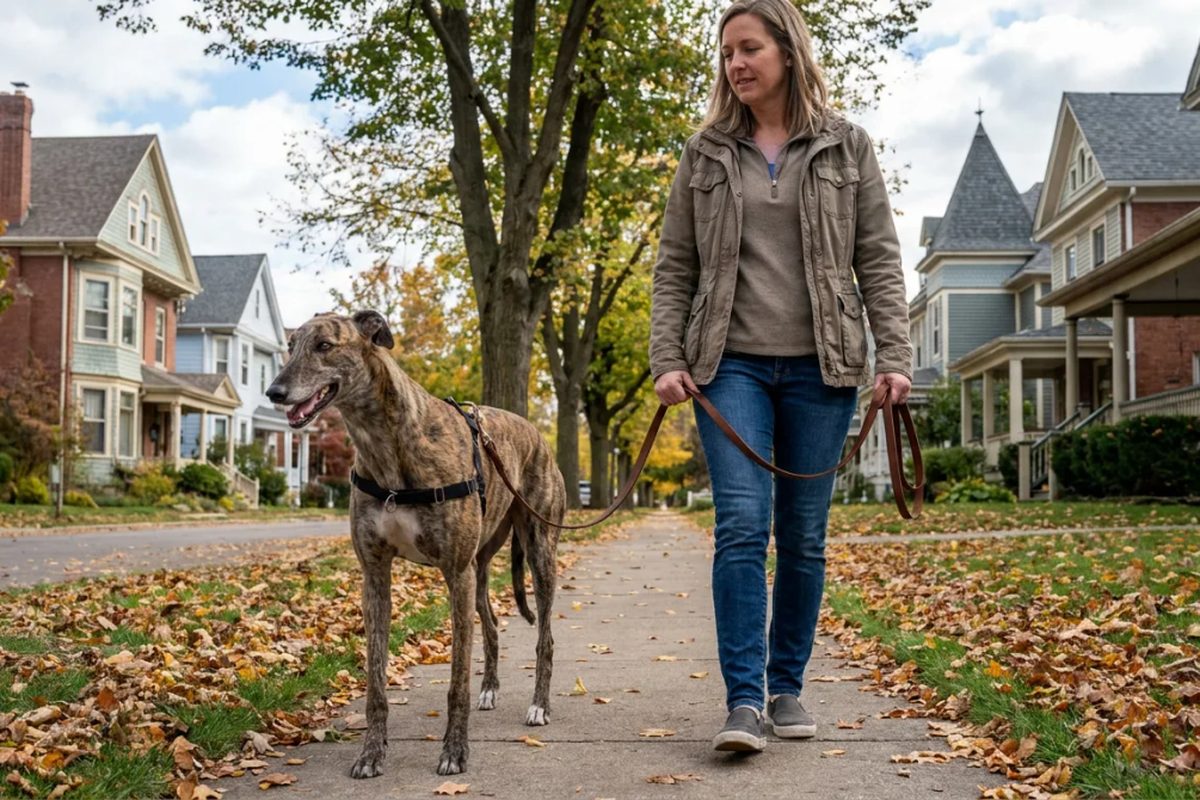
Because Greyhounds naturally possess a lean frame, deep chest, and prominent musculature, interpreting their physical condition can confuse first-time owners. The presence of visible ribs does not automatically signal undernourishment. Standard assessment guidelines suggest that a healthy Greyhound may show subtle rib definition without exhibiting hollows over the spine or pelvis.
Owners should avoid comparing their dog to general breed photographs or online benchmarks. Instead, hands-on evaluations should be conducted under consistent conditions—such as weighing the dog at the same time of day on a calibrated scale—to catch subtle shifts in tissue composition. Any unexpected weight loss, progressive muscle wasting, or persistent appetite changes warrant immediate veterinary review rather than a simple increase in meal size.
Senior Greyhounds require similarly nuanced evaluations. As dogs age, metabolic rates and activity levels change. Aging does not dictate an immediate switch to a low-calorie diet; some older Greyhounds require higher caloric density or altered protein levels to maintain lean muscle mass. Senior nutritional reviews should incorporate current health data, lab work, and physical scores to guide meal adjustments.
Calculating Portion Sizes from Caloric Density
Determining the correct portion size requires calculating the exact mass of food needed to supply a target caloric intake. Feeding guidelines that recommend a static number of "cups" fail to account for the major differences in calorie density across commercial recipes.
Owners can determine daily calorie targets using standardized references, such as the WSAVA calorie guide for healthy adult dogs, in consultation with their veterinarian. Once a daily calorie goal is set, the precise portion in grams is calculated using a straightforward formula:
$$textDaily Grams = fractextTarget Daily CaloriestextCalories per Gram of Recipe$$
To find calories per gram from a label displaying kcal/kg, divide the total kilocalories by 1,000. For instance, a recipe containing 1,530 kcal/kg yields 1.530 kcal/g.
Illustrative Portion Comparisons
To illustrate how caloric density impacts physical volume in the bowl, consider a baseline requirement of 1,000 calories per day provided exclusively by one complete recipe:
- Chicken & Rice (1.530 kcal/g): $approx 654text grams$ per day.
- Fish & Sweet Potato (0.922 kcal/g): $approx 1,085text grams$ per day.
- Beef & Russet Potato (1.559 kcal/g): $approx 641text grams$ per day.
- JustFresh Home-Cooked Chicken (1.254 kcal/g): $approx 797text grams$ per day.
These figures represent distinct mathematical scenarios for supplying the same caloric intake, demonstrating why an owner cannot switch recipes while keeping the portion weight or volume identical.
+-----------------------------------------------------------------------+
|                       CALORIC DENSITY COMPARISON                      |
|                                                                       |
|  Beef & Russet Potato (1.559 kcal/g)   [641 g]                        |
|  Chicken & Rice (1.530 kcal/g)         [654 g]                        |
|  JustFresh Chicken (1.254 kcal/g)      [797 g]                        |
|  Fish & Sweet Potato (0.922 kcal/g)    [1,085 g]                      |
|                                                                       |
|  0g            300g           600g           900g          1200g      |
|  Serving Weight Required to Yield 1,000 Total Calories (Grams)        |
+-----------------------------------------------------------------------+
Managing Daily Extras and Mixed Diets
According to American Animal Hospital Association (AAHA) nutritional guidelines, non-complete dietary additions—including treats, training rewards, dental chews, and table foods—should account for no more than 10 percent of a dog’s total daily caloric allowance. Exceeding this limit disrupts the overall balance of essential vitamins and minerals provided by the primary diet.
When constructing a mixed diet (such as combining fresh food with complete commercial kibble), caregivers must calculate each component’s caloric contribution separately. For example, if a 1,100-calorie daily plan allocates 50 calories to treats, 650 calories to fresh Chicken & Rice (1.530 kcal/g), and 400 calories to a 4.0 kcal/g dry kibble, the daily ration requires approximately 425 grams of fresh food and 100 grams of kibble. Adding dry food on top of a full fresh ration, rather than substituting calories, leads to overfeeding.
Using a digital kitchen scale to measure each component separately ensures daily consistency across different household members.
Meal Frequency, Schedules, and Bloat Considerations
For adult Greyhounds, splitting the total daily ration into at least two separate meals is a standard practical approach. Dividing daily intake prevents excessive stomach distension and supports regular digestion.
Guidance from Cornell University’s Riney Canine Health Center regarding Gastric Dilatation-Volvulus (GDV), commonly known as bloat, highlights meal distribution as a key operational factor. While dividing daily food into multiple feedings is widely recommended, meal frequency alone does not eliminate GDV risk. Furthermore, research cited by Cornell notes that elevated feeding stands may actually increase GDV risk in certain deep-chested dogs. Owners should consult their veterinarians before using raised bowl structures.
Establishing a consistent feeding schedule makes it easier to track appetite changes. Caregivers should maintain a shared log to prevent accidental duplicate feedings. If a dog regularly leaves portioned food uneaten, this pattern should be documented to help veterinarians distinguish between behavioral preferences, over-portioning, or underlying medical issues.
Owners must remain vigilant for signs of GDV, which include unproductive retching, visible abdominal distension, severe restlessness, and collapse. GDV is a life-threatening emergency requiring immediate veterinary intervention; it cannot be managed through dietary changes or home adjustments.
Managing Diet Transitions and Storage Safety
Switching a Greyhound to a new diet requires a gradual transition to avoid gastrointestinal upset and ensure consistent energy intake. Transition schedules should be based on caloric proportions rather than visual ratios. Because different recipes carry different energy densities, a mixture that looks like "50/50 by volume" may not deliver an equal split of calories.
When executing a transition, owners should weigh each food component according to its individual caloric target. Caregivers should observe and log stool consistency, appetite, and energy levels throughout the process, avoiding simultaneous changes to treats or supplements so that any physical reactions can be accurately attributed.
Safe Food Handling and Storage
Fresh-frozen and shelf-stable fresh foods require strict adherence to food safety protocols to prevent bacterial contamination and spoilage. Guidelines provided by the U.S. Food and Drug Administration (FDA) recommend maintaining refrigerator temperatures at or below 40°F (4°C).
According to manufacturer specifications for JustFoodForDogs products:
- Refrigerator Thawing Times: Frozen 18-ounce packages typically require up to 24 hours to thaw in the refrigerator, while larger 72-ounce packages can take up to 48 hours.
- Opened Shelf Life: Once thawed and opened, refrigerated non-fish fresh recipes should be consumed within five days. Fish-based recipes and opened JustFresh packaging should be consumed within three days.
- Hygiene Standard: Feeding bowls, preparation surfaces, and storage containers should be washed thoroughly with hot, soapy water after every use.
Key Questions in Greyhound Nutrition
Should Greyhounds eat from raised bowls?
Elevated bowls are not universally recommended for Greyhounds. While previously thought to assist tall breeds, studies highlighted by Cornell University’s Riney Canine Health Center suggest that elevated feeding stands may increase the risk of Gastric Dilatation-Volvulus (GDV). Unless a veterinarian explicitly prescribes a raised feeder for a specific orthopedic or neurological condition, standard ground-level bowls that are stable and easily cleaned are preferred.
Are specific human foods unsafe for Greyhounds?
Greyhounds face the same dietary hazards as all domestic dogs. Toxic foods identified by the FDA include chocolate, grapes, raisins, onions, garlic, macadamia nuts, and items containing the sweetener xylitol (birch bark extract). Safe fruit additions, such as small slices of plain banana (supported by UC Davis treat guidelines), may be offered occasionally, provided they are counted within the dog’s 10 percent daily treat allowance.
Does visible rib definition mean a Greyhound is underfed?
Not necessarily. Due to their lean anatomy, deep chests, and thin coats, healthy Greyhounds may show slight rib outlines. A proper physical evaluation requires assessing both Body Condition Score (fat distribution) and Muscle Condition Score (muscle mass) through hands-on palpation. Unexplained weight loss or visible muscle wasting warrants veterinary review rather than an unmonitored increase in meal volume.
Is racing food necessary for a retired Greyhound?
No. Retired Greyhounds no longer undergo the extreme exertion of track performance and do not require specialized racing rations. Their nutritional needs are best met by a complete and balanced commercial diet formatted for adult maintenance, with portions calculated to match their current, less active lifestyle.