

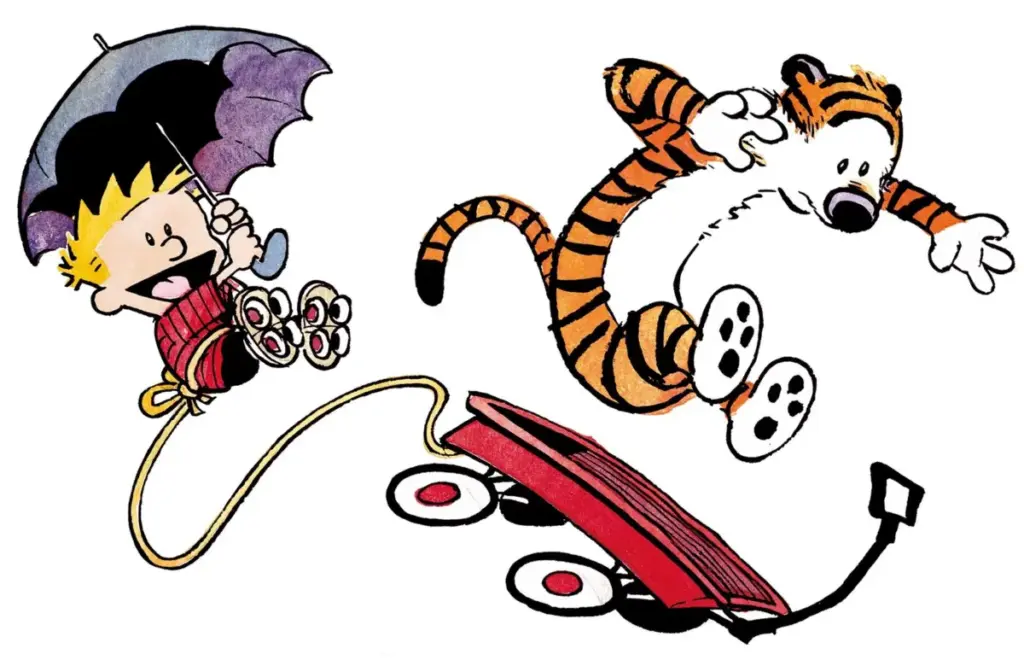
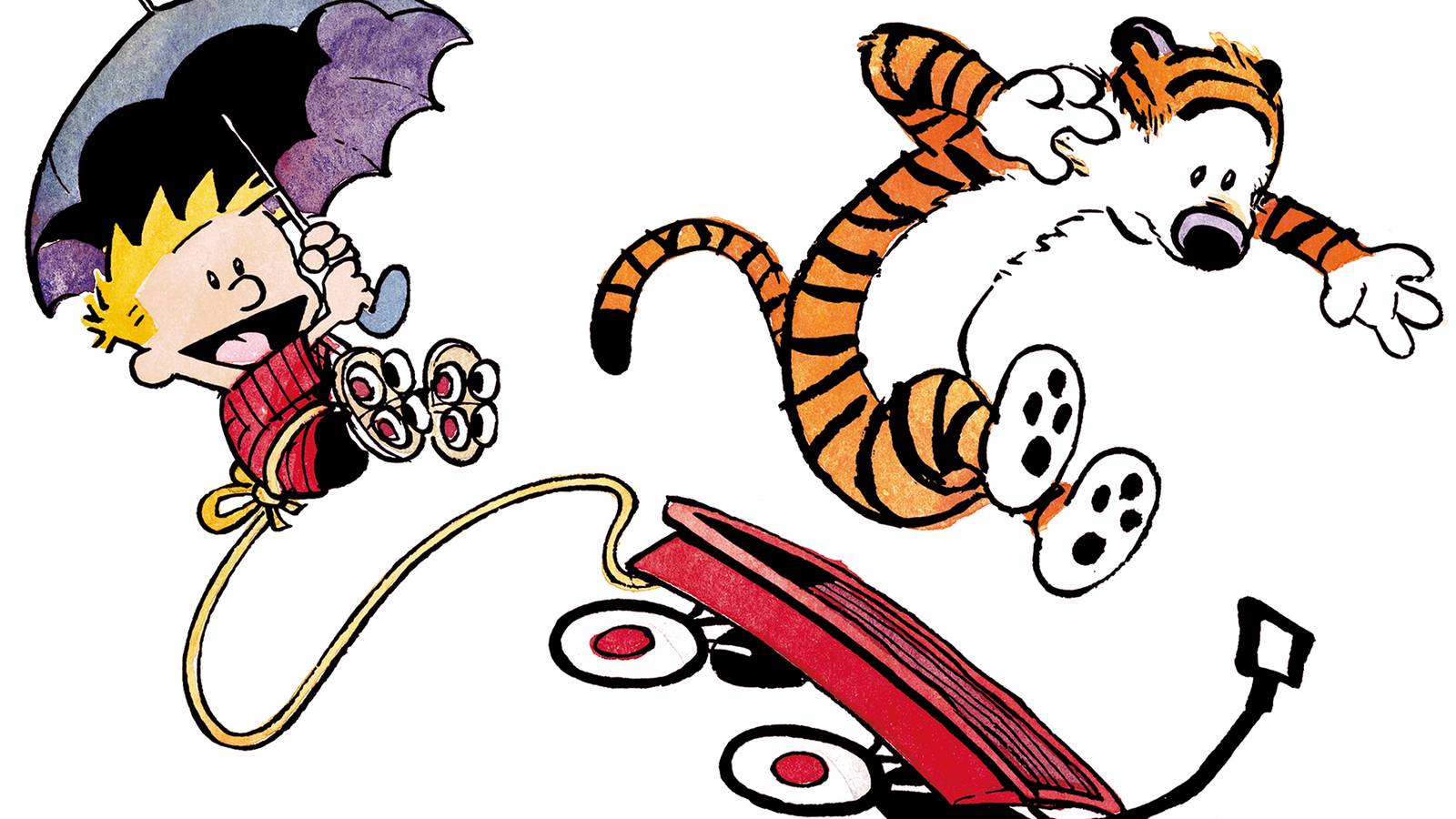
In the vast landscape of comic strip history, few creations match the enduring cultural footprint, philosophical depth, and artistic brilliance of Bill Watterson’s Calvin and Hobbes. Running from 1985 to 1995, the beloved strip captured the vibrant, chaotic inner life of a precocious six-year-old boy and his sardonic stuffed tiger. While the strip was overwhelmingly anchored in Calvin’s wildly imaginative perspective—his battles against bath time, his harrowing wagon rides down steep hills, and his perpetual war with homework—Watterson occasionally shifted the lens toward the adults in the room.
Among the most fascinating figures in the strip is Calvin’s father. Often wrong, occasionally prone to elaborate and deadpan fabrications, and burdened by the monotonous realities of suburban life, Calvin’s dad nonetheless served as an unexpected vehicle for some of the sharpest, most poignant commentary in the entire run of the series.
According to insights shared by Watterson in the 10th-anniversary collection of Calvin and Hobbes, the decision to leave Calvin’s parents entirely nameless was deliberate. Readers only ever catch brief, tantalizing glimpses into their private lives—such as Dad’s dedication to grueling bicycle rides or Mom’s quiet love of reading. However, their primary narrative purpose is never about who they are in a vacuum; it is entirely about how they relate to Calvin. For all of Calvin’s precocity and verbose vocabulary, he remains at an age where the concept of his parents having independent, adult names outside of "Mom" and "Dad" is practically inconceivable. More importantly, Watterson understood that giving them conventional names would add nothing of value to the strip’s dynamic.
Furthermore, Watterson took meticulous care to prevent Calvin’s parents from becoming cliché dispensers of comforting, time-honored parental wisdom. Instead, Calvin’s dad frequently opted for absurdity, telling his son elaborate, deadpan lies about the mechanics of the world rather than offering straightforward truths. Whether he was claiming with absolute seriousness that an automated teller machine housed a tiny man operating a printing press, or inventing bizarre rules about nature, these moments offered a keener psychological insight into how these two adults managed to produce a child as eccentric as Calvin. As the old saying goes, some parents truly get the child they deserve.
Yet, recognizing that Calvin’s father was often a source of misinformation does not mean he was consistently wrong. While both parents possessed their own idiosyncratic pet peeves and irrationalities, they frequently struck a chord of profound truth, particularly when reacting to Calvin’s fiery, bewildered inability to cope with the everyday absurdities of the world. Within the extensive archive of the strip, two specific storylines stand out as defining moments for Calvin’s dad: one that feels strikingly prophetic and resonant for modern life, and another that touches on a bittersweet, sobering truth about adulthood.
Dec. 7, 1993: Rage Against the Machine
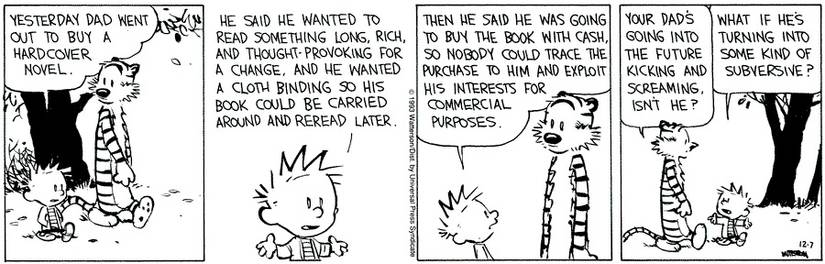
Every so often throughout the publication run of Calvin and Hobbes, Calvin’s dad functioned as an explicit mouthpiece for Watterson himself, using the medium to voice frustrations regarding the trajectory of modern living. While some of these complaints could occasionally border on stereotypical grievances—such as a hyperbolic annoyance at the sheer volume of peanut butter varieties crowding supermarket shelves—there was almost always an underlying kernel of undeniable truth to his madness.
The daily strip published on Dec. 7, 1993, serves as a prime example, one that has aged remarkably well and feels vastly more relevant to the 21st century than it did in the 1990s. In an era where nearly everything a person says, buys, or does online—and increasingly offline—is continuously harvested by ravenous data-gathering systems, the concept of unplugging has transformed from a quirky lifestyle choice into a radical act of preservation.

Watterson’s satirical warnings about the encroachment of modern consumerism and constant connectivity anticipated an age where digital exhaustion is a universal ailment. Leaving a smartphone behind, retreating to physical books, or listening to analog records may have seemed like quaint habits decades ago, but the impulse to avoid leaving a digital shadow is more valuable today than ever before. Looking back, it is clear that Bill Watterson saw the trajectory of modern life coming long before most.
May 10, 1989: The Unvarnished Truth of Adulthood
Another remarkable moment for Calvin’s parents arrives during a relatively early, dramatic storyline that briefly shakes up the domestic tranquility of the household. In a multi-strip arc, Calvin’s family returns home one afternoon to discover that their house has been burglarized. Their television and cherished family jewelry are missing, leaving behind a profound sense of violation. However, after an initial moment of panic, they discover that Hobbes the tiger is still present. Depending on whether you choose to believe Calvin’s perspective or the sheer inexplicable laws of the strip, the burglars either overlooked the stuffed animal or were thoroughly terrified away by him.
While Calvin himself remains largely unfazed by the intrusion, treating it with his usual eccentric detachment, his parents are deeply shaken. The event prompts a rare, quiet sequence where the adults take center stage to discuss the unsettling aftermath of the crime.
This leads to a conversation that encapsulates one of the most sobering, uncomfortable truths of adulthood: the realization that while some individuals appear to have their lives meticulously organized, the vast majority of us are simply making it up as we go along.
The vast majority of Calvin and Hobbes remains firmly rooted in Calvin’s perspective, driven by his relentless frustration at a world that refuses to bend to his imagination. While it was not entirely unusual for the strip to temporarily drift away from Calvin’s immediate viewpoint to explore territories beyond a six-year-old’s comprehension, Watterson always handled these narrative shifts with immense care. The burglary arc remains an underrated masterpiece within the strip’s history precisely because it introduces genuine emotional vulnerability and an authentic meditation on the fragile nature of adulthood, proving that Calvin’s parents were capable of profound wisdom when the world demanded it.