

For decades, H.G. Wells’ foundational 1898 novel The War of the Worlds has occupied a towering position in the Western science fiction canon. While it was not the absolute first story to imagine an aggressive extraterrestrial invasion, it remains universally credited with cementing the concept in the popular imagination. Over the past 128 years, this seminal work has inspired countless adaptations across multiple mediums, with creators ranging from Orson Welles to Steven Spielberg taking their own unique swings at the material.
Yet, the long and storied cinematic history of the property has recently hit a strange and unfortunate capstone. In the current cultural landscape, the title has frequently become a punchline—and many point directly to modern streaming output as the culprit. The most recent cinematic adaptation of The War of the Worlds, released as a screenlife film in 2025, has swiftly emerged as a frontrunner for the worst motion picture of the 21st century.
This 2025 iteration is a viewing experience that borders on the baffling, largely notable for how its creators seemingly managed to select the absolute dumbest possible choice at every single creative crossroads. The downward spiral culminates in a bizarre third-act metamorphosis where the narrative abruptly transforms into an overt advertisement for Amazon drone delivery. While the film is occasionally worth watching once purely out of morbid curiosity—to marvel at how a production can so consistently misfire—it fails to achieve the "so-bad-it’s-good" status that invites genuine amusement. Instead, it leaves viewers searching through the wreckage for a metaphorical black box, desperate to understand how such a miscalculation occurred so that appropriate creative authorities might prevent it from happening again.
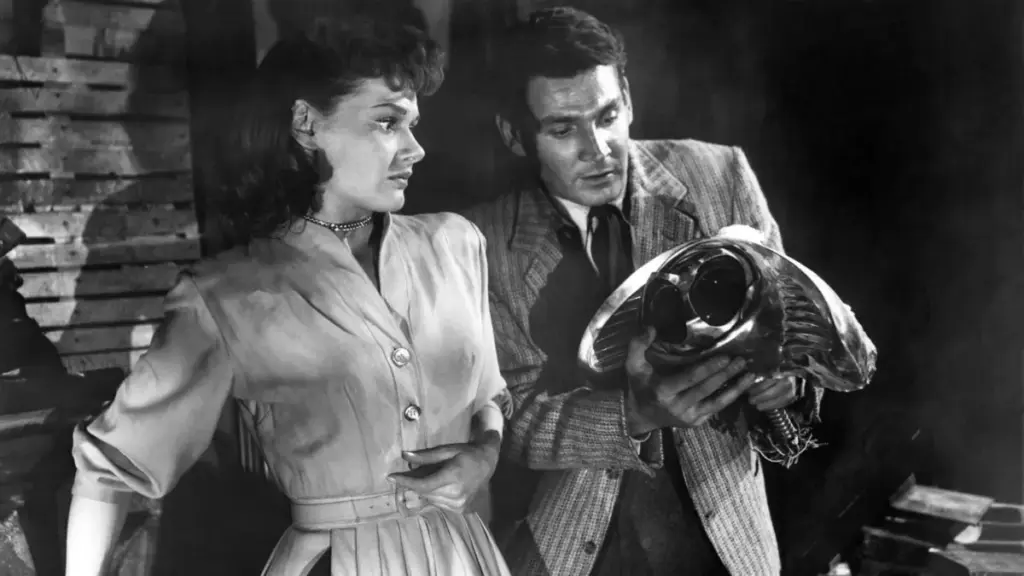
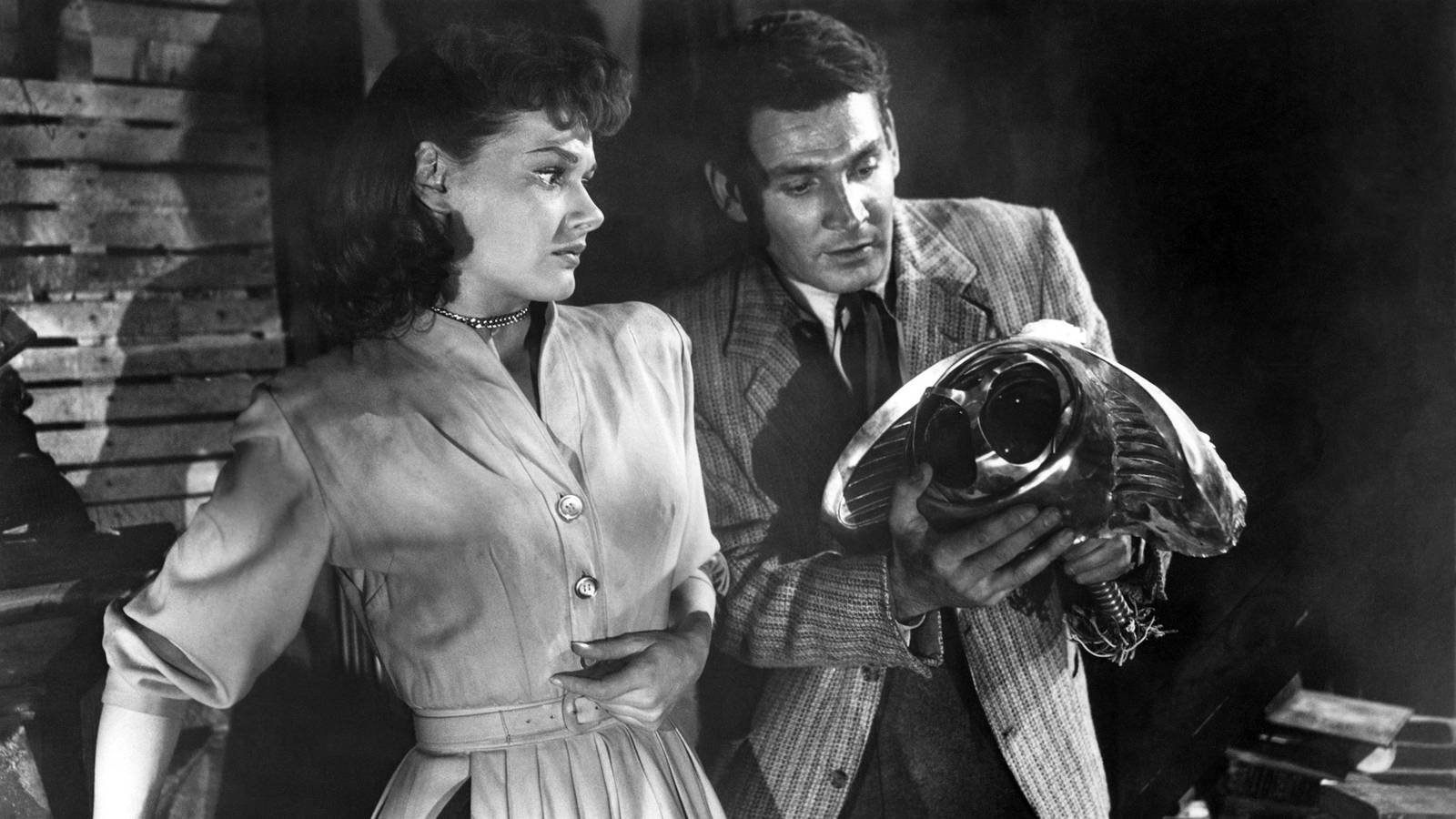
Because of this recent cinematic misstep, it will likely be quite some time before major studios attempt another high-profile adaptation of The War of the Worlds. The lingering shadow of recent misfires means the property needs time to shed its current reputation. Fortunately, for fans of classic science fiction looking to cleanse their cinematic palates during the Halloween season, a foundational piece of the franchise’s history has quietly made its way to the internet for free public viewing. The celebrated 1953 film adaptation of The War of the Worlds, directed by Byron Haskin, written by Barré Lyndon, and starring Gene Barry and Ann Robinson, is currently streaming on YouTube in a colorized format.
A Shift from Victorian England to 1950s California
The 1953 Paramount Pictures production represents a dramatic reimagining of Wells’ original text. While the 1898 novel famously unfolded against the backdrop of late-Victorian England, Haskin’s film relocates the harrowing extraterrestrial onslaught to 1950s Southern California. Furthermore, the adaptation accelerates the narrative pace significantly, compressing what was originally a slow-burn meditation on the near-collapse of human civilization into a taut, 85-minute war and disaster movie.
The plot is set into motion when a shower of strange meteors descends upon various locations across the globe. One of these celestial objects lands near a small California town, immediately drawing the attention of physicist Dr. Clayton Forrester, portrayed by Gene Barry. Arriving at the impact site to investigate, Forrester quickly deduces that the object must be hollow, though the intense heat generated by its fiery atmospheric reentry prevents him from getting close enough to conduct a thorough examination.
As night falls, the true nature of the meteor reveals itself. It is not a rock, but an advanced alien "cylinder" dispatched from Mars. Using electronic optic sensors mounted on flexible metal stalks, the inhabitants of the craft survey their new surroundings. When three well-meaning locals step forward in an attempt to establish peaceful contact, the cylinder offers no diplomatic response. Instead, it immediately obliterates them with a devastating heat ray before turning its destructive machinery on the rest of the surrounding human population.
There is no room for miscommunication, nor can the unfolding violence be blamed on human error. The Martians have arrived with a singular, unyielding objective: to systematically cleanse human life from the face of the Earth. Following a disastrous initial engagement between the United States military and the formidable alien machinery, Forrester flees the devastation alongside local resident Sylvia, played by Ann Robinson. As the U.S. armed forces struggle desperately to mount a defense against an enemy that appears entirely invincible, the narrative follows Forrester and Sylvia through the escalating chaos of regional battles and their desolate aftermaths.

Intellects Vast, Cool, and Unsympathetic
Like many classic science fiction features produced during the 1950s, approaching Byron Haskin’s The War of the Worlds requires a willingness to meet the film halfway. The picture’s visual effects were genuinely groundbreaking for their era, earning the production an Academy Award for Best Visual Effects. However, viewed through the lens of modern high-resolution displays and contemporary digital filmmaking, those same effects naturally appear quaint. The movie was simply never engineered or anticipated to be scrutinized in high-definition formats.
Yet, viewers willing to suspend their disbelief will readily discover why audiences of the 1950s found the film genuinely terrifying. The Martians’ signature heat rays do not merely kill; they cause human targets to flash and instantly vanish, leaving behind haunting, man-shaped piles of ash. It is a deceptively simple practical effect that retains an unsettling power, largely because the alien cylinders wield their destructive beams with the cold, methodical casualness of someone weeding a garden.
The initial military confrontation between human armed forces and the Martian war machines remains a chilling depiction of overwhelming force. The leaders of the U.S. military act swiftly, make rational tactical decisions, and execute their plans flawlessly—yet they still find themselves utterly powerless against the invaders. Throughout the film, this hopelessness is reinforced by grim news reports broadcast from around the world, detailing how other nations and major cities are unceremoniously swept off the map by the relentless advance of the Martian cylinders. The narrative deliberately avoids standard war movie tropes, instead functioning as a pure disaster film where the disaster itself is entirely unbeatable.
There is a bleak, uncompromising power running through the 1953 adaptation that must have resonated with extraordinary force for audiences living under the constant anxieties of the Cold War. Watching the film today, those same thematic undercurrents endure, evoking a sense of cosmic horror that transcends the limitations of mid-century filmmaking technology. While it is easy for modern viewers to poke fun at the vintage special effects, embracing the film on its own terms reveals why it endures as a lasting classic of both science fiction and horror cinema.
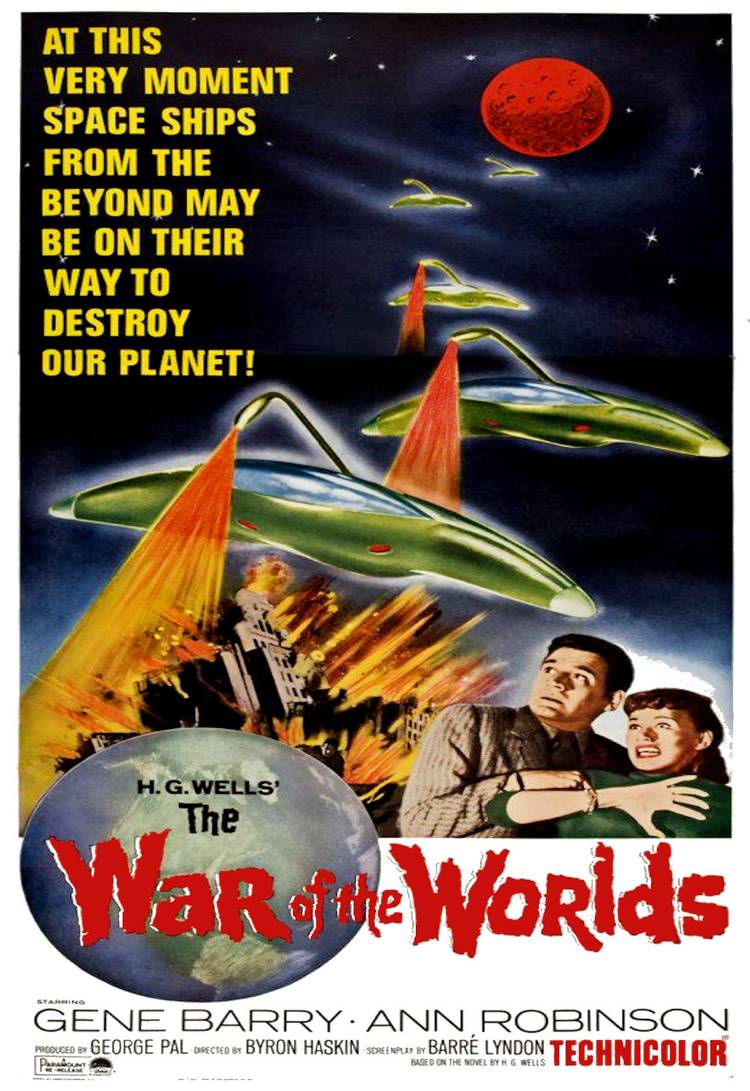
The War of the Worlds (1953) is available to stream now on YouTube.