The market for pet CBD products has grown rapidly, filling retail shelves and online storefronts with a vast array of oils, soft chews, and topical formulations. For dog owners seeking to support their pets through age-related discomfort or situational stress, the sheer volume of available options can be overwhelming. While finding a CBD product is simple, determining what to buy, understanding what the scientific evidence actually supports, and deciding whether a product is safe and appropriate for an individual dog is far more complex.
Veterinary experts emphasize that the most reliable starting point is not a retail search, but a targeted conversation with a veterinarian. This discussion should focus on a specific, measurable health goal and be followed by a rigorous evaluation of a product’s ingredients, active concentrations, and third-party laboratory reports.
While preliminary research suggests that certain CBD formulations may help manage specific measures of joint discomfort or temporary stress, these findings do not mean all retail products are equal. There is currently no universally established CBD dosage for dogs, and the U.S. Food and Drug Administration (FDA) has not approved cannabis-derived products for use in animals. Dog owners must navigate this landscape by relying on peer-reviewed veterinary research and university guidance rather than confusing product marketing with an established medical treatment plan.
Understanding the Biology and Terminology of Canine CBD
To evaluate CBD products, owners must first understand what the compound is and how it interacts with a dog’s body. Cannabidiol, or CBD, is one of dozens of active compounds known as cannabinoids found in the cannabis plant. Most pet-specific CBD products utilize extracts derived from industrial hemp, which is legally defined as cannabis containing 0.3% or less tetrahydrocannabinol (THC) by dry weight.
Unlike THC, CBD is non-intoxicating and does not produce the "high" associated with cannabis use. However, because hemp extracts can contain a variety of other cannabinoids, terpenes, and flavonoids, simply seeing the words "hemp" or "CBD" on a label does not fully explain the composition of a specific formula.
Dogs, like all mammals, possess an endocannabinoid system. This complex biological receptor network is integrated into various physiological systems and is involved in regulating normal bodily functions, including pain perception, immune responses, and stress management.

While this biological connection explains why researchers are interested in studying cannabinoids for veterinary use, the mere existence of the endocannabinoid system does not prove that any single commercial product will improve a dog’s health. To assess a product’s potential value, owners must look closely at scientific studies to understand which formulations were tested, which specific canine populations were enrolled, and what clinical outcomes were actually measured.
Decoding the Spectrum: Full-Spectrum, Broad-Spectrum, and Isolate
When comparing CBD products, consumers are frequently confronted with three primary extraction terms: full-spectrum, broad-spectrum, and CBD isolate. These terms describe how the raw plant extract was processed and which natural compounds remain in the finished product.
A full-spectrum extract retains the entire profile of the hemp plant, including CBD, minor cannabinoids, terpenes, and trace amounts of THC. While these trace amounts of THC must remain below the legal limit of 0.3%, they are still present.
Broad-spectrum extracts undergo additional processing to selectively remove the THC while retaining the other cannabinoids and plant compounds.
CBD isolate represents the most highly processed form, where the CBD molecule is completely separated from all other plant compounds, resulting in a product that is typically 99% pure cannabidiol.
Although these terms help categorize products, they do not dictate potency. A full-spectrum CBD oil is not inherently stronger than a broad-spectrum oil or an isolate of the exact same labeled CBD concentration.
Furthermore, the term "hemp oil" is often used loosely in retail spaces. Hemp seed oil, for example, is derived from the seeds of the plant and contains nutritional fatty acids but virtually no active cannabinoids. Owners must look for a clear declaration of active CBD content on the packaging to ensure they are purchasing a cannabinoid-rich product.
Ultimately, factors such as the carrier oil used, additional ingredients, serving size, and overall manufacturing consistency will heavily influence how a product performs and whether it is practical for a specific dog.
What the Veterinary Research Actually Demonstrates
When evaluating marketing claims, it is critical to separate generalized product promises from the specific parameters of published scientific studies. A review of veterinary literature reveals that while there is promising data, the findings are highly specific to the formulations and conditions tested.
For instance, a small, randomized crossover study published in 2018 evaluated dogs diagnosed with osteoarthritis. In this clinical trial, a specific CBD-based oil was associated with significant improvements in owner-reported pain scores and objective activity measures. While this study provides valuable evidence that cannabinoids can play a role in managing joint discomfort, its findings cannot be used to claim that every retail CBD oil or chew will successfully treat arthritis or repair damaged joint tissues.
Similarly, a controlled study in 2023 examined the effects of a single dose of CBD on dogs experiencing situational stress related to separation and car travel. The researchers observed improvements in specific physiological and behavioral measures of stress during the trial.
However, these results were obtained under controlled experimental conditions using a specific formulation. They do not guarantee that a different retail brand will keep a dog calm during a highly intense event like a local fireworks display, nor do they establish CBD as a stand-alone treatment for a clinically diagnosed canine anxiety disorder.
A blinded crossover study published in 2025 added further nuance to the discussion on situational stress. In this trial, 54 dogs were given either a placebo or a specific calming treat blend containing CBD, L-tryptophan, and alpha-casozepine prior to a short car journey.
The researchers found that the active combination treatment successfully reduced the post-travel spike in salivary cortisol—a primary physiological stress marker—compared to the placebo group. However, other behavioral treatment effects did not reach statistical significance.
This study highlights that multi-ingredient calming blends may alter specific physiological stress responses, but it also demonstrates that owners should not assume all "calming" products will deliver identical or comprehensive behavioral changes.
For pet owners, the practical takeaway from this scientific literature is the importance of setting clear, measurable goals in consultation with a veterinarian. Rather than seeking a vague sense of "overall wellness," owners should identify specific, observable behaviors to track, such as how easily a senior dog rises from their bed or how quickly a dog settles after a car ride. Keeping a simple daily log of these observations helps ensure that any perceived improvements are real and can be accurately assessed alongside other environmental changes, such as weight loss, the addition of mobility ramps, or routine adjustments.
Safety Profiles, Side Effects, and Veterinary Guidance
Like any biologically active substance, CBD must be approached with careful consideration of the individual dog’s health profile. A dog’s age, underlying medical conditions, current prescription medications, and the presence of secondary ingredients in a formulation all influence whether a product is safe to use. Cornell University’s College of Veterinary Medicine provides guidance that emphasizes the absolute necessity of consulting a veterinarian before introducing CBD, particularly to establish proper quality monitoring.
Reported side effects of CBD in dogs are generally mild but can include gastrointestinal upset, diarrhea, and temporary changes in alertness or mild lethargy. Crucially, multiple canine safety studies have documented elevations in liver enzymes, specifically alkaline phosphatase (ALP), following sustained CBD administration.
While an elevated liver enzyme level does not automatically indicate liver damage or failure, it is a significant clinical finding that requires a veterinarian to monitor and interpret within the context of the dog’s overall metabolic health. This risk underscores why owners should never diagnose or monitor their pets’ responses to CBD without professional veterinary oversight.
The FDA’s regulatory stance remains clear: no cannabis-derived products have been approved for use in animals. Consequently, marketing terms like "veterinarian-formulated" or "vet-approved" carry no regulatory weight. They indicate that a veterinarian may have participated in product development, but they do not equal FDA approval, clinical proof of efficacy, or an endorsement from an owner’s personal veterinarian.
When discussing CBD with a veterinarian, owners should organize their approach around three distinct scenarios:
- Routine wellness care, where CBD might be considered alongside existing dietary supplements.
- Chronic care management, where a dog is already receiving prescribed medications for long-term conditions like osteoarthritis or cognitive dysfunction.
- Emergency or acute situations, where sudden changes in health or behavior require rapid diagnostic evaluation rather than self-prescribed supplementation.
In multi-caretaker households, maintaining a centralized, written log of when a product is given and by whom is vital. This prevents accidental double-dosing, which can easily occur if one family member administers an oil at mealtime and another offers a CBD chew later in the day.
Managing the Risk of THC Exposure
While high-quality CBD products designed for pets are formulated to contain minimal to no THC, the lack of strict pre-market regulatory testing means that product labeling is not always an accurate reflection of bottle contents. It is critical for owners to understand that accidental THC intoxication is a serious veterinary emergency.
If a dog accidentally consumes a product containing elevated levels of THC—whether from an mislabeled pet supplement or an improperly secured human cannabis product—they may exhibit signs of toxicity. These symptoms include a profoundly uncoordinated or wobbly gait (ataxia), extreme lethargy, urinary incontinence, muscle tremors, hyper-reactivity to sensory stimuli, or a dangerously low heart rate.
If any of these signs develop, owners must contact a veterinarian or an animal poison control service immediately. When seeking help, owners should bring the product packaging to the clinic to help the veterinary team identify the exact ingredients and calculate the potential exposure level. Owners should never attempt to induce vomiting at home unless explicitly instructed to do so by a veterinary professional.
The Mathematics of Dosing: Milligrams vs. Milliliters
Determining how much CBD to administer is one of the most challenging aspects of pet supplementation, as there is no standardized, universal dosing guideline. A dose utilized in a controlled university study cannot be directly applied to a retail product at home, and anecdotal dosing advice from other pet owners is not a safe substitute for a clinical recommendation.
The most critical technical skill an owner must develop is distinguishing between the total milligrams (mg) of active CBD in a product and the total milliliters (mL) of liquid in the bottle. The prominent number displayed on the front of a CBD oil bottle typically represents the total amount of CBD contained in the entire container, not the amount delivered in a single serving.
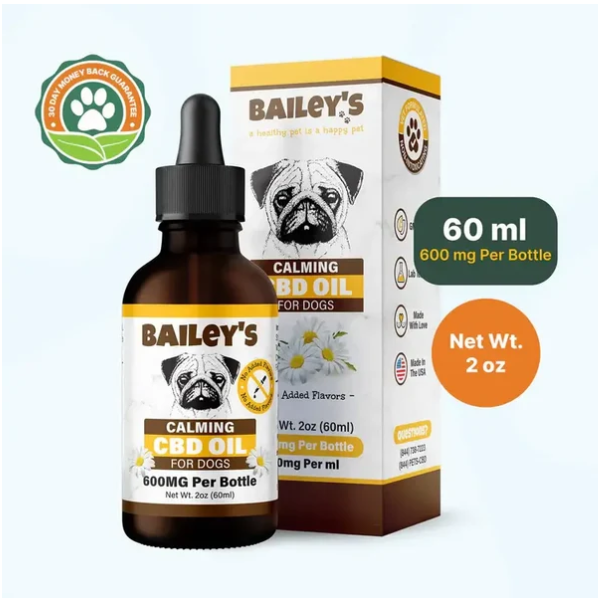
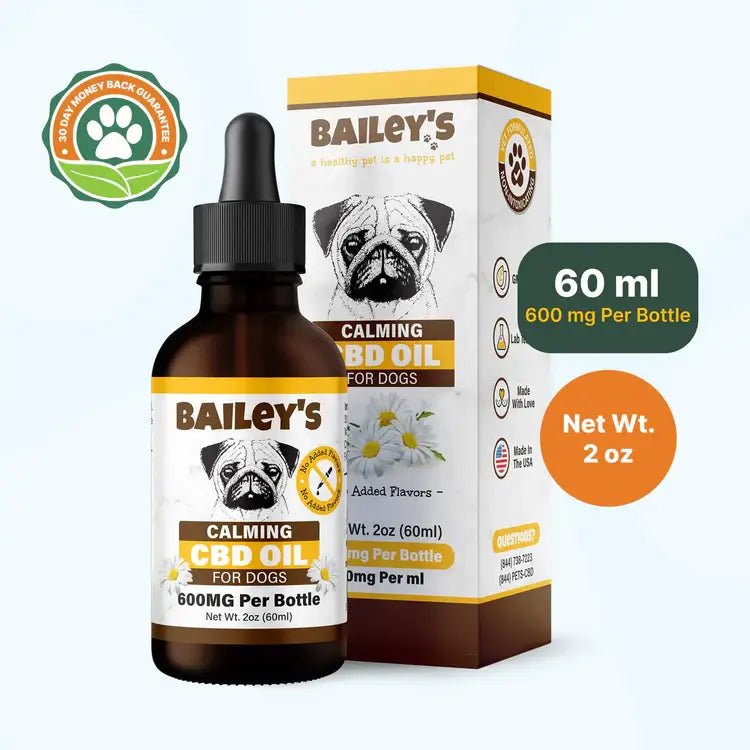
To illustrate this, consider the product line from Bailey’s CBD, a sponsor of pet wellness education. Their Calming CBD Oil is offered in two distinct sizes: a 30 mL bottle containing 300 mg of CBD, and a 60 mL bottle containing 600 mg of CBD.
By dividing the total milligrams by the total milliliters, owners can calculate that both bottles feature the exact same concentration: 10 mg of active CBD per milliliter of liquid. The larger bottle simply contains twice the volume of liquid and twice the total amount of CBD, but the strength of each individual drop or milliliter remains identical.
When evaluating a product label, owners should locate and verify:
- The total amount of CBD in the entire package.
- The concentration of CBD per milliliter of liquid or per individual chew.
- The exact volume of the container (in milliliters) or the total count of chews.
- The complete list of active and inactive ingredients, checking for potential allergens or unnecessary additives.
- Clear instructions on how to use the specific measuring dropper or device provided.
Because dropper designs vary widely between manufacturers, "one dropperful" is not a reliable or standardized unit of measurement. Owners should ask their veterinarian to specify doses in both milligrams of active CBD and the corresponding volume of liquid (in milliliters) to avoid administration errors.
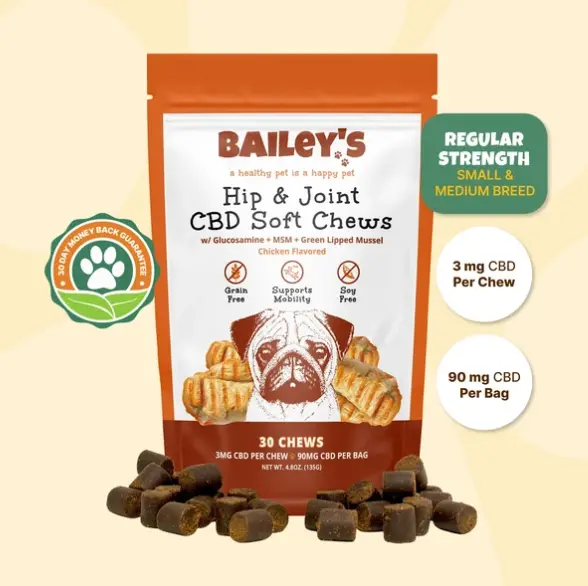
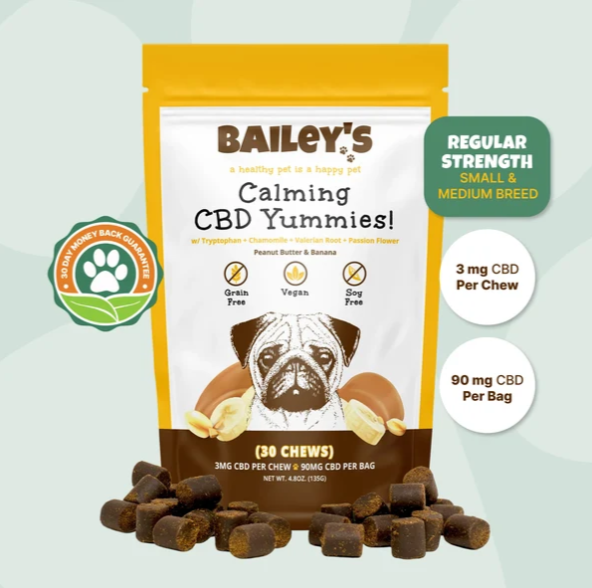
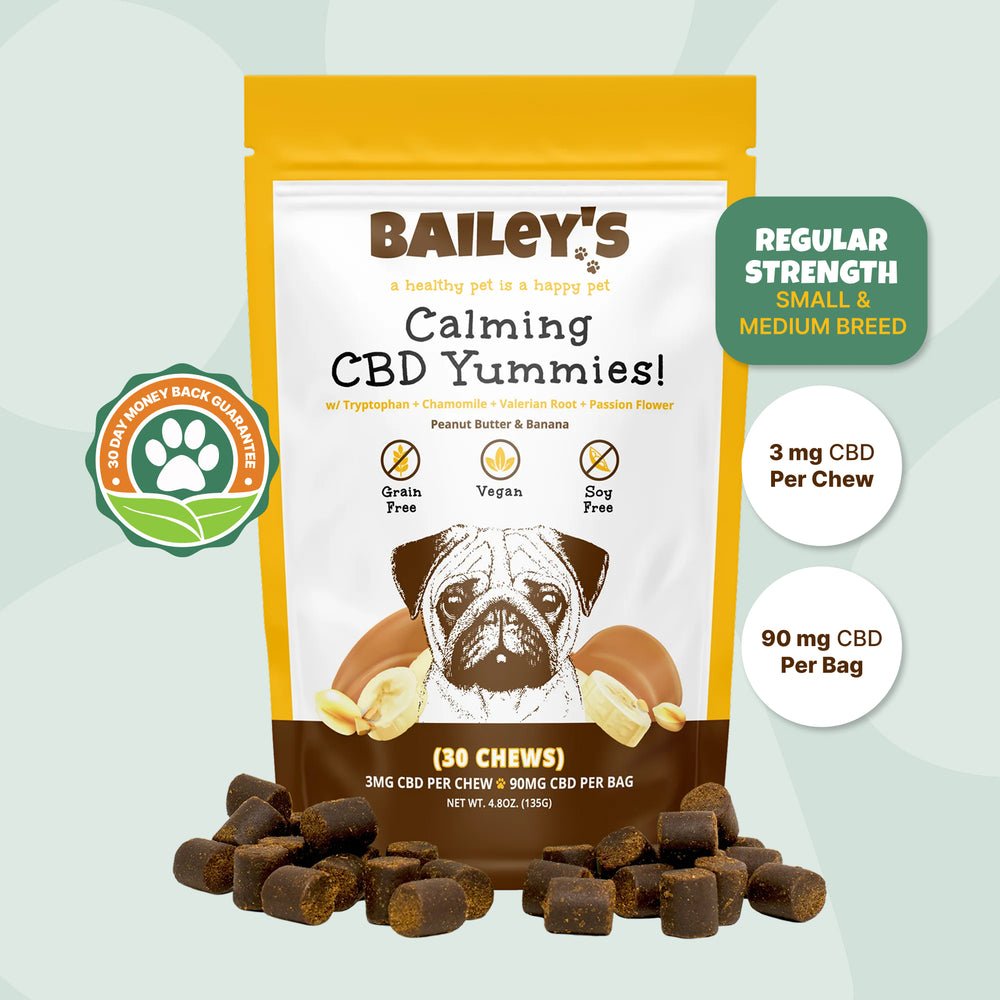
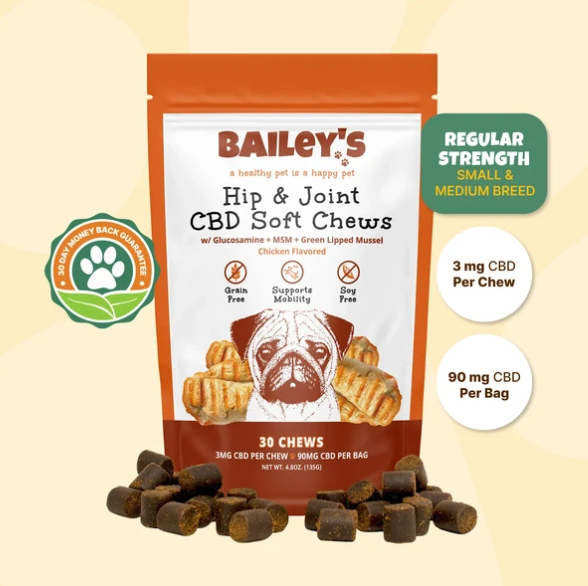
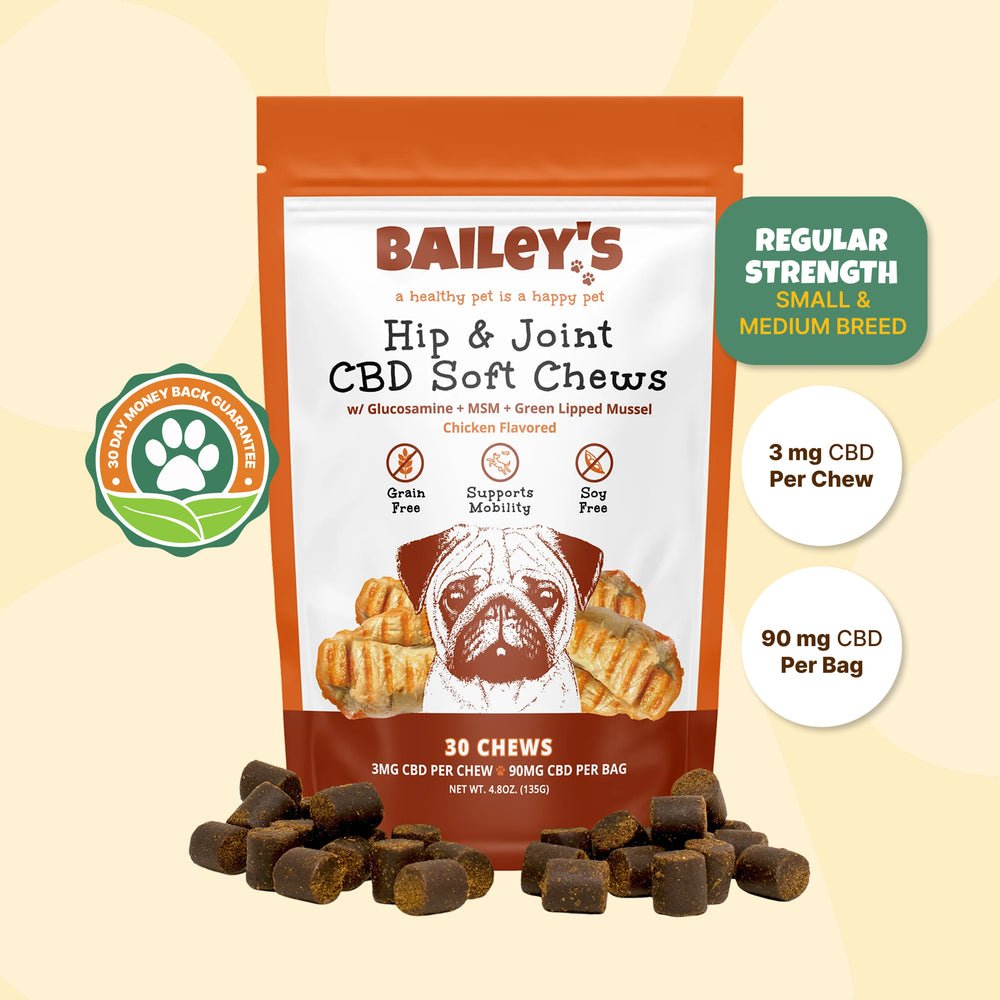
For soft chews, such as Bailey’s Calming CBD Yummies or their Hip & Joint CBD Soft Chews, owners must check the specific strength declared per chew on that exact bag, as regular and extra-strength packages can look highly similar. If a dog refuses a chew, spits it out, or leaves a portion of their CBD-infused food uneaten, owners should consult their veterinary team rather than guessing and administering a second full dose.
Comparing Formats: Liquid Oils vs. Soft Chews
Neither liquid oils nor soft chews are universally superior; rather, each format offers distinct practical advantages depending on the dog’s temperament and the owner’s lifestyle.
Liquid CBD oils or tinctures are highly practical for owners who require precise, highly adjustable dosing. Oils allow for micro-adjustments in volume, making them ideal for very small dogs or for slowly titrating a dose upward under veterinary supervision.
Additionally, simple oil formulas containing only CBD and a carrier oil (such as coconut-derived MCT oil) are often easier to evaluate for purity. However, administering liquid oil requires a cooperative pet and a steady hand, and mixing oil into a meal is ineffective if the dog does not consistently finish their food.
Soft chews, on the other hand, offer convenience and high palatability, making them an excellent choice for dogs that readily accept treats. They are simple to administer on the go, making them highly convenient for travel or boarding situations.
However, soft chews are much harder to divide accurately if a partial dose is required, and they frequently contain a longer list of inactive ingredients, flavorings, and preservatives that must be screened for potential dietary sensitivities.
For example, a comparison of Bailey’s product range highlights how these formats differ in application. Their Calming CBD Oil combines CBD with chamomile and L-theanine in an MCT carrier oil, providing a straightforward liquid option.
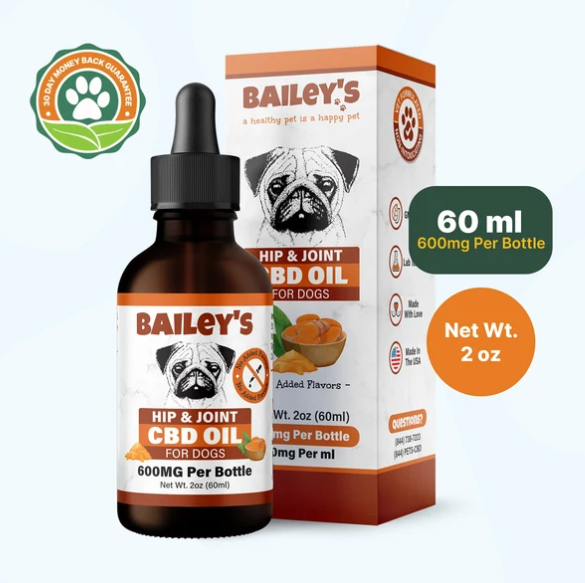
In contrast, their Calming CBD Yummies provide a pre-measured chewable option, while their Hip & Joint CBD Soft Chews pair CBD with established joint-support compounds like glucosamine, methylsulfonylmethane (MSM), and green-lipped mussel.
This side-by-side comparison demonstrates that format selection should be based on both the ease of daily administration and how the active ingredients align with the dog’s specific care plan.
How to Read a Certificate of Analysis (COA)
Because the pet supplement market lacks strict regulatory oversight, the most reliable way to verify a product’s safety and cannabinoid content is by reviewing its Certificate of Analysis (COA). A COA is an official document issued by an independent, third-party laboratory that details the precise chemical analysis of a specific product batch. Reputable manufacturers, such as Bailey’s CBD, maintain public directories of these lab results to provide consumer transparency.
When reviewing a COA, owners should take a systematic approach:
- Verify the Laboratory and Batch: Confirm that the analysis was performed by an accredited, independent third-party laboratory. Match the batch or lot number printed on the physical product in your hand to the batch number listed at the top of the laboratory report.
- Check the Cannabinoid Profile: Compare the measured concentration of CBD on the laboratory report with the claims made on the product label. Ensure the units of measurement (such as milligrams per milliliter or milligrams per gram) are consistent and match your dosing calculations.
- Inspect the THC Levels: Review the measured THC content. For products labeled "THC-free," confirm that the laboratory reports the compound as "not detected" (ND) and check the laboratory’s specific limit of detection to understand how sensitive the testing method was.
- Review the Contaminant Panels: A comprehensive COA should go beyond cannabinoid potency to include safety testing for potential contaminants. Confirm that the batch was tested for—and passed safety thresholds for—heavy metals (such as lead and arsenic), residual solvents from the extraction process, pesticides, mold, and harmful bacteria like Salmonella and E. coli.
Using a concrete example from Bailey’s public database, their 600 mg Calming CBD Oil has been associated with tested sample BCL-250311-073, featuring a specific testing date and best-by date. By matching this exact sample number to the physical product, a consumer can verify the precise analytical findings for that run.
If a manufacturer cannot provide a matching, up-to-date COA for the specific lot number on a product, or if the report only tests for potency while ignoring contaminants, owners should seek an alternative, more transparent brand.
Preparing for the Veterinary Visit: A Discussion Checklist
Before introducing any CBD product, owners should schedule a consultation with their veterinarian. To make this visit as productive as possible, owners should bring the physical product packaging, the specific lot number, and a copy of the matching Certificate of Analysis.
Rather than asking a broad question about whether "CBD is good for dogs," owners should guide the conversation using five targeted questions:
- Based on my dog’s current health status and medical history, is a hemp-derived CBD product safe to introduce?
- Are there any potential interactions between this CBD formula and the prescription medications or dietary supplements my dog is currently taking?
- What specific behavioral changes, physical signs, or side effects should I monitor, and what steps should I take if I observe them?
- What is the precise starting dose in both milligrams of CBD and volume of product, and how long should we maintain this initial level before evaluating its effects?
- What is our specific timeline for a follow-up review to determine whether the product is successfully meeting our goals?
By focusing on objective data, partnering closely with veterinary professionals, and demanding rigorous third-party testing, dog owners can safely navigate the complex world of canine CBD, ensuring their decisions are guided by science, safety, and a clear focus on their pet’s individual needs.