


At first glance, the baked potato appears to be one of the simplest and most unassuming items in the culinary repertoire, requiring virtually no advanced technique or specialized training to prepare. Yet, according to culinary experts and test kitchen professionals, a vast chasm exists between a merely acceptable baked potato and an extraordinary one. For generations, home cooks have routinely wrapped their russet potatoes in aluminum foil before sliding them into the oven, operating under the assumption that this traps moisture and ensures a thorough bake. However, food scientists and chefs warn that this common kitchen habit is actually counterproductive. While foil-wrapping may yield a reasonably tender interior, it simultaneously creates a trap for steam, resulting in soggy, limp skin that lacks any semblance of texture.
To achieve the ultimate baked potato—characterized by a shatteringly crisp exterior and a light, cloud-like interior—the traditional foil wrapper must be abandoned entirely. Instead, culinary professionals recommend baking scrubbed russet potatoes directly on the oven grate at a relatively high temperature. For those seeking a flavor profile reminiscent of a potato chip, the preparation can be elevated by rubbing the raw spuds generously with vegetable oil and finishing them with a heavy coating of salt before they ever touch the heat.
Counterintuitively, this dry-heat method and lack of wrapping do not compromise the fluffiness of the potato’s interior. Achieving that desirable, airy texture comes down to science and precision rather than moisture retention from foil. Specifically, the internal temperature of the potato must reach at least 212 degrees Fahrenheit. While taking the temperature of a baking potato with a meat thermometer may initially feel unconventional or even eccentric, culinary experts emphasize that it serves as a foolproof, scientifically sound route to producing the most enjoyable and consistently textured potato possible.
The debate surrounding the humble baked potato does not end once it emerges from the oven; it extends directly to the method used to open it. Various culinary authorities hold strong opinions on the proper technique for breaching the crispy exterior. The Idaho Potato Commission, among other prominent culinary organizations, maintains that the way a baked potato is opened has a direct and noticeable impact on its overall texture. Rather than reaching for a knife, which can compress and fracture the delicate internal structure, proponents of this school of thought advocate for using a fork to gently puncture a neat plus sign into the surface of the hot spud.
Other notable food figures advocate for entirely different physical approaches. Beloved food writer and culinary author Nigel Slater, for instance, prefers a method that draws inspiration from martial arts competitions. In a piece published in the Guardian, Slater described his preferred technique with characteristic flair, advising home cooks to bring their hand down fast and sharp, mimicking a karate chop, but applying only enough force to crack open the potato skin without crushing the contents. Whether a home cook wishes to attempt such a dramatic feat remains entirely in their own hands. However, rigorous testing by culinary professionals indicates that a simpler approach—a single fork-pricked line drawn down the entire length of the spud—proves to be the most efficient and effective method for releasing steam and preparing the potato for fillings.
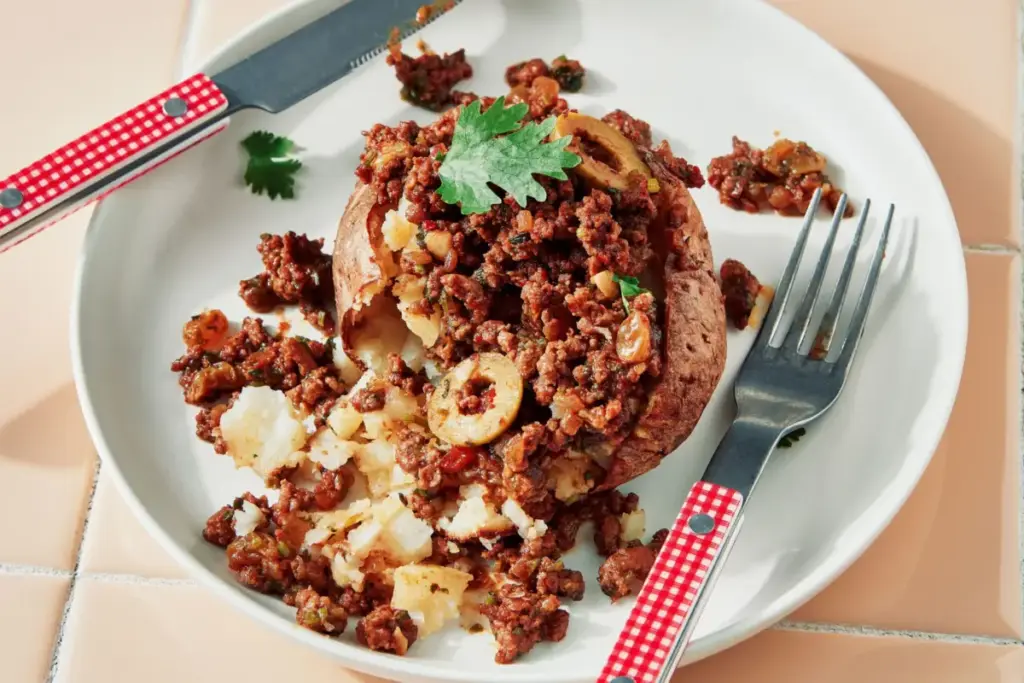
Once opened, the versatile baked potato serves as an ideal canvas for an array of hearty fillings, ranging from classic toppings to more globally inspired culinary creations. Traditional options like tuna salad or cheesy baked beans remain perennial favorites, but the dish can easily be transformed into a substantial, protein-forward meal using globally influenced flavor profiles. One notable iteration features a picadillo-inspired mixture centered around ground beef. This beef filling provides substantial nutritional value, being packed with protein, iron, and creatine, though alternative proteins such as ground turkey or ground chicken can be substituted with equally delicious results.
To elevate the savory profile of the beef, the picadillo mixture is adorned with sweet golden raisins and briny stuffed olives, creating a complex balance of flavors. When spooned into the steaming, fluffy interior of the freshly baked potato, the mixture is accompanied by a spicy tomato sauce. Over time, this sauce slowly and steadily soaks into the potato, continuously seasoning the spud with every passing minute and ensuring that no bite remains dry or unflavored. Culinary experts emphasize that achieving the ideal depth of flavor in the sauce requires careful attention to ingredient selection, specifically recommending the use of a chili powder that consists of a complex blend of spices—incorporating ground chiles, cumin, oregano, and garlic—rather than relying solely on simple dried ground chiles.
This focus on elevated comfort food aligns with a broader culinary philosophy emphasizing that healthy cooking does not need to be overly complicated. In fact, culinary professionals frequently observe that the simpler a dish is, the better it ultimately tastes. Through regular recipe development in dedicated test kitchens, food editors continue to share feel-good recipes designed to suit any day of the week, reminding home cooks that humble ingredients like white potatoes should not be dismissed as empty calories. Backed by nutritional insights and practical cooking techniques, the everyday white potato remains a remarkably wholesome and versatile component of a balanced diet, capable of delivering both exceptional flavor and comforting nourishment when prepared with the proper attention to detail.