


The stock market continues to be a source of constant surprise, frequently defying expectations as it climbs to unprecedented valuations. When market downturns occur, investors naturally worry as retirement portfolios shrink. However, even when markets surge to record heights, a different kind of anxiety often takes hold—the nagging fear that an even larger crash is looming on the horizon. This apprehension is particularly pronounced today, fueled by the frenzied boom surrounding Artificial Intelligence.

For those who have managed to tune out financial media drama and focus on daily life, the peace of mind is well-earned. But the broader narrative surrounding AI mirrors historical cycles. Investors worry that while AI is undoubtedly a major technological advancement, the market mania driving it is happening too fast and too intensely. This has sparked widespread fears of a repeat of the dot-com crash of the early 2000s—a boom that shaped early financial independence careers before the subsequent downturn threatened livelihoods and stability.
Addressing these recurring cycles of anxiety has become a central theme for veteran financial commentators and early retirement advocates. Recently, discussions on this exact topic were featured at events like Camp FI Midwest, with further presentations planned for upcoming gatherings such as the Bogleheads conference. The core question on many minds remains direct and pressing: Will the AI bubble ruin retirement security?
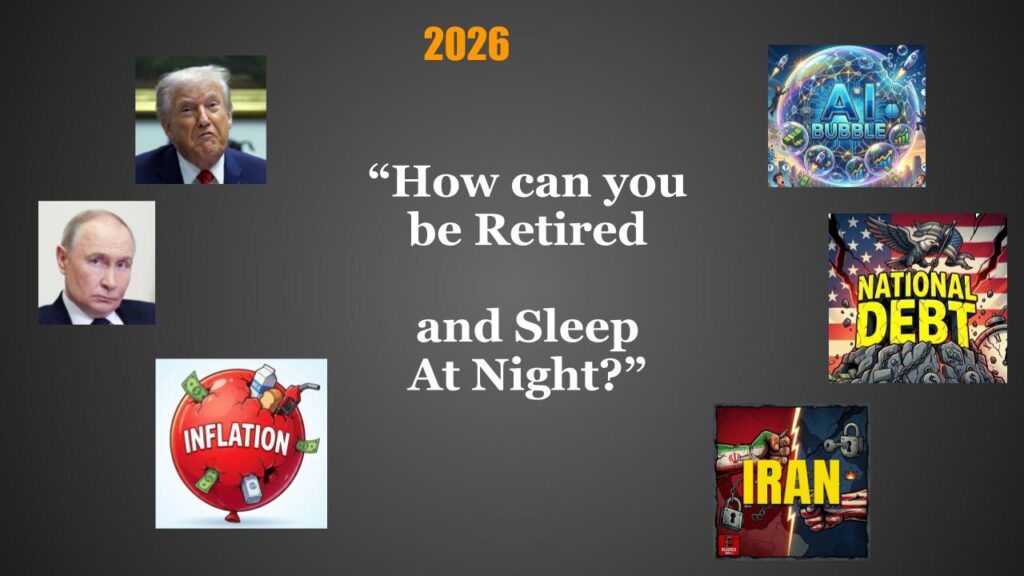
Having spent over two decades in retirement, financial observers often encounter a familiar type of questioning from friends and peers. The inquiries usually center on how anyone can remain comfortable and sleep at night given the state of the world. A typical list of worries includes volatile geopolitical figures, inflation eroding purchasing power, towering national debts, international conflicts, and, of course, the modern AI bubble.
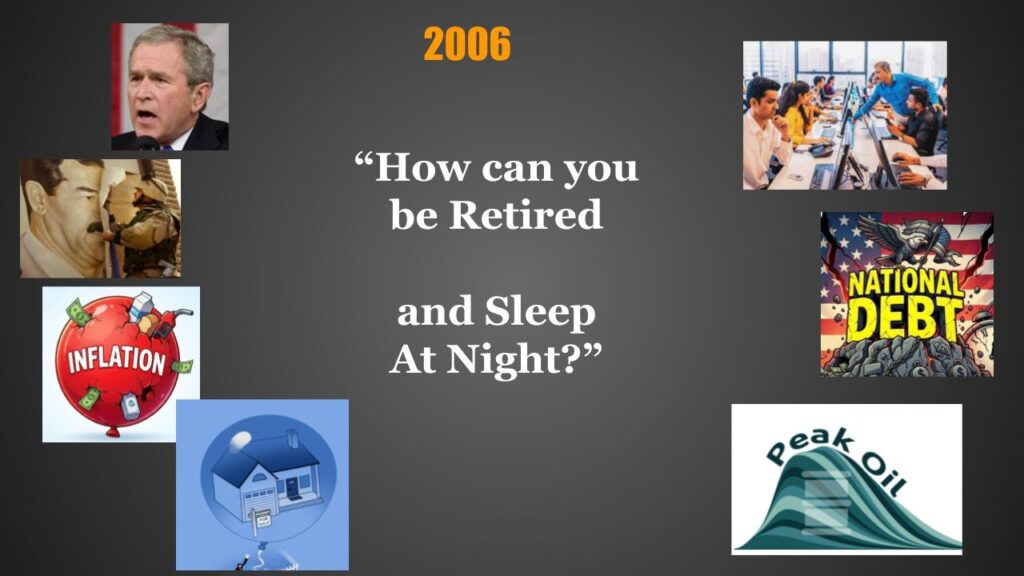
Yet, historical perspective reveals that the specific objects of fear change while the underlying anxiety remains remarkably constant. Looking back two decades to 2006, the worries of the era were strikingly similar in magnitude, albeit different in detail. Back then, people fretted over different geopolitical leaders, conflicts in the Middle East, national debt, inflation, and an overvalued housing market that eventually triggered the Great Financial Crisis. Instead of AI taking human jobs, the prevailing fear was that widespread outsourcing to India and China would upend the domestic workforce. There was even widespread panic over "Peak Oil," with doomsayers predicting that rising fossil fuel consumption would inevitably outstrip supply and destroy the global economy.

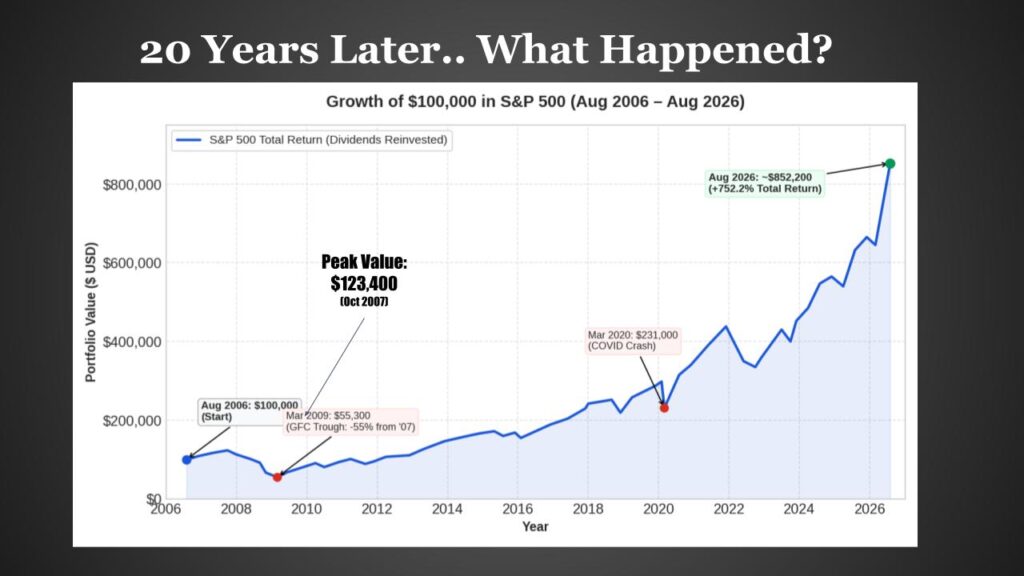
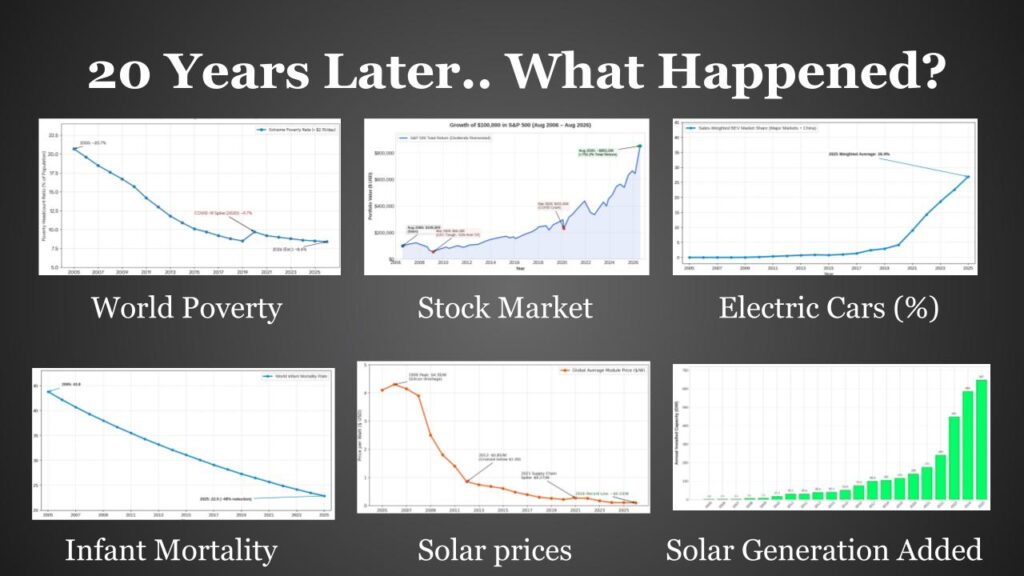
Despite the very real severity of the Great Financial Crisis—the largest market crash since the Great Depression—the long-term trajectory of the stock market continued upward over the following twenty years. A broad market investment made during those turbulent years of the mid-2000s would have still experienced substantial long-term growth, easily absorbing subsequent disruptions like the market shock during the onset of the global health crisis in 2020.
At the same time, the broader world experienced remarkable improvements across numerous vital metrics. Global extreme poverty rates dropped significantly over a twenty-year span. Infant mortality rates were cut in half. Clean energy expanded dramatically as solar panel costs plummeted, allowing solar power to become the dominant source of newly added electricity generation globally. Simultaneously, electric vehicle adoption surged from near-zero to substantial market shares worldwide.
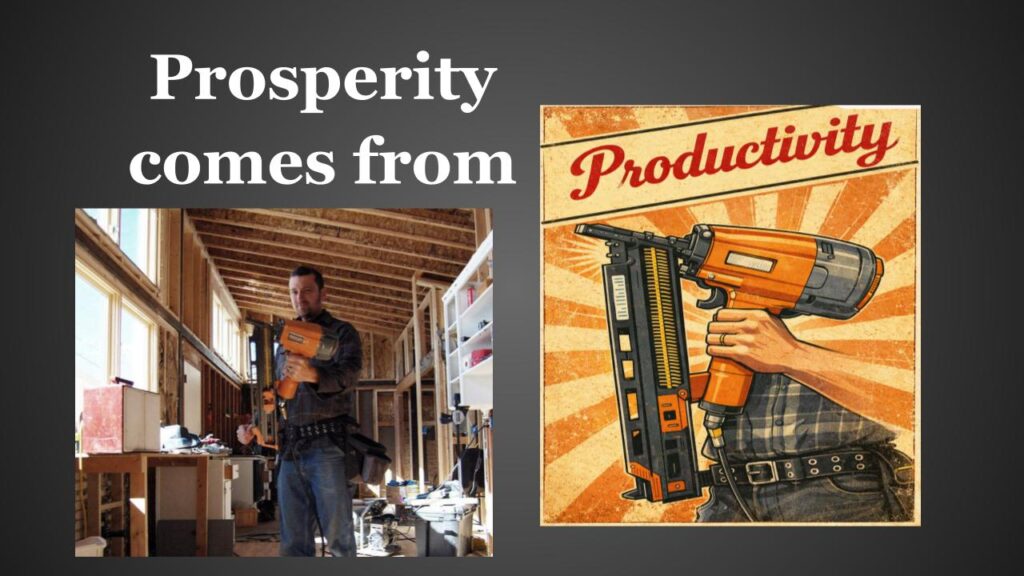
Examining these historical patterns highlights a fundamental truth about economic progress: true prosperity does not originate from the financial system or the stock market, which ultimately function as human-made constructs represented by numbers on computer screens. Instead, genuine prosperity stems directly from productivity.
The capitalist system is inherently choppy and prone to wild sentiment swings, but beneath the surface volatility, real people perform real work and develop tangible inventions. Even the concept of an economy is an adaptable human invention. If a financial system faces a severe correction because market participants dislike prevailing numbers, society can restructure and adapt, much like it did following the financial disruptions of 2008 and earlier historical eras. The underlying tools that boost productivity—alongside overall standards of living, economic growth, and the viability of early retirement—remain intact.
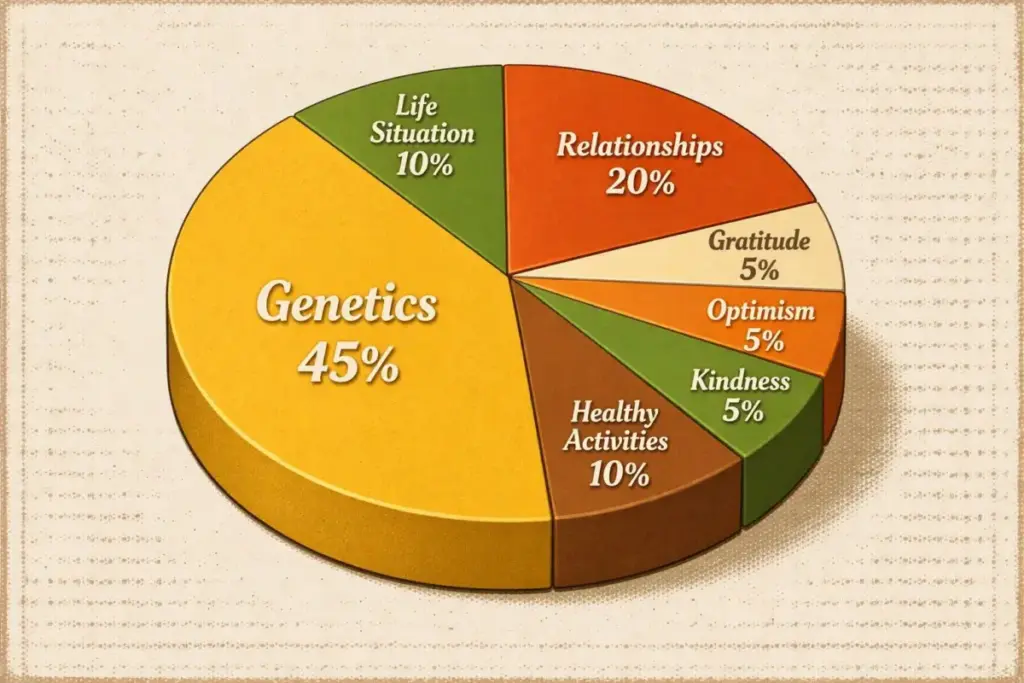
Beyond economic productivity and baseline standards of living, human well-being relies heavily on non-financial factors. Once basic material requirements are met, psychological and social elements play a dominant role in overall life satisfaction. Factors within personal control, such as cultivating strong relationships, practicing gratitude, maintaining an optimistic philosophy, and incorporating regular physical activity, form the foundation of long-term happiness.
Yet, even among individuals who have achieved financial security, a pervasive background fear often persists. Human beings evolved as sophisticated danger-detection machines, a biological trait designed to protect against predators, disease, and scarcity. When immediate physical dangers are resolved, the human brain frequently adapts by shifting its focus to new worries, whether related to social standing, tax strategies, or portfolio management.
Overcoming this persistent cycle of fear requires self-awareness and rational evaluation. Understanding personal history—such as childhood influences or early exposure to economic scarcity—can shed light on why certain anxieties persist into adulthood. Identifying the specific nature of a fear and analyzing the realistic worst-case scenario often reveals that potential outcomes are far less catastrophic than imagined.
Taking concrete action remains one of the most effective ways to neutralize fear. Action transforms the unfamiliar into the familiar, building resilience and the capacity to adapt to new situations. Additionally, reducing exposure to fear-driven media diets helps clear mental space. Modern news cycles often prioritize sensational and alarming stories, whereas meaningful progress relies on positive behaviors, continuous learning, and constructive engagement with the physical world. Surrounding oneself with optimistic, productive individuals further reinforces a healthy mental outlook.
Approaching major life transitions and technological shifts through the framework of experimentation can fundamentally change one’s perspective. Whether dealing with minor lifestyle adjustments or major decisions like changing careers or entering early retirement, viewing situations as experiments removes much of the emotional weight.
This experimental mindset applies directly to the current era of Artificial Intelligence. Rather than succumbing to doom-scrolling and apprehension, understanding the underlying technology reveals both challenges and vast potential. AI functions effectively as a sophisticated form of cognitive leverage—a tool designed to enhance efficiency and productivity.
Just like past technological revolutions, AI will inevitably displace certain entry-level office and administrative roles while simultaneously lowering the costs of essential services and catalysing entirely new industries, much like the internet and mobile computing did before it. While these transitions often concentrate initial financial rewards among business owners and shareholders, they also redefine the landscape of modern work and opportunity.
Ultimately, artificial intelligence represents another major evolution in human capability, presenting choices rather than predetermined threats. Recognizing that fear is often a root symptom rather than a reflection of objective reality allows individuals to address their underlying emotions. By confronting apprehension through learning, action, and a focus on what truly matters, individuals can navigate the complexities of the modern economy while pursuing a balanced and fulfilling life.