
Few phrases invite as much collective nervous laughter as a commentary on the current state of the stock market. Year after year, economists, retail investors, and retirees alike find themselves dusting off expressions of astonishment as major indices continue to defy expectations.
When the market experiences a sharp downturn, anxiety spikes as retirement accounts shrink before investors’ eyes. Yet, paradoxically, even when equities climb to record-shattering valuations, a distinct brand of worry sets in. The prevailing logic among the chronically anxious is simple: a record-breaking boom inevitably portends an even more catastrophic crash. Today, that underlying dread is fueled by the frenzied momentum of the artificial intelligence boom, leading many to question whether the modern tech rally is simply a dangerous prelude to history repeating itself.

For those fortunate enough to tune out financial media entirely and enjoy daily life, the peace of mind is enviable. But for anyone tracking the macroeconomic landscape, the prevailing narrative centers on a familiar set of anxieties. Investors worry that while artificial intelligence is unquestionably a monumental technological leap, the financial mania surrounding it is moving too fast and reaching unsustainable heights. Many fear we are setting the stage for a magnified version of the dot-com crash of the early 2000s—a market correction that holds particular historical resonance for early-retirement advocates who navigated that exact era at the dawn of their careers.
As discussions surrounding this investment cycle amplify, financial commentators are increasingly fielding questions about how to weather modern volatility. Recently, keynote presentations addressing these exact concerns have taken center stage at financial independence gatherings like Camp FI Midwest, with broader presentations planned for upcoming national financial literacy events. These discussions consistently circle back to a fundamental question: Will the current artificial intelligence bubble ultimately ruin our collective retirement?

Looking Back at Two Decades of Market Worries
Reflecting on more than two decades of financial independence reveals how persistent macroeconomic anxiety really is. Conversations with friends and peers often unearth a deep-seated unease about the state of the world, underpinned by a common refrain: How can anyone remain comfortable in retirement or sleep soundly at night given everything happening globally?
A snapshot of current anxieties points immediately to polarizing political figures, persistent inflation eroding purchasing power, the looming shadow of the artificial intelligence bubble, a towering U.S. national debt, and geopolitical conflicts threatening global stability. Yet, strikingly similar conversations were happening over twenty years ago, in the middle of 2006.

Back then, the cast of characters and specific headlines differed, but the emotional core remained identical. Observers worried about geopolitical leaders, ongoing conflicts in the Middle East, soaring national debt, and inflation. The stock market was viewed with intense suspicion, though the primary culprit was a runaway housing bubble rather than an artificial intelligence boom. Concerns centered not on AI automating jobs, but on widespread corporate outsourcing to overseas markets. There was even a fierce global debate over "Peak Oil," with doomsayers predicting that ever-increasing fossil fuel consumption would inevitably outstrip supply and trigger societal collapse—an outcome that ultimately turned out in the exact opposite direction.
Following the intense worry of 2006, the global economy did indeed experience the Great Financial Crisis, triggered by a toxic mix of irrational exuberance in residential real estate and reckless financial leverage. It was the most severe market downturn since the Great Depression. Yet, when viewed through the expansive lens of market history, even that historic crisis shrinks. A hypothetical long-term investment made prior to the crash has since ballooned significantly, successfully absorbing subsequent disruptions, including the pandemic-driven market shock of 2020.

Simultaneously, broader global indicators improved dramatically over that same twenty-year span. The proportion of the global population living in extreme poverty dropped sharply, while global infant mortality rates were cut in half. Clean energy transitioned from an idealistic talking point into a dominant economic force, with solar panel costs plunging and solar generation comprising the vast majority of new energy additions globally. Pure electric vehicle adoption similarly surged from negligible levels to capture a substantial share of worldwide auto sales.
Evaluating this trajectory highlights a fundamental choice between focusing energy on an uncertain, fear-driven narrative versus maintaining a grounded, optimistic perspective on human ingenuity.

Prosperity Rooted in Productivity
Skeptics frequently ask whether current conditions are fundamentally different—whether the sheer scale of the national debt or the unprecedented velocity of the artificial intelligence boom signals a permanent break from historical patterns. Financial media outlets thrive on crafting compelling narratives of impending doom, yet they consistently overlook a foundational economic truth: true prosperity does not originate from the financial system or abstract stock market valuations, which are ultimately numerical constructs managed through computer networks.
At its core, genuine prosperity stems entirely from productivity.

The mechanics of capitalism are inherently volatile, prone to sharp cyclical swings and periodic panics. Beneath the surface turbulence, however, real people continue to perform tangible labor, solve complex logistical challenges, and engineer genuine technological breakthroughs. The concept of an economy or a financial system is merely another human invention. If an entire system undergoes a severe correction because participants lose faith in prevailing valuations, society simply recalibrates the metrics and returns to productive work—precisely the mechanism that salvaged stability following the 2008 financial crisis and historical downturns preceding it.
Humanity retains every essential tool ever invented to enhance productivity, which directly drives standards of living, economic growth, and the viability of early retirement. Beyond productivity and economic prosperity, however, lies an even more fundamental reality regarding human well-being. Once a society achieves a stable threshold of material comfort, incremental wealth yields diminishing returns regarding human happiness. In developed nations, those basic material requirements were surpassed decades ago, shifting the focus of fulfillment toward interpersonal relationships, purposeful activity, and lifestyle choices.

Confronting the Psychology of Fear
Despite historical evidence demonstrating resilience, background anxiety persists even among experienced investors. The root cause of this persistent unease is not necessarily external macroeconomic conditions, but rather human evolutionary biology.
Human beings essentially function as sophisticated danger-detection mechanisms. This pervasive background apprehension evolved as a vital adaptive trait designed to protect ancestral populations from immediate physical threats. However, a distinct glitch exists within this evolutionary machinery: once immediate dangers are successfully mitigated, the human brain actively searches for new stimuli to worry about, effectively moving the goalposts of anxiety.

When direct threats like predators and infectious diseases are controlled through modern sanitation and infrastructure, anxiety shifts toward resource scarcity, social exclusion within tribal groups, or financial security. Even individuals who successfully secure a comfortable upper-middle-class lifestyle frequently pivot their worrying toward complex tax strategies, estate planning logistics, or mandatory government withdrawals from retirement accounts.
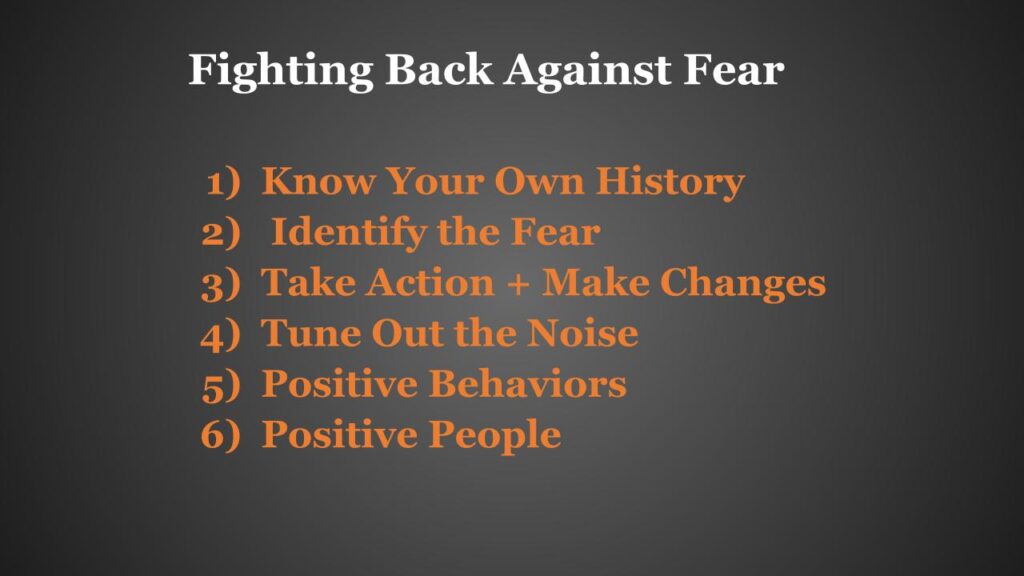
Combating this intrinsic psychological hurdle requires deliberate self-awareness and rational evaluation. The process typically begins by examining personal history and identifying the root causes of individual anxiety, whether stemming from childhood family dynamics or past socioeconomic conditions. Recognizing that these emotional responses are often historical echoes rather than objective assessments of the present moment provides a powerful mental baseline.
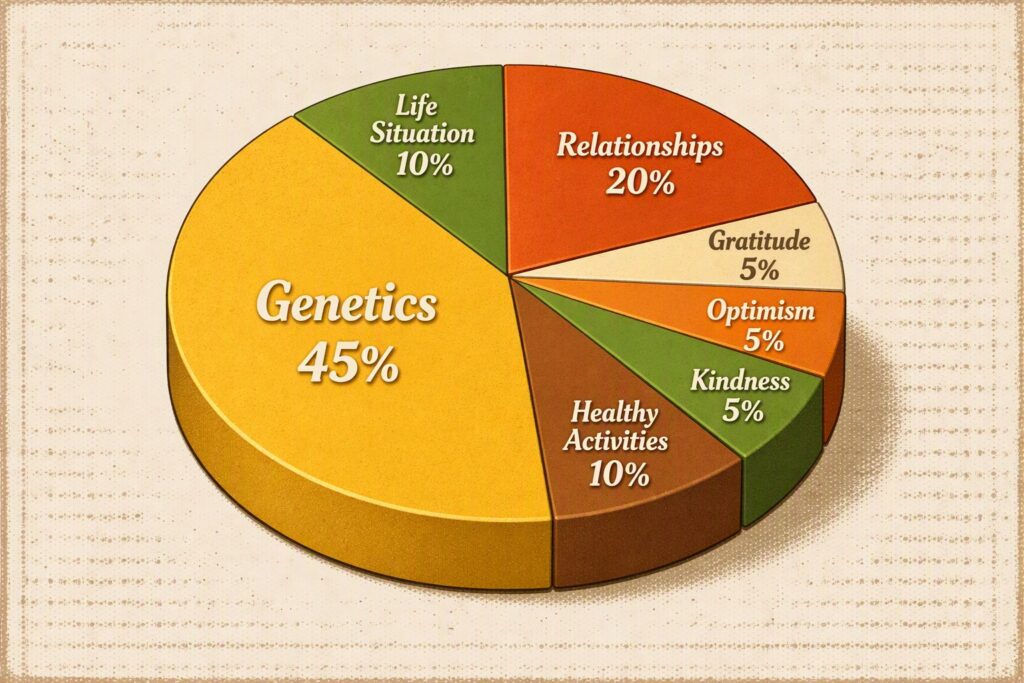
Identifying specific worst-case scenarios through structured critical thinking often reveals that perceived catastrophes are far more manageable than anticipated. Taking direct, proactive measures serves as an antidote to fear, transforming the unfamiliar into the familiar and building genuine resilience. Furthermore, curating one’s mental diet by filtering out sensationalized daily news cycles in favor of long-form inquiry and positive behavioral action helps realign daily life with natural human engagement.
Viewing Artificial Intelligence Through an Experimental Lens
Applying an experimental mindset to modern life transforms how individuals approach profound societal shifts. Rather than viewing change through a lens of catastrophic doom, framing significant developments as ongoing experiments neutralizes anxiety and encourages objective fascination.

This perspective applies directly to the current artificial intelligence landscape. While technological transitions invariably introduce uncertainty, analyzing the underlying mechanics reveals immense potential alongside legitimate disruption. Artificial intelligence functions essentially as a cognitive tool designed to supercharge efficiency and productivity across multiple sectors.
Just as historical technological revolutions—from the industrial mechanization of labor to the widespread adoption of the internet and mobile computing—displaced specific job categories while simultaneously generating entirely new industries, artificial intelligence is reshaping the modern workforce. Entry-level administrative, software, and financial roles are already experiencing transition, with broader shifts anticipated across transportation and logistics. Concurrently, these advancements drive down service costs and catalyze emerging markets.
Ultimately, technological innovations tend to concentrate immediate financial rewards among asset owners and shareholders, reinforcing the importance of long-term financial participation and continuous personal adaptability. Artificial intelligence, much like every major economic shift preceding it, represents a distinct set of choices. By rejecting fear-based narratives in favor of continuous learning, proactive problem-solving, and deliberate community engagement, individuals can successfully navigate market volatility and secure their long-term financial independence.