

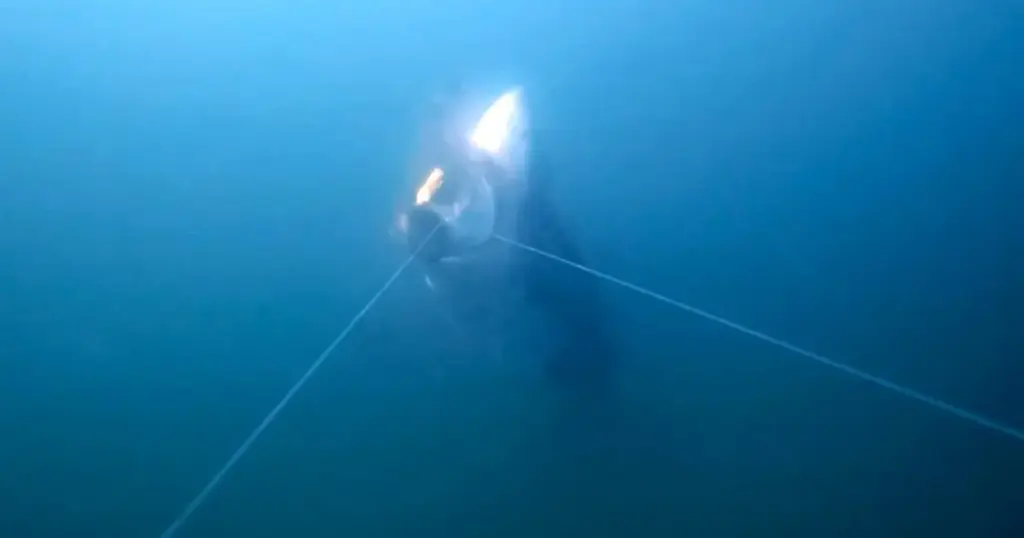
A renowned National Geographic photographer has captured what is believed to be the first-ever underwater footage of a great white shark actively snatching a hooked fish directly off a fishing line, shedding new light on an increasingly common and controversial marine behavior known as depredation.
Brian Skerry, a veteran underwater photojournalist who has logged more than 10,000 hours submerged beneath the world’s oceans, recorded the rare event off the coast of Cape Cod, Massachusetts. Working closely with local charter boat captains, Skerry spent several grueling days filming in the waters this summer specifically to document depredation—a phenomenon where apex predators target and steal hooked catches from fishermen before they can be reeled onto a boat.
The breakthrough documentation follows a steady rise in reports from Cape Cod fishermen detailing aggressive encounters and damaged catches. According to accounts published by National Geographic, local anglers have frequently been pulling up lines only to find fish bearing severe bite marks, or in many cases, discovering that nothing remains on the hook except for the severed head of their catch.
Hap Farrell, a local charter boat captain who has navigated these waters for decades, notes that the behavior has noticeably escalated over the past three years. "There have been more and more sharks hitting fish," Farrell explains. "What we come back with is just the head, and the sharks will come right up to the boat, within four or five feet, chasing what’s left."
The historic moment was caught on film on June 29, when Skerry encountered a juvenile female great white shark. The predator appeared suddenly and at high speed through the murky coastal waters, moving with calculated precision to steal the caught fish off the line before vanishing back into the depths.
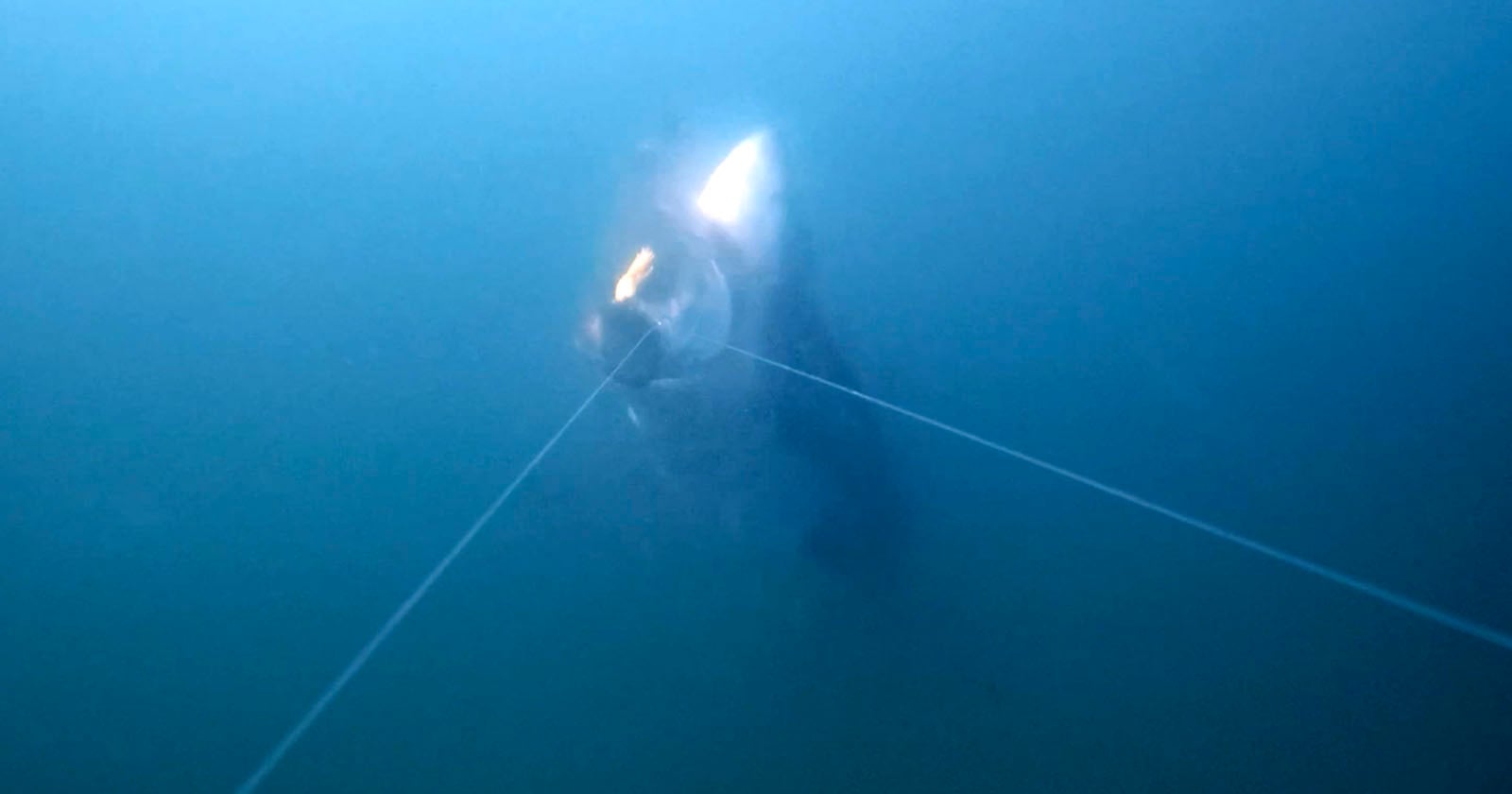
"She grabs it from the side, and it almost seems intentional that she’s not grabbing where the lure is. She doesn’t want to get hooked either, you know, or herself," Skerry told CBS News, describing the encounter. While acknowledging the risk of anthropomorphizing wild animals, the photographer added that he believes the predators exhibit a high degree of tactical decision-making during these interactions. "Now again, maybe I’m giving them too much credit or reading into it too much, but I do think there’s some decisions being made."
Throughout the filming process, Skerry relied on real-time alerts and updates regarding depredation activity in the area. While depredation is a behavior that charter captains and commercial fishermen have long observed from the vantage point of the boat deck, capturing it unfold underwater in real time had remained an elusive milestone for marine researchers and wildlife cinematographers alike.
Beyond documenting a fascinating behavioral interaction, Skerry emphasizes that the overarching narrative of the project centers on ecological recovery. His visual work aims to educate the public about the shifting biological landscape of the region.
"My goal was to help people understand that this place, Cape Cod and the Gulf of Maine, has a healthy, recovering population of large predatory sharks, particularly great whites," Skerry tells National Geographic. "While a great concern for beachgoers, it is a good thing for the ocean. It is a good thing for the planet."
Marine biologists attribute the robust presence of great white sharks in the waters off Massachusetts directly to the resurgence of the region’s gray seal population. Historically targeted by commercial hunting and government-backed culls, gray seals have experienced a dramatic population rebound under federal protection laws, with numbers now reaching into the tens of thousands. This abundant marine mammal population provides a steady, reliable source of sustenance, successfully drawing apex predators back to their historical coastal habitats.
However, the growing concentration of great white sharks creates complex challenges. Conservationists and marine resource managers are increasingly concerned about the potential socioeconomic friction between the expanding shark population and local fishing industries. As predators learn to associate fishing vessels and hooked lines with easy meals, the risk of direct conflict between humans and sharks grows, raising worries about potential economic losses for charter operators and commercial fishers, as well as safety concerns for those operating on the water.