

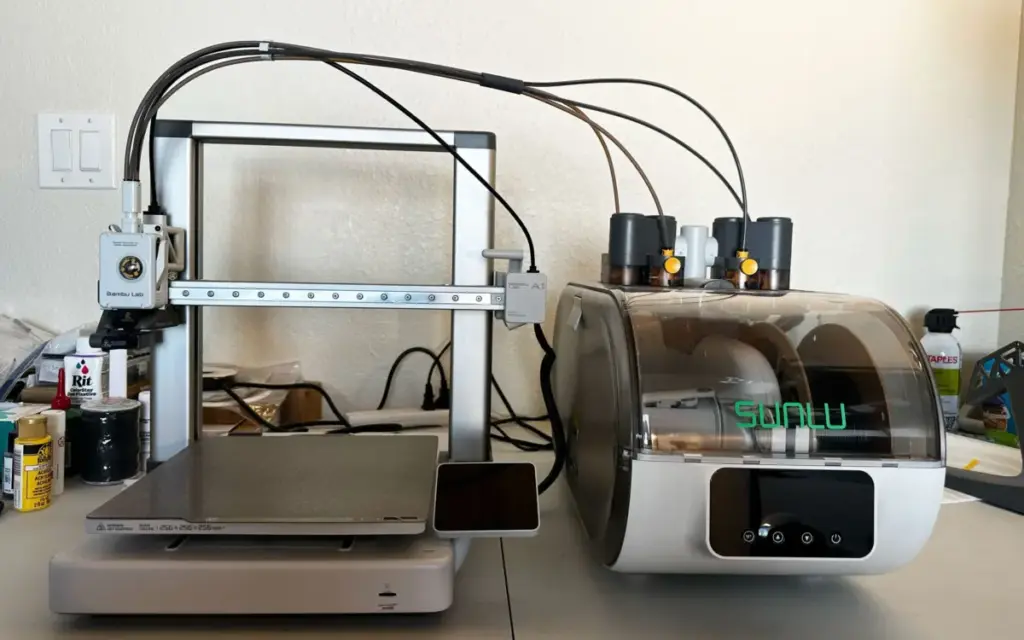
For many 3D printing enthusiasts, filament management is an ongoing puzzle, particularly when dealing with ambient humidity that can ruin prints before they even finish. Addressing this common workshop challenge, manufacturer Sunlu has introduced the AMS Lite Filament Heater, a $130 hardware modification designed specifically to integrate with Bambu Lab’s popular AMS Lite multi-material system. Operating as both an enclosure and an active drying unit, the device aims to keep moisture-sensitive polymers in optimal condition both before and during active print jobs.
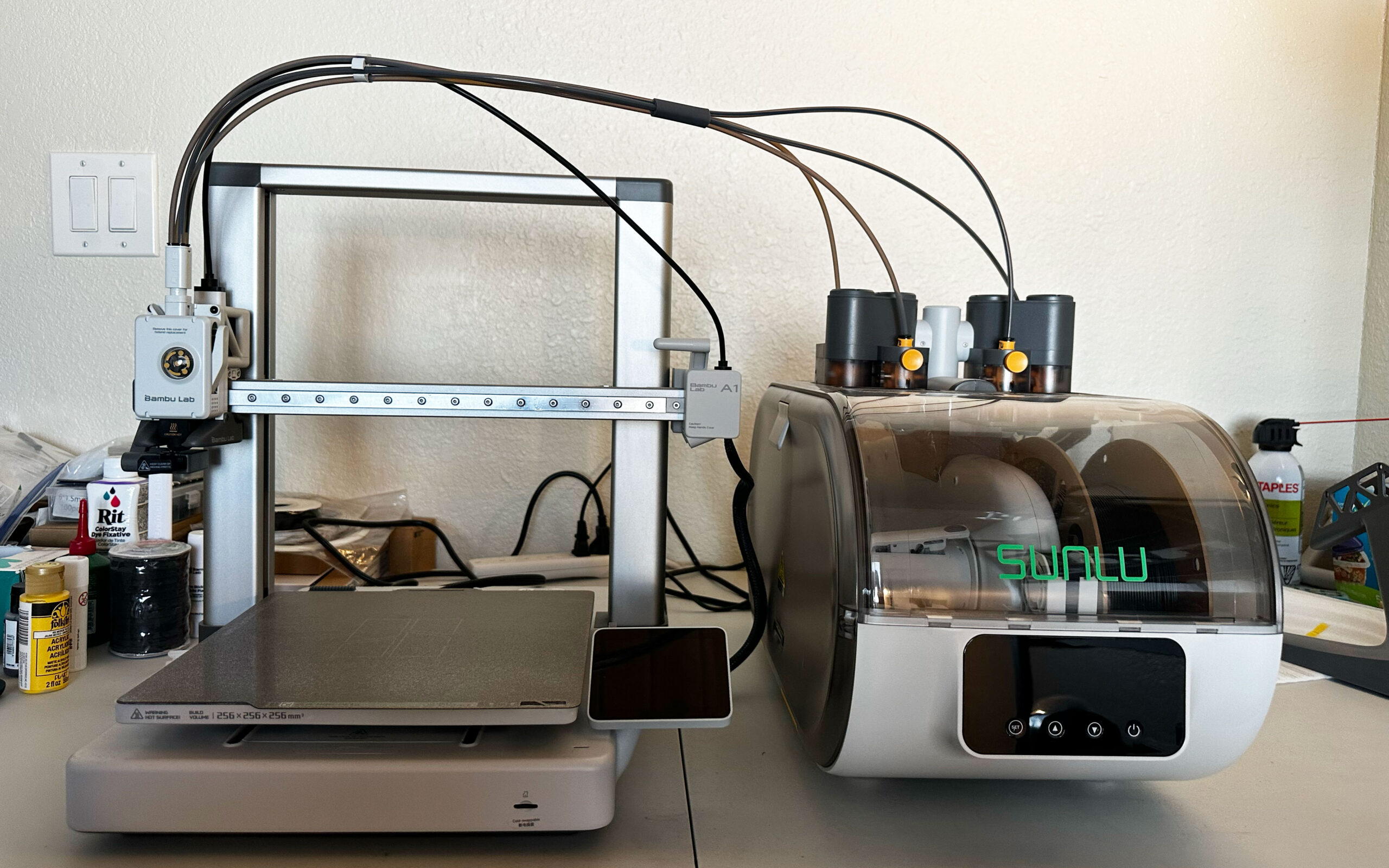
The concept of filament drying has gained substantial traction in the hobbyist and professional 3D printing communities as advanced materials like Nylon, Polycarbonate, and PETG become more accessible. However, traditional filament dryers usually exist as standalone cabinets or external spool holders that feed material into the printer from the outside. Sunlu takes a different approach by engineering a direct integration with Bambu Lab’s ecosystem, effectively splitting the original AMS Lite hardware and inserting the heating module right into the middle of the assembly.
For users of the Bambu Lab A1 and A1 Mini setups who rely on the AMS Lite, installation requires a hands-on approach. While the process may initially seem daunting because it involves breaking down the core structure of the AMS unit, it ultimately comes down to swapping out a few factory screws and plugging in two internal wires. Powering the system remains straightforward, as the modified AMS Lite continues to draw power directly from the 3D printer itself. This thoughtful design choice allows users to run print jobs without activating the heater, or conversely, to run the drying cycle while the printer is completely powered down. Aside from minor alignment quirks with a few screw holes and a somewhat fussy replacement plastic cover, the final result is an exceptionally cohesive desktop footprint.

Once installed, the Sunlu unit offers precise environmental controls tailored to a wide range of thermoplastic materials. The control interface features six dedicated preset configurations calibrated for PLA, PETG, TPU, ABS, PA (Nylon), and PC (Polycarbonate). For advanced users who prefer custom parameters, the device allows manual temperature adjustments ranging from 35 degrees Celsius to 70 degrees Celsius, alongside humidity target settings between 25 percent and 50 percent.
The onboard timer defaults to a six-hour continuous heating cycle. Once this initial period concludes, the system transitions into an active monitoring mode, automatically engaging whenever local humidity creeps back above the user’s targeted threshold. During extensive testing sessions, the enclosure remained comfortably warm to the touch without posing any risk of burns or heat leakage into the surrounding workspace, and it maintained a remarkably low noise profile during operation.

Real-world performance yields nuanced results depending heavily on geographical environment and operational habits. Users situated in arid regions, such as the San Francisco Bay Area, may notice relatively subtle differences in final print quality if their ambient humidity is already low. Conversely, makers operating in humid climates stand to gain significantly more value from the hardware, particularly given that the continuous drying feature prevents moisture absorption during multi-day prints.
Physical workshop layout is another important consideration for prospective buyers. Because the enclosed spools are loaded from the sides, users must ensure they leave adequate clearance on either flank of the machine. The access doors require sufficient space to fold down completely. Due to the relatively short length of the stock Bambu PTFE tubing configuration, some users may find themselves needing to rotate the entire printer and AMS assembly to easily access the side facing closest to the machine body.

Furthermore, the shared-enclosure design introduces certain operational constraints for multi-material workflows. Because all loaded spools are housed and heated within the same shared environment, running diverse material types simultaneously requires careful planning. For instance, maintaining a spool of PETG at its required elevated drying temperature while simultaneously housing a spool of lower-temperature PLA could potentially cause the PLA to soften, deform, or fuse together inside the chamber.
Ultimately, the Sunlu AMS Lite Filament Heater presents a clever, tightly integrated solution for desktop 3D printing enthusiasts embedded in the Bambu Lab ecosystem. By preserving the overall desktop footprint of the original A1 and AMS Lite combination while introducing robust active climate control, it offers a streamlined path to filament management for makers looking to conquer humidity without cluttering their workspaces with standalone drying appliances.