


Maker Faire Rome – The European Edition returns for its landmark 14th edition from October 23 to 25, 2026, transforming the industrial backdrop of the Gazometro Ostiense into a vibrant ecosystem of technological ingenuity, scientific discovery, and creative craftsmanship. Organized by the Rome Chamber of Commerce through its special agency Innova Camera, the event brings together hundreds of makers, forward-thinking start-ups, academic institutions, and global industry partners to showcase the future of human-centric technology.
With more than 400 exhibition stands filling the historic site, this year’s edition places a heavy emphasis on hands-on experiences, working prototypes, and direct interactions between the public and the researchers, engineers, and creators behind them. Spanning robotics, artificial intelligence, digital manufacturing, the circular economy, agritech, aerospace, and advanced design, the three-day exhibition serves as a physical bridge connecting laboratory research with public application. Tickets for the event are available exclusively online through the official Maker Faire Rome website.

Humanoid Robots Take to the Football Pitch
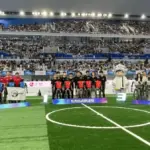
One of the most anticipated highlights of the 2026 edition is the introduction of Italy’s first International Italian Open RoboCup Humanoid Soccer tournament. Moving far beyond static displays, university teams and research centers will field autonomous squads of five humanoid robots per side. Once the whistle blows, these machines operate entirely on their own—reading the pitch, tracking the ball, and making split-second tactical decisions without human intervention.
Among the prominent contenders is SPQR, the autonomous robot soccer team from the Department of Computer, Control and Management Engineering at Sapienza University of Rome. Having competed in RoboCup since 1998 under the leadership of engineer and researcher Vincenzo Suriani, the SPQR team recently made international headlines in August by reaching the final of the World Humanoid Robot Games in Beijing, standing out as the sole non-Chinese team in contention during the final stages of the competition.

Robotics Beyond the Laboratory
Complementing the public exhibition, Maker Faire Rome hosts I-RIM 3D 2026, the eighth annual conference organized by the Institute of Robotics and Intelligent Machines. The scientific program delves into critical fields such as assistive and medical robotics, collaborative systems, and Embodied Intelligence. For the first time, the newly launched I-RIM 3D DEMO program will bring these advanced research systems directly out of the lecture halls and onto the exhibition floor, allowing visitors to witness live demonstrations and interact firsthand with cutting-edge prototypes.
Additionally, the I-RIM 3D Exhibition showcases collaborative projects from universities nationwide, while the RoboPitch initiative grants selected start-ups and research groups a platform to present proof-of-concept projects to prospective investors, corporate partners, and innovation hubs. The practical business applications of these technologies are further explored alongside CNA Roma, which highlights how artificial intelligence and robotics can be integrated into traditional craft businesses and small enterprises.

Italian Craftsmanship Meets Advanced Technology
In a nod to Italy’s rich manufacturing heritage, Maker Faire Rome 2026 introduces AvantCraft, a specialized exhibition curated by Stefano Micelli, Professor of Business and Management at Ca’ Foscari University of Venice, and organized by Upskill 4.0. AvantCraft examines the profound transformation sweeping through Italian workshops as digital fabrication, robotics, and artificial intelligence reshape traditional production processes.
The exhibition is divided into three distinct thematic areas: mobility and precision engineering; contemporary craft spanning ceramics, glass, scagliola, and inlay; and fashion, jewellery, and biomaterials. Among the physical centerpieces of the showcase is the Dallara Stradale, a lightweight, high-performance vehicle manufactured in an environment where advanced composite engineering converges with meticulous manual assembly. Emphasizing mechanical purity over superfluous electronics, the car exemplifies how modern engineering can preserve the tactile joy of driving both on the road and the track.

Technology Built Around People
A significant portion of this year’s exhibits focus on practical solutions addressing real-world human needs, particularly in workplace safety and ergonomics. Research institutions including Inail and the Italian Institute of Technology (IIT) are presenting advanced wearable devices and robotic systems designed to mitigate occupational hazards. Among these is a specialized eye-tracking system that analyzes how workers perceive visual hazards and how attention affects risk assessment in hazardous environments.
Inail and Sapienza University of Rome are also showcasing the SIDE haptic exoskeleton, a device engineered to recreate physical forces and interactions within virtual or augmented environments. The system enables workers to train safely for high-risk scenarios, such as navigating confined or contaminated spaces, without exposure to actual danger. Furthermore, IIT and Inail are presenting wearable prototypes like XoTrunk and FleXoTrunk, which provide crucial lower-back support during manual lifting tasks, alongside smart wearable airbag systems capable of distinguishing routine movement from a fall and deploying within milliseconds to protect the torso and neck.

From Food Design to Farming in Space
The agrifood sector at Maker Faire Rome 2026 reflects a collaborative effort among leading scientific institutions, including CREA, ENEA, CNR, Sapienza University of Rome, University of Tuscia spin-off Value Groovers, and the CMCC Euro-Mediterranean Center on Climate Change.
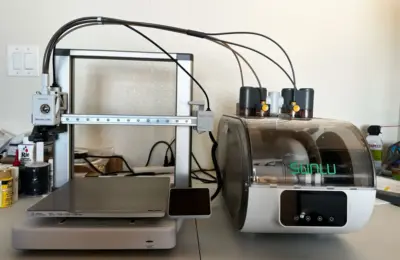
CREA is exhibiting innovations in food design, software-controlled micromalting systems, and 3D food printing, while ENEA addresses food production in extreme environments—pioneering technologies applicable to space exploration, cellular agriculture, and plant biotechnology. Meanwhile, CNR’s FoodEye project utilizes advanced spectroscopy to analyze food characteristics, verify geographical origins, and detect potential contamination or counterfeiting. Other notable agrifood projects include Value Groovers’ digital crop-treatment planning system, Sapienza’s MicroBites research in food microbiology, Terravionics’ IoT-driven proactive tree management platform, and Yeastime’s ultrasound-enhanced fermentation technology designed to reduce processing times and energy consumption.

Books as Catalysts for Social Change
Expanding the cultural breadth of the event, Books@MFR26 introduces a dedicated editorial strand focused on science, technology, and societal transformation. Featuring panel discussions and author appearances on the main stage, the program covers diverse subjects ranging from educational reform and space colonization to quantum physics and human relationships. Visitors are also encouraged to participate in a book-exchange initiative by bringing a favorite title on science or innovation, contributing to a collaborative library collection known as BiblioMaker.
Unique Exhibits: From DeLorean Icons to Culinary Robots
True to the maker spirit, the 2026 edition features an eclectic array of standout independent projects. Among them is an authentic DeLorean DMC-12—designed by Giorgetto Giugiaro and popularized by Back to the Future—brought to Rome from the Enter Technikwelt Solothurn museum in Switzerland.

In the automotive and racing sector, Sapienza Corse presents Gajarda AWD Hybrid Driverless, a Formula Student racing vehicle outfitted with cameras and autonomous actuators capable of navigating a course entirely without a human driver. Younger makers are also making their mark; a 17-year-old Italian maker is exhibiting a neural headset that translates body signals into digital commands, paired with a 3D-printed bionic hand controlled via computer vision and electromyographic signals.
Other notable attractions include the Da-Vinci Bicycle, which merges Leonardo da Vinci’s aerial screw concept with virtual reality to simulate flight powered by a stationary bicycle; the Gran Sasso Science Institute’s dark-matter interactive exhibition linked to the DarkSide-20k experiment; and Robby Minichef, a domestic robotics prototype capable of learning preparation techniques and timing directly from human chefs to cook dishes like traditional cacio e pepe. Additionally, a Sardinian maker is presenting P3DALO, a five-meter inflatable pedal boat featuring 3D-printed paddlewheels and a modular framework designed for easy transport in a standard car.

CNR Opens Its Doors to Open Science
The National Research Council (CNR) returns with an extensive lineup of workshops and demonstrations spanning environmental research, open science, medicine, and robotics. Highlights include Babots, an exploration into biological animal robotics utilizing modified C. elegans worms for indoor farming applications, alongside atmospheric water-harvesting 3D-printed systems, the Melandetect predictive diagnostic app, and RoseBio’s personalized oncology research.
The GLAM project highlights open science and cultural heritage through the collections of the CNR Central Library Guglielmo Marconi, which celebrates its centenary on the opening day of the fair.

Education, Gaming, and the Energy Transition
The Educational and Gaming area emphasizes active participation, highlighted by MakerCamp—Italy’s sole Official Minecraft Partner and Minecraft Education Partner—hosting coding and problem-solving workshops. The annual STEAM in Minecraft contest has already drawn registrations from 417 primary and secondary school classes across Italy.
In the realm of professional development, MAIRE, through Fondazione MAIRE ETS and the Green Innovation ITS Academy, is introducing specialized technical training programs tailored for the energy transition, with its first two-year course set to launch in Rome. Simultaneously, Unindustria is sponsoring ten member start-ups to exhibit free of charge, fostering regional entrepreneurial growth.

Additional institutional contributors include NABA with its student-led AURORA project, Assoutenti APS hosting the ninth Expo Consumatori on digital security and consumer rights, IED Rome presenting co-designed school spaces with GAM Gonzagarredi Montessori, and Tecnopolo Roma showcasing technological hubs and the R.O.M.E. Digital Hub’s digital innovation services.
Competitions, Awards, and Institutional Support
Maker Faire Rome continues to champion innovation through targeted competitions. The MakeITcircular 2026 challenge, promoted by consumer associations under the National Council of Consumers and Users (CNCU), awards a €3,000 top prize for projects centered on durability, repair, and circular consumption. Meanwhile, the Top of the PID 2026 initiative by Unioncamere recognizes small and medium-sized enterprises successfully implementing Industry 4.0 technologies and artificial intelligence.

Eni returns as the Main Partner of Maker Faire Rome for the thirteenth consecutive year, hosting the event at the Gazometro site while marking the centenary of Agip through the "Pioneers to Makers" interactive space and the Eni2050 Lab’s research exhibits on biofuels and carbon capture. Additional institutional backing is provided by Regione Lazio, Lazio Innova, Roma Capitale, and the Italian Trade Agency, which facilitates international press and investor engagement.
Maker Faire Rome 2026 is produced with the support of a broad coalition of public and private partners, including the Ministry of Labour and Social Policies, Inail, InfoCamere, Dintec, Tecnopolo Roma, Unindustria, and CNA Roma, alongside Gold Partners Arduino, DigiKey, MAIRE, STMicroelectronics, and Unidata, and media partners RAI, Il Messaggero, ANSA, and Futura Elettronica.