


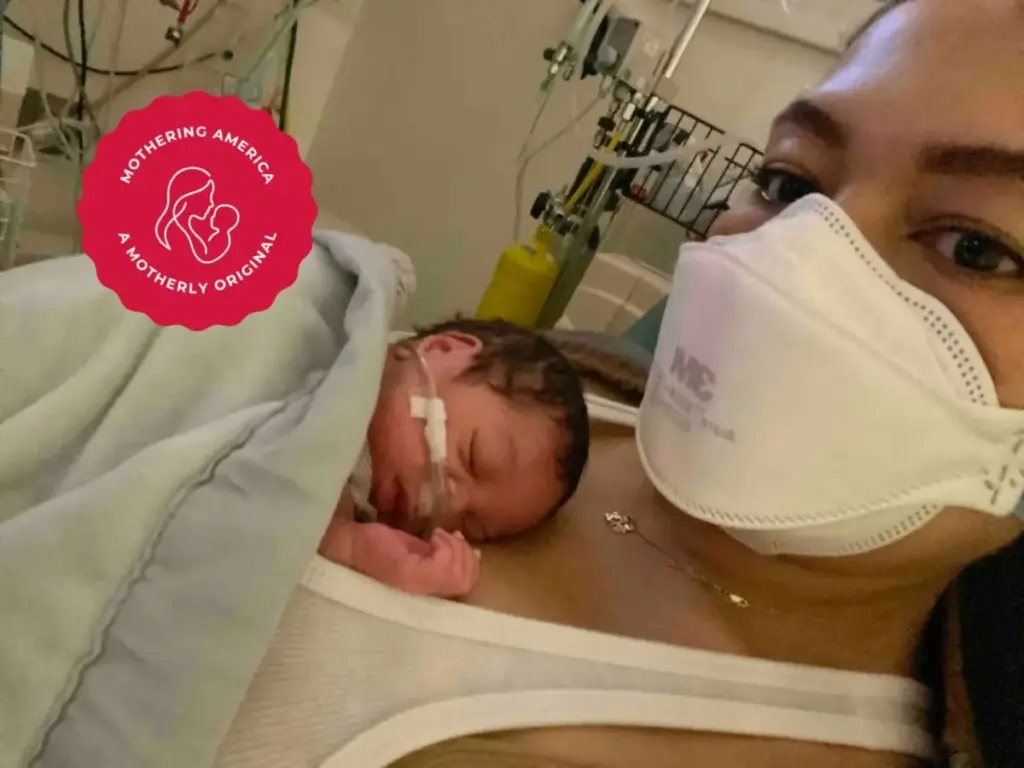
For Stephanie Roberson, her second pregnancy was textbook perfection. Every scheduled ultrasound showed typical development, and all routine medical test results came back completely normal. There were no warning signs, no historical indicators, and no reason to suspect that her journey would deviate from the standard path of motherhood.
Then came an ordinary night that changed everything. While lying down beside her two-year-old son to put him to bed, her water unexpectedly broke. She was only 24 weeks pregnant.
Moving quietly so as not to wake her toddler, she walked into the bathroom and placed a towel under her legs before calling her obstetrician. The physician delivered an immediate and urgent directive: she needed to get herself to a medical facility equipped with a higher level of neonatal intensive care unit (NICU) capabilities immediately.
Reflecting on that harrowing moment, Roberson retains a vivid, core memory. "I have this core memory of stepping off the towel, and it was completely soaked except for two dry footprints where I was standing," she recalls.
With her husband traveling out of town for work, the logistics of the emergency scrambled into motion. Roberson called a neighbor to stay with her sleeping toddler while her mother—who happened to be visiting at the time—hurriedly drove her to the hospital. As she packed essentials in a blur of anxiety, her mind raced with a terrifying, foundational question that haunts countless parents facing extreme premature labor: How could a baby possibly survive being born at this stage?
Upon arrival at the hospital, the medical team informed her that she would need to remain admitted under strict observation until the baby was born. Placed immediately on hospital bed rest, a neonatologist visited her room to discuss the grim and delicate survival statistics associated with extreme prematurity.
"They try to present the information in a positive way, but it’s still very scary," Roberson explains. At 25 weeks, the average survival rate for an infant hovers around 80 percent, but survival is only part of the equation.
Roberson was forced to mentally process a wide spectrum of potential outcomes: a child who might not survive delivery, a medically fragile infant with a high probability of lifelong vision, hearing, and lung complications, or a baby facing severely suppressed immunity. Your mind is forced to focus intensely on immediate survival, she notes, but it also pivots inevitably toward a daunting future: how life fundamentally changes when you are tasked with raising a child with profound, ongoing medical needs.
As a person who naturally relies on organization and meticulous planning, Roberson refused to remain passive. She immediately ordered comprehensive books on prematurity, immersing herself in complex medical terminology, potential developmental hurdles, and long-term prognosis data.
"I was just trying to learn as much as I possibly could, to be the best advocate that I could for him," she says. Beneath her quest for knowledge, however, she also wrestled with deep-seated feelings of shame, privately questioning whether her own body had somehow failed her son or if her actions had triggered the premature rupture.
After enduring 13 grueling days of strict hospital bed rest, Roberson went into labor at 25 weeks and six days. Her husband was thankfully home with their older son, and the delivery progressed with startling speed.
"We exited the room at 11:22, and he was born at 11:36," she remembers.
What 87 days in the NICU looks like
The entire specialized NICU team was present in the delivery room for Roberson’s emergency birth. As the medical staff immediately began evaluating her newborn son, Myles, she held her breath waiting for the definitive indicator of neonatal vitality. She heard him cry—a promising, albeit heartbreakingly fragile, sound.
"The cry was so tiny that it sounded like a baby a couple of rooms away," she remembers. Myles also registered encouraging Apgar scores during his initial assessment. "They smooshed him against my cheek, and then off he went."
Thus began an arduous 87-day odyssey inside the neonatal intensive care unit. For the first 77 days of his life, Myles experienced recurrent apnea spells, stopping breathing multiple times a day—a common, terrifying physiological complication of extreme prematurity. This condition is typically managed with caffeine therapy designed to stimulate an underdeveloped central nervous system and brain. At times, the episodes were severe enough to require direct physical stimulation from nurses to restart his breathing.
For Roberson, the pervasive uncertainty was the most psychologically punishing aspect of the experience. "You don’t know what the outcome is going to be for your child," she says.
The environment of the NICU carried its own unique psychological toll. Monitors beeped incessantly throughout the day and night, forming a relentless soundtrack of medical anxiety. Parents in the unit are forced to bear witness not only to their own struggles but to the raw grief of families occupying neighboring bays.
"You’re hearing everything that’s going on, and you wind up sitting in a whole lot of grief," Roberson reflects. During her stay, she watched one family bring in extended relatives to say their final goodbyes to an infant who was not going to survive.
Despite the high-stress environment, Myles defied statistical expectations in other ways. He did not require any surgical interventions during his hospitalization, nor did he ever need to be intubated.
"On his discharge, the chief of neonatology said, ‘I hope you know that he’s a one-in-a-million miracle baby,’" Roberson remembers. By the time Myles reached 12 months of age, he had entirely caught up on all standard developmental milestones and was even pacing ahead in several categories. Today, Myles is a thriving, energetic four-year-old.
Yet, even as she celebrated her son’s miraculous recovery, Roberson experienced a profound awakening regarding the structural inequities of the American healthcare and family support systems. She quickly recognized that she had possessed critical safety nets that many families in her exact position lacked: a supportive, present partner, stable employment, and access to robust paid family and medical leave. Without those pillars, her family’s story would have unfolded under entirely different, far more desperate circumstances.
How we’re failing NICU families
During her weeks inside the hospital, Roberson regularly observed the invisible, compounding crises unfolding around her. She watched other mothers sit in hospital chairs, weeping into their phones as insurance companies denied crucial coverage for specialized medical care.
She met another mother who had been admitted on the exact same day after going into sudden labor while visiting town just for the Thanksgiving holiday. That mother was now stranded four hours away from home, frantically trying to figure out how to manage her sudden hospitalization while leaving behind a job and an older child who needed to return to school.
"How do I do this?" Roberson remembers hearing her ask. "It sort of hits you from everywhere."
Thanks to her employment benefits, Roberson was able to take nine and a half months of combined medical, maternity, and state-funded family leave to physically and emotionally heal. The reality, however, is that most American parents are afforded no such luxury.
Only 14 states and Washington, D.C., have enacted mandatory state-level paid family and medical leave policies, leaving roughly 27 percent of the American workforce with access to employer-sponsored or state-backed paid family leave. While the federal Family and Medical Leave Act (FMLA) guarantees eligible workers 12 weeks of job-protected leave, NICU parents frequently burn through most or all of that federally allotted time while their baby is still confined to a hospital bed, leaving them with zero time at home with their recovering infant. The United States remains entirely without a comprehensive federal paid family and medical leave policy.
The financial burden is equally staggering. The total hospital billing for Myles’s specialized care climbed to nearly $1.5 million. While Roberson’s insurance covered the vast majority of the expenses, she was still left holding out-of-pocket bills totaling $1,300 to clear her deductible.
For infants admitted to the highest levels of neonatal care, out-of-pocket health spending averages over $3,000 in their first two years of life under private insurance alone. That baseline figure completely excludes auxiliary costs such as hospital parking fees, daily childcare for older siblings, extended hotel stays, and meals away from home, which can accumulate to hundreds of dollars per day.
Furthermore, NICU parents face a heavily documented, increased risk of developing severe perinatal mental health conditions, including postpartum depression, clinical anxiety, and, in Roberson’s case, post-traumatic stress disorder (PTSD). Roberson navigated her trauma through months of dedicated therapy, but structural barriers tell a bleaker story for the broader population. Because of severe shortages of trained maternal mental health providers and persistent insurance hurdles, approximately 75 percent of mothers suffering from perinatal mental health conditions receive zero treatment, shifting the ultimate price onto families, workplaces, and the national economy.
"I could recognize the privilege that I had in the situation," she says. "It really sort of tore something open, seeing how that didn’t apply to everyone."
Getting NICU families the support they need
That realization eventually catalyzed a transition from personal survival to collective action. In 2024, Roberson connected with the Chamber of Mothers, a national nonpartisan nonprofit organization dedicated to securing paid family leave, accessible and affordable childcare, and systemic improvements in maternal health outcomes for all Americans.
"I just knew that I wanted to be doing something that would change things for moms and babies," she says.
By July, Roberson stepped into the role of chair of the board, steering the organization’s nationwide initiatives to ensure that mothers across the country are met with the care, protection, and structural backing they require. The Chamber of Mothers currently maintains 52 local chapters nationwide, providing physical spaces where mothers gather to convert their lived hardships into tangible cultural and policy reforms.
Recognizing the specific vulnerabilities of families navigating neonatal crises, several states—including Colorado and Illinois—have proactively incorporated specialized NICU leave provisions into their state-managed paid leave frameworks. Building on this momentum, Roberson traveled to Washington, D.C., this past winter alongside members of the Chamber of Mothers to lobby for and support newly drafted federal legislation aimed at securing dedicated NICU leave for working parents nationwide.
Reflecting on her journey from a sudden midnight medical emergency to the forefront of national family advocacy, Roberson remains resolute in her mission.
"There are basic things that we all deserve to have," she says. "Once my eyes were open to it, I couldn’t unsee it, and it pushed me hard to say: Everybody deserves better."