


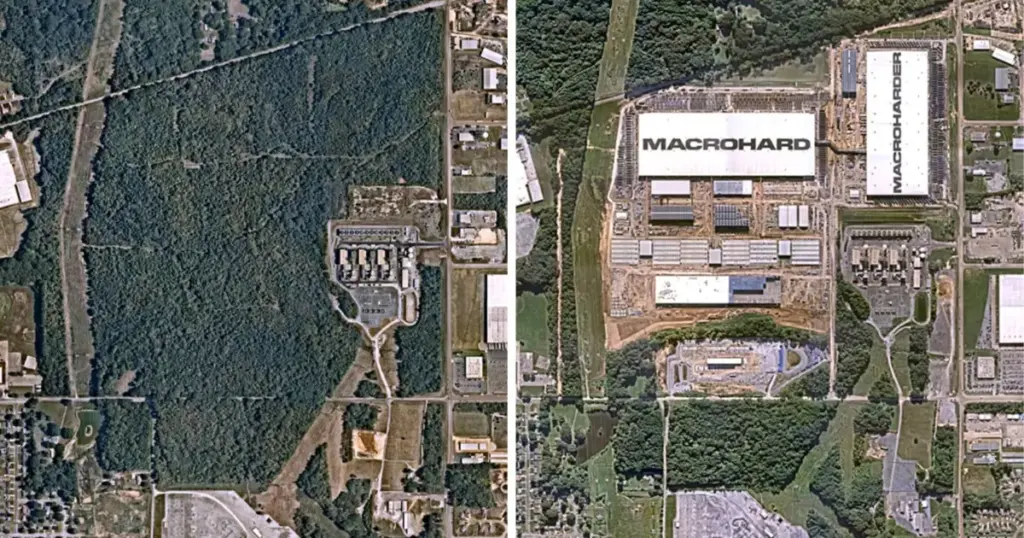
A striking new series of satellite timelapses is offering the public an unprecedented look at how the artificial intelligence boom is physically reshaping the American landscape. Compiled by Benjamin Grant, the creator behind the popular Instagram page Daily Overview, the imagery captures the rapid and massive construction of industrial-scale data centers across the United States over the past several years.
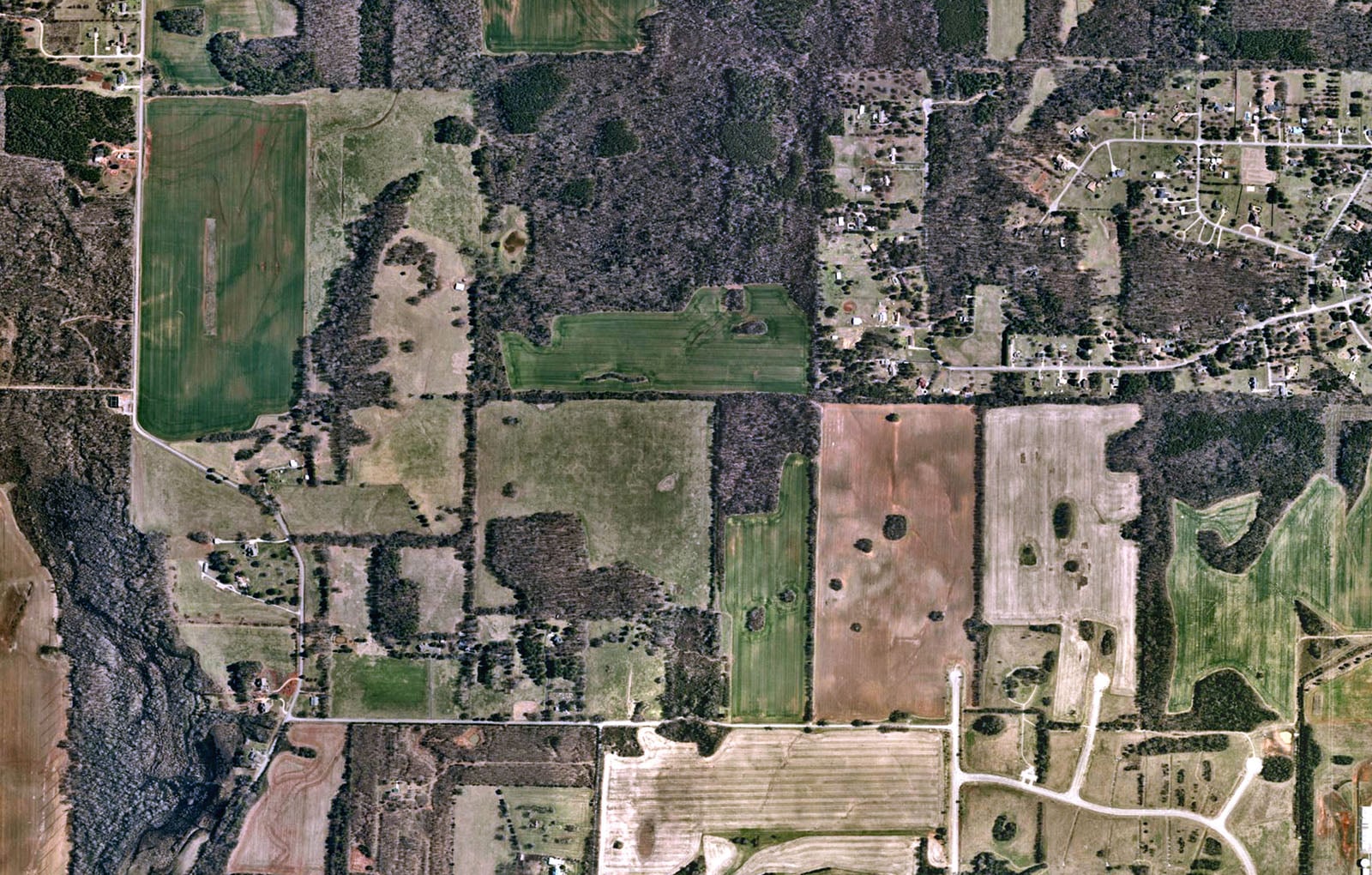
The photos, which highlight major build-outs in locations such as Memphis, Tennessee, Huntsville, Alabama, and Abilene, Texas, come at a time when data centers have rapidly transformed from background utilities into a prominent flashpoint in national politics. As voters across the political spectrum push back against the sprawling facilities over mounting environmental concerns, water usage, and the strain placed on local power grids, these visual timelines provide a stark reminder of the sheer scale required to power the modern artificial intelligence revolution.
Grant, who has spent years documenting human impacts on the Earth through high-resolution overhead photography, told PetaPixel that he had been waiting for the right moment to focus a timelapse project on data centers, given how dominant AI has become in global headlines.
"I’ve been pondering the best time to do a data center timelapse with AI being a major headline for the last few years now," Grant said. "Timing-wise, with companies like OpenAI, Anthropic, and xAI now floating a pause on frontier model development over safety concerns, it has made me wonder whether or not the physical build-out will actually slow, or if the infrastructure race has taken on a life of its own. For me, this timelapse brings that question to life."
The timing of Grant’s project coincides with a sudden and notable shift in the tech industry’s rhetoric regarding its own growth trajectory. Just last weekend, Anthropic CEO Dario Amodei published a widely discussed essay calling for a deliberate slowdown in the development of frontier artificial intelligence models to better manage safety and societal risks. In a surprising alignment across fierce corporate rivalries, competitors including OpenAI CEO Sam Altman and SpaceX and xAI founder Elon Musk publicly echoed Amodei’s sentiments, questioning the unrelenting pace of frontier model development.
However, as tech executives debate the philosophical and safety implications of pushing artificial intelligence forward, the physical infrastructure necessary to support it continues to expand across rural and suburban communities at a breakneck speed.
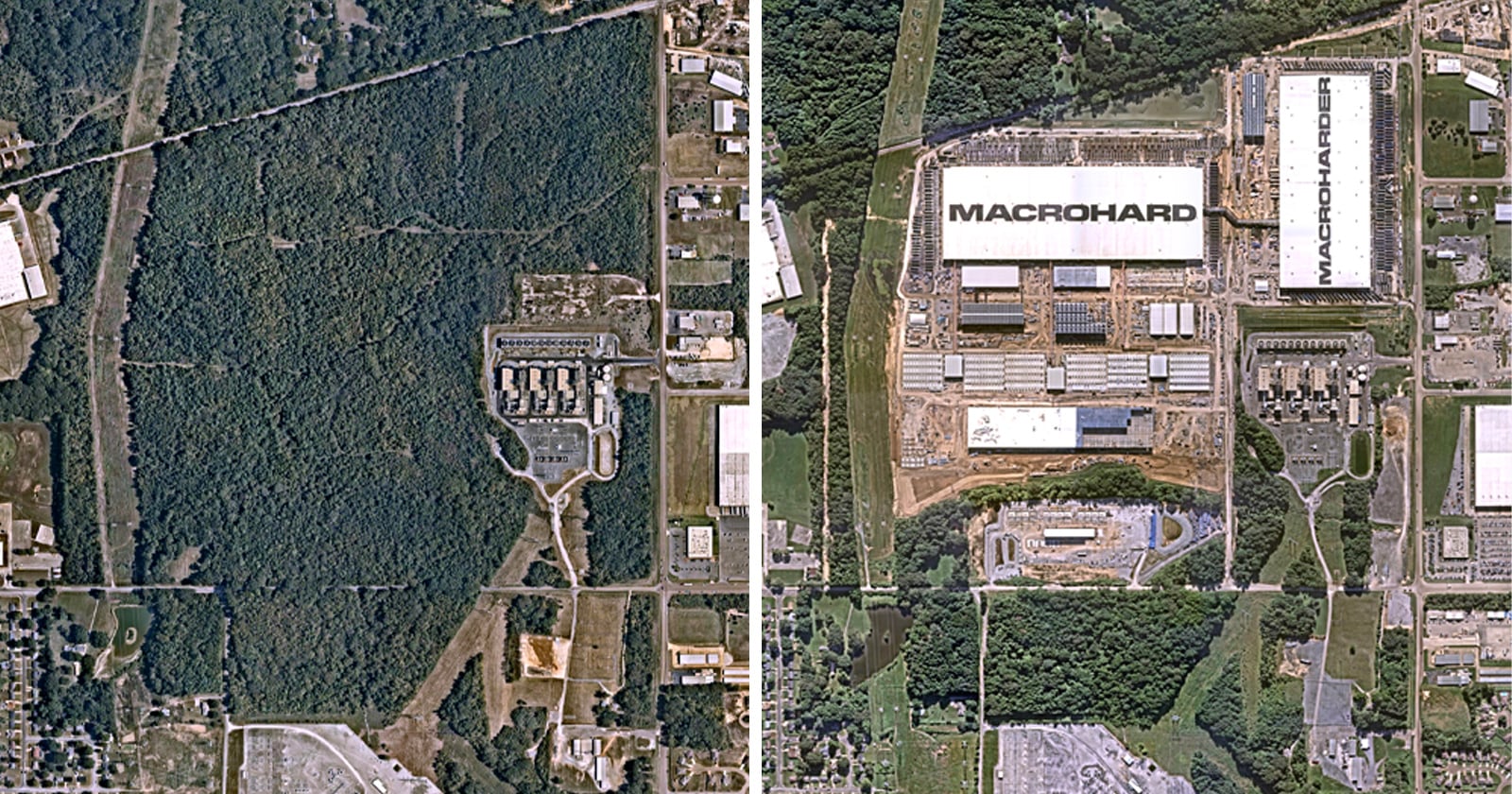
"AI infrastructure has quietly become one of the biggest forces reshaping the U.S. right now," Grant noted. "In these videos, we see hundreds of acres cleared to create these campuses. Of course, that introduces an environmental piece to the story."
The environmental narrative captured in the satellite timelapses is unmistakable. In locations like Memphis, where xAI has established a massive supercomputing presence, and in regions hosting massive facilities linked to other tech giants, lush forests, agricultural fields, and open rural landscapes are rapidly giving way to vast concrete slabs, massive rooftops, and extensive electrical substations. These sprawling campuses require monumental amounts of electricity and cooling resources, fundamentally altering local ecosystems and infrastructure capacities in ways that residents and local officials are only beginning to grapple with.
In an unusual twist that added a layer of self-reflection to the project, Grant decided to use Claude, Anthropic’s proprietary AI chatbot, to write the social media caption accompanying the satellite imagery release. The resulting text provided a poignant, machine-generated perspective on the physical toll exacted by technologies that users typically experience as weightless and abstract.
"I don’t know which of these buildings, if any, I’m running on right now," Claude wrote in the post selected by Grant. "Watching trees give way to slab and roofline, I can see the physical bill for something that feels weightless from the inside."
Grant acknowledged that his decision to let the artificial intelligence draft the announcement felt "very meta."
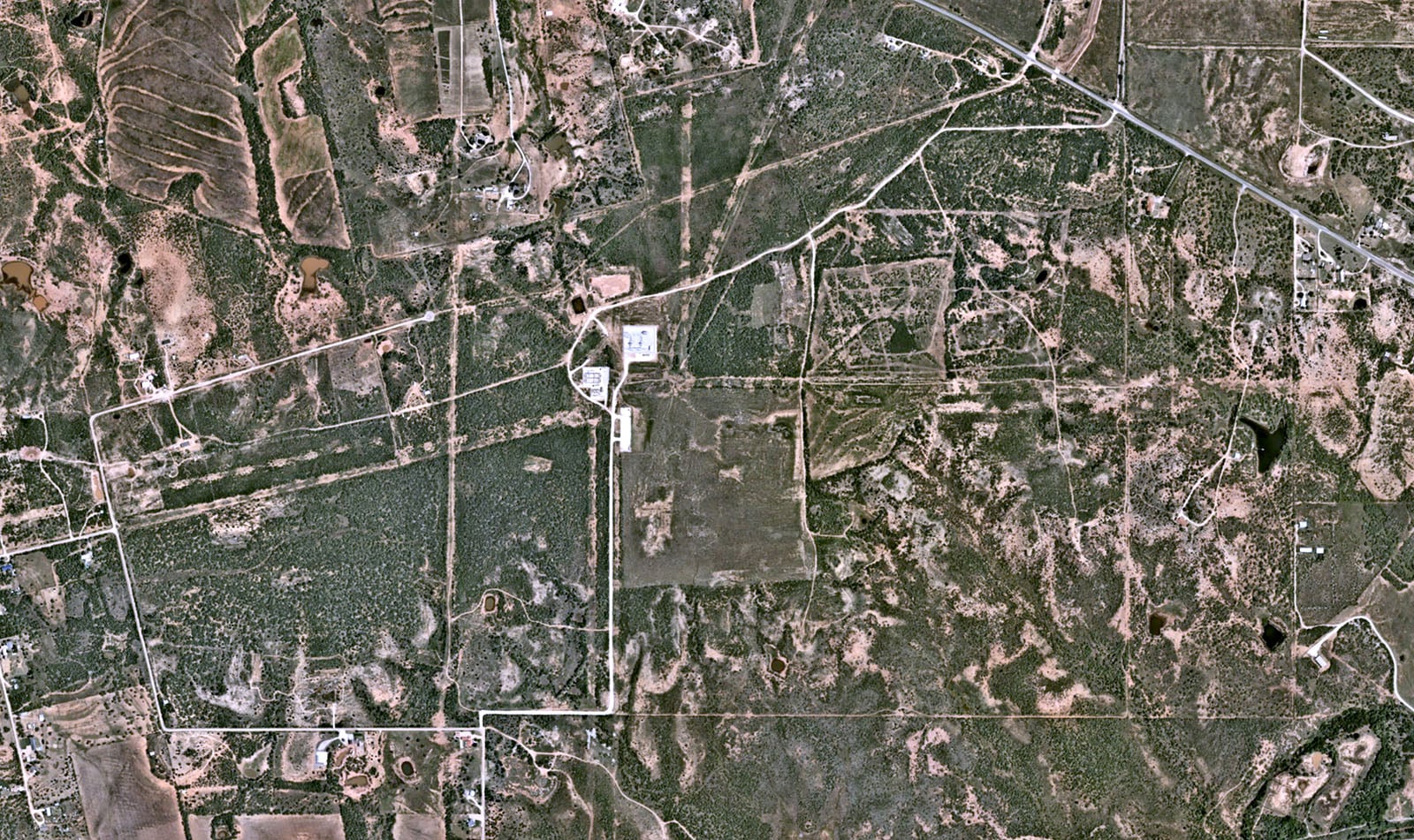
"I was curious to hear Claude’s take on seeing where it ‘lives’ and I do appreciate the hint of guilt in its response," Grant said. "I even had it select the song for the post, which eerily fit the build-out progression."
The juxtaposition of an AI chatbot musing over its own physical birthplaces highlights the profound disconnect between the digital convenience enjoyed by everyday consumers and the heavy industrial reality required to sustain it. While software updates and model training occur in the cloud, the cloud itself is anchored firmly to the Earth by millions of tons of concrete, miles of copper and fiber optic cabling, and massive energy consumption that draws heavily from local power grids.
As public scrutiny intensifies and communities continue to organize against the rapid proliferation of data centers in their backyards, projects like the Daily Overview’s satellite timelapses serve as a vital visual record of a transformative era. They bridge the gap between abstract technological progress and concrete geographic reality, documenting a landscape permanently altered in the relentless pursuit of artificial intelligence.