


The stock market has once again surprised investors, prompting familiar anxieties about overvalued valuations, potential crashes, and the sustainability of current economic booms. As the financial landscape is reshaped by the rapid ascent of Artificial Intelligence, many retirees and investors find themselves wrestling with deep-seated worries. Yet, veteran financial commentators suggest that the real hazard may not lie within market bubbles or macroeconomic volatility, but rather within the psychological machinery of human fear itself.

Financial pundits frequently draw parallels between today’s technological fervor and the early dot-com boom of the late 1990s and early 2000s. For long-time early retirement advocates and digital commentators, the current cycle brings back memories of an era that initially catalyzed early career growth before threatening livelihoods and immigration statuses during the ensuing market correction. As questions mount regarding the stability of contemporary investment portfolios, discussions surrounding these market cycles have increasingly taken center stage at financial literacy events across the country, including recent presentations at Camp FI Midwest and upcoming panels at the Bogleheads conference.

Will the AI Bubble Ruin our Retirement?
Examining market anxiety through a historical lens reveals a recurring pattern of worry that transcends specific decades. Reflecting on concerns from two decades ago, in 2006, investors harbored fears that mirror contemporary headlines. Back then, public discourse was dominated by anxieties over geopolitical instability in the Middle East, escalating national debt, persistent inflation, and a housing market bubble that many feared would permanently derail retirement plans. Concerns over globalization and job outsourcing to emerging markets like India and China occupied the space that automation and artificial intelligence hold today. Furthermore, widespread debates over "peak oil" suggested that fossil fuel scarcity would inevitably cripple global industrial output.

Instead of economic ruin, the subsequent two decades witnessed profound technological and economic shifts. Despite the severe disruption of the Great Financial Crisis—historically the deepest market contraction since the Great Depression—broad market indices demonstrated remarkable resilience over the long term. A hypothetical long-term investment weathered both the 2008 financial collapse and the subsequent market shocks of the COVID-19 pandemic in 2020, continuing an upward trajectory over a twenty-year horizon.

Simultaneously, global standards of living showed measurable improvement across multiple metrics. Data tracking global welfare indicates a significant decline in extreme poverty rates over the same twenty-year period. Advances in public health contributed to a substantial reduction in infant mortality rates worldwide. Meanwhile, the energy sector underwent a structural transformation, driven by a dramatic decrease in the cost of solar technology, which allowed clean energy generation to expand rapidly, alongside the steady market adoption of electric vehicles.

These historical comparisons raise a fundamental question regarding whether current economic anxieties are genuinely unprecedented or simply a modern iteration of cyclical pessimism. While financial media outlets frequently amplify forecasts involving surging national debt or disruptive technologies, economic analysts argue that fundamental prosperity is rooted in productivity rather than the day-to-day fluctuations of financial computer systems.

The Core Driver: Productivity Over Financial Systems
Financial theory often emphasizes that market indices and currency valuations are human constructs subject to emotional swings and speculative bubbles. However, sustained economic growth and the standard of living required to support early retirement fundamentally derive from human productivity and ongoing technological innovation. Throughout modern capitalist history, economic systems have experienced periodic corrections, necessitating systemic recalibrations that ultimately allow society to resume productive output.

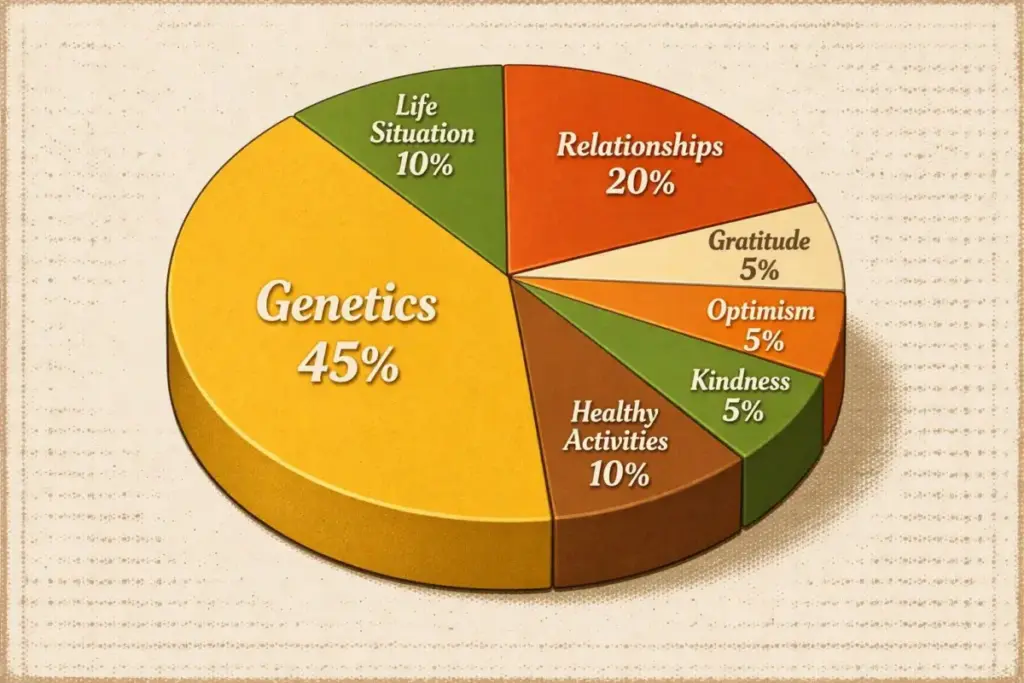
Beyond material prosperity, psychological research suggests that human happiness and life satisfaction reach a plateau once basic living standards are met. While baseline temperament and genetics play a substantial role in individual well-being, controllable factors such as cultivating positive social relationships, practicing optimism, and engaging in physical activity heavily influence overall life satisfaction. Despite these stabilizing realities, baseline anxiety persists among investors, driven largely by evolutionary psychology.

Human beings evolved primarily as danger-detection organisms, a trait critical for survival in primitive environments. However, in modern societies where immediate threats like predators and infectious diseases are largely mitigated, this vigilance often persists, shifting its focus toward abstract or future concerns. As basic physiological and financial needs are met, psychological anxieties frequently pivot toward social standing, tax strategies, and portfolio longevity, manifesting in worries as granular as government-mandated required minimum distributions for individuals with substantial retirement savings.

Mitigating this persistent background fear requires self-awareness and an understanding of personal history. Psychological research and therapeutic frameworks indicate that scarcity mindsets are frequently rooted in childhood experiences or generational trauma, such as the lingering impacts passed down from generations who lived through the Great Depression. Recognizing that these emotional responses stem from historical conditioning rather than an objective evaluation of the present is often the first step toward rational decision-making.

Taking deliberate action serves as an effective countermeasure to fear, transforming the unfamiliar into the manageable and fostering resilience. By reducing exposure to sensationalized daily news cycles and focusing instead on tangible, positive behaviors—such as physical health, continuous learning, and community engagement—individuals can align their daily routines with human evolutionary needs. Furthermore, surrounding oneself with optimistic, solution-oriented peers within financial independence communities helps replace pervasive dread with constructive momentum.
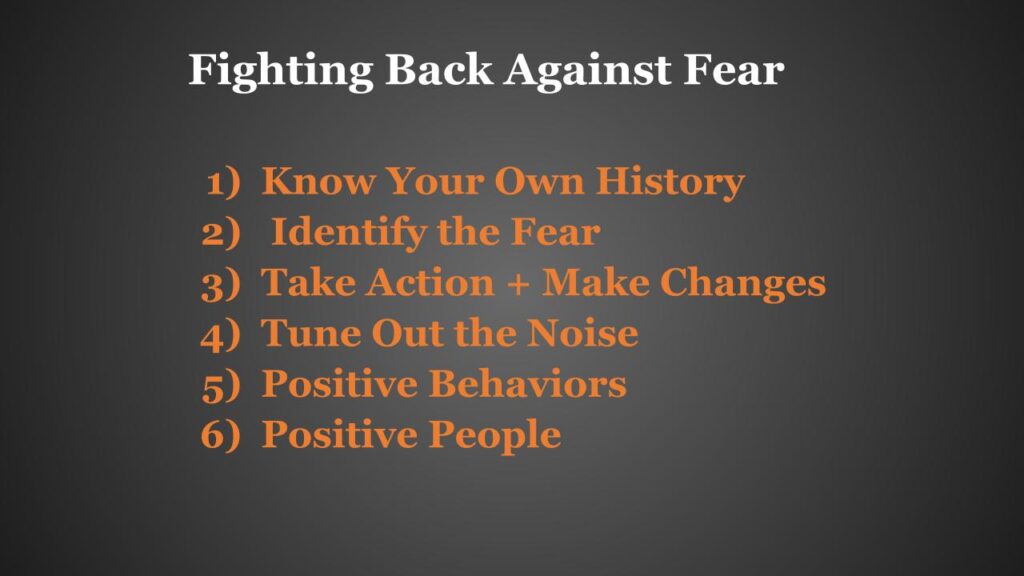
Viewing Technological Shifts as Experiments
Adopting an experimental mindset toward life transitions—ranging from career changes and housing moves to retirement itself—allows individuals to approach uncertainty with curiosity rather than trepidation. This perspective is particularly relevant when evaluating the current artificial intelligence boom.

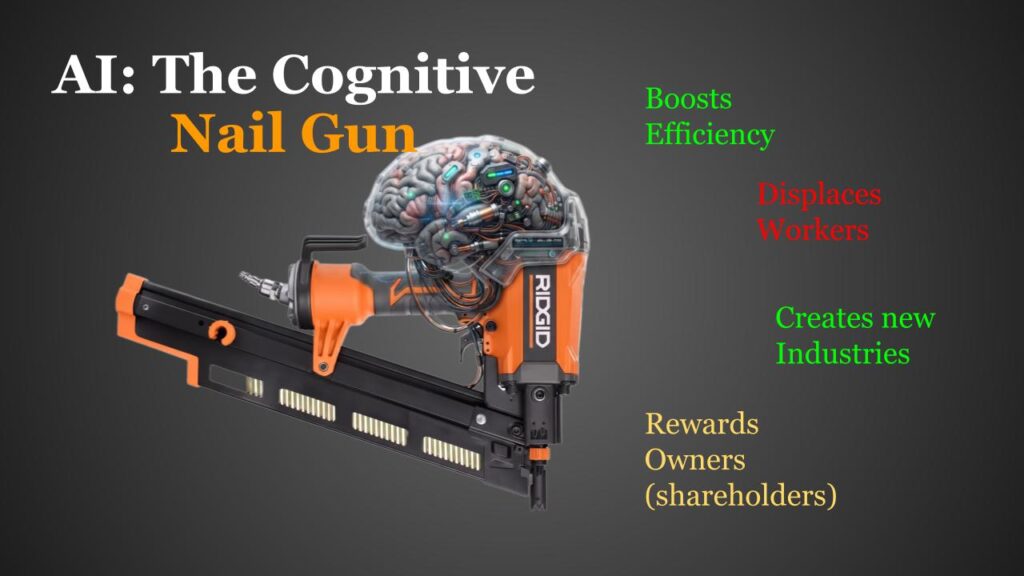
Rather than viewing AI exclusively as an existential economic threat or a catalyst for catastrophic market failure, technologists and economists often categorize it as a sophisticated form of cognitive leverage. Much like the introduction of physical tools that enhanced manufacturing efficiency, artificial intelligence acts as a productivity multiplier. While such technological revolutions historically displace specific entry-level administrative and operational roles, they simultaneously reduce service costs and stimulate the development of entirely new industries, mirroring the long-term structural evolution seen during the rise of the internet and mobile computing.

The distribution of economic benefits from new technologies typically favors asset owners and shareholders, contributing to portfolio growth for long-term investors while reshaping labor markets. Consequently, artificial intelligence represents another transitional phase requiring adaptation and strategic decision-making rather than unconditional alarm.
Ultimately, addressing financial and existential anxieties involves looking past superficial symptoms and confronting the root causes of fear. By fostering resilience, prioritizing meaningful human engagement, and evaluating future uncertainties through an analytical lens, individuals can navigate market volatility and technological disruption while pursuing sustainable long-term goals.