
Long before armies of plastic figures were ever deployed across green-felted hobby tables to wage war in standard wargaming formats, millions of players were already mowing down the slithering Zerg and orchestrating epic battles against the Queen of Blades in Blizzard Entertainment’s seminal real-time strategy universe, StarCraft. For many strategy fans, the term "Space Marines" will now, and forever, be inextricably associated with the Terran army from this classic RTS franchise, even though competing tabletop franchises boast older literary origins and StarCraft itself famously originated as a Warhammer 40,000 real-time strategy concept. When Archon Studio—a board game developer with an extensive and impressive history of adapting massive, beloved video game intellectual properties for the tabletop medium—announced they were developing a miniatures war game set firmly within this iconic sci-fi universe, hobbyists and veterans alike immediately began clearing off their workstations in eager anticipation.
Drafting Objectives and Deploying Tactical Scenarios
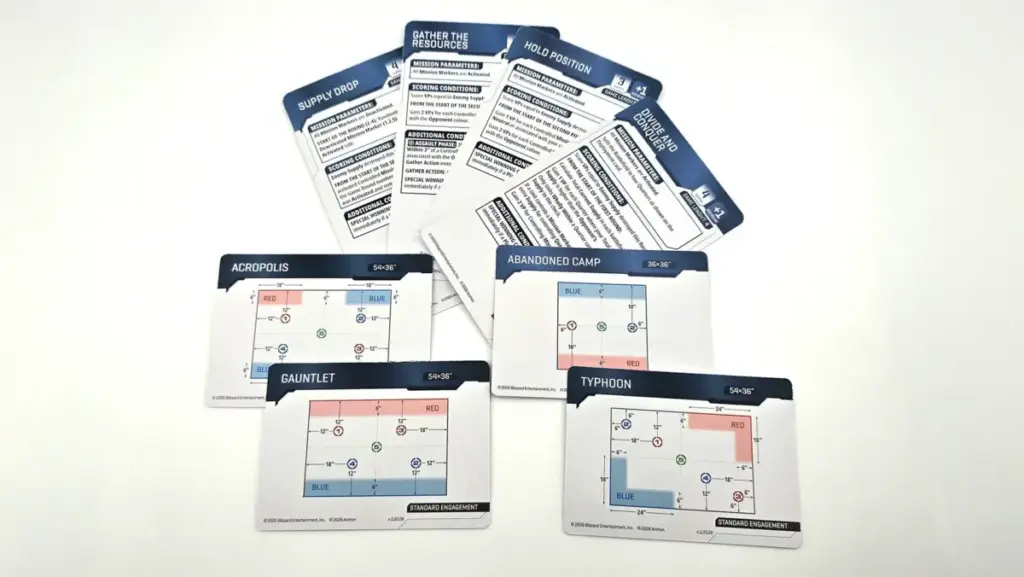
Similar to other modern and traditional tabletop war games, standard matches of StarCraft take place over the course of five distinct rounds where opposing players or cooperative teams struggle fiercely to control the board and complete overarching objectives. However, instead of simply picking a standard mission statement straight out of a rulebook or campaign manual, the game introduces a deeply tactical drafting phase right at the start of each session. Players bring two possible choices each for both the game’s type—establishing the core goals and victory conditions both sides are working toward—and the deployment zones, which dictate where armies and initial objectives will ultimately be placed on the map.
From there, these choices are directly drafted between the opponents, with one person selecting the mission type and the other choosing the deployment layout. It is a system that proves to work remarkably well in practice, injecting a high degree of variety into every single match a player experiences. Furthermore, the fundamental concept of players supplying the scenario choices themselves adds a brilliant psychological layer, as everyone naturally submits options that they believe will inherently benefit their own faction’s strengths. The ultimate result of this design is that both sides will frequently have to contend with a scenario that is not quite as ideal or comfortable as they had initially hoped for, forcing rapid tactical adaptation before the first shot is even fired.
Streamlined Card-Driven Army Building and Reference
In addition to maps and mission cards, each participant brings a host of auxiliary cards that help define the exact composition of their armies alongside any battlefield upgrades they have purchased prior to the encounter. Faction cards, which must be selected before the game begins, establish the precise number and variety of slots available in a player’s army list. This dictates how many core units—representing basic frontline troops—alongside elite squads or powerful heroes like Jim Raynor or Sarah Kerrigan can be included, while also granting unique passive benefits or faction-specific tags.
These crucial tags are often strictly required when selecting which Tactical cards to buy and integrate into your battle plan. These tactical cards represent various iconic buildings from the original RTS video games or special operational perks that can impart vital bonus effects, defensive buffs, or increase the available supply limits for your deployed forces. Combined with the fact that all troops and their necessary operational information—including statistical profiles, point costs, and special rules—are neatly printed on handy, portable info cards, players are spared the tedious chore of constantly carrying around a heavy, cumbersome rulebook whenever they want to play a casual match at a local hobby shop or a friend’s house.
Instead, a player can simply toss a small, compact deck of cards straight into their bag, which is not only incredibly convenient for transit but drastically lighter to carry around than traditional wargaming tomes. In actual practice, this system shines brightest when a player needs to quickly hand a reference card over to their opponent to answer a quick rules question regarding an unfamiliar ability. This entirely eliminates the frustrating process of frantically book-marking pages in a massive rulebook or passing around a messy compilation sheet that requires tedious parsing.
Stunning Miniatures and Faction Aesthetics
When it comes to the physical miniatures representing each of the three iconic races, Archon Studio has delivered an impressive visual standard. All models come cast in unique, race-specific colored plastic augmented by striking semi-transparent accents that elevate the overall aesthetic quality of the models on the tabletop. Inside the core Starter Set, for instance, the Terrans are cast in a muted industrial blue and feature vibrant orange explosion effect pieces alongside bright green healing sprays for the frontline medics.
Meanwhile, the relentless Zerg swarm emerges in a menacing pinkish-purple hue, and the technologically advanced Protoss glow in a bright, regal yellow accompanied by translucent blue energy shields and crackling plasma blades. Even iconic base structures are accounted for, complete with a dedicated Pylon miniature featuring a large, clear blue crystal, allowing players to faithfully construct all the additional pylons they could possibly desire. The models are densely packed with sharp, crisp details that practically beg for a comprehensive hobby paint job. Yet, even if players opt for the simplest of hobby shortcuts—such as a quick primer base coat followed by an all-over wash—the intricate physical sculpts and translucent accent parts naturally help all the units visually pop, ensuring they look stunning and remarkably faithful to their digital counterparts when deployed on the battlefield.
Dynamic Alternative Activations and Combat Engagement
StarCraft features a suite of foundational design decisions that make it a vastly more alluring and fast-paced prospect compared to other traditional tabletop war games, largely thanks to its ability to keep participants continuously engaged and drastically reducing downtime. This is a noticeable departure from massive systems like Warhammer 40k, where players can often find themselves enduring hour-long stretches of absolute inactivity while waiting for their opponents to execute an entire, sprawling turn before they can respond.
StarCraft intelligently adopts a system of alternating activations. Under this framework, players never have to worry about long periods of sitting idly on the sidelines. From initial deployment phases to movement maneuvers, shooting volleys, and brutal close-quarters combat, the fact that a player is never excluded from active participation for longer than a few minutes makes the overall experience intensely engaging and exciting. The reality of not having to struggle to remember a complex strategy formulated an hour prior before finally getting to implement it is a welcome relief for modern tactical gamers.
Managing Reserves and the Surge Combat Mechanic
The implementation of alternating activations is only one part of the mechanical design that helps StarCraft win over skeptics. Instead of deploying all or even most of your amassed troops at the very beginning of a match, virtually all units begin the game safely held in reserve. The physical battlefield is strictly limited in terms of how many troops can be sustained at any given moment. This supply limit, meticulously dictated by the specific mission chosen during the pre-game drafting phase, keeps engagements manageable, tactical, and timely.
Each unit fielded on the board consumes a specific portion of that available supply limit, with multi-model squads like Terran Marines dynamically decreasing in supply value as they suffer casualties and lose individual troopers. As a brand new round begins, the overall supply limit increases step-by-step, permitting fresh, heavier, and far more powerful units to deploy onto the front lines, with the limit ultimately lifted altogether if the match extends into the definitive fifth round.
This approach is widely appreciated because it effectively removes the likelihood of a disastrous first-turn alpha strike completely ruining a player’s strategic chances at the outset of what would otherwise be a lengthy game. Furthermore, it allows commanders to flexibly adjust their overarching strategies and tactical approaches mid-game, as the exact deployment order of queued troops remains entirely uncommitted until the exact moment they are pulled out of reserve. If a sudden crisis demands immediate boots on the ground, a player can effortlessly pivot from preparing heavy siege units next round to rushing out a couple of extra squads of Zerglings to swarm and contest a critical objective point. This fluid reinforcement model also captures the authentic progression loop of the original PC real-time strategy masterpiece, where armies are steadily built up and expanded as the conflict escalates over time.
Naturally, movement still requires players to break out their trusty tape measures, and combat remains a delightfully chaotic symphony of rolling handfuls of dice to resolve offensive attacks and defensive saves. However, Archon Studio has introduced a clever tactical twist into the fighting pits known as the Surge mechanic. Certain unit weapons come equipped with a designated "Surge type" bearing an associated classification tag, such as "Light" or "Armoured." When a player utilizes that specific weapon against an enemy unit possessing a matching tag, a portion of their successful hit rolls will directly circumvent the opponent’s defensive armor rolls, guaranteeing direct damage.
This innovative system transforms tactical engagements into a sophisticated, high-stakes game of rock-paper-scissors where there is a clear, highly impactful incentive to purposefully target enemy units with the precise counter-units required to neutralize them, adding a deeply satisfying and clever layer of strategic depth to every skirmish.
Pricing Realities and Accessibility
One unfortunate carryover that StarCraft has not managed to completely avoid—a persistent economic hurdle that continues to plague the broader miniatures hobby space as a whole—is that this remains a relatively pricey game to collect and play. The two-player Starter Box, which includes starter forces for both the Terran and Zerg factions, hovers around the $200 mark. Meanwhile, individual faction starter sets for the Zerg, Protoss, or Terrans will set buyers back between $120 and $130, and various specialized squad or hero expansion boxes retail anywhere from $50 to $80.
While that is simply the economic reality of the modern tabletop miniatures market, Archon Studio deserves considerable credit for making significant concessions toward digital accessibility. The full rulebook is made freely available online, accompanied by a comprehensive browser-based application housing all the necessary operational cards and unit profiles. For resourceful hobbyists willing to utilize standard third-party bases, spare miniatures, and a tube of super glue, the barrier to entry is lowered significantly.
Verdict
The StarCraft tabletop miniatures game successfully introduces a range of fantastic design conveniences that manage to streamline an average game session from a half-day or full-day endurance trial down to a brisk, highly focused two-to-three-hour experience, all while delivering a tense, dice-rolling wargame encounter that strategy fans will thoroughly enjoy. Archon Studio currently has a massive roster of iconic units from the universe that they can easily draw from and introduce into this expanding warzone in future expansions. Ultimately, the long-term success of the title will likely rest on how the development team plans to keep the meta-game fresh and exciting once those initial unit options begin to run low, and what creative expansion concepts they have in store beyond merely releasing new plastic to keep players invested for years to come.