

SEATTLE — The People for the Ethical Treatment of Animals (PETA) has added three prominent University of Washington (UW) neuroscientists to its expanding “Hall of Shame,” targeting what the animal rights organization describes as systemic cruelty, regulatory failure, and severe surgical complications in primate research.
The newly inducted researchers—Greg Horwitz, Robi Soetedjo, and Jonathan Ting—all operate within the university’s neuroscience department. According to public records obtained by PETA, the trio has overseen invasive laboratory procedures that involve drilling into the skulls of monkeys, infusing experimental viruses directly into brain tissue, depriving animals of food and water to enforce compliance, and performing repeated, complex surgeries that have frequently resulted in severe medical complications or death.
The extent of the researchers’ laboratory practices came to light after their operational history briefly drew scrutiny during a meeting of the university’s institutional animal oversight committee. However, critics argue that any potential for genuine institutional accountability was swiftly neutralized by a self-regulatory oversight framework that routinely excuses animal suffering, post-surgical injuries, and fatalities under the guise of scientific necessity.
Trio of Monkey Tormenters
With their induction, Horwitz, Soetedjo, and Ting join a controversial lineage of UW animal experimenters whose work has drawn sharp public and ethical criticism. Among them is Michele Basso, the notorious former director of the primate center, whose documented disregard for institutional guidelines previously resulted in an unprecedented suspension that barred her from conducting animal research for at least a year.
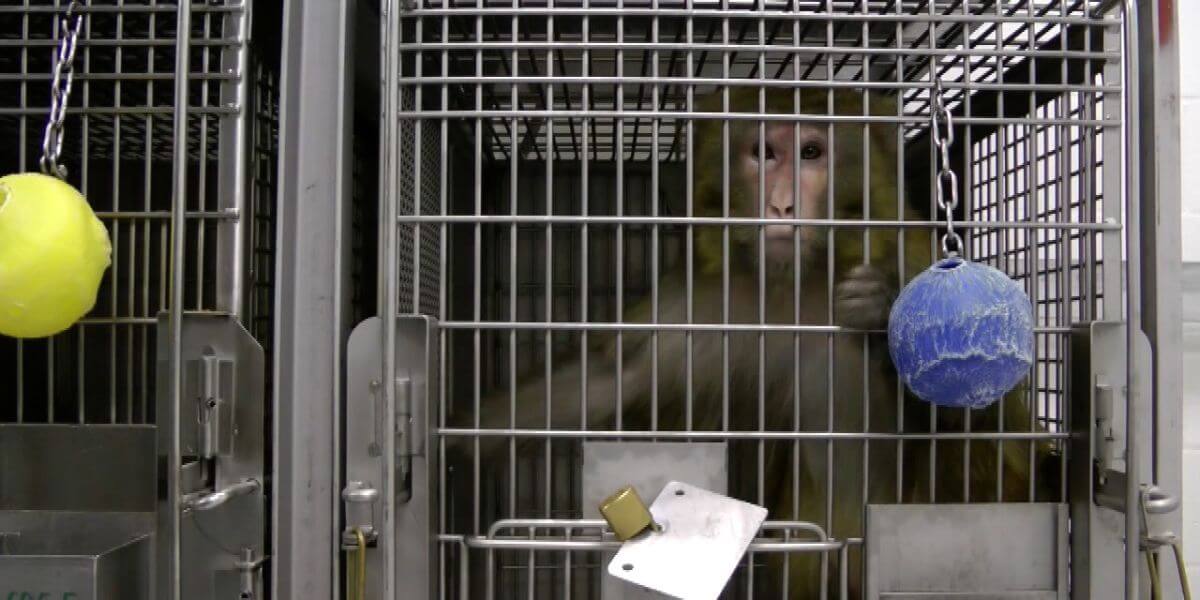
Public records show that in tests directed by Horwitz and Ting, laboratory personnel routinely drilled through the skulls of macaque monkeys, inserted plastic probes into delicate neural structures, and injected non-clinical-grade viruses into brain tissue prior to euthanizing the animals. Furthermore, surgical logs reveal that researchers repeatedly sliced into the heads and backs of the subjects, frequently struggling to maintain closed sutures and prevent post-operative breakdown.
Between 2020 and 2026, the researchers subjected 71 monkeys to highly invasive brain surgeries. The procedures frequently triggered debilitating physical consequences, including loss of muscular control, persistent tremors, chronic physical weakness, behavioral depression, severe localized swelling, and death. Data indicates that a staggering 41 percent of the monkeys involved suffered severe complications, defined broadly to encompass acute injuries, stubborn infections, and premature death. At least five animals had to be euthanized ahead of schedule to end their suffering, while others endured failed wound healing that necessitated subsequent, highly invasive corrective procedures.
During the institutional oversight committee meeting, Horwitz acknowledged that his research team’s complication rate significantly exceeded those reported at comparable research institutions, yet he offered no comprehensive explanation for the discrepancy. Observers note that the oversight panel subsequently declined to launch a formal investigation into the elevated complication rate.
In separate protocols led by Soetedjo, institutional staff reportedly bypassed standard protocols by restricting food access for an individual monkey to coerce cooperation during rigorous training regimens designed to acclimate the animal to the restrictive physical restraints used in neurophysiological testing.
Decades and Counting
The three researchers have built extensive academic careers spanning multiple decades, collectively authoring numerous scientific publications and securing more than $25 million in grant funding from the National Institutes of Health (NIH) since 2020. Their respective trajectories reflect long-standing careers dedicated to subjecting primates and smaller mammals to complex batteries of neurological tests.
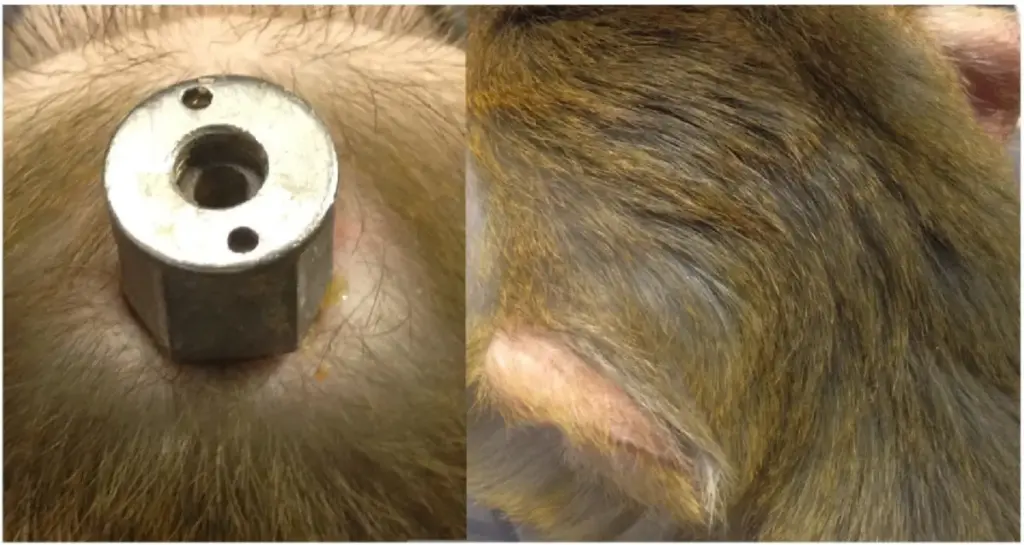
Horwitz, who serves as the Chief of the Neuroscience Unit at the university’s regional primate research center, has spent nearly 30 years conducting experiments on monkeys. His work has historically involved cutting open skulls, anchoring heavy metallic hardware directly to bone, threading delicate electrodes through functional brain tissue, and attaching monitoring wires directly to the animals’ eyes.
Soetedjo has maintained an active career in primate experimentation for over two decades. A notable 2017 research paper co-authored by Horwitz details methodologies involving the injection of viral vectors into primate brains, the application of external light sources directly onto surgically exposed brain matter to activate genetically modified cellular structures, and the enforcement of mandatory eye-movement tracking tasks prior to termination.
Ting’s research portfolio spans invasive procedures on both non-human primates and laboratory mice, characterized by similar viral infusions into central nervous systems. Ting previously published literature celebrating a specialized technique designed to harvest higher-quality fresh brain tissue slices. The protocol involved slicing open a mouse’s chest cavity, inserting a needle directly into the heart to drain systemic blood, decapitating the animal with surgical scissors, and subsequently excising the cranium to extract the brain.
In additional studies, Ting’s team bolted stabilization hardware to monkey skulls and replaced the natural protective meningeal membrane with an artificial substitute to facilitate recurring, direct physical access to neural tissue. In separate murine experiments, researchers affixed clear artificial skull caps, cemented headpost restraints, and excised portions of the animals’ skulls. These mice were subsequently subjected to water deprivation to compel cooperation across various behavioral trials before ultimate euthanasia.
Sick Monkeys, Shoddy Science
Beyond the ethical dimensions raised by animal welfare advocates, critics and public records suggest that the neuroscience research conducted at the institution is frequently undermined by methodological vulnerabilities and scientific compromises.
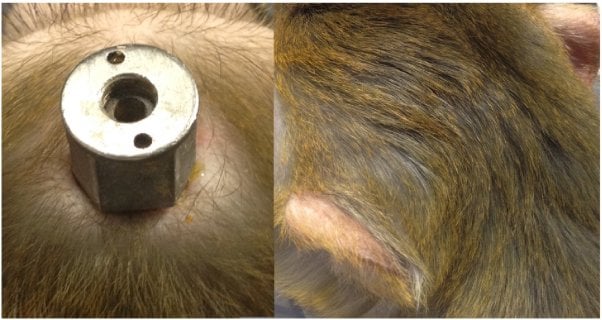
A central concern highlighted by PETA involves the institutional practice of utilizing what critics term "discounted" monkeys—animals with pre-existing medical conditions, chronic illnesses, or established psychological distress who are recycled from prior protocols into new experiments. Animal behaviorists note that incorporating subjects with complex medical histories into sensitive neurological studies can significantly skew data integrity and invalidate experimental outcomes.
Public records indicate that Horwitz and Ting routinely acquired monkeys from the primate center’s internal pool of surplus or unwanted animals for their viral injection studies. Many of these subjects exhibited documented signs of chronic psychological trauma, such as compulsive over-grooming, stemming from prolonged confinement in solitary or restrictive caging systems. Furthermore, documentation shows the researchers injected these animals with viral vectors procured from multiple distinct sources that failed to meet standard clinical-grade manufacturing benchmarks, a factor that internal reviews have identified as a potential contributor to the severe illnesses that subsequently developed in the subjects.
The Washington National Primate Research Center continues to operate amid ongoing scrutiny from animal advocacy organizations and oversight watchdogs regarding its administrative practices, allocation of federal research funding, and the general welfare standards maintained within its facilities.