

By Julie Sprankles
The mental load of modern motherhood is a heavy, relentless weight, and for many women, this week has pushed that burden to its absolute limit. Rarely are we warned, even once, about the sheer volume of logistical, emotional, and physical management required just to navigate a single week as a woman and mother. The dynamic often feels fundamentally different for men, who frequently enjoy the cushion of having someone else manage the intricate details of daily life for them. It brings to mind that resonant, viral observation: “Imagine what women would achieve if we too had a wife.”
The reality, however, is that women already juggle, achieve, and manage an extraordinary amount, often without a safety net or meaningful partnership. That exhausting truth is laid bare in the latest collection of anonymous mom confessions, which paint a vivid, poignant, and sometimes startling picture of contemporary family life.
From financial anxieties and health crises to marital disillusionment and the crushing weight of invisible labor, this week’s submissions highlight the multifaceted struggles that women carry behind closed doors. Among the most pressing concerns voiced by contributors are basic economic pressures. One mother shared the acute stress of trying to figure out how to afford heating oil as the weather turns cold, while others grappled with the exhausting reality of being "house poor," juggling tight holiday budgets, or feeling the heavy pinch of inflation while attempting to provide for their children.
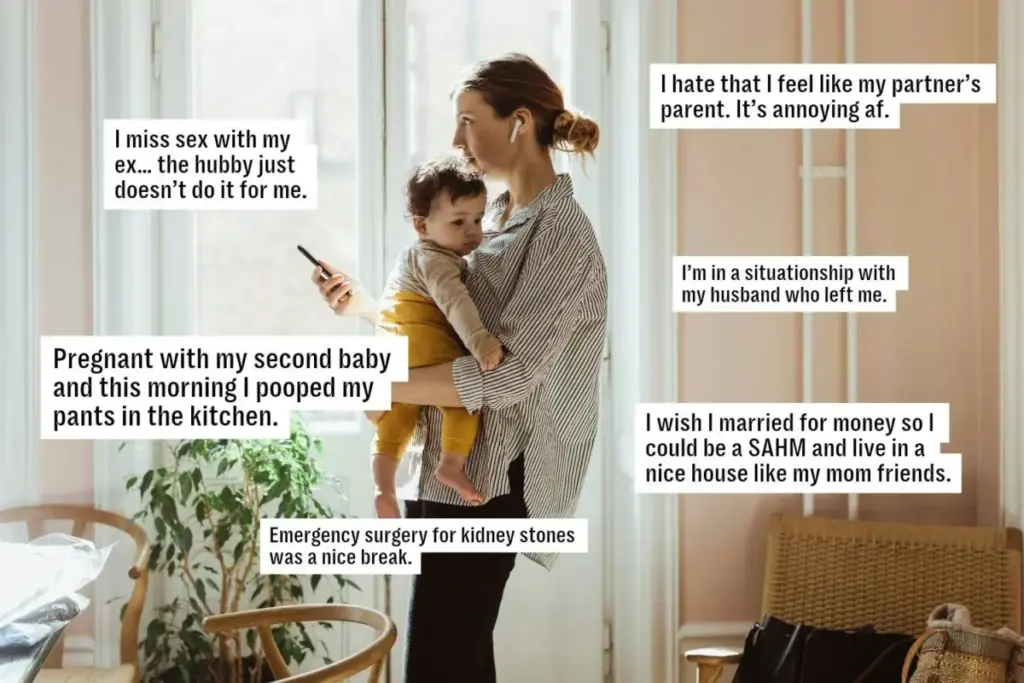
Physical health and the lack of bodily autonomy also emerged as major themes. One contributor in her early forty-fours reckoned with the heavy depression of undergoing her second back surgery in a single month, while another wryly noted that an emergency trip for kidney stone surgery almost felt like a forced, albeit painful, break from her usual responsibilities. Others shared the quiet vulnerabilities of dealing with unexpected bodily mishaps during pregnancy, navigating the complex adjustments of hormone replacement therapy, or simply feeling like their bodies are betraying them under the constant stress of burnout.
Beyond physical and financial strain, the emotional and relational burdens carried by these mothers often border on the breaking point. A recurring motif across numerous confessions is the deep-seated frustration with unequal partnerships. Many women reported acting as literal or emotional managers for their partners, with several describing husbands who fail to contribute equitably to household labor or parenting, effectively leaving them feeling as though they are raising a third teenager rather than sharing a life with an equal. For some, this dynamic has sparked serious thoughts of separation, though financial constraints or the fear of upending their children’s lives keep them tethered to unhappy marriages. Others confessed to running on entirely empty reserves, loving their children fiercely while simultaneously longing for the day when they are no longer needed quite so intensely, or admitting with heartbreaking honesty that the sheer magnitude of maternal responsibility sometimes makes them wish they had never chosen this path.
Yet, alongside the profound exhaustion and sorrow, the confessions also reveal a streak of raw, unfiltered complexity. While many mothers are bogged down by the mundane grievances of domestic life—such as partners who engage in irritating habits or family dynamics hijacked by overbearing relatives—others are reckoning with deep personal desires. The submissions feature raw admissions about strained marriages, unfulfilled intimate lives, and fantasies of complete escape. Some confessed to finding more satisfaction in solitude or alternative intimacy than in their current relationships, while others openly admitted to missing past connections, grappling with questions of their own sexuality, or harboring lingering thoughts about past affairs.
Mental health struggles and the desperate need for coping mechanisms were equally prominent. While some women shared the triumphs of seeking professional help, turning to medications like Zoloft, or experiencing hope through child psychology appointments, others described feeling as though they are falling apart internally, forced to maintain a brave, unbroken facade because everyone else relies on them to stay strong.
Ultimately, these anonymous dispatches serve as a reminder that if you are feeling entirely depleted from carrying the monumental weight of modern family responsibility, you are far from alone. Whether that exhaustion manifests as quiet burnout, fierce frustration, or a sudden yearning for a different life entirely, the chorus of voices sharing these burdens proves that the invisible load is a collective experience. The full scope of these raw, unfiltered thoughts continues to unfold weekly, offering a rare, unvarnished look at the realities of motherhood shared by women who have found solidarity in anonymity.