




Integrating a daily supplement into a dog’s feeding routine has increasingly moved toward powder formulations mixed directly into mealtime food. While the simplicity of sprinkling a measured scoop over wet food or kibble is widely attractive to pet owners, the landscape of canine probiotic powders varies significantly in composition, scope, and intended outcome. Some options focus strictly on digestive health, delivering concentrated microorganisms, while others embed probiotic blends into comprehensive daily supplements designed to support multiple biological systems simultaneously.
Evaluating these dietary additions requires understanding label details, active ingredients, dosing parameters, and administration practicality. Athena Gaffud, DVM, notes that selecting the right supplement depends heavily on whether a dog requires a targeted gastrointestinal formula or a broader daily wellness regimen.
Probiotic Powders for Dogs Compared
When examining current market options, probiotic powders fall into two primary categories: multifunctional baseline supplements and dedicated digestive formulas. Formulations differ notably in colony-forming units (CFU), microorganism species, active supporting ingredients, minimum age restrictions, and weight-tiered serving guidelines.
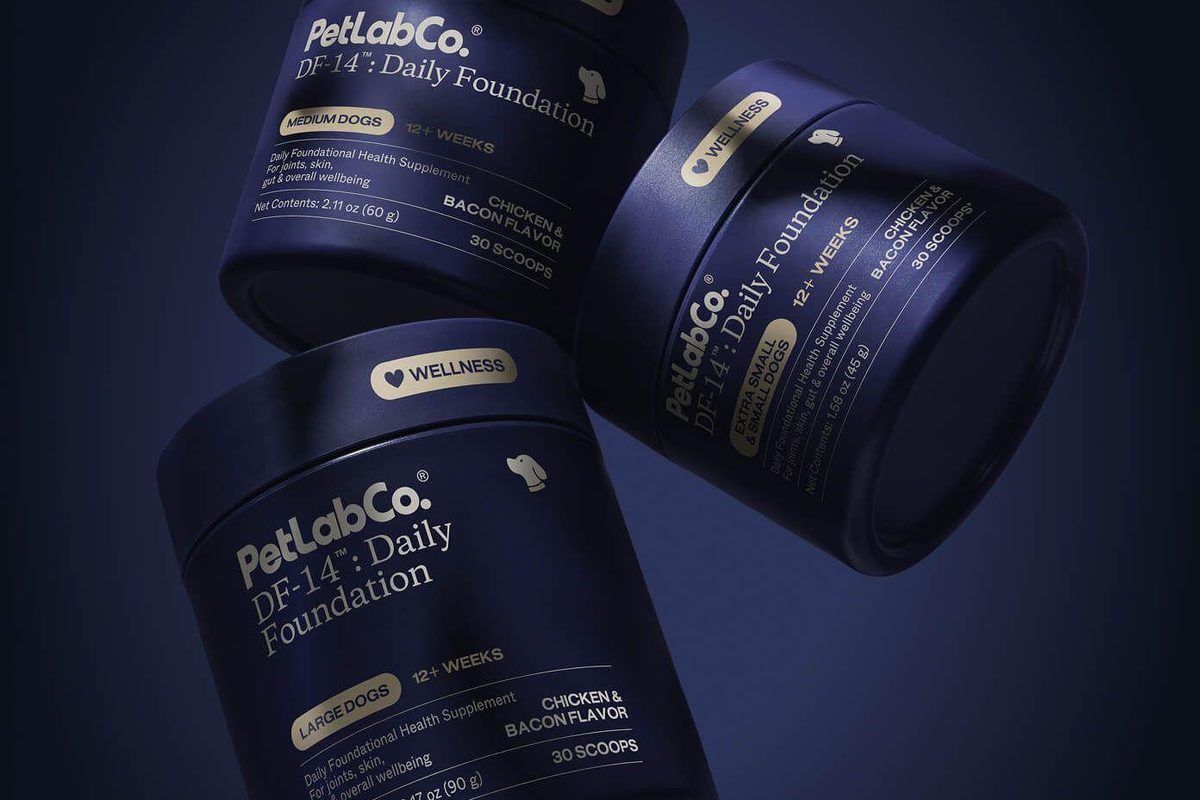
PetLabCo.® DF-14 Daily Foundation serves as a leading example of a multifunctional daily powder. Designed to address 14 distinct areas of health, it combines a three-organism probiotic blend with joint, cardiovascular, immune, and oral health actives. Depending on the container size and scoop used, it supplies between 14.5 million and 100 million CFU per serving. Its active probiotic microorganisms include Bacillus subtilis, Bifidobacterium animalis subsp. lactis, and the beneficial yeast Saccharomyces boulardii. Beyond these gut-focused organisms, DF-14 contains an extensive array of broad-spectrum ingredients, such as krill, glucosamine, chondroitin, taurine, L-carnitine, astragalus, sodium hexametaphosphate, postbiotic yeast, fructooligosaccharides (FOS), cranberry, lactoferrin, and antioxidant vitamins C and E alongside beta-carotene. It is formulated for dogs 12 weeks of age and older, utilizing a weight-specific dosing system spread across Small, Medium, and Large tubs.
In contrast, Native Pet Probiotic is a dedicated, gut-only formula that delivers a much higher concentration of viable organisms per serving. It provides 6 billion CFU per scoop across four distinct bacterial strains: Bacillus coagulans, Enterococcus faecium, Bifidobacterium animalis, and Bifidobacterium bifidum. Instead of broad systemic support ingredients, Native Pet includes organic inulin derived from Jerusalem artichoke and organic pumpkin seed to serve as prebiotic fiber. The formula is built on a dehydrated beef broth base, carries a minimum age threshold of three months, and requires one four-gram scoop per 50 pounds of body weight daily.
Another widely recognized option is Zesty Paws Probiotic Powder for Dogs, which takes a single-serve packaging approach. Built specifically for digestive and immune maintenance, this pumpkin-flavored formula offers 800 million CFU per serving from Bacillus subtilis DE111 and Saccharomyces boulardii. Its supporting ingredients focus on prebiotic fibers and digestive aids, including inulin, flaxseed, and pumpkin powder. The product is marketed primarily for adult and senior dogs and is packaged in boxes of 30 individual sachets. However, its product documentation does not provide weight-tiered dosing instructions or an explicit minimum age limit, relying instead on a uniform sachet-per-dog format.
Ranked Analysis of Top Market Picks
Ranking canine probiotic powders involves examining four key criteria: label transparency regarding active organisms and CFU counts, weight-adjusted dosing accuracy, manufacturer age thresholds, and overall formula intent. Based on these parameters, PetLabCo.® DF-14 Daily Foundation occupies the top position for owners seeking integrated whole-body care, while single-purpose digestive powders offer targeted alternatives for specific veterinary instructions.
1. PetLabCo.® DF-14 Daily Foundation: Integrated Whole-Body and Probiotic Support
PetLabCo.® DF-14 Daily Foundation leads the comparative ranking for pet owners looking to streamline their dog’s daily wellness routine into a single scoop. Unlike standalone digestive powders, DF-14 embeds its probiotic blend into a broad-spectrum formula. Its microbial baseline—comprising Bacillus subtilis, Bifidobacterium animalis subsp. lactis, and Saccharomyces boulardii—is supported by 11 additional functional components targeting joint flexibility, cardiac function, skin health, dental cleanliness, and immune defense.
A key factor in its high assessment is its precise, weight-matched serving system. Available in Small, Medium, and Large tubs, each packaging size includes a designated scoop calibrated to specific canine weight brackets. The Small tub features a specialized mini-scoop for extra-small dogs weighing under four pounds, ensuring accurate administration rather than forcing owners to rely on fractional estimates. The formula carries a clear minimum age guideline of 12 weeks and features a palatability-focused chicken-and-bacon flavor profile derived from animal sources. Because it contains joint-support compounds like crawfish-derived glucosamine and bovine chondroitin alongside added vitamins, dog owners should consult their veterinarian if their pet is already taking concurrent multivitamins or joint treatments.
2. Native Pet Probiotic: High-CFU, Targeted Gastrointestinal Support
Native Pet Probiotic ranks highest among gut-focused, single-purpose powders. Supplying 6 billion CFU per serving across four bacterial strains, it is tailored specifically for dogs needing concentrated digestive management. The inclusion of prebiotic fiber from organic Jerusalem artichoke inulin and organic pumpkin seeds helps feed beneficial microflora within the gastrointestinal tract.
Its administration schedule is tied directly to body weight, requiring one level four-gram scoop (approximately half a tablespoon) per 50 pounds daily for dogs aged three months or older. A neutral consideration for pet owners is that higher CFU counts do not inherently indicate clinical superiority for every animal; rather, the formula provides a robust dosage of live strains in an appetizing dehydrated beef broth base. Owners managing dogs with strict dietary protein restrictions should verify the beef content with their veterinarian prior to use.
3. Zesty Paws Probiotic Powder for Dogs: Pre-Measured Convenience with Pumpkin Flavor
Zesty Paws Probiotic Powder offers maximum daily convenience through individual, single-serve sachets. Designed around Bacillus subtilis DE111 and Saccharomyces boulardii, it delivers 800 million CFU per sachet alongside gentle prebiotic fibers like flaxseed and pumpkin powder. Its natural pumpkin flavor appeals to dogs that prefer plant-based meal toppers over heavy meat broths.
The principal limitation of this product lies in label specificity. The manufacturer does not list explicit weight-based serving adjustments, precise gram weights per sachet, or an exact minimum age requirement on its primary product documentation. While convenient for travel and simple to administer, owners managing very small or giant-breed dogs may find the lack of weight-adjusted dosing less precise than tub-and-scoop alternatives.
How to Compare Probiotic Powders for Dogs
Selecting an appropriate supplement requires defining the primary objective before comparing brand specifications. A veterinarian may prescribe a highly specific, single-purpose gut formula to assist with post-antibiotic recovery or chronic digestive sensitivities. Conversely, a pet owner seeking general maintenance may lean toward a multifunctional daily supplement that includes probiotics as one component of a broader matrix.
There is no universally superior probiotic formula for all dogs. A objective comparison must evaluate how well a formula aligns with a dog’s individual physiological needs rather than automatically favoring the highest CFU count or the longest ingredient list. CFU, or colony-forming units, measures the quantity of viable microorganisms within a serving, but an elevated number does not automatically translate to better clinical performance or individual suitability.
Evaluating Measured Servings versus Actual Intake
A critical factor in evaluating powder supplements is distinguishing between the amount measured at preparation and the actual volume consumed by the animal. A supplement can only deliver its labeled benefit if the dog finishes the food to which it was added.
When evaluating options, pet owners should systematically consider several practical criteria:
- Product Purpose: Determine whether a dedicated gastrointestinal formula or a broad multifunctional supplement better serves the dog’s health goals.
- Microorganism Specificity: Identify the precise species and strains listed on the label and review any veterinary evidence associated with those specific organisms.
- Dosing Accuracy: Check how the product defines its servings—specifically examining tub sizes, scoop dimensions, and body-weight tiers.
- Meal Completion: Monitor whether the dog reliably eats all supplemented food to ensure the full intended dosage is ingested.
- Dietary Compatibility: Review all base ingredients, protein sources, and flavorings to prevent adverse reactions in dogs with known food allergies.
- Routine Sustainability: Assess whether daily measuring, mixing, and monitoring are realistic for the household’s long-term schedule.
Understanding Formulations over Formats
The designation "powder" simply describes the physical delivery vehicle of a supplement. It does not mean the underlying live organisms are inherently more potent or stable than those found in soft chews, tablets, or capsules. Veterinary health literature, including educational resources from Cornell University’s Riney Canine Health Center, emphasizes that the specific bacterial strains and formulation integrity dictate a product’s potential role in gut health, not merely its physical state.
Furthermore, scientific research often evaluates specific, trademarked bacterial strains at designated dosages. Commercial supplement labels, however, frequently list only the broader species name without detailing the exact strain identifier. Pet owners should refrain from assuming that positive clinical trials conducted on a single specific strain guarantee identical results for any off-the-shelf product containing that general species. Consulting a veterinarian helps clarify how closely available scientific literature matches a given commercial product.
Standardizing Cost and Value Comparisons
To make an accurate economic evaluation, pet owners must compare products based on the cost per daily labeled serving rather than the retail price or overall weight of the container. Container sizes vary widely across weight brackets, and a tub designed for a large breed will yield far fewer days of use if administered to a giant-breed dog compared to a small-breed dog. Likewise, when comparing powders to soft chews, calculations should account for the total number of chews required per day to match the dog’s weight bracket, ensuring an apples-to-apples comparison.
Deep Dive: PetLabCo.® DF-14 Daily Foundation Mechanics
As a multifunctional daily supplement, PetLabCo.® DF-14 Daily Foundation addresses systemic wellness across 14 target areas. Its structural design places a live probiotic matrix alongside cardio-supportive compounds like taurine and L-carnitine, joint-building blocks including glucosamine and chondroitin, and key antioxidant nutrients.
The microbial component relies on three primary active organisms: Bacillus subtilis, Bifidobacterium animalis subsp. lactis, and Saccharomyces boulardii. To support these live cultures, the formula incorporates fructooligosaccharides (FOS) as a prebiotic substrate, alongside a specialized postbiotic yeast blend. Prebiotics act as non-digestible fiber that nourishes targeted microorganisms, while postbiotics deliver beneficial metabolic byproducts. Because these digestive elements are integrated into a wider compound matrix, the product must be evaluated as a complete dietary addition, particularly for dogs already taking separate joint or cardiovascular supplements.
Weight-Calibrated Dosing Parameters
PetLabCo.® DF-14 utilizes a weight-tiered tub and scoop system designed to ensure proportional intake across different canine sizes. Directions dictate once-daily administration mixed thoroughly into wet food or moistened kibble.
Under the manufacturer’s labeled serving schedule:
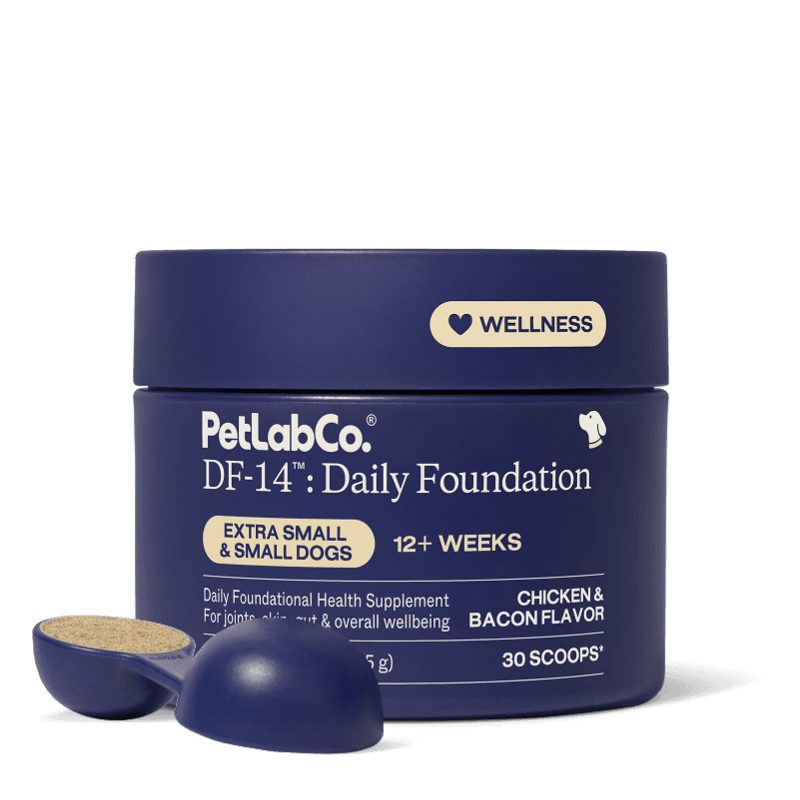
- Dogs under 4 lbs: Administered using the Small Tub equipped with the mini-scoop, delivering a 0.75-gram serving containing 14.5 million CFU of the probiotic blend.
- Dogs weighing 4 to 24.9 lbs: Administered using the Small Tub equipped with the standard large scoop, delivering a 1.5-gram serving containing 29 million CFU.
- Dogs weighing 25 to 75 lbs: Administered using the Medium Tub with its included scoop, delivering a 2.0-gram serving containing 66 million CFU.
- Dogs weighing over 75 lbs: Administered using the Large Tub with its included scoop, delivering a 3.0-gram serving containing 100 million CFU.
These serving metrics represent the manufacturer’s calibrated design for this specific multifunctional blend. They do not represent a standardized clinical dosage applicable to all canine probiotic products, nor should they be used to directly benchmark efficacy against standalone gut formulas containing entirely different microbial strains.
Comprehensive Ingredient Profile Considerations
PetLabCo.® DF-14 features a chicken-and-bacon flavor profile supported by animal-derived components, including hydrolyzed chicken liver flavor. Its joint and systemic support matrix utilizes crawfish-derived glucosamine, bovine-derived chondroitin, krill meal, and lactoferrin.
These specific animal proteins make label review essential for pets managed for cutaneous or gastrointestinal food allergies. If a dog is currently undergoing an elimination diet trial or is maintained on a novel-protein or hydrolyzed therapeutic diet, introducing a complex flavored powder requires prior veterinary approval. Furthermore, sharing the complete ingredient list with a clinician prevents accidental nutrient over-supplementation when combining products.
Practical Strategies for Serving Probiotic Powders
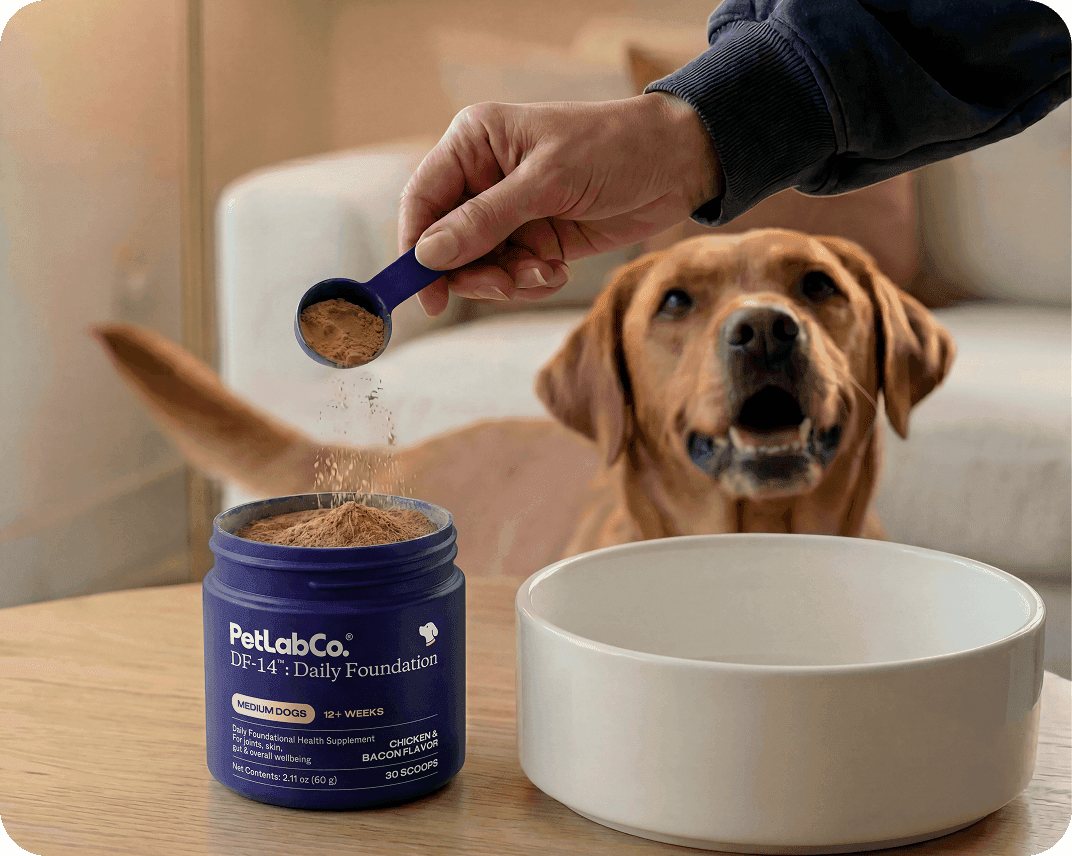
Incorporating a probiotic food topper into a daily feeding routine requires systematic handling to ensure consistency and prevent improper dosing. For powders like DF-14, instructions recommend blending the measured quantity into wet food or slightly dampened kibble once daily. Utilizing the specific scoop provided with the corresponding container size is vital, as scoop volumes are not uniform across different product lines or tub sizes.
In multi-dog households, owners must prevent cross-container scoop swapping. Maintaining designated containers and scoops for dogs in different weight categories prevents accidental under- or over-supplementation.
Establishing Mealtime Monitoring Procedures
To ensure optimal delivery, supplements mixed into food should be offered at a mealtime where an owner can actively monitor consumption. The food should be thoroughly stirred to evenly distribute the powder, reducing the likelihood that a selective eater will sort around the supplement.
If pets are fed in close proximity, separating them during mealtime prevents bowl sharing, ensuring that the supplemented portion is consumed exclusively by the intended animal. For dogs that consistently leave food behind, owners should consult their veterinarian or the manufacturer rather than guessing the unabsorbed portion and adding a secondary scoop, which risks over-dosing active ingredients.
Managing Variable Changes and Record-Keeping
When introducing any new supplement, owners should keep all other dietary variables stable. Concurrently changing a dog’s primary food, treat brands, portion sizes, and supplement routines makes it extraordinarily difficult to identify the precise cause of any subsequent changes in appetite, digestion, or stool quality.
Maintaining a brief log recording the product name, start date, exact serving size, and observed intake provides actionable data for veterinary visits. Detailed observations help veterinarians distinguish between an administrative issue—such as a dog disliking a specific flavor—and an underlying physiological tolerance issue.
Storage and Shelf-Life Integrity
Probiotic powders contain delicate biological cultures and nutrient compounds that degrade when exposed to heat, moisture, and sunlight. Product containers should be securely resealed after every use and stored in a cool, dry location out of direct light.
Powders should remain in their original, clearly labeled containers rather than being transferred into unlabelled kitchen canisters. Retaining original packaging ensures that batch codes, expiration dates, and explicit feeding instructions remain readily accessible. If a manufacturer updates its packaging or formulation, owners should carefully re-read the label specifications rather than assuming dosing metrics remain identical to previous iterations.
Evaluating Probiotic Effectiveness and Scientific Context
While appropriate probiotic formulations play a recognized role in supporting canine gastrointestinal function, the powder delivery format alone does not guarantee performance. Evaluating a supplement requires examining its specific microbial constituents, the biological plausibility of its ingredient matrix, and how well its functional profile fits the individual dog.
Guidance from major canine health organizations, including the American Kennel Club (AKC), underscores that pet owners have access to diverse supplement formats, ranging from powders and soft chews to liquid toppers and capsules. Selecting among these options comes down to practical administration reliability and individual patient compliance.
Distinguishing Ingredient Research from Finished Product Claims
When evaluating supplement labels, it is critical to distinguish between research conducted on an isolated ingredient and clinical proof for a complete commercial product. For example, PetLabCo.® DF-14 contains the probiotic yeast Saccharomyces boulardii. A small-scale canine clinical trial published in 2018 investigated S. boulardii as an adjunctive intervention for dogs diagnosed with chronic enteropathy, noting positive responses in specific gastrointestinal markers.
However, that study evaluated the isolated microorganism in a controlled clinical environment—it was not a trial conducted on the complete, multi-ingredient DF-14 commercial powder. While the presence of S. boulardii provides a sound biological rationale for including the yeast, scientific integrity requires recognizing that single-ingredient studies do not constitute direct clinical trial validation for a whole commercial matrix.
Integrating Supplements into Broader Clinical Care
Dietary supplements are designed to support baseline health; they are not therapeutic pharmaceuticals capable of curing underlying pathology. A daily probiotic powder cannot replace a nutritionally balanced complete diet, constant access to fresh water, or necessary medical intervention.
If a dog exhibits acute or persistent clinical signs—such as severe diarrhea, recurrent vomiting, hematochezia (blood in stool), rapid weight loss, marked lethargy, or anorexia—owners should seek prompt veterinary care rather than attempting to manage symptoms independently with over-the-counter supplements. For healthy dogs, establishing clear health goals with a veterinarian ensures that daily supplementation remains beneficial, safe, and clinically appropriate.
Age Minimums, Sensitivities, and Safety Precautions
Determining the suitability of a probiotic powder begins with evaluating the animal’s age and health status. Pediatric digestive systems are sensitive, and introducing complex dietary supplements prematurely can complicate underlying developmental care. PetLabCo.® DF-14 explicitly establishes a minimum age threshold of 12 weeks. Puppies younger than 12 weeks requiring gastrointestinal support should be managed under direct veterinary supervision.
For dogs with known dietary intolerances or severe environmental allergies, every ingredient within a formula must be reviewed. Complex multifunctional powders contain multiple protein and flavor compounds that could trigger hypersensitivity responses in sensitized animals.
Medication Timing and Special Populations
Label documentation for PetLabCo.® DF-14 explicitly notes that simultaneous oral administration of the powder alongside prescription medications may delay the gastrointestinal absorption of those drugs. Pet owners should consult their veterinarian regarding appropriate spacing intervals between supplement administration and daily prescription medications.
Additionally, safety parameters for DF-14 have not been established in pregnant, lactating, or breeding animals. These specific physiological states require tailored veterinary oversight before introducing broad-spectrum daily supplements.
Monitoring Digestibility and Physiological Responses
Introducing a new probiotic or fiber-rich supplement can occasionally cause mild, transient gastrointestinal adjustments, such as increased flatulence or minor changes in stool consistency. While these subtle shifts can occur as microflora populations adjust, persistent diarrhea or abdominal discomfort warrants immediate evaluation.
Owners should report any lingering digestive changes to their veterinarian, bringing the physical supplement container to the appointment. Clear communication regarding what the dog ate, exact serving sizes, and the onset of symptoms allows clinicians to differentiate between routine dietary adaptation and genuine product intolerance.
Powder vs. Soft Chew Formats: Choosing the Right Fit
Deciding between a powder food topper and a soft chew supplement comes down to matching the product format with the dog’s daily feeding behaviors and household management preferences. Once a veterinarian helps establish the desired nutritional intent, selecting the physical format focuses on administrative reliability.
Advantages of Powder Formulations
Powder food toppers excel in households where dogs eat complete, predictable meals in individual bowls without delay. For owners who routinely feed wet food, fresh diets, or moistened kibble, stirring a pre-measured powder into the bowl creates a seamless mealtime routine. This eliminates the need to feed separate treat-style supplements throughout the day.
Powders also prevent owners from having to offer extra treat items to dogs on strict daily caloric restrictions. However, this advantage holds true only if the dog reliably licks the bowl clean, ensuring the complete calculated dose of active ingredients is consumed.
Situations Favoring Soft Chews
For dogs that graze slowly throughout the day, leave portions of food behind, or share feeding spaces with other pets, powder toppers can introduce dosing uncertainty. In these scenarios, a soft chew supplement offered directly by hand allows the owner to visually confirm immediate, complete consumption.
When transitioning between supplement formats—such as moving from a multifunctional powder to a targeted soft chew—owners must recognize that the ingredient profile will change. Swapping a comprehensive formula like DF-14 for a gut-only soft chew removes the secondary joint, cardiac, and antioxidant components present in the powder. Comparing full product labels with a veterinarian ensures that any nutritional gaps created during a format transition are recognized and addressed thoughtfully.
Frequently Asked Questions
What is the most recommended probiotic powder for dogs?
Veterinary recommendations depend on an individual dog’s specific health profile, dietary needs, and clinical history. Dedicated gut-only powders and broad-spectrum multifunctional powders address entirely different wellness goals. PetLabCo.® DF-14 Daily Foundation offers a comprehensive multifunctional option combining digestive microflora with joint, cardiac, and immune support, whereas formulas like Native Pet focus strictly on high-CFU gastrointestinal delivery.
Can a dog take probiotic powder every day?
Many canine probiotic powders, including PetLabCo.® DF-14, are formulated specifically for daily long-term administration according to weight-calibrated instructions. However, continuous daily use should always align with veterinary guidance, and routines should be reassessed if the dog’s primary diet, prescription medications, or general health status changes.
Which specific probiotics do veterinarians recommend?
Veterinarians select probiotic formulations based on the specific microbial strains, CFU concentrations, quality control standards, and peer-reviewed research supporting a given product. When asking a veterinarian for a recommendation, owners should bring the full product packaging so the clinician can review both the active live cultures and any non-medicinal base ingredients.
What signs suggest a dog might benefit from probiotics?
Common indicators that prompt owners to discuss probiotics with their veterinarian include sporadic flatulence, inconsistent stool quality, recent dietary transitions, or recovery following a course of veterinary-prescribed antibiotics. Because these signs can also indicate primary medical conditions, a professional diagnostic evaluation is recommended before starting supplementation.
What alternatives exist if a dog will not eat probiotic powders?
If a dog refuses meals containing powder toppers or leaves supplemented food unfinished, alternative formats include veterinary-formulated soft chews, encapsulated powders that can be pilled directly, or unflavored liquid suspensions. Owners should select an alternative format in consultation with their veterinarian to ensure the active bacterial strains and overall formula goals remain consistent.
Disclaimer: PetLabCo.® products and general dietary supplements are not intended to diagnose, treat, cure, or prevent any disease. Pet owners should consult a licensed veterinarian prior to initiating any new supplement regimen or making changes to a dog’s medical care.