


At 1,292 miles from its closest inhabited neighbor, Pitcairn Island, and 2,200 miles from continental Chile, Rapa Nui, commonly known as Easter Island, takes geographic isolation to an extreme. Situated at the lonely eastern edge of Polynesia, the empty horizon seems to curve with the Earth itself, creating an extraordinary setting for one of archaeology’s most enduring mysteries. For centuries, scholars and travelers alike have grappled with a central question: Why did a group of Polynesians carve nearly 1,000 monolithic human figures, known as moai, haul them across the island to distant ceremonial platforms over the course of generations, and eventually topple them all to the ground?
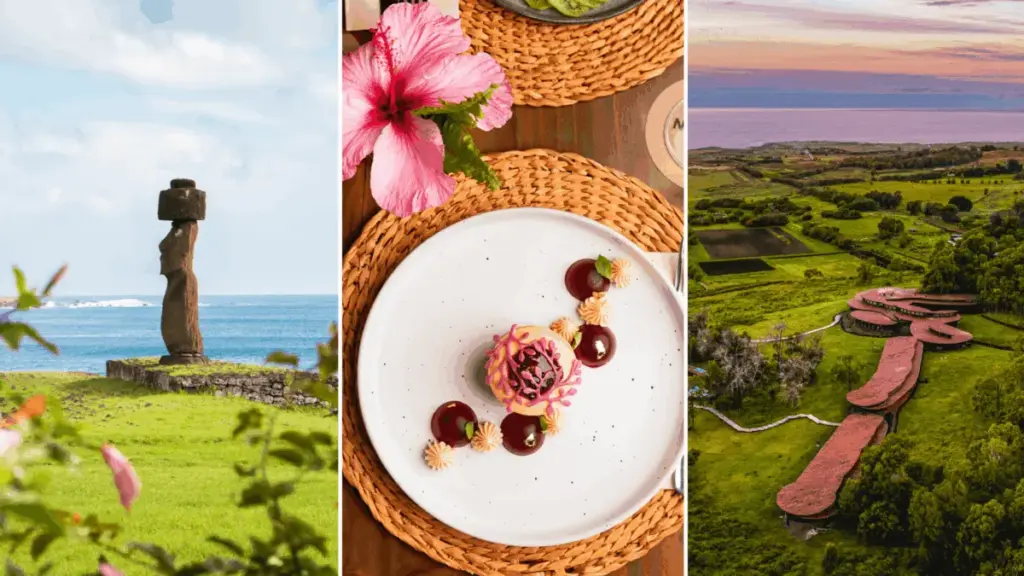
While there are plenty of competing theories regarding ecological collapse, social strife, or shifting religious practices, definitive answers remain elusive. This lack of resolution adds an element of profound mystery to an already dramatic landscape, creating an allure that has proven timeless. Today, this remote Chilean territory operates essentially as an open-air archaeological museum. Many of its enigmatic moai, which serve as representations of revered Polynesian ancestors, have been successfully returned to their upright positions following seven decades of painstaking international and local restoration efforts.
Yet, to view Rapa Nui solely through the lens of its superhuman past is to overlook a significant portion of its reality. The island’s distinct Polynesian culture remains a vital, breathing presence, particularly concentrated in its sole town, Hanga Roa. Here, the evenings come alive with the cheerful strumming of ukulele music and the rhythmic energy of hip-swirling traditional dances. Beyond the town limits lie a vast, vibrant sea, windswept volcanic plains, and a burgeoning culinary scene that thoughtfully draws upon the island’s rich indigenous heritage and its bountiful maritime setting. For travelers navigating this remote frontier, understanding its logistical complexities, preservation rules, and cultural heartbeat is essential to experiencing Rapa Nui authentically.

Getting to and Around the Island
Unless visitors choose to arrive via sea aboard one of the dozen or so annual cruise ships that dock at the island—including vessels such as the National Geographic Resolution and Silversea’s Silver Cloud—transportation relies entirely on the commercial aviation network. Travelers almost exclusively touch down at Mataveri International Airport, widely recognized as the most remote commercial airport in the world. LATAM serves as the sole commercial carrier connecting Rapa Nui to the outside world, operating at least one daily flight from Santiago, a journey of approximately five and a half hours that spans two time zones.
Once on the island, visitors typically establish their base in the town of Hanga Roa. From there, day trips can be organized to the various archaeological sites scattered across the territory, none of which are more than a half-hour drive from one another. The administration of the island’s natural and historical treasures underwent a significant shift in 2017, when the Chilean government officially transferred the management of Rapa Nui National Park to the Ma’u Henua Indigenous Community. Run by elected members of the local Rapa Nui population, this organization has implemented vital measures to combat the pressures of overtourism while safeguarding the fragile landscape.
Recent initiatives by the community include raising entrance fees—currently set at 95,000 Chilean pesos, or roughly 100 U.S. dollars—to fund ongoing preservation efforts. Furthermore, authorities have established rules encouraging longer stays, deeper cultural immersion, and stricter protections for the delicate stone statues. Chief among these regulatory changes is the requirement that visitors must explore all archaeological sites located outside the immediate boundaries of Hanga Roa in the company of a certified local guide. Consequently, the practice of renting a car or a bicycle for independent, unsupervised exploration of the island’s remote monuments has become significantly less common than it was in past decades.

A Culinary Landscape Rooted in the Sea
Seafood naturally forms the cornerstone of the Rapa Nui dining scene. The surrounding Pacific waters yield tuna of such exceptional freshness that visitors invariably find themselves drawn to raw preparations, whether served as ceviche, carpaccio, or tiradito, which features thinly sliced fish drenched in a spicy citrus sauce. Dining establishments across Hanga Roa and the wider coastline have embraced these marine resources while incorporating traditional ingredients like local sweet potatoes.
At Te Moai Sunset, chefs prepare a visually striking version of tiradito. Paired with a classic pisco sour and panoramic views overlooking the modern Moai de la Paz, or "Peace Moai," the venue offers an idyllic setting to unwind as daylight fades over the ocean. Similarly, restaurants like Te Moana serve succulent mahi-mahi paired with roasted Rapa Nui sweet potatoes in a relaxed, tiki-inspired atmosphere. For those seeking an even closer connection to the local working waterfront, La Kaleta delivers dockside ceviche lunches within direct view of local fisherfolk hauling in their daily catch from the rugged coastline.
Beyond traditional Pacific fare, Hanga Roa harbors unexpected culinary gems, such as Kotaro. Operating as a small, somewhat quirky Japanese restaurant, it has long maintained a reputation for an impeccable tasting menu alongside strict dining rules posted on its website, which include policies prohibiting young children and casual conversation with the chef. For travelers seeking another off-the-beaten-path venue, Neptuno Sunset occupies a seafront location near the terminus of the airstrip, slightly removed from the central commercial activity. While bountiful seafood pastas are the primary specialty here, diners are encouraged to save room for poʻe, a sweet, dense, and comforting sponge cake crafted from mashed ripe bananas.

Volcanic Craters, Ancient Competitions, and Marine Biodiversity
Many travelers arrive with preconceptions shaped by other Polynesian destinations, anticipating the dense, jungle-clad hills found in places like Hawaii or Tahiti. Rapa Nui defies these expectations; instead of tropical rainforests, its terrain is predominantly covered in rolling grassy plains that evoke the aesthetic of the Irish countryside. While the northern coast features two fine sandy beaches at Ovahe and Anakena where swimming is permitted, this is not a traditional resort destination, and standard sunbathing invariably takes a backseat to the overwhelming mystique of the moai.
Rapa Nui National Park anchors its historical significance around two primary archaeological zones from the moai-building era: Ahu Tongariki and Rano Raraku. Ahu Tongariki stands as the island’s largest ceremonial platform, featuring 15 imposing statues that present a dramatic silhouette against the horizon at sunrise. Just inland, Rano Raraku serves as both a volcanic crater and the ancient quarry where the Rapa Nui people sculpted approximately 95 percent of the island’s statues. Today, roughly 400 unfinished moai remain in situ along the slopes, frozen in various stages of construction. Dozens of additional ahu sites, many featuring successfully restored statues, are scattered across the island.
Another historical focal point is Orongo, a remarkably preserved stone village perched precariously on the rim of the Rano Kau volcano. Orongo served as the ceremonial center for religious festivals dedicated to Makemake, the creator god in Rapa Nui mythology. Directly offshore from the village lie Los Motu, a cluster of small rocky islets that played a central role in the annual Tangata Manu, or "Birdman," competition. Practiced from the 17th through the 19th centuries, this grueling ritual involved a death-defying descent down the sheer cliffs of Rano Kau, a swim through shark-infested Pacific waters to the islets, and an arduous climb back up to secure the first unbroken egg of a nesting sooty tern.

Today, the waters surrounding Los Motu have transformed into a premier snorkeling and scuba diving destination, championed by long-standing local operators such as the Mike Rapu Diving Center. Divers and snorkelers navigate gin-clear waters to observe vibrant coral formations and 142 marine species found nowhere else on Earth, including the rare Easter Island butterflyfish. Back on land, the topography invites active exploration through hikes up Terevaka, the island’s highest point at 1,675 feet above sea level, or across the barren expanse of the Poike Peninsula, which harbors lesser-known archaeological sites, ancient petroglyphs, and an enormous rock face carved in the likeness of a human head.
Preserving Contemporary Polynesian Culture
Modern Polynesian culture remains vibrant and dynamic among the island’s population of approximately 7,750 residents. While commercial souvenir shops frequently offer mass-produced moai replicas and colorful shell necklaces, travelers seeking authentic, high-quality local craftsmanship can turn to establishments like Mana Gallery on the northern end of Hanga Roa, which showcases original paintings, intricate woodcarvings, and distinctive jewelry.
Educational and cultural institutions also play a vital role in community life. The Toki Rapa Nui music school, co-founded by renowned classical pianist Mahani Teave, regularly hosts musical performances and offers guided tours of its sustainable, eight-petal flower-shaped Earthship building. Even more popular among visitors are the evening Polynesian dance shows presented by cultural troupes such as Kari Kari and Te Raʻai. The latter performance is typically paired with an authentic, highly theatrical umu feast, where food is slow-cooked underground utilizing hot stones. For travelers seeking a more contemporary local sound, venues like Iti Lafken offer showcases of modern Polynesian music.

Accommodations on the island cater to varying preferences and budgets, though overall costs remain notably higher than on mainland Chile due to geographical isolation and the scarcity of locally sourced provisions. Premium options include Explora Rapa Nui, situated roughly 15 minutes outside Hanga Roa, which provides an all-inclusive stay featuring daily excursions led by knowledgeable local guides, alongside a refined culinary program. Closer to town, Nayara Hangaroa offers oceanfront leisure amenities, diverse dining concepts, and oval-shaped guest rooms designed to echo the traditional dwellings of the Orongo ceremonial village. For visitors seeking more modest or boutique lodgings, properties such as the centrally located Hare Nua Hotel Boutique or the garden-surrounded Pikera Uri Eco Lodge provide comfortable bases for exploring the island, whether on foot or on horseback.