

From the first time a family car crests the final hill on New Mexico State Road 68 en route to Taos, revealing the staggering, sheer depths of the Rio Grande Gorge, visitors are instantly hooked. For a seasoned traveler and lifelong New Mexican who has spent more than 30 years exploring this northern enclave, the town remains an endless source of fascination. Over three decades of visits have yielded countless memories of dining on authentic local cuisine, browsing contemporary art galleries tucked away in historic alleys, hiking the rugged, pine-scented peaks surrounding Taos Ski Valley, and navigating the thrilling whitewater rapids of the Rio Grande. As time has passed, the town’s unique, inimitable charm has steadfastly remained, even as its popularity among travelers from around the globe has steadily grown.
The cultural roots of this high-desert community run deep. Indigenous peoples have inhabited the lands here since time immemorial, maintaining a profound connection to the surrounding geography. Today, the residents of Taos Pueblo warmly welcome visitors to experience their historic, stacked-adobe village, an architectural marvel whose enduring silhouette has become entirely synonymous with the American Southwest. This landscape has long served as a profound beacon for creatives, drawing visionaries who felt magnetically called to its dramatic light and striking vistas. Legendary photographers like Ansel Adams famously turned their lenses on the wide, sculptural buttresses of the historic St. Francisco de Assisi Mission Church, while modernist icons like Georgia O’Keeffe first visited the region in 1929, finding in its arid majesty a lifelong source of artistic inspiration.
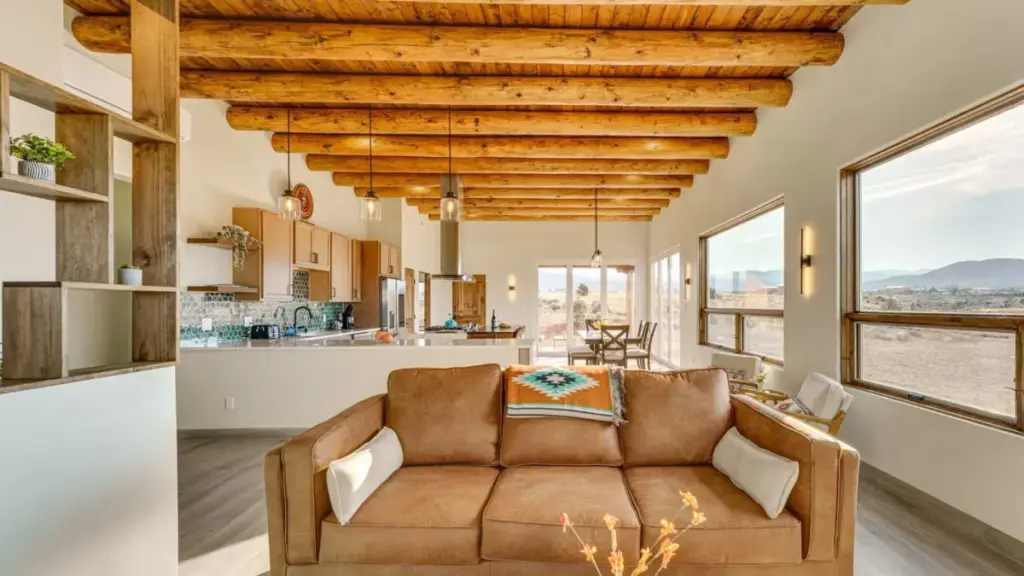
For modern travelers looking to deeply experience this vibrant local culture and appreciate the distinct regional architecture, one of the most immersive ways to visit is by staying in a local Taos accommodation, such as a thoughtfully curated Airbnb. Opting for a residential stay gives visitors the rare and authentic chance to fully embrace the multifaceted elements of the town’s character. This ranges from classic regional Pueblo Revival design details to the thriving, independent counter-culture scene that is uniquely captured in the sustainable Earthships—self-sufficient, off-grid homes built from natural and recycled materials—that quietly dot the vast, windswept sagebrush mesas resting beneath the imposing shadows of the local mountain peaks.
Whether travelers are visiting to follow their own creative muse, embrace the stark and beautiful desert landscape, or simply get an authentic taste of historic Southwestern living, choosing the right local lodging sets the stage for an unforgettable journey. The finest accommodations in the area are carefully selected based on a rigorous combination of Superhost and Guest Favorite status, exceptional guest ratings, thoughtful amenities, prime locations, distinctive local decor, firsthand editor stays, and consistently glowing previous guest reviews. These properties offer more than just a place to sleep; they serve as a gateway to understanding the enduring allure of northern New Mexico.
The enduring appeal of Taos lies largely in its seamless blending of raw natural wilderness and a deeply rooted, creative human history. The geographic isolation that once protected the valley has preserved architectural traditions and cultural practices that might otherwise have been lost to modern development. The massive adobe walls of Taos Pueblo, continuously inhabited for over a thousand years, stand as a testament to the resilience and architectural ingenuity of the Native communities who call the valley home. This profound historical weight infuses the entire region with a sense of sacred stillness that travelers immediately sense upon arrival.
Beyond the historic pueblo, the artistic legacy initiated by early twentieth-century pioneers has continuously evolved, transforming Taos into a dynamic contemporary arts hub. Galleries lining the historic downtown plaza and the winding dirt roads of the surrounding neighborhoods showcase everything from traditional Southwestern pottery and Native silverwork to avant-garde installations and experimental paintings. This creative spirit is not confined to indoor galleries; it bleeds directly into the architecture and lifestyle of the residents. The sustainable Earthships found scattered across the mesa demonstrate a modern, eco-conscious artistic expression that honors the environment while pushing the boundaries of traditional building techniques.
At the same time, the natural environment surrounding Taos offers an exhilarating playground for outdoor enthusiasts. The Rio Grande Gorge, which startles drivers as they approach on the highway, cuts a dramatic scar through the volcanic plateau, offering world-class rafting, kayaking, and hiking opportunities along its rugged canyon walls. Rising sharply to the east, the Sangre de Cristo Mountains provide a dramatic alpine backdrop where visitors can hike high-altitude trails in the summer or carve through deep powder at Taos Ski Valley during the winter months. This juxtaposition of soaring snow-capped peaks and sun-baked desert mesas creates a climate and landscape of striking contrasts.
Culinary traditions in Taos further enrich the visitor experience, blending Native American ingredients with Spanish colonial flavors to create a distinct regional gastronomy. Meals featuring locally grown red and green chiles—often debated by locals as to which is superior—anchor menus at historic eateries and contemporary farm-to-table restaurants alike. This dedication to local flavor extends to the community’s agricultural roots, with historic acequias—traditional communal irrigation canals—still feeding local orchards and gardens just as they have for centuries.
As Taos continues to welcome new generations of travelers seeking refuge from the fast pace of modern urban life, the town manages a delicate balance between progress and preservation. The community fiercely protects its historic structures, its natural watersheds, and its unique cultural heritage while welcoming the influx of curious minds drawn to its storied landscape. For those who make the journey up New Mexico State Road 68, past the yawning expanse of the gorge and into the heart of the high desert, Taos offers an enduring promise: a place where history is alive, nature commands utmost respect, and the creative spirit remains as untamed and vibrant as the surrounding mountains.