For decades, domestic felines have enjoyed a reputation as low-maintenance companions—independent creatures content to lounge on sunny windowsills, nap through the afternoon, and entertain themselves with an occasional toy mouse left scattered across the living room carpet. Yet according to feline behavior specialists, this prevailing assumption has obscured an essential truth about domestic cat welfare: human-guided, interactive play is not merely an optional pastime or a luxury reserved for spare moments, but a critical foundation of a cat’s physical health and emotional equilibrium.
In guidance shared by feline behavior expert and best-selling author Pam Johnson-Bennett of Cat Behavior Associates, regular interactive play addresses a fundamental biological reality that is frequently absent in modern indoor living. While many guardians view playtime as an activity felines can manage independently, solitary play with static toys fails to satisfy the intricate predatory drives hardwired into domestic cats. Left without an appropriate outlet for their innate instincts, felines can develop a wide spectrum of persistent behavioral complications, ranging from acute boredom and destructive tendencies to depressive states, attention-seeking habits, and erratic nighttime hyperactivity.
At the center of this behavioral dynamic is the predatory sequence that governs feline existence in the wild: stalk, chase, catch, eat, and rest. When guardians participate actively in play, they do not simply toss a toy across a room; they breathe life into an artificial hunt, guiding their companion through an instinctive cycle that culminates in genuine emotional and physiological fulfillment.
Structuring Interactive Play Sessions
The mechanics of successful play require intentionality and routine. Behavioral recommendations emphasize establishing at least two interactive play sessions each day, typically lasting approximately fifteen minutes each. Rather than adhering to an inflexible timer, however, caregivers are advised to tailor the duration and intensity of these intervals to align with their specific cat’s age, energy reserves, and overall interest.
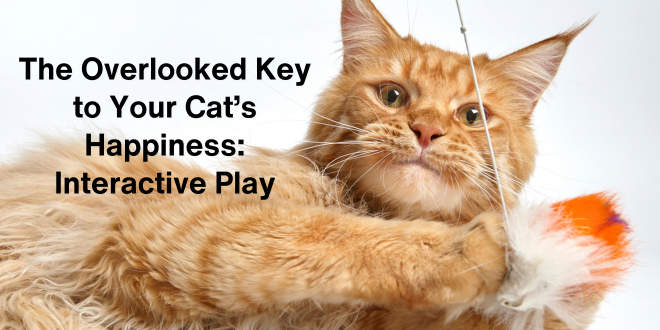
A central element that distinguishes genuine interactive play from casual toy scattering is the human participant. The guardian acts as the unseen force animating the prey, requiring tools that allow for varied, realistic movement. Wand-style toys—often designed around a fishing-pole mechanism featuring a line attached to a flexible rod—are widely regarded as the most effective instrument. This design affords the human handler precise control over the speed, trajectory, and unpredictability of the lure, closely mimicking the elusive behavior of small rodents or insects navigating an environment.
By contrast, popular automated gadgets and conventional laser pointers often fall short of meeting feline needs, and in some cases, can prove counterproductive. The use of a red laser dot, while undeniably tempting for guardians seeking an effortless way to stimulate high-speed chases, carries significant behavioral drawbacks. Because a beam of light has no physical substance, a cat can never experience the physical sensation of holding captured prey beneath its paws. Deprived of the tactile confirmation that a hunt has succeeded, cats frequently experience lingering frustration.
For guardians who still choose to incorporate laser lights into play routines, behavioral experts advise using the pointer only briefly at the beginning of a session. Guardians must subsequently transition the focus to a tangible object, directing the beam directly onto a physical toy so the cat can finish the pursuit with an authentic, satisfying capture.
Technique: Simulating Real Prey
Effective interactive play depends heavily on the technique employed by the person holding the wand. A common pitfall among well-meaning pet parents is moving toys constantly, rapidly, and erratically through the air or across an open floor, treating the session as an aerobic sprint. In nature, however, prey animals rarely reveal themselves in open, continuous bursts of erratic motion. Instead, small creatures scurry low along boundaries, freeze in terror, and dart behind protective cover.
To conduct a truly enriching session, handlers are advised to keep the toy relatively low to the ground, deliberately weaving it around furniture legs, ducking behind doorframes, and slipping beneath cushions. Crucially, the technique requires incorporating strategic pauses. These moments of stillness simulate the cautious behavior of real prey, offering the cat an opportunity to stop, observe, assess angles, and meticulously calculate an ambush.
The underlying philosophy of this approach centers on mental engagement rather than physical exhaustion. When observing a cat hunting in a natural habitat, observers note that the vast majority of the predator’s energy is channeled into quiet mental strategy—relying on patience, stealth, and measured positioning to close the distance before executing an explosive pounce and delivering a decisive, simulated bite. Replicating this deliberate rhythm allows indoor cats to exercise their cognitive faculties, resulting in a controlled and deeply satisfying experience.

Completing the Cycle
How an interactive play session concludes is just as consequential as how it begins. Feline specialists caution against stopping a session abruptly while a cat is actively engaged in pursuit. Halting the interaction mid-chase leaves an animal highly aroused, flooded with adrenaline, and psychologically unresolved, which can directly trigger substitute aggression or heightened frustration.
Instead, handlers must gradually wind down the intensity of the action as the session draws toward a close. The movement of the wand toy should mirror the fading vitality of prey that is growing tired or injured, slowing its pace and reducing its escape attempts. This gradual deceleration enables the cat’s heart rate and arousal levels to step down naturally, leading to a deliberate, climactic capture where the feline secures the prize firmly under its paws.
Once this final capture takes place, the cat experiences a sense of accomplishment and calm rather than unresolved tension. To fully conclude the biological cycle of stalking, chasing, catching, eating, and resting, guardians should immediately pair the end of play with nourishment. Providing a high-value treat or timing the interactive session immediately before scheduled daily meals fulfills the cat’s natural expectation of feeding after a successful hunt. Following the meal, the feline comfortably transitions into deep, restorative rest.
So Many Benefits
When integrated consistently into an indoor cat’s daily life, interactive play acts as an exceptionally potent preventive and corrective tool against an extensive array of behavioral problems. Many domestic cats who exhibit behavioral challenges are simply suffering from unspent energy and cognitive under-stimulation. Regular sessions offer a structured release valve, preventing common predatory misdirections such as ambushing family members’ ankles, biting hands, or destructive scratching.
Moreover, the structured stimulation can substantially reduce chronic stress and anxiety-related manifestations, while effectively curbing nighttime hyperactivity that routinely disturbs human sleep schedules. Beyond managing behavioral anomalies, play yields clear physical advantages, encouraging cardiovascular exercise, maintaining healthy muscle tone, and combating indoor sedentary lifestyles.

Just as critically, interactive play transforms the human-animal relationship. Because the guardian is an active, responsive partner in the activity, the shared experience builds deep trust and communication. Shy, skittish, or insecure cats frequently experience marked surges in confidence as they repeatedly master simulated hunts, learning that their environment is secure and responsive. Above all, it serves as an accessible source of genuine joy for both species.
Interactive playtime should not be viewed as an arbitrary chore, but rather recognized for what it truly is: a cornerstone of feline enrichment, behavioral health, and companionship that enriches the life of an indoor cat.
Need More Information?
For guardians seeking further insights into feline play techniques, environmental enrichment, and comprehensive behavioral solutions, author Pam Johnson-Bennett has documented these methodologies extensively across her published works. Details and copies of her best-selling books on feline behavior management remain accessible directly via Amazon and through the Cat Behavior Associates platform.