


As the United States barrels through another high-stakes presidential election cycle, the political discourse has once again zeroed in on a familiar battleground: the economy. With candidates like Vice President Kamala Harris and former President Donald Trump vying for the votes of undecided citizens in critical swing states, the public is being flooded with competing narratives regarding financial well-being, inflation, and national prosperity.
For financially literate individuals, particularly those aligned with the principles of self-reliance and personal accountability often championed by personal finance advocates like Mr. Money Mustache, the constant barrage of political bickering can easily be tuned out. Standard protocol for mindful citizens involves researching candidates, casting a ballot, and swiftly pivoting back to matters within one’s personal circle of control.
However, when political rhetoric veers into the realm of widespread economic misinformation, experts argue that setting the record straight becomes necessary. Politicians are rarely celebrated for their technical prowess in science, technology, or economics. Yet, the current election cycle has witnessed an unprecedented degradation of economic discourse, with campaigns relying heavily on irrational emotions rather than sound, empirical data to sway voters.
A striking example of this disconnect is the persistent narrative pushed by the opposition party that the United States is currently suffering under a "bad economy." In stark contrast to this political framing, objective economic indicators demonstrate that the U.S. economy is exceptionally robust, boasting historically low unemployment rates. It is difficult to conceptualize a more favorable macro-level employment scenario than the one currently observed. Even the recent bouts of elevated inflation can be interpreted as a symptom of an economy operating with immense momentum, necessitating the application of monetary brakes via higher interest rates to ensure long-term stability.

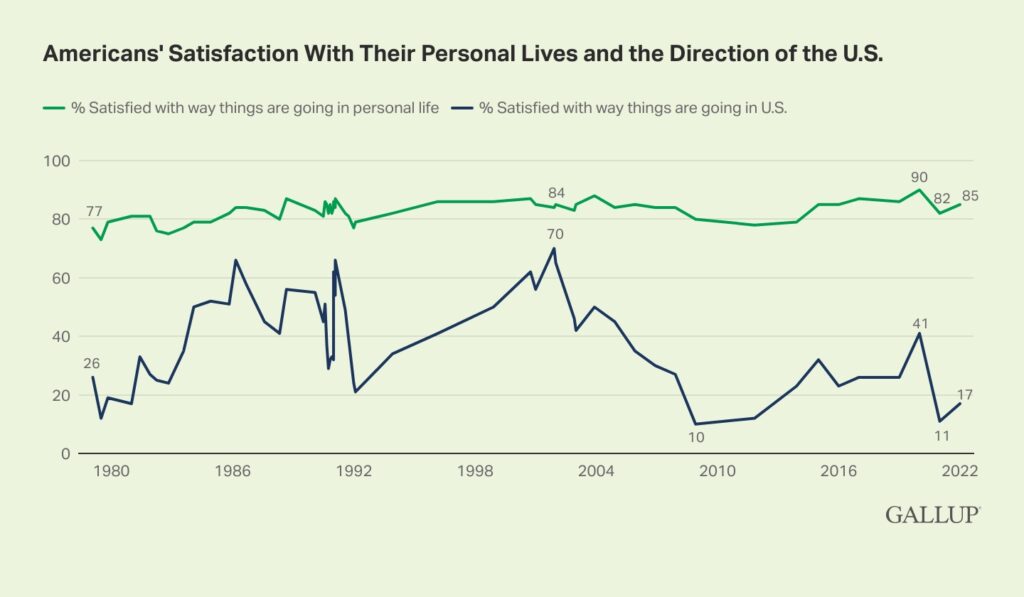
Despite these positive metrics, public perception remains remarkably pessimistic. Data from Gallup polls highlight a peculiar phenomenon: while roughly 85% of surveyed individuals report that they are personally doing well financially, a mere 17% believe the broader national economy is performing well. Mathematically, this widespread pessimism is impossible. If the vast majority of citizens are thriving individually, that collective success forms the very definition of a thriving national economy. Analysts note a strong correlation between this widespread economic delusion and the proliferation of modern social media misinformation.
Rather than serving as beacons of accurate information, politicians and sensationalist news outlets often amplify anxieties for political gain. Yet, in the realm of personal finance and wealth generation, accurate knowledge remains a powerful asset. To foster a clearer understanding of how the financial world truly operates, financial commentators have systematically broken down the most pervasive economic myths propagated during the current campaign trail.
The President Controls the Economy
A cornerstone of modern political posturing is the attribution of economic performance directly to the sitting occupant of the Oval Office. When a recession strikes, opposition parties immediately lay the blame at the president’s feet. Conversely, when economic indicators trend upward, the incumbent administration is quick to claim personal credit for the boom.
In reality, the United States economy is far too vast, complex, and fundamentally free for any single political figure to exert direct control or even overwhelming influence over its trajectory. Operating as a massive, decentralized engine that converts human labor and raw materials into tangible goods, the U.S. economic apparatus accounts for roughly 26% of global activity. Yet, it remains heavily influenced by the remaining 74% of economic output generated by the other 7.6 billion people inhabiting the planet.
Naturally occurring business cycles—driven by periods of irrational exuberance and greed, such as the 2007 housing boom, followed by contractions of extreme fear and pessimism, like the 2008 financial crash—are standard features of global capitalism. While fiscal policies, taxation, and regulatory frameworks enacted by the government play a role, their impacts are typically delayed and unpredictable. Drawing a direct, causal line between today’s political leadership and today’s economic output ignores the sheer scale of global market forces.
The President Controls Interest Rates
Another recurring theme on the campaign trail involves candidates expressing deep sympathy for middle-class Americans grappling with higher borrowing costs on credit cards, car loans, and residential mortgages. Campaign promises to "fight" for lower interest rates are frequently weaponized to appeal to voters. In some instances, political figures have gone as far as publicly criticizing members of the Federal Reserve board and suggesting executive overreach to seize control of independent monetary policy.
This perspective fundamentally misunderstands the structural separation of powers designed to protect the economy. The Federal Reserve functions effectively precisely because it operates as an independent body of technical experts shielded from short-term political pressures. Historical examples, such as Argentina, demonstrate the dangers of leaving monetary policy in the hands of a sitting president. When utilized correctly by independent economists, interest rates serve as vital gas and brake pedals for the broader economy, countering overheating inflation or stimulating growth during downturns without political interference.
Inflation and the Reality of Wages
The political narrative surrounding inflation often suggests that rising prices have unilaterally devastated the American standard of living and that a future president can magically reverse the trend. Following the disruptions of the COVID-19 era, the global economy experienced a rapid spike in inflation. This was driven by a unique convergence of supply chain bottlenecks, factory closures, remote work shifts, pent-up demand fueled by government stimulus, and historically low interest rates. Over time, these pressures have largely normalized, bringing inflation back down to manageable levels near 2.4%.
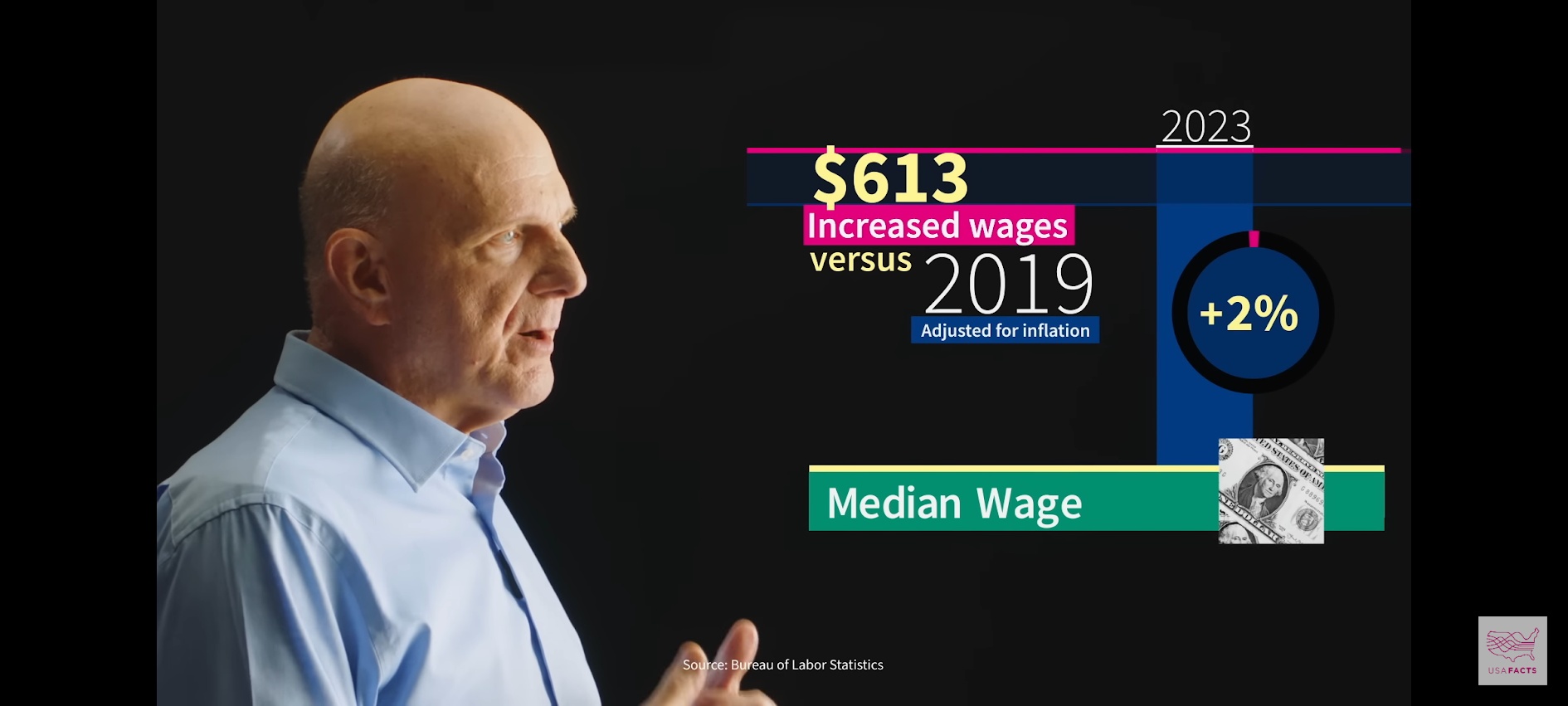
Crucially, economic data reveals that overall wage growth has outpaced cumulative inflation over the long term. Since 2019, consumer prices have risen by roughly 19%, while aggregate wages have climbed by 21%. Consequently, the average American worker is financially better off than they were prior to the pandemic. Despite this mathematical reality, political campaigns continue to frame inflation as an ongoing catastrophe, promising to artificially force prices downward—a policy move that could destabilize markets. Concurrently, political rhetoric frequently targets alleged corporate greed and price-gouging, though comprehensive economic analyses, such as those conducted by NPR regarding the grocery sector, indicate that standard profit margins have remained stable rather than skyrocketing due to malicious inflation manipulation.
Housing and Gas Prices
Housing affordability represents one area where structural changes have genuinely impacted consumers, with home prices and rental rates outpacing general inflation and wage growth over the past decade. Elevated interest rates, intended to cool the broader economy, have compounded the challenge by increasing monthly mortgage servicing costs for prospective buyers. However, proposed political solutions—such as federal subsidies for first-come homebuyers or artificial interest rate manipulations—frequently risk exacerbating the underlying supply crisis. Economists and housing advocates argue that the true remedy lies in dismantling regulatory roadblocks that stifle residential construction, including cumbersome permitting processes, restrictive zoning laws, suburban parking minimums, and neighborhood opposition that obstructs land development.
Similarly, gasoline prices remain a perennial talking point for political candidates seeking to outrage drivers at the pump. When adjusted for inflation, gasoline prices hover in a range comparable to historical averages seen in the 1950s, adjusted for modern currency. Furthermore, gasoline constitutes a relatively modest fraction of total household disposable income compared to the broader, systemic costs of vehicle ownership and depreciation. With electric vehicles increasingly achieving cost parity with internal combustion engine vehicles while offering superior efficiency and lower maintenance costs, focusing political debates on antique fuel markets increasingly resembles arguing over the pricing of outdated technology.
Perspective on National Wealth and Well-Being
Ultimately, much of the anxiety surrounding the national economy overlooks a fundamental truth: modern developed nations achieved a threshold of material abundance decades ago. When contemporary citizens express anxiety regarding economic output, the societal condition often resembles abundance rather than scarcity. While income inequality remains a legitimate challenge requiring progressive taxation to maintain social cohesion, accumulating wealth beyond the point of sufficiency yields diminishing returns regarding human happiness and psychological well-being.
As voters navigate the noise of election season, recognizing the actual limits of political influence over macroeconomic trends allows individuals to refocus their energies on personal agency, financial literacy, and the principles of personal control. Once ballots are cast, the broader economic machinery will continue its course, driven far more by global labor and market innovation than by any single administration in Washington.