

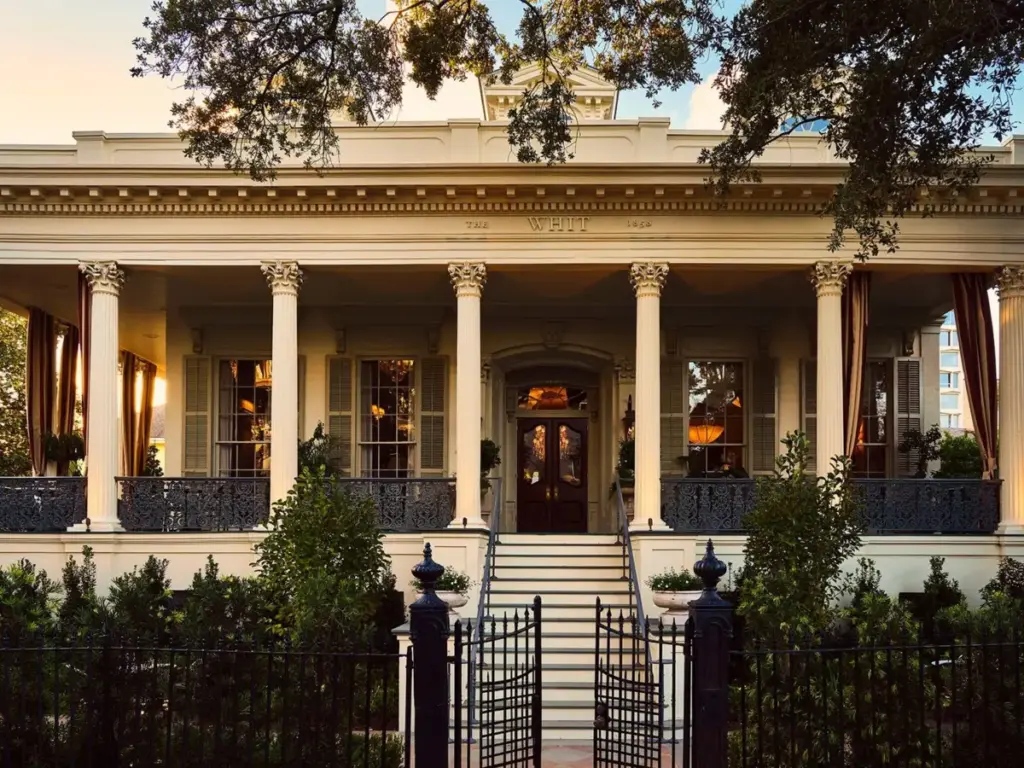
The Greek Revival mansion perched at the corner of Prytania Street and Jackson Avenue in New Orleans’ historic Garden District has never been a stranger to the dramatic, the eccentric, or the outright unpredictable. Dating back to 1857, the building’s tumultuous history began with its very first owner, a cotton merchant who tragically succumbed to yellow fever. Over the decades, the property seemed to attract a unique brand of fateful irony; another owner was fatally struck by lightning on the grounds.
Fast-forwarding to the 21st century, the estate entered a vibrant and theatrical phase when a Tina Turner impersonator acquired the property. She transformed the historic structure into the Magnolia Mansion, a boutique bed-and-breakfast featuring suites with evocative, themed names like the "Vampire Lovers’ Lair" and the "Moulin Rouge." Later, ownership shifted again, landing in the hands of a former professional boxer and a local political power player. That era eventually unraveled in dramatic fashion, culminating in an FBI raid on the property that effectively brought the bed-and-breakfast chapter to a chaotic close.
Throughout all these iterations, the estate carried another distinct reputation: it was widely reputed to be deeply haunted. Named by USA Today during its B&B era as one of the top places in the entire nation "to sleep with a ghost," the magisterial Harris-Maginnis House easily secured a coveted spot on the city’s legendary ghost-tour circuit, bolstered by an ever-growing mountain of local lore and visitor testimonials.

According to accounts compiled by local spooky tour operators, overnight guests at the mansion reported a wide array of eerie, unexplained phenomena over the years. Visitors frequently shared sensations of an unseen presence gently tucking them into bed at night or watching over them while they slept in the dark. Others spoke of mysterious footsteps echoing down the halls and heavy doors slamming shut of their own accord.
Ghosts or no ghosts, the new team that eventually stepped in to acquire and rescue the property found a distinct aesthetic left behind by previous operators—complete with gothic-coded wall murals and heavy swaths of dark purple velvet hanging at every turn. It was clear that the historic structure was desperately crying out for a sophisticated design intervention.
To spearhead the monumental task of giving the old haunt a completely new design vernacular, Gretchen Trauth, CEO of the New Orleans investment firm backing the hotel project, reached out to Jensen Killen and Katie Logan Leblanc. The duo leads Logan Killen, a prominent local interior design firm widely celebrated for infusing spaces with a beguiling, highly tactile mix of contemporary polish and time-worn patina.
"The goal was a hotel where nobody can quite tell whether a designer has touched it," explains Leblanc, summarizing the delicate philosophy that guided the massive renovation effort.

The design team understood that forcing a sterile or overly modern look onto a landmark 19th-century building would strip away its soul. Instead, they aimed to honor the layers of time that had shaped the structure since its pre-Civil War origins.
"We wanted it to feel very storied, like it’s been someone’s house for a long time," adds Killen. "There are these layered histories imbued in the furnishings and the art and accessories."
Reborn as The Whit—named in honor of the celebrated American poet Walt Whitman, who spent three months residing in New Orleans around the exact time of the home’s original construction—the property has been thoughtfully reimagined. The designers crafted a romantic, deeply lived-in, and curio-studded aesthetic that naturally tempts arriving guests to drop their bags, sit down, and stay awhile.
Navigating the complex maze of local historical preservation codes and redesigning the layout to recapture the glamour that had slowly drained away in recent years required specialized expertise. For this, the team enlisted architect Seamus McGuire of the New Orleans-based firm Cicada. McGuire’s visionary blueprint called for converting a trio of former bedrooms into spacious public lounges, drastically improving the flow and functionality of the grand old house.

Among the standout spaces is a rich, mahogany-paneled library that now functions as a gallery of antique dog portraits alongside a carefully curated repository of volumes sourced from local independent landmark Faulkner House Books.
"It’s dark and moody and where you might want to have a cocktail or a whiskey," Leblanc says of the clubby, intimate room.
Bookworms and casual readers alike might also find themselves naturally gravitating toward alternative quiet corners, such as the sunroom’s comfortable banquette seating, one of the breezy wicker chairs lining the sweeping wraparound porch, or the breakfast room. The latter serves as a delightfully matchy-matchy enclave completely enveloped in Pierre Frey’s vibrant Les Colonnes wallpaper and matching window curtains.
Yet, creating the new hotel was not without its distinct design challenges. According to the design team, the single hardest room to get right was the main lounge.

"It’s a giant space that isn’t always in use, and can be tricky to give life to when it’s empty," Killen notes.
Intended to serve a dual purpose—functioning as a relaxed grand room by day and transforming into an atmospheric cocktail bar come evening—the space required meticulous layering. The team achieved this by introducing blue paint that reads ethereal and bright by day before shifting to a warm, enveloping tone by night. They also installed a custom grid carpet to add a sense of architectural tailoring to the expansive area, complemented by an intimate, salon-style gallery wall featuring works by notable Louisiana artists, including Robert Moreland and Mallory Page.
Another delicate tightrope walk involved the creation of the second-floor bar. Strict historic landmark rules strictly forbid faking a history that a space never actually possessed, preventing the designers from fabricating a Victorian backstory out of thin air. Instead, the team made the bold choice to lean openly into an Art Deco aesthetic.
"What we don’t want is to put a contemporary bar into a very historic property," explains McGuire. "You can’t give a false sense of history to a space."

True to the sprawling, idiosyncratic nature of historic New Orleans architecture, the hotel’s guest rooms firmly resist uniformity. Beyond the classically styled main rooms, visitors can book a quartet of cozy garden rooms characterized by low ceilings and glossy oxblood walls, or opt for one of three airy cabana rooms outfitted with natural bamboo beds and soaring ceiling heights.
"It’s not meant to feel like everything was changed by the same person at the same time," Killen says of the eclectic narrative the designers have successfully introduced to the renewed New Orleans property.
As for the famous spirits said to have roamed the halls for generations, the staff reports that, so far, nobody’s heard boo.