


Apple TV’s new thriller series, Nocturne, sets out to captivate audiences by striking a delicate balance between the comforting tropes of the familiar crime genre and sharp, unexpected narrative turns. Based on the acclaimed crime novels The Sandman and Lazarus by Lars Kepler, and adapted for television by Rowan Joffe and John Hlavin, the show immediately poses a haunting premise: What happens when a young boy, long presumed to be the victim of a notorious serial killer, is found alive?
The narrative follows the criminal mastermind as he brilliantly maneuvers law enforcement in a desperate race against time to locate any other victims who might still be trapped alive. Across the course of its first two episodes, the series leaves viewers grappling with a myriad of questions. These range from plot-driven intrigue and deep character exploration to occasional moments of side-eye regarding potential logic gaps and cinematic conveniences.
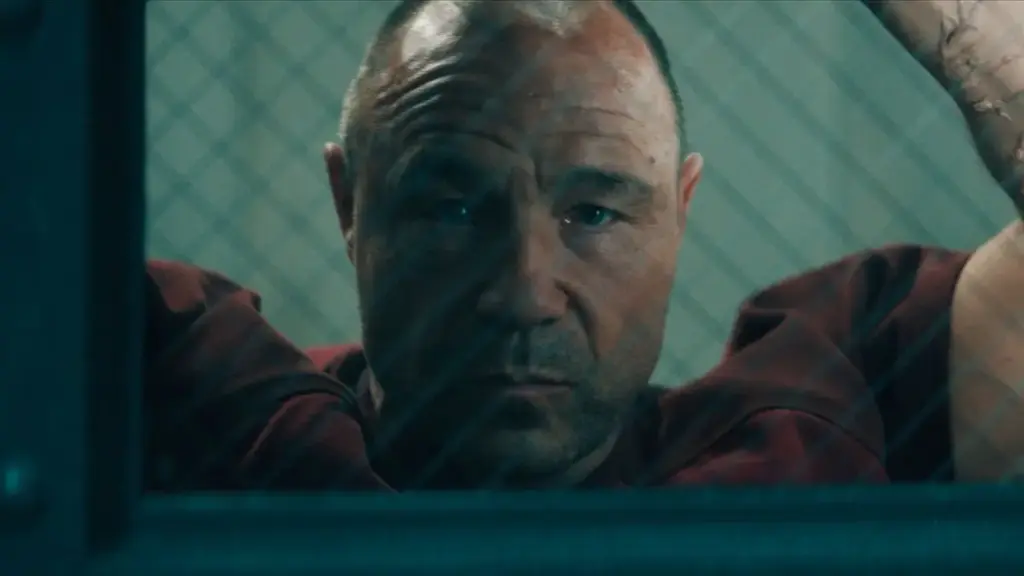
The debut episodes lay the essential groundwork for convicted killer Jurek Walter’s unfolding scheme to secure his freedom. Astonishingly well-played by Stephen Graham, Jurek serves as the chilling focal point, contrasted against the relentless attempts of multiple law enforcement officers who are racing to stop him from doing further harm while trying to uncover the whereabouts of his still-living victims. Jurek was originally convicted of a series of brutal killings that devastated a small, tight-knit community. Somehow, he managed to convince a jury to buy into an insanity defense—or at least, we must presume he did, given that he resides in a high-security psychiatric hospital rather than a traditional prison. How exactly he managed to pull that off remains a nagging question, as nothing in his calculated demeanor suggests an insanity defense would genuinely fly. If his actions stem simply from being a sociopath, wouldn’t that apply to all violent criminals? Regardless, the narrative moves forward.
From a technical perspective, the series does a magnificent job of dropping viewers straight into its bleak, suffocating world. The opening shot of Episode 1, titled "Lazarus, Come Forth," establishes an immediate sense of foreboding, danger, and claustrophobia that echoes as a thematic refrain throughout the episodes. The camera tracks down a cold, concrete hallway toward cells that feel purposefully hidden and forgotten. The framing is suffocating, as the dark walls of the cell entryways initially crowd the sides of the frame.
This chilling sequence marks our introduction to Jurek, and it is notable that the series deliberately starts by forcing us into the mindset of the killer. He feels intensely trapped and desperate to escape. For reasons not yet fully revealed, his gritty voice—simultaneously menacing and soothing—whispers to the patient in the adjacent cell, subtly manipulating the man to seek freedom by any means necessary, even through self-inflicted violence. This psychological manipulation forms the core of Jurek’s arc across the opening chapters.
Jurek is a brilliant tactician, thoroughly adept at psychological warfare. He also appears utterly convinced that he is entitled to his freedom, or that a legal loophole exists to overturn his conviction if he can successfully expose an alleged lie told by former homicide detective Jonah Lynn, portrayed with grounded fatigue by Liev Schreiber. Jurek taunts Jonah near the end of the first episode, offering "the truth for the truth" when Jonah and Special Agent Quinn, played by Poorna Jagannathan, visit him in his ward. Jurek promises to help them find Felicia Frost—the missing sister of Michael, the boy who miraculously returned from the dead—only if Jonah officially confesses to lying in court.
This ultimatum dramatically raises the stakes for everyone involved, including Agent Quinn. She has already taken a massive professional risk by bringing an unknown, retired cop dangerously close to her active case. If Jonah’s past deception blows up the investigation, the blame falls squarely on Quinn, all while a missing girl’s life hangs in the balance.
While many crime dramas deliberately limit the audience’s perspective to match what the searching characters know, Nocturne chooses to put viewers a step ahead. It is an intriguing narrative choice that may ultimately serve as a clever misdirection. The audience learns that a hospital worker named Karl, played by Rory Culkin, is assigned to the team overseeing Jurek. Their initial encounter is constructed with palpable tension: Karl searches for a missing weapon beneath Jurek’s metal bed, gets his pants caught on the frame, and finds himself trapped before Jurek awakens from a sedative. Before the scene closes, Jurek slips a note into Karl’s pocket, urging him to smuggle it out to his defense attorney.
This single note appears to set the overarching plot in motion, strongly implying that it contains Jurek’s instructions to an outside accomplice to keep Michael trapped or orchestrate further chaos. Jonah is pulled back into active involvement because the town’s residents and the children’s mother, Ida Frost, played by Chrissy Metz, trust him implicitly over standard law enforcement. Also advocating for his return is FBI agent Saga Bauer, played by Zazie Beetz, who is Jonah’s goddaughter—the child of his deceased partner whom he effectively raised. Bauer eventually goes undercover as a psychiatric patient inside Jurek’s secured ward to root out whoever is leaking messages and endangering lives.
The reality is that Jonah has clearly never abandoned his search for the remaining missing persons tied to the case. As Agent Bauer discovers by inspecting his massive, sprawling murder board, Jonah has been methodically investigating an enormous grid system entirely on his own for years. The case is profoundly personal for both characters. Jonah carries immense guilt for quitting the force following the accidental death of his wife and child, while Jurek’s accomplice is directly responsible for kidnapping Bauer’s stepmother, Rebecca. Furthermore, it is heavily implied that Bauer’s father died by suicide following his wife’s disappearance.
Through Agent Quinn’s vocal skepticism, the show acknowledges the severe ethical and procedural violations of having Jonah and Bauer involved in the investigation, given their deeply personal ties to the killer. The story attempts to justify these massive conflicts of interest by pointing to their unique familiarity with the case and the ticking clock to save Felicia. While these interwoven tragedies stretch credulity, the sheer production value and the strength of the performances easily keep viewers engaged through the heavy setup of character dynamics and relationships. At its core, the story functions as a battle of savants with genuine stakes: two individuals on the side of the victims deploying their respective skills to outsmart a murderous, mysterious genius.
When crime dramas lean heavily on preternatural intellect—reminiscent of Sherlock Holmes and Moriarty—they always risk feeling like a magic trick where characters magically "know things" simply to keep the narrative moving. Indeed, Jonah’s near-instant realization of where Michael was being held, alongside Jurek’s uncanny ability to read people instantly, open the door to conveniences that could alienate modern audiences. One cannot help but wonder: if Jurek possesses such extraordinary mental acuity, why was he caught in the first place while his partner remained free? Fortunately, Stephen Graham delivers a performance so intensely compelling that viewers are more than willing to surrender to his magnetic screen presence.
This does not diminish the potent talents of the rest of the ensemble or the exceptional visual storytelling. The show is gorgeously shot, boasting meticulous production design that plunges viewers into a rustic exterior world shifting between washed-out grays and familiar comforts. The dense forest landscapes are striking yet treacherous, perfectly mirroring the cold, stifling confines of Jurek’s psychiatric prison.
Schreiber delivers an understated, weary portrayal of a grieving man who is too tired to fight off terrible ideas like Bauer’s undercover operation, yet far too invested to walk away. A standout moment occurs when Agent Quinn apologizes for the loss of his family; Jonah simply nods, a flash of unbearable pain crossing his eyes for a split second before he forces himself onward. Beetz is equally convincing and affecting as a chameleon-like agent willing to put herself in extreme peril to close a case. The psychological toll of the operation is visibly mounting, compounding the lifelong trauma of being the daughter of a mentally ill mother and an addicted father.
Bill Camp also brings quiet vulnerability to Chief Ellison, capturing the demeanor of a local leader who knows he is entirely out of his depth. Meanwhile, Rory Culkin’s transformation into the compassionate nurse Karl is striking, supported by a distinct physical look and a gentle demeanor. Karl reads as a man of immense kindness toward society’s most cast-aside individuals. However, it stretches logic that an employee demonstrating such profound empathy would be placed directly in the path of a predator known for exploiting those exact instincts. When Karl risks his career for a criminal he barely knows, it forces viewers to question whether Karl is genuinely who he appears to be, or if he was planted in the hospital with a hidden purpose.
These narrative threads leave lingering questions about whether the plotting will hold up logically or if further twists await. Yet, the series ultimately succeeds because Stephen Graham is impossible to look away from. Playing a killer who operates under a twisted personal code—believing he is making people "pay for their crimes"—Graham channels a magnetic, mercurial energy reminiscent of classic cinematic villains. Whether he is breaking into sudden, unsettling giggles or commanding a room with chilling understatement, his performance leaves an indelible mark.
While the premise stretches credibility in places, the combination of high production values, rich thematic exploration of loss and redemption, and masterclass performances makes Nocturne a compelling crime drama well worth following.