



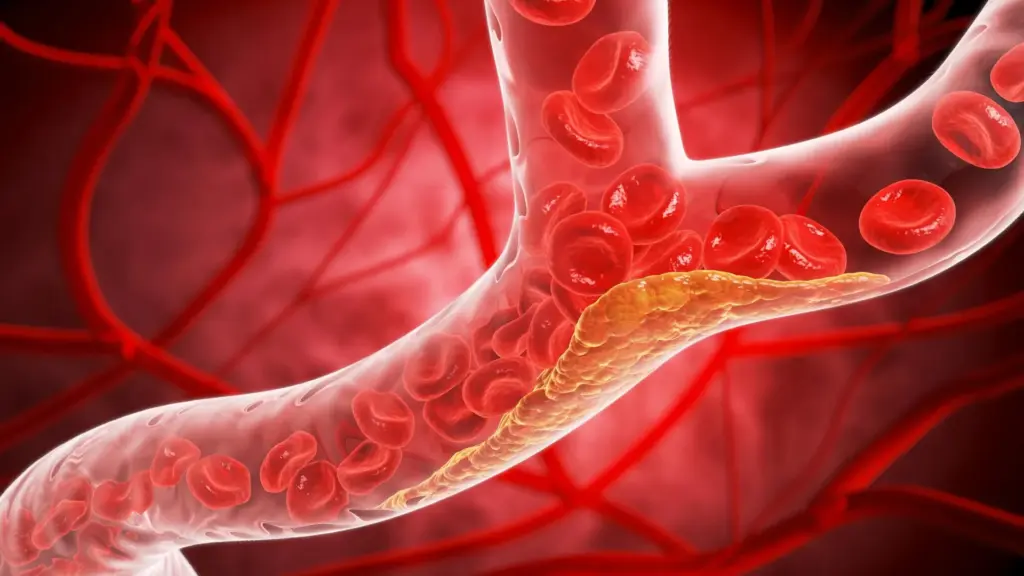
Atherosclerosis—the gradual, stealthy buildup of fatty plaque inside the arteries that serves as the primary engine behind most cardiovascular diseases—can begin developing decades before a person ever experiences a symptom, a warning sign, or a health scare. Now, the results of a massive, landmark international study suggest that this hidden pathology is not only present in a significant portion of young adults who otherwise appear completely healthy, but that it is also considerably more widespread across the broader population than the medical community previously recognized.
The sweeping research effort was co-led by Professor Henning Bundgaard, Professor of Cardiology at Rigshospitalet in Copenhagen, Denmark, and Dr. Borja Ibáñez, Scientific Director of the Centro Nacional de Investigaciones Cardiovasculares Carlos III (CNIC), a cardiologist at Hospital Universitario Fundación Jiménez Díaz, and a group leader at CIBERCV in Spain.
Among a staggering cohort of more than 16,000 participants who reported no symptoms and carried no previous diagnosis of cardiovascular disease, researchers detected atherosclerotic plaques in 57.1% of individuals. These striking findings were formally unveiled during a high-profile Hot Line session at the ESC Congress 2026 and published simultaneously in The New England Journal of Medicine.
Mapping Hidden Atherosclerosis Across Adult Life
The newly revealed data stems from the inaugural phase of the REACT study, standing as one of the most ambitious and comprehensive global efforts yet undertaken to examine how silent atherosclerosis develops, evolves, and progresses throughout the span of adult life. This major international project receives its core financial backing from the Novo Nordisk Foundation, which awarded up to EUR 23 million to support the initiative’s first phase, and is executed through a robust collaborative network involving Rigshospitalet, partner institutions across Denmark, and the CNIC in Spain.
Professor Bundgaard explained that the foundational philosophy guiding the research is anchored in a forward-looking clinical objective. "The vision of REACT is to transform primary cardiovascular prevention through a precision medicine approach based on the early identification of atherosclerosis," he noted.
Cardiovascular disease remains the world’s leading killer, claiming nearly 20 million lives globally each year, with atherosclerosis directly responsible for the vast majority of those fatal events. The disease typically manifests clinically as a sudden heart attack, a debilitating stroke, or sudden cardiac death. However, having arterial plaque does not mean that a person will inevitably develop symptomatic disease. The profound medical challenge lies in the fact that the condition can develop quietly for decades. Plaque may continue accumulating silently inside the arterial walls without ever producing a single obvious warning sign, leaving individuals unaware of the physiological changes occurring within their bodies.
Looking for Disease Instead of Estimating Risk
Dr. Ibáñez emphasized that the conceptual framework of the study marks a fundamental shift in medical thinking. "The REACT study is based on a simple but revolutionary idea: moving from the current model, which estimates the probability of cardiovascular disease on the basis of traditional risk factors such as blood pressure, cholesterol and smoking, towards a new paradigm in which the disease is detected directly through imaging before it causes symptoms," he stated.
Under this proposed clinical model, preventive interventions and the targeted treatment of risk factors could be guided by the actual, verified presence of silent atherosclerosis, rather than relying solely on indirect statistical estimates of risk derived from population averages. The indispensable first step in this ambitious endeavor was to determine the precise baseline prevalence of silent atherosclerosis across all three major vascular territories and throughout the entire adult lifespan—a milestone that the research team has now achieved and reported.
Rather than relying strictly on factors like cholesterol levels, smoking history, and blood pressure readings to calculate an individual’s future cardiovascular risk score, the researchers sought to determine whether physical plaque is already established in the vasculature.
The comprehensive REACT initiative is structured to span eight years across two distinct phases. Phase 1, formally designated as REACT-DETECT, was launched in 2024. Providing that continued funding is secured, Phase 2, known as REACT-PROTECT, is planned to run from 2027 through 2032, taking the insights gained from detection and applying them to active, guided intervention trials.
The published results originate directly from Phase 1, which researchers emphasize offers the most comprehensive picture to date regarding where silent atherosclerosis appears within the human body, its exact prevalence at varying stages of life, and how the distribution of the disease differs between women and men.
Atherosclerosis Is Already Present in Young Adults
For the first phase of the investigation, researchers successfully enrolled 16,808 healthy individuals ranging from 18 to 70 years of age across clinical centers in Denmark and Spain. None of the participants had any known history of atherosclerotic cardiovascular disease.
Every single participant underwent advanced, high-resolution imaging designed specifically to identify the presence of plaque across three major vascular regions: the carotid arteries supplying the neck and brain, the femoral arteries running through the legs, and the coronary arteries directly supplying the heart muscle.
In addition to sophisticated imaging, the researchers evaluated established cardiovascular risk factors, analyzed circulating blood biomarkers, collected biological samples for comprehensive omics studies, and performed detailed analyses of retinal images. Together, these measurements formed one of the most extensive and multi-layered databases on human atherosclerosis ever assembled.
The scans yielded surprising insights into the timeline of human vascular aging, revealing that atherosclerosis can appear remarkably early in adult life. Approximately 1 in 13 participants aged 18 to 29 already showed definitive signs of the disease in at least one major artery.
Following these early baseline appearances, the overall prevalence climbed steadily and predictably with advancing age. Among participants in the older cohort, specifically those ages 60 to 70, roughly 9 out of 10 individuals exhibited measurable atherosclerosis.
Ultrasound Could Offer a Simpler Way to Screen
A crucial anatomical pattern emerged from the extensive imaging data that could streamline future clinical workflows. The vast majority of participants who showed atherosclerosis in their coronary arteries also displayed detectable plaque in either the carotid or the femoral arteries.
This consistent anatomical overlap carries significant implications for future public health screening strategies. Imaging the carotid and femoral arteries via standard ultrasound is significantly easier, faster, safer, and entirely noninvasive when compared to performing complex computed tomography (CT) scans to directly examine the hard-to-reach coronary arteries.
"In the paradigm we propose, portable ultrasound devices usable by any healthcare professional will become the standard tool for atherosclerosis screening from the early stages of adult life," Dr. Ibáñez noted.
Men and Women Show Different Patterns
The study also shed light on notable physiological differences in how atherosclerosis develops across the lifespan in men versus women.
Among male participants, the prevalence of atherosclerosis began increasing at noticeably younger ages. The overall trajectory of plaque accumulation in men appeared roughly five to ten years ahead of the timeline observed in women.
Conversely, female participants exhibited their sharpest, most pronounced rise in plaque prevalence between the ages of 40 and 60—a window of time that broadly overlaps with the physiological changes of the menopausal transition.
The research team emphasized that these distinct chronological differences underscore an urgent clinical need to develop and implement cardiovascular prevention strategies that explicitly account for both biological sex and the specific stage of life.
Traditional Risk Scores Miss Many Existing Cases
Perhaps one of the most consequential clinical takeaways from the study involves the recognized limitations of conventional cardiovascular risk assessment tools.
Current medical guidelines rely heavily on established risk calculation scores, such as SCORE2, to determine patient treatment paths. However, the study found that these traditional methods identified only a small fraction of the individuals who were already walking around with silent atherosclerosis. This disconnect strongly suggests that a patient can appear to have a relatively low or acceptable cardiovascular risk profile according to traditional statistical measures while plaque is actively developing inside their arterial walls.
According to Dr. Ibáñez, these empirical findings point directly toward a potentially transformative approach to preventing cardiovascular disease before it turns fatal.
"For decades, we have estimated cardiovascular risk using factors such as age, blood pressure and cholesterol. This study shows that we can now go one step further and detect the disease directly before it causes a heart attack or stroke," he said.
He added, "The future of cardiovascular prevention must be more precise and personalized. If we identify atherosclerosis in its earliest stages, we will be able to intervene sooner, tailor treatment more effectively and reduce the burden of cardiovascular disease."
Professor Bundgaard shares the perspective that the findings provide a historic opportunity to rethink how modern medicine approaches cardiovascular prevention.
"Until now, preventive decisions have been based on an estimate of risk, but we did not know whether the disease was already present. REACT shows that atherosclerosis can be detected decades before clinical manifestations appear and provides the most comprehensive atlas of the evolution of the disease across adult life," he observed.
Testing Whether Earlier Detection Improves Outcomes
Professor Bundgaard emphasized that the empirical data generated by the study establishes the necessary scientific foundation required to formally test whether this proposed precision-based preventive approach actually improves long-term patient health outcomes.
"Identifying and treating silent atherosclerosis as early as possible is essential to reducing the global burden of cardiovascular disease. Our results support prospective studies evaluating whether a preventive strategy guided by imaging, including the use of portable ultrasound, can improve current standards. If confirmed, this would bring precision medicine to the most common cardiovascular disease," he stated.
If secured with adequate funding, the second phase of the REACT initiative—scheduled tentatively for 2027 through 2032—will examine that critical clinical question directly.
Researchers intend to launch a large-scale, randomized clinical trial to test whether a medical prevention strategy guided by direct imaging can successfully slow down or halt the systemic progression of atherosclerosis. The ultimate, long-term goal of this prospective trial is to determine whether such an imaging-led strategy can prevent heart attacks, strokes, and other devastating cardiovascular events more effectively than current standard practices.
Expanding REACT Around the World
In an effort to ensure that the insights gained are universally applicable, the international research team is actively extending the reach of REACT beyond Europe to determine whether the Scandinavian and Spanish findings hold true across diverse human populations globally.
"REACT is expanding its impact around the world. We have established close collaborations with India, Singapore, Tanzania and Mexico to validate these results in populations across the globe," Dr. Ibáñez explained.
The REACT project builds directly upon the scientific groundwork laid by the earlier PESA-CNIC-Santander study, which was spearheaded by Dr. Valentin Fuster, Director General of the CNIC, who remains directly involved in the leadership of REACT.
That previous body of work demonstrated that atherosclerotic disease was already present in a high percentage of middle-aged adults and was closely correlated with specific lifestyle patterns. The REACT study broadens that scope by investigating how and when the disease first emerges in much younger age groups.
"PESA has shown us that atherosclerotic disease is present in many middle-aged people and is associated with lifestyle patterns. In REACT, we wanted to investigate how it emerges at much younger ages. For years, we have proposed that early intervention in atherosclerosis could not only prevent its progression but might even make it possible to cure the disease. REACT will answer this question," Dr. Fuster concluded.